
Understanding Invasive Species: What Neophytes Have to Do with Our Gardens
Gardening Knowledge
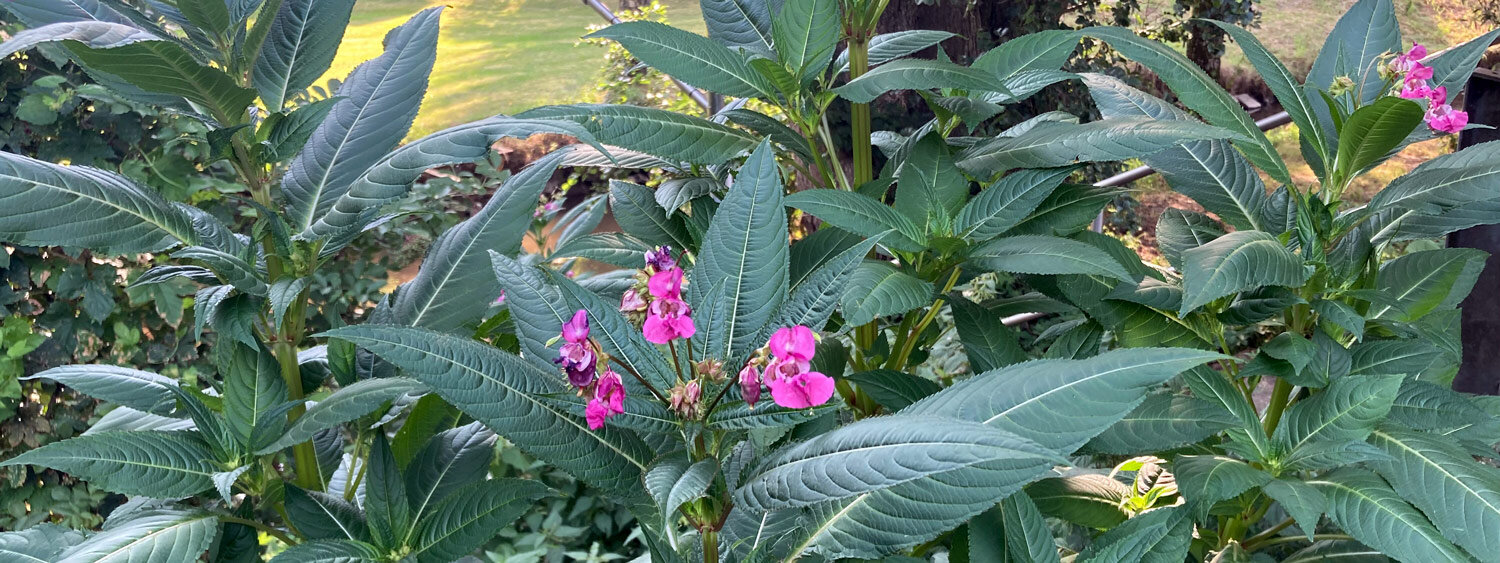
Some plants arrive quietly. A few seeds travel along in a bag of soil, a piece of root stays stuck to a garden tool, or an ornamental plant self-seeds beyond the garden fence. Many of these newcomers disappear again after a short time. Others become familiar companions in our cultural landscape. And a few spread so vigorously that they can endanger native species and habitats.
But when is a plant simply new? When is it considered non-native, and when invasive?
To kick off this month's theme, we take a closer look. Because mindful gardening does not begin with fear of unfamiliar plants, but with knowledge, observation and a feel for how things are connected.
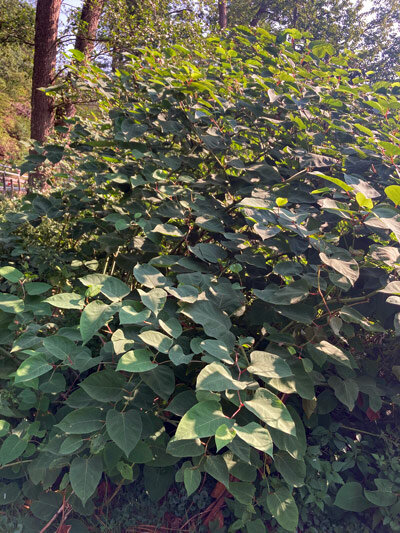
Japanese Knotweed (Fallopia japonica)
What Are Non-Native Species?
Species are described as non-native when human activity has brought them into an area they would probably not have reached under their own steam. This may have happened deliberately, for example through agriculture, horticulture or the introduction of ornamental plants. But many species were also introduced unintentionally via traded goods, soil, vehicles or other transport routes.
For dating purposes, experts often use the year 1492. Plants that reached a new area with human help after this date are called neophytes. Non-native animal species are correspondingly called neozoa. Together with other organisms, both groups belong to the so-called neobiota.
Plants that were already spread by humans before 1492 are called archaeophytes. They include many species that we have long perceived as part of our traditional cultural landscape.
At first, these terms only say something about origin and time of arrival. They are not a judgement.
Non-Native Does Not Automatically Mean Invasive
This is probably the most important message of this whole month's theme:
Not every non-native plant is invasive.
Many introduced plants cannot survive permanently outside gardens and cultivated land at all. Others occasionally escape into the wild without causing any recognisable damage. Some fit into existing communities over a long period of time.
A non-native species is only considered invasive when its spread endangers biological diversity. This can happen, for example, when it displaces native plants, changes habitats significantly or affects food chains.
The German Federal Agency for Nature Conservation currently classifies 46 neophytes in Germany as invasive. This number is small compared with the many plant species that have been introduced, cultivated or unintentionally carried in over the centuries. Source: German Federal Agency for Nature Conservation
So the deciding question is not only: “Where does this plant come from?” Much more important is:
- How does it behave in its new location?
- How quickly, and by which routes, does it spread?
- Can it endanger native species or habitats?
- Can it still be controlled once it has become established?
Why Do Some Plants Become Invasive?
Whether a non-native plant becomes a problem depends on many factors.
Some species produce particularly large quantities of seed. Others multiply via runners, rhizomes, root pieces, bulbs or tubers. Some grow very quickly, resprout after being cut back or can form dense stands in which other plants barely find any light or space.
But location also plays an important role. A species can behave entirely inconspicuously in one region and spread vigorously under other climatic conditions. Bare soil, disturbed ground, roadsides, railway land, river valleys and urban areas offer many newcomers favourable conditions for getting started.
In Germany, important centres of neophyte distribution lie above all in conurbations and large river valleys. Rising temperatures can additionally enable warmth-loving species to colonise new regions or to establish themselves there permanently. Source: German Federal Agency for Nature Conservation
That is why a plant cannot be judged the same everywhere and at all times. A more fitting way to put it is:
In the right place a plant can be an asset, and in the wrong place a problem.
What Does This Have to Do with Our Gardens?
Gardens are valuable habitats. They offer food, shelter and refuges for countless plants and animals. At the same time, they are places where species from many regions of the world come together.
This makes gardeners important guardians of this diversity.
Some plants get from gardens into the wider landscape because their seeds are spread by the wind, by animals or by water. Others leave the bed via underground runners. Root pieces, tubers or seeds can also be carried further on garden waste, compost, soil, shoes and tools.
Dumping garden waste at the edge of woodland, on wasteland or by water is particularly problematic. What looks like a harmless way of getting rid of it can open the way into a new habitat for a plant that spreads readily.
Plants from ponds and aquariums never belong in natural waters, either. Some aquatic plants multiply from even small plant fragments and can form dense stands there.
What Can We Do as Gardeners?
Nobody now has to banish every vigorously growing plant from the garden. Even a plant that spreads strongly in the bed is not automatically an invasive species in the nature conservation sense.
Rather, a mindful approach begins with a few simple questions:
- How does the plant reproduce?
- Does it form a lot of seed or underground runners?
- Can it leave the place intended for it?
- Does the garden border on a body of water, a meadow or another sensitive area?
- Are there regional recommendations or legal restrictions?
- Will I be able to keep the plant reliably under control in the coming years, too?
If you discover an unfamiliar species, you should first identify it reliably and not remove it too hastily. Expert advice makes sense especially for plants that are hard to identify or pose a health risk. The German Environment Agency likewise recommends keeping a close eye on invasive neophytes in the garden and using identification aids. Source: German Environment Agency
Why Prevention Is So Important
Once an invasive plant has become established over a large area, it can often only be contained with considerable effort. That is why nature conservation measures rely first and foremost on prevention, early detection and rapid action.
The European strategy follows this principle, too. For invasive species of Union concern, measures are graduated: their introduction is to be prevented, new occurrences are to be detected early, and widespread populations are to be managed properly. The EU Union list, updated in 2025, currently comprises 114 strictly regulated species, including 49 plant species. Source: European Commission
Not every problematic garden plant is on this list, however. National assessments, regional recommendations and the specific situation on the ground therefore remain just as important.
Diversity Needs Knowledge
Magic Garden Seeds stands for the joy of special plants, old crop species and open-pollinated seed. For us, this joy and a responsible approach to nature are not opposites. On the contrary: the more we know about the plants we sow, the more consciously we can shape diversity.
Transparency is part of this, too. In our product descriptions, we therefore try to state as clearly as possible which region or original range a plant comes from, how it reproduces and which particular characteristics should be taken into account when growing it.
If a species can develop a strong potential to spread under certain conditions or can become a problem regionally, we point this out explicitly. Because a plant can remain inconspicuous in one location but spread vigorously in another. Climate, soil, neighbouring land and the type of cultivation all play an important role here.
Such notes are not meant to unsettle, but to enable an informed decision. If you know whether a plant forms a lot of seed or spreads via runners, rhizomes, tubers or root pieces, you can choose its position more carefully and take suitable precautions.
Conclusion
It is important to us neither to condemn plants too hastily nor to keep quiet about possible risks. An old crop plant can at the same time have a high potential to spread. A treasured ornamental plant can be unproblematic in some regions and already invasive in others. That is why we recommend that, in addition to our information, you always take into account regional advice, legal requirements and the conditions in your own garden.
That is why we will take a closer look in the coming posts. We will trace the routes by which plants cross garden boundaries, introduce specific species and ask what “the right plant in the right place” means in practice.
Because, ecologically speaking, our garden does not end at the garden fence.
Which plant has ever surprised you with its urge to spread? Feel free to share your experience with us.
Sources and Further Information
- German Federal Agency for Nature Conservation: Neobiota and basic knowledge about non-native species
- German Federal Agency for Nature Conservation: Ecological principles and current invasiveness assessments
- European Commission: Invasive alien species and current Union list
- German Environment Agency: Advice on invasive plant species in the garden