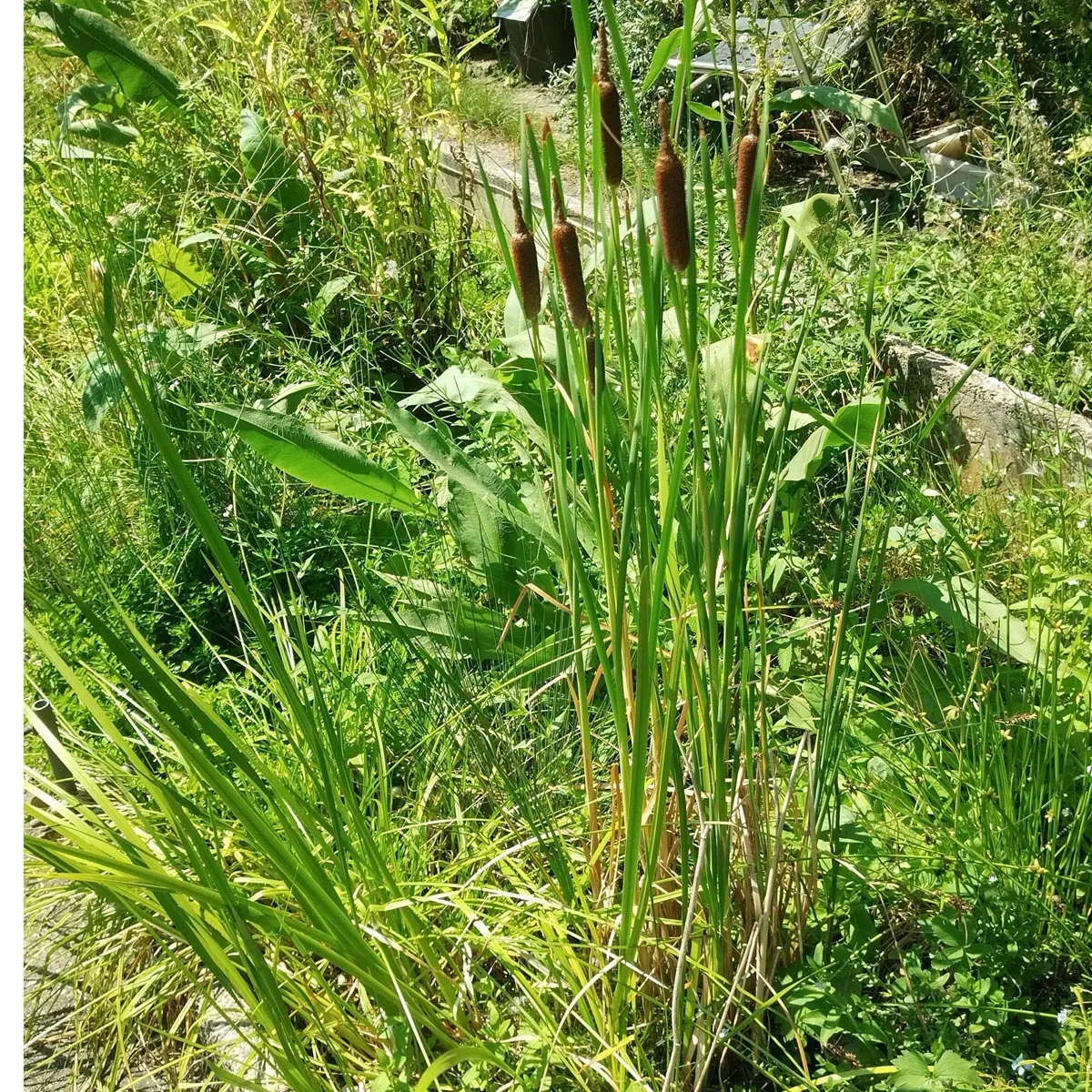

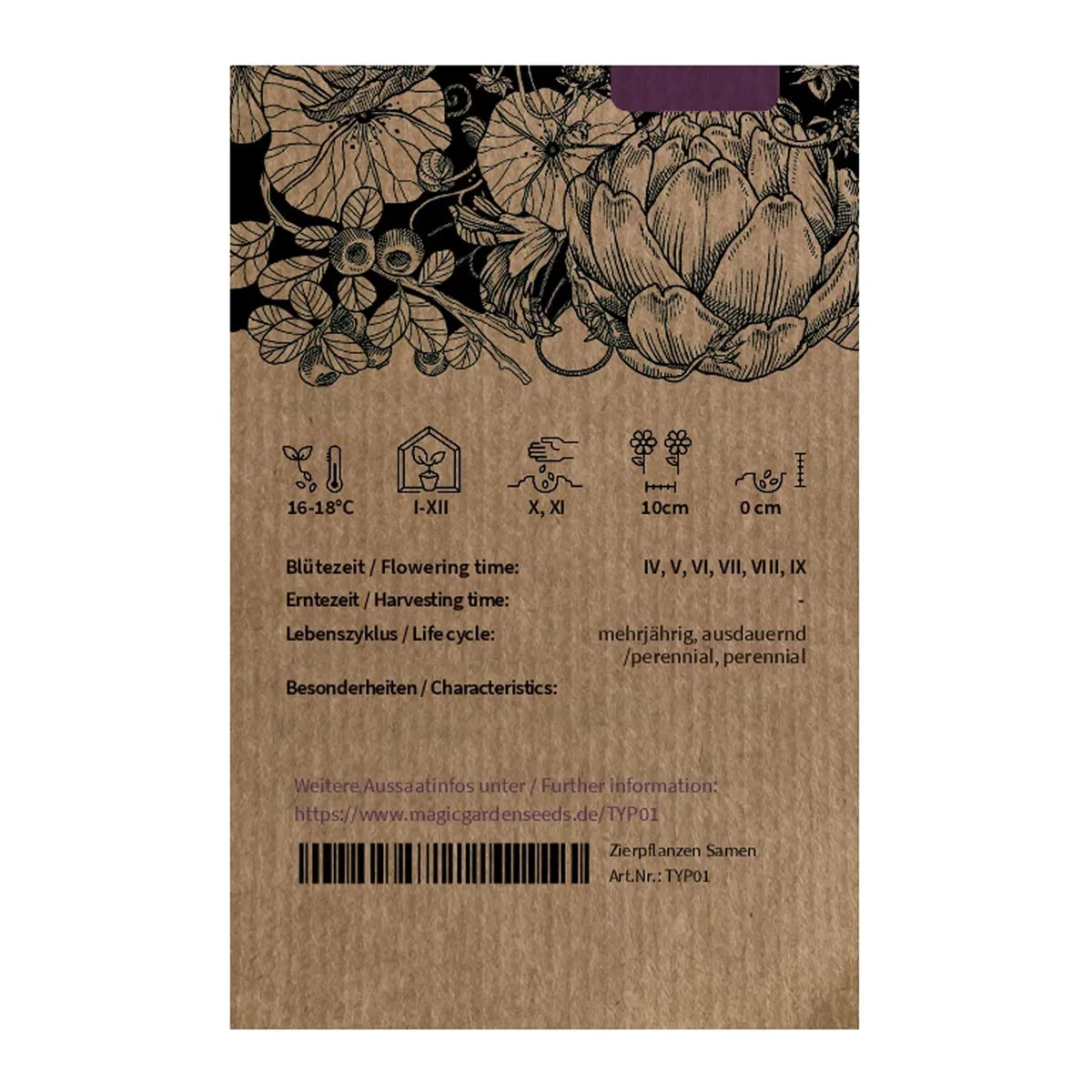
Broadleaf Cattail/ Reedmace (Typha latifolia) seeds
- Bullrush grows in moist locations. The young sprouts are considered a very tasty vegetable.
- Contents: Approx. 1000 seeds
- Open-pollinated variety, seed tested regularly
Regular price:
€2.79
Content: 1000 Single seed
Product number: TYP01 GTIN: 4251420500007
Description
The broadleaf cattail is an important heirloom crop, which was rediscovered in the course of permaculture because of its very versatile use. It is a perennial, hardy water plant growing in shallow water up to 50 cm deep and often found on the edge of lakes, trenches, marshes and other slowly flowing waters .
The plant can reach a height of up to 3 m and spreads over time by means of its widely ramified rhizome.
All parts of the plant are usable: best known is the use of the dried stems for thatching and covering roofs. Leaves and stems of the fiber plant are also excellent for braiding baskets and mats
However, the knowledge about the culinary qualities of reedmace has largely disappeared, even though all parts of the plant are edible. The rhizome can be harvested all year round and is known as a tasty root vegetables which can be cooked like potatoes. It can also be dried and ground and added to flour, since it contains a lot of protein and starch and is very suitable for baking.
The fresh shoots harvested in spring are very tasty. They have a light cucumber flavor and are prepared like asparagus. Also the flowers and seeds can be used in various ways in the kitchen. Immature inflorescences can be stir-fried or cooked in soups and have a sweet aroma reminiscent of maize.
Furthermore, broadleaf cattail is also known as a popular medicinal herb. Cultivation in watertight buckets or on the pond edge in the garden is highly recommended, as the harvest of wild plants involves the risk of an accumulation of heavy metals and toxins in the usable parts of the plants. Reedmance is often planted for the cleaning of polluted waters.
Plant profile
| Lifecycle | Hardy, Perennial |
|---|---|
| Species | Typhaceae |
| Characteristics | Needs light to germinate |
| Eventual height | 1-3 m |
| Flower colour | Brown, Green |
| Flowering months | April, August, July, June, May, September |
| Root system | Rhizome |
Growing instructions
| When to sow outdoors | November, October |
|---|---|
| Sowing depth | 0 cm |
| Germination temperature | 15-20°C |
| Sunlight | Full sun |
| Planting distance | 10 cm |
Sowing and care
Sow the seeds broadcast on moist soil. Thinly cover with earth and keep warm. The soil must remain constantly moist - for this purpose it is best to place the pot in another container with approx. 3 cm of water ('swamp method'). When the seedlings are large enough, plant them in pots and continue to keep them submerged. Plant them out in summer. Edges of ponds and wet meadows with lots of sun are perfect locations. Tolerates up to 50 cm water depth.
Other names
Botanical name: Thypha latifolia
German: Breitblättriger Rohrkolben
English: Reedmace, Broadleaf cattail, Bullrush, Nailrod
Reviews
Login
No reviews yet. Will you write the first one?