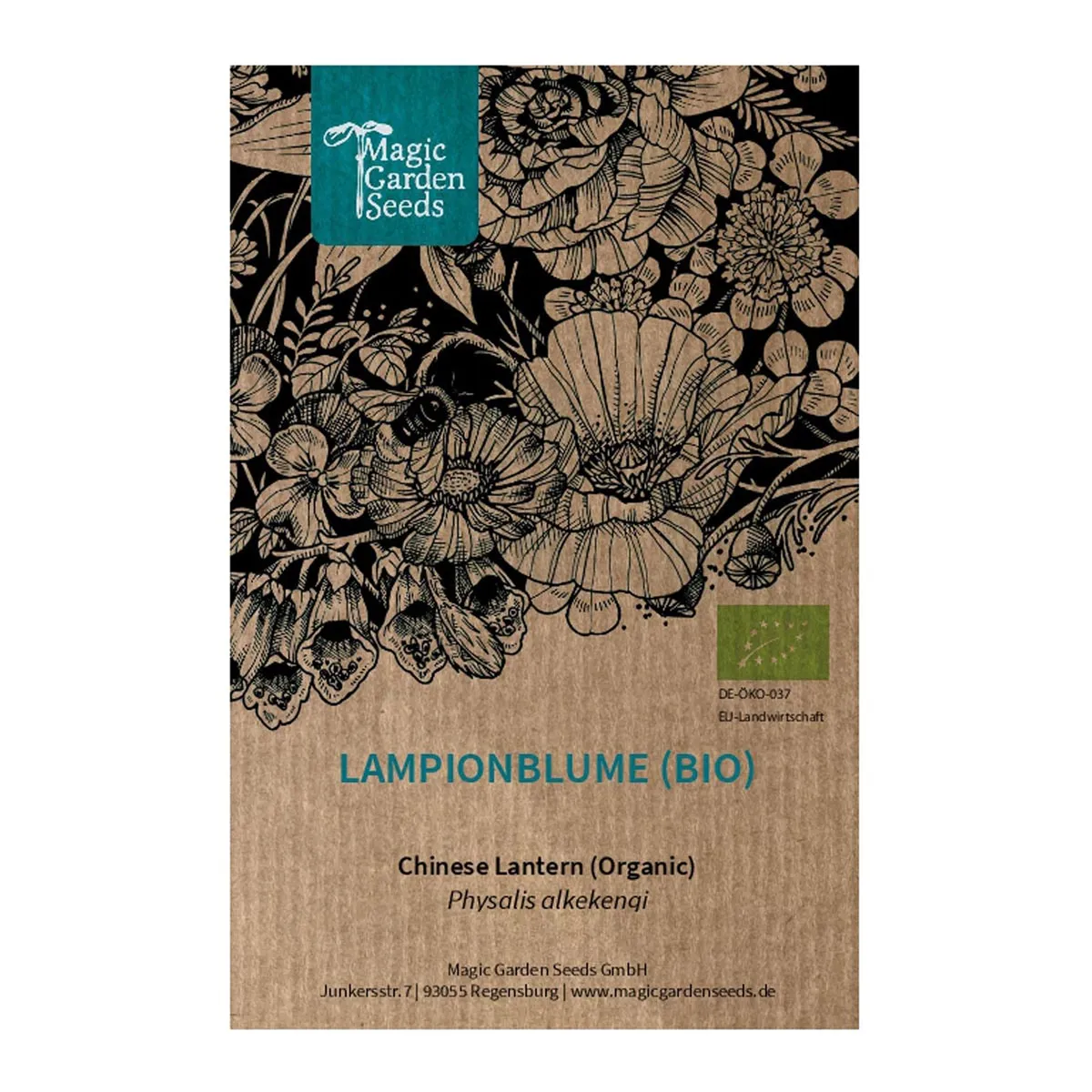
Chinese Lantern (Physalis alkekengi) organic seeds
- In Japan, the seeds are used as a sacrifice for the deceased ancestors at the Obon celebration. Also in Europe, wild perennial shrub with decorative lampion fruits.
- Contents: Approx. 100 seeds
- Open-pollinated variety, seed tested regularly
€3.39
Description
Decorative Autumn Beauty with Cultural Significance
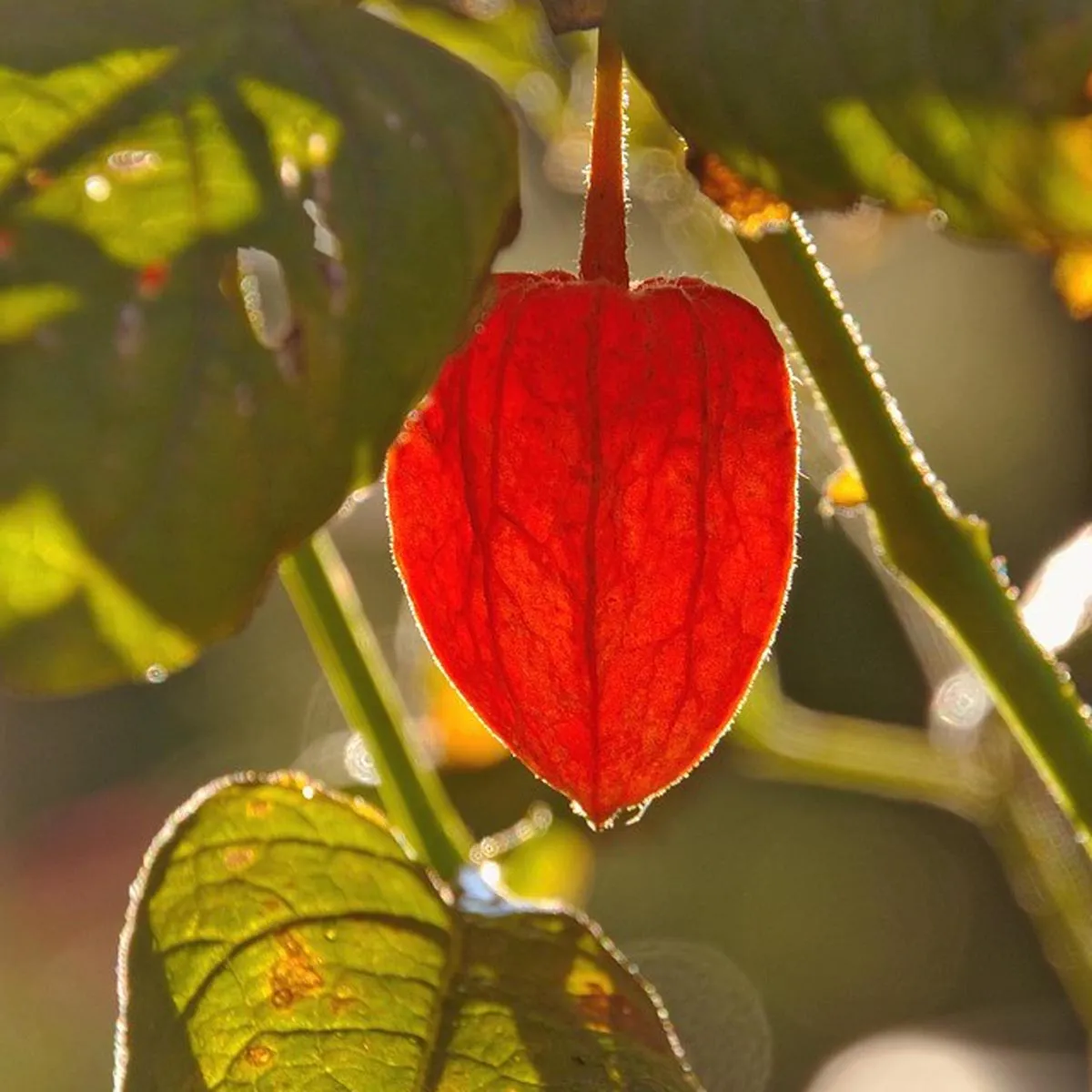
The Chinese lantern plant (Physalis alkekengi) is a hardy, easy-care perennial, best known for its striking, orange-coloured fruiting husks. Resembling small paper lanterns, these husks give the plant not only its name but also its unique ornamental appeal. Even in winter, the dried husks retain their vivid colour and intricate structure, making them ideal for dried arrangements and autumn decorations.
Originally native to regions stretching from Southern Europe to Southeast Asia, the Chinese lantern plant has become a popular ornamental feature in many gardens. In Japan, it plays a special role in the Obon Festival, where its seeds are offered symbolically to honour the spirits of the deceased. This cultural connection makes the plant both visually and symbolically fascinating.
Important: All parts of the plant are mildly toxic and should not be confused with edible physalis species such as the Cape gooseberry (Physalis peruviana).
Plant profile
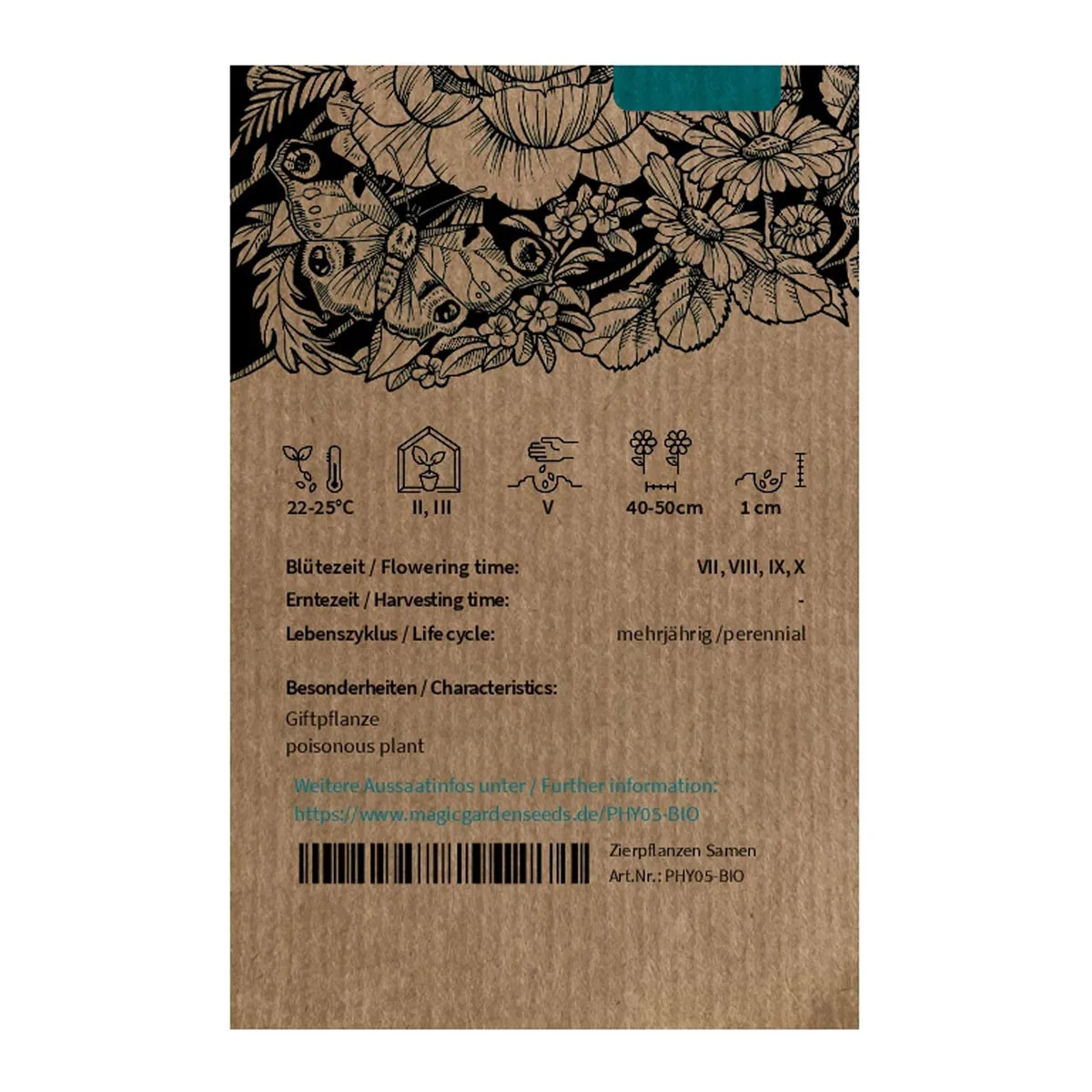
| Plant type | Herbaceous plant |
|---|---|
| Lifecycle | Perennial |
| Species | Solanaceae |
| Region of origin | Asia, Eastern Europe, Southern Europe |
| Characteristics | Poisonous plant |
| Eventual height | 40-80 cm |
| Flower colour | White |
| Flowering months | August, July, October, September |
| Fruit colour | Orange |
| Root system | Rhizome |
| Winter hardiness zones | 7 (-18 bis -12 °C) |
Growing instructions
| When to sow outdoors | May |
|---|---|
| Sowing depth | 1 cm |
| Germination temperature | 22-28°C |
| Climate | Temperate |
| Soil type | Chalky |
| Sunlight | Full sun, Shade |
| Water requirement | Medium |
| Planting distance | 50 cm |
| Good companion plants | Bellflower, Comfrey, Daylily, Yellow Loosestrife |
Sowing and care
Sowing and Care of the Chinese Lantern Plant
- Plant type: Hardy, vigorous perennial
- Sowing: Start indoors from February or direct sow outdoors from May
- Location: Sunny to partially shaded; well-drained, fertile soil
- Care: Very robust; occasional watering; no special feeding required
- Spread: Tends to form strong runners – root barrier recommended
- Use: Flower beds, naturalistic gardens, dried arrangements, symbolic plant
With its distinctive fruiting husks, easy cultivation and symbolic significance, the Chinese lantern plant is a long-lived, decorative addition to gardens and floral arrangements – striking, steeped in tradition, and low-maintenance.
Other names
Botanical name: Physalis alkekengi
German: Lampionblume
English: Bladder Cherry, Chinese Lantern, Japanese-Lantern, Strawberry Groundcherry, Winter Cherry
French: l'Alkékenge, la Lanterne japonaise, l'Amour en cage, la Lanterne chinoise,
Italian: L'alkekengi, alchechengi, alchechengio, Frutto di Kenjo,
Spanish: linterna china, alquequenje, vejiga de perro,
Login