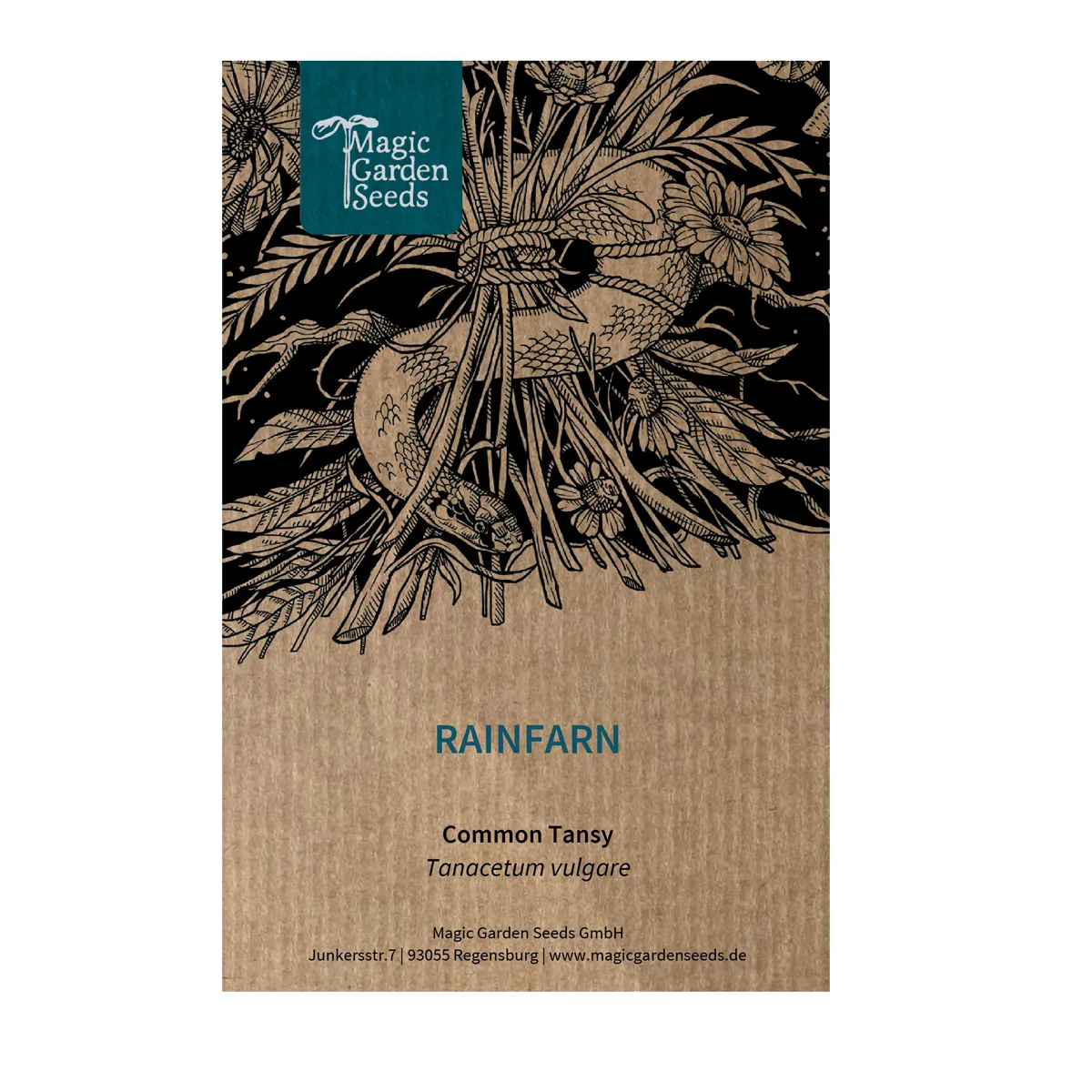
Common Tansy (Tanacetum vulgare) seeds
- Indigenous wild shrub for near-natural gardens. Also a traditional medicinal plant. Is also fumigated.
- Contents: Approx. 800 seeds
- Open-pollinated variety, seed tested regularly
Regular price:
€2.49
Product number: TAN02 GTIN: 4251420520388
Description
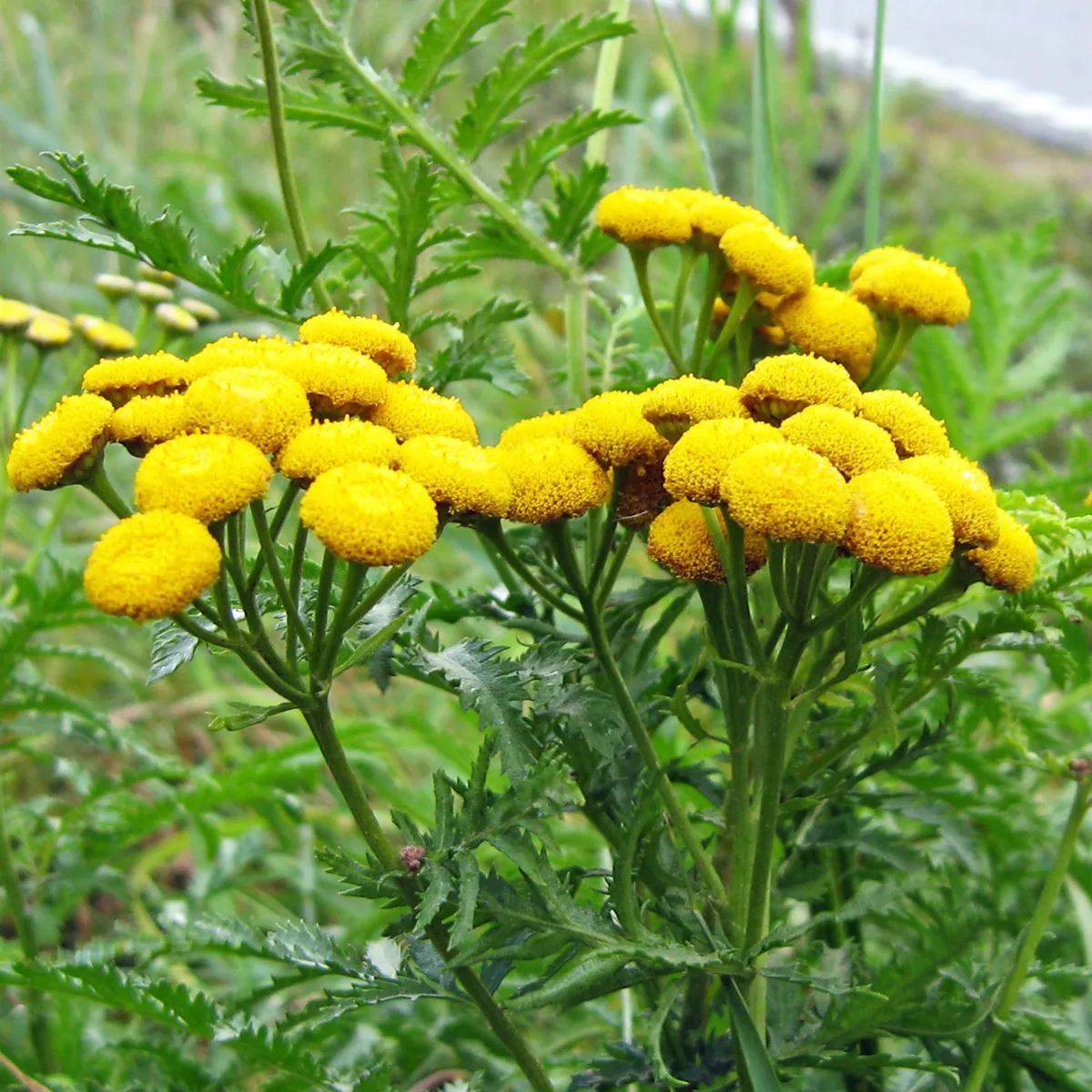
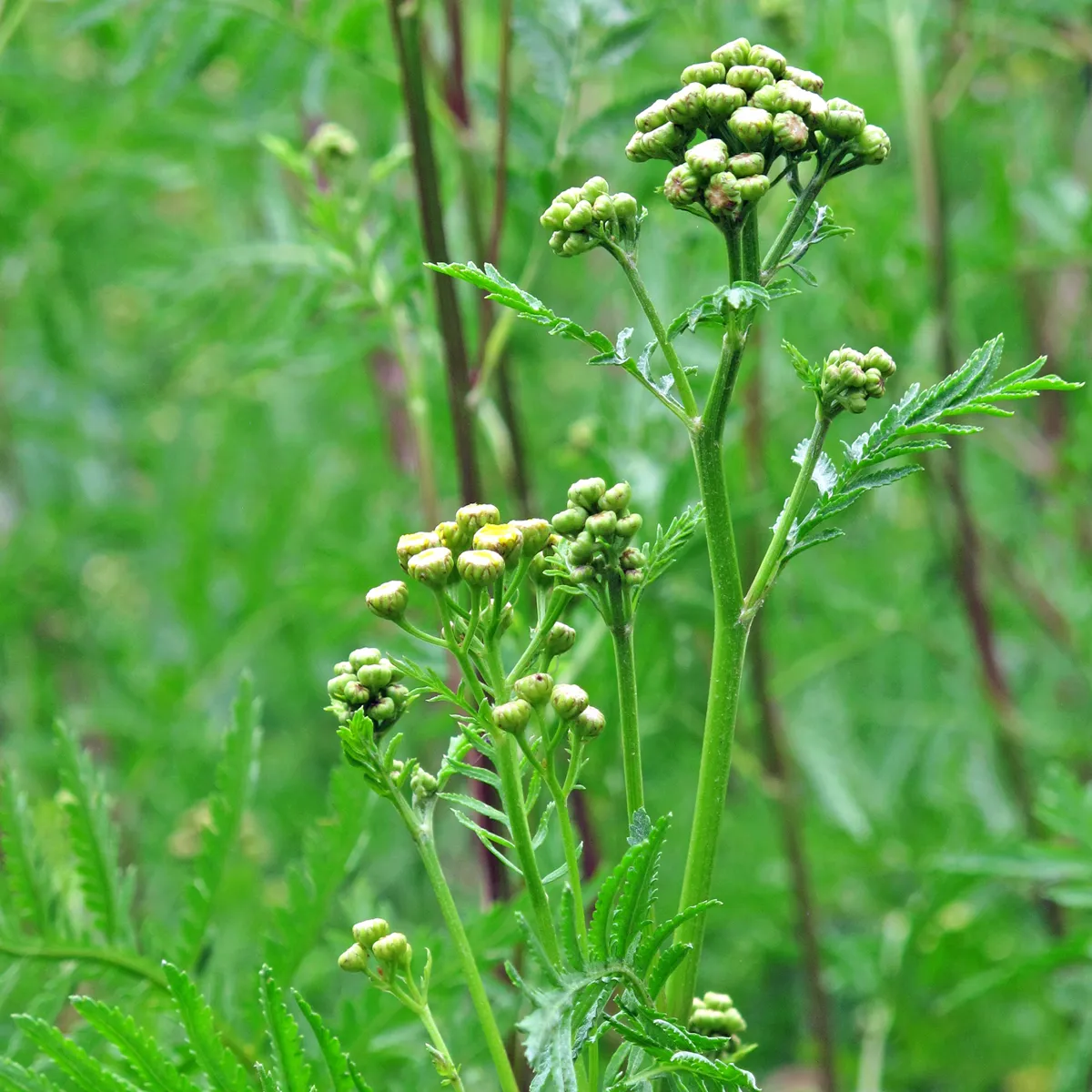
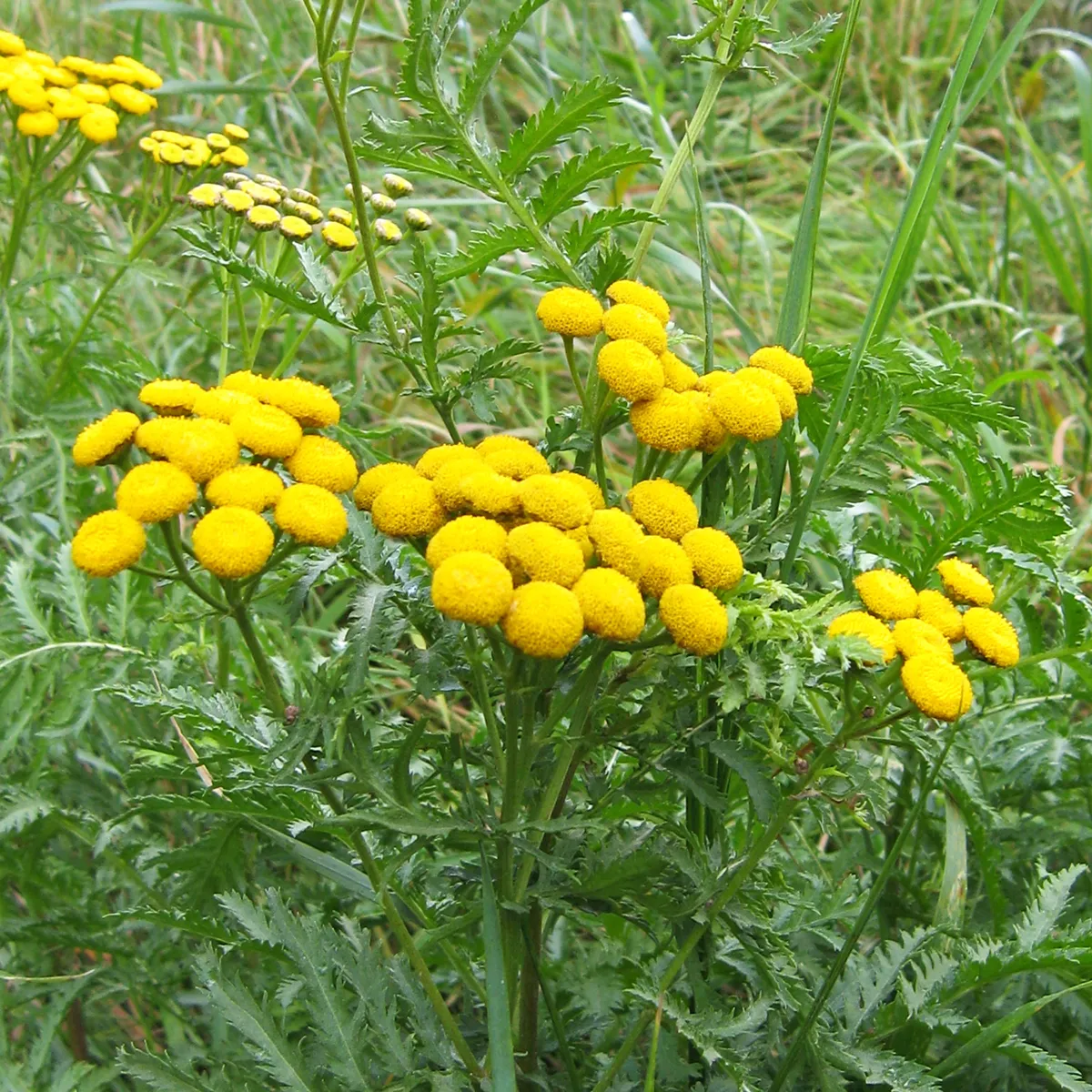
Tansy is a very aromatic native wild perennial and a traditional old medicinal and dye plant. Since the leaves are very rich in essential oils, the whole plant emits a very distinctive, spicy scent that is either loved or despised. The scent and the essential oils make tansy a good natural plant protection plant. Planted next to potatoes, it is said to drastically reduce the infestation of potato beetles. If you make a tansy tonic from the above-ground parts of the plant, it can be used very effectively to strengthen and protect strawberries, blackberries, and raspberries against some chewing pests.
The antiseptic effect of the plant made it a well-known medicinal plant in antiquity. It became known as the remedy of choice for worm infestations. The German name 'Wurmkraut' (worm herb) is derived from this use. However, it is important to know that tansy is a toxic plant, and even small amounts of tansy oil can cause severe poisoning symptoms. In sensitive people, touching the plant can cause mild contact allergies.
The flower heads of tansy are very suitable for dyeing fabrics. Depending on the addition of mordants, a dark yellow or dark green colour is produced.
In nature, tansy is often found along plant-rich roadsides, waste places, and riverbanks. It is an important host plant for some caterpillars, butterflies, and beetles.
Plant profile
| Plant type | Herbaceous plant |
|---|---|
| Lifecycle | Perennial |
| Species | Asteraceae |
| Region of origin | Asia, Europe |
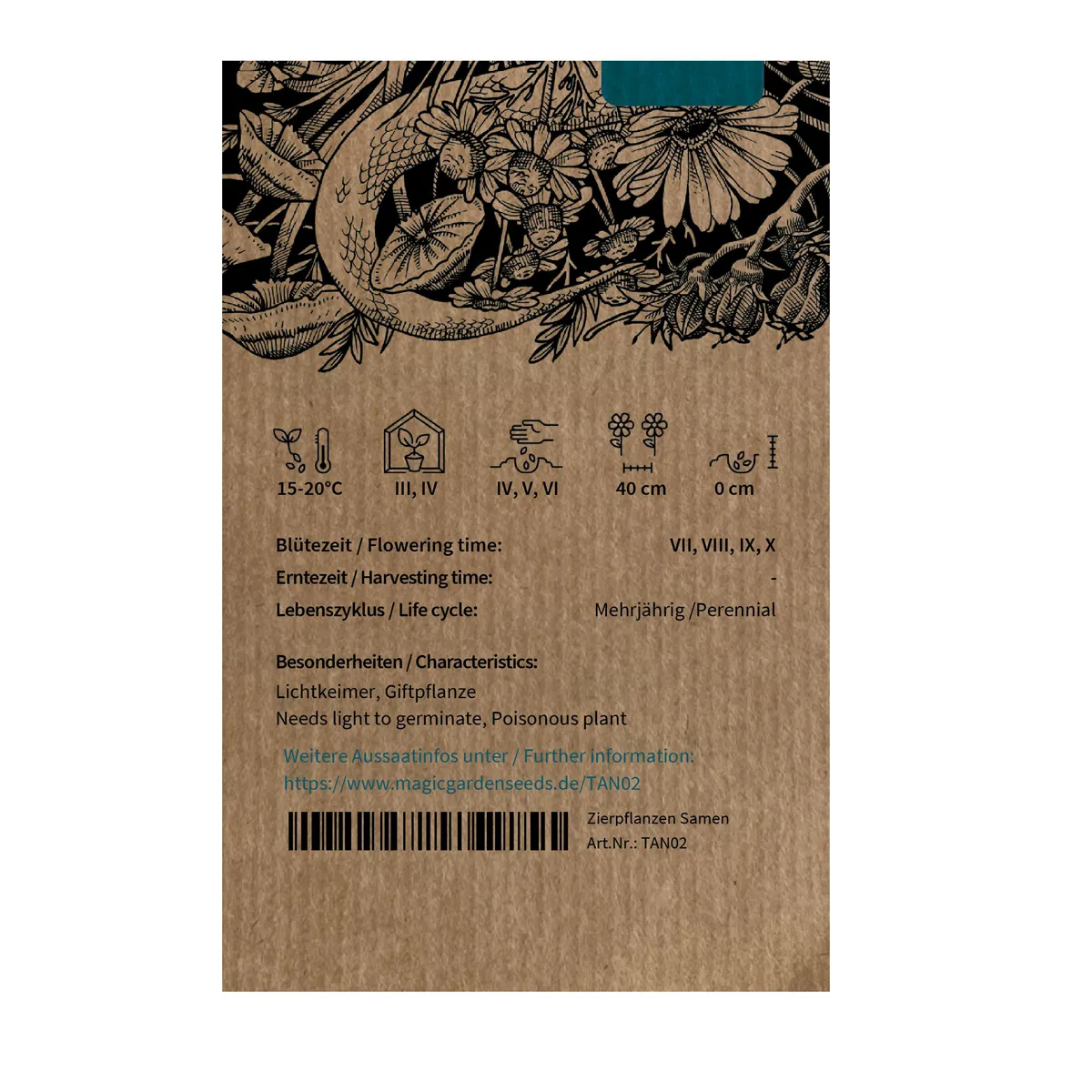
| Characteristics | Needs light to germinate, Poisonous plant |
| Eventual height | 30-150 cm |
| Flower colour | Yellow |
| Flowering months | August, July, October, September |
| Root system | Heart roots, Rhizome, Runners |
| Winter hardiness zones | 5 (-30 bis -23 °C) |
Growing instructions
| When to sow outdoors | April, June, May |
|---|---|
| Sowing depth | 0 cm |
| Germination temperature | 15-20°C |
| Climate | Temperate |
| Soil type | Dry, Free-draining, Humus-rich, Moist |
| Sunlight | Full sun |
| Water requirement | Medium |
| Planting distance | 40 cm |
Sowing and care
Perennial wildflower. Pre-culture from March indoors or direct sowing outdoors from mid-April. Sprinkle seeds only on the substrate and press lightly. Germination uncomplicated. Seedlings can be placed outdoors from mid-May. Loves sunny, rather dry locations.
Other names
Botanical name: Tanacetum vulgare
German: Rainfarn, Wurmkraut,
English: Common Tansy
French: Tanaisie commune
Italian: Tanaceto
Spanish: Tanaceto
Dutch: Boerenwormkruid
Reviews
Login
No reviews yet. Will you write the first one?