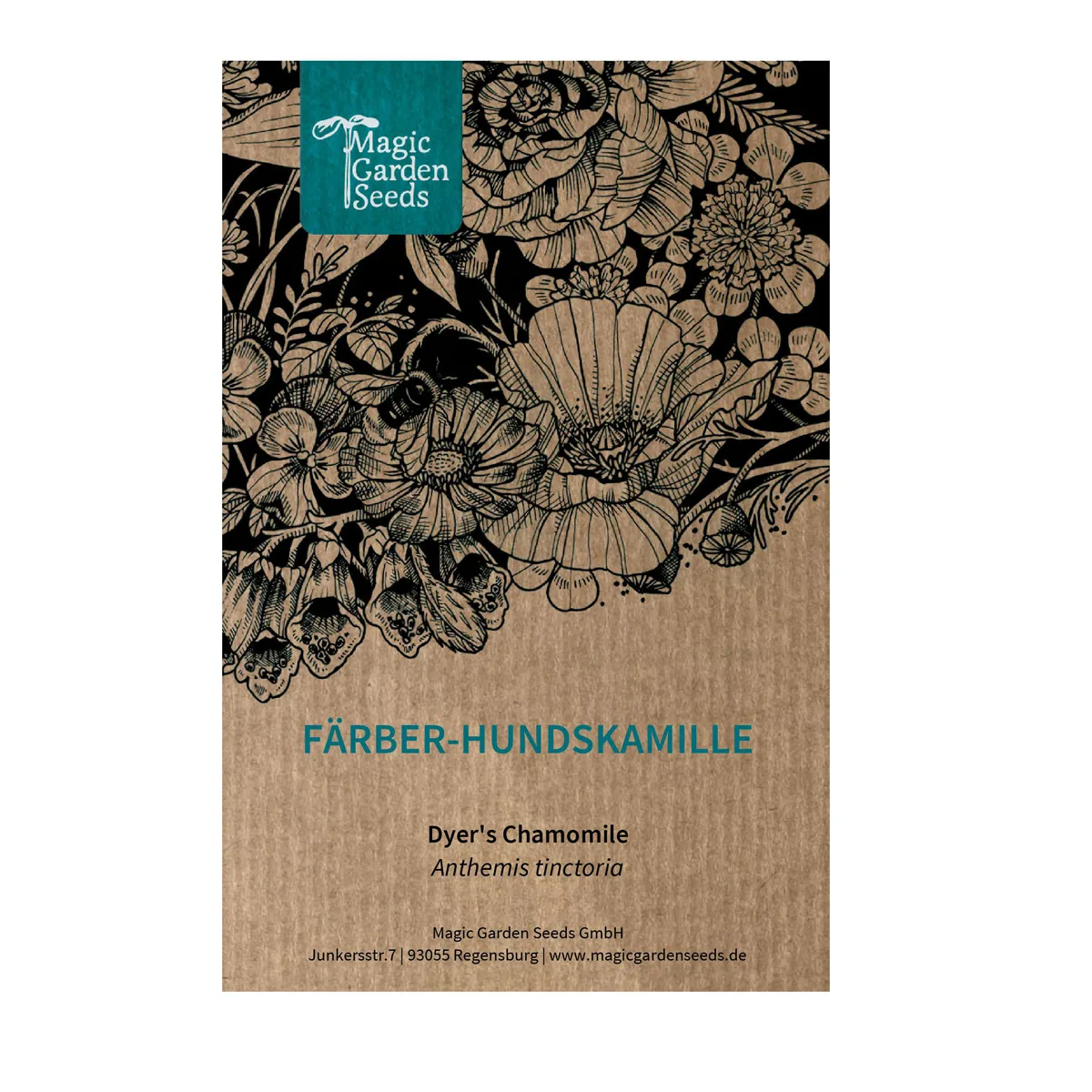
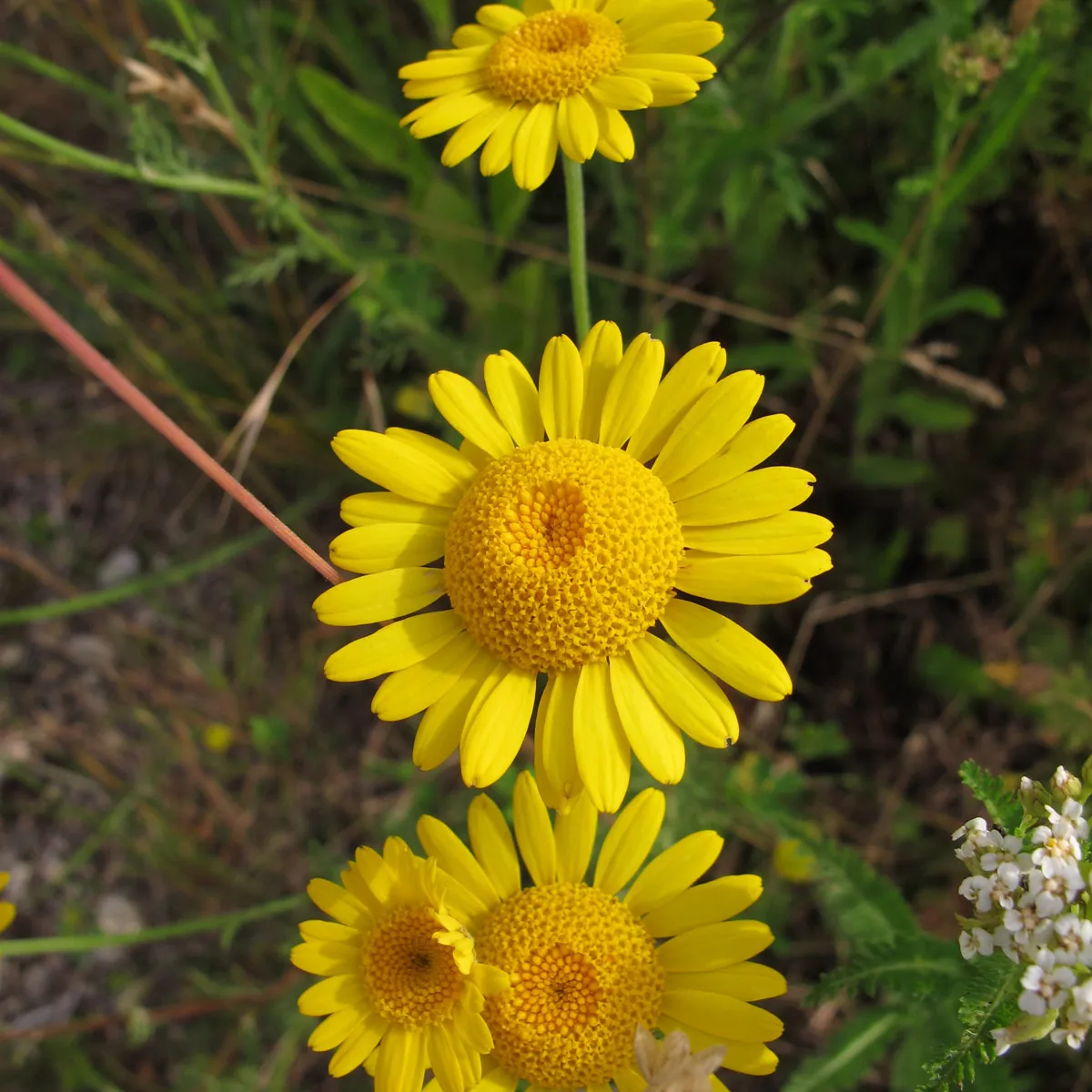
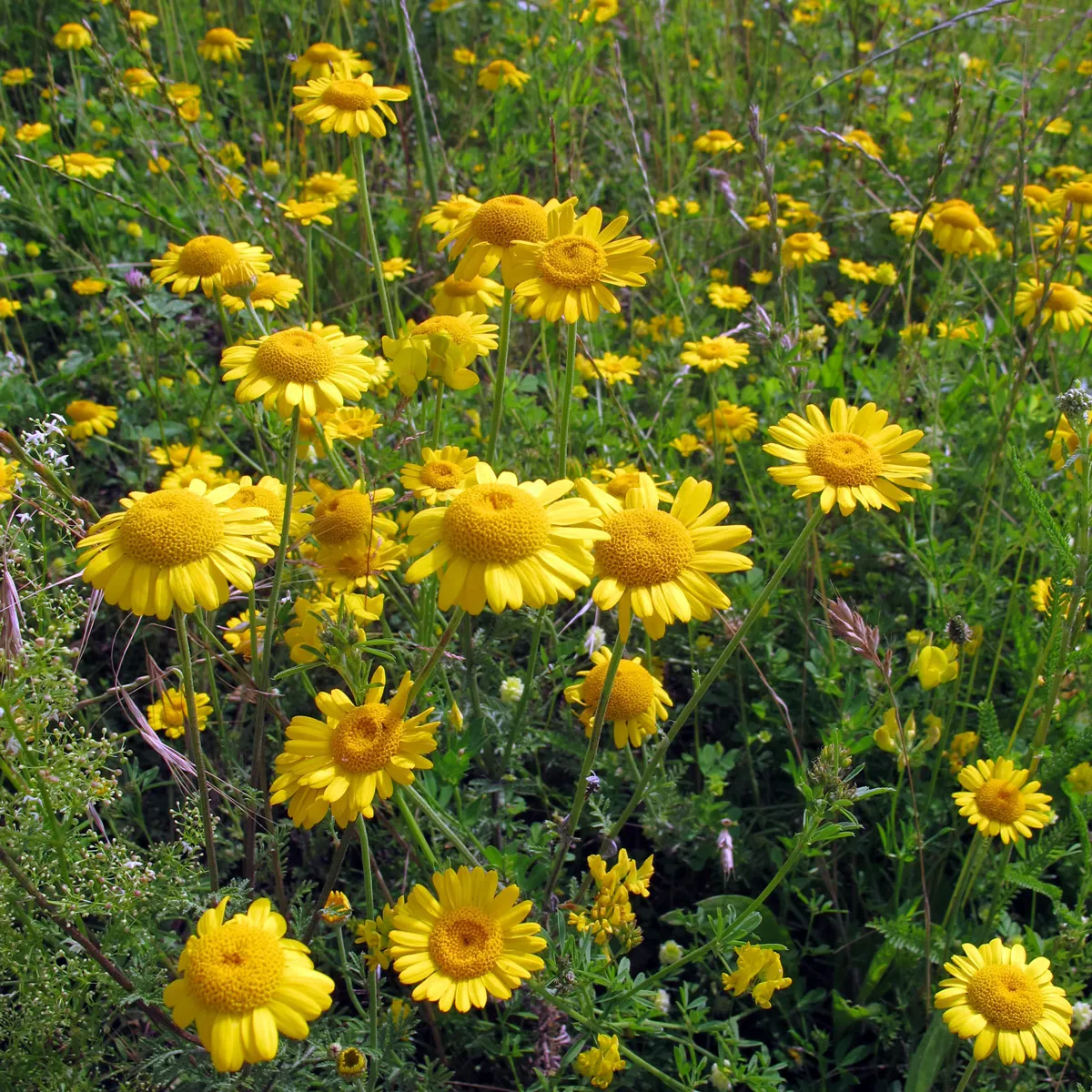
Dyer's Chamomile (Anthemis tinctoria) seeds
- Dyer's Chamomile was traditionally used to dye fabrics in bright shades of yellow, is valued for its soothing properties for digestive complaints and skin conditions, and also attracts a wide variety of insects.
- Contents: Approx. 800 seeds.
- Open-pollinated variety, seed tested regularly.
€2.59
Description
It bears its name for good reason - for centuries it was used to dye textiles. As early as antiquity, people valued its colouring properties and used it to produce radiant yellow shades. The flowers contain natural pigments which, combined with different mordants, can create a range of yellow tones. At a time when synthetic dyes were still unknown, Dyer's Chamomile played an important role in textile production.
Beyond its use as a dye plant, Dyer's Chamomile has also long been appreciated for its soothing properties. In traditional herbal medicine it has been used for digestive complaints, menstrual discomfort and minor skin conditions. Its anti-inflammatory and calming qualities make it a valued ingredient in herbal teas and ointments.
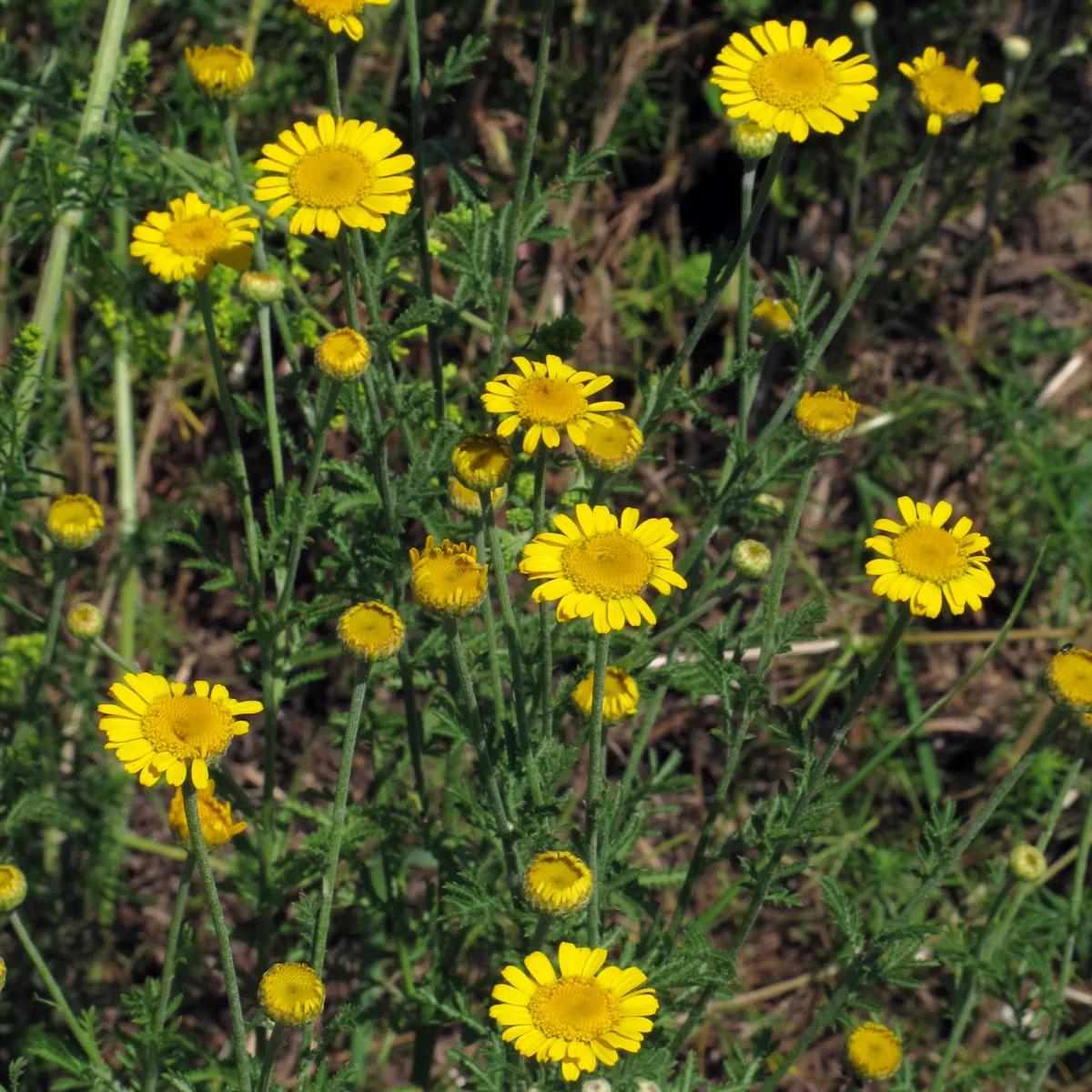
The bright yellow blooms are not only eye-catching for us, but also attract a wide range of insects. Bees, butterflies and other pollinators are drawn to the flowers, helping to create a vibrant and healthy garden habitat. This hardy perennial is highly drought-tolerant and ideal for naturalistic plantings or rock gardens. A long-flowering perennial, it also performs beautifully as a cut flower, bringing lasting colour into your home.
Plant profile
| Plant type | Herbaceous plant, Wildflower |
|---|---|
| Use | Cut flower, Dye plant, Edible plant, Good insect food plant, Ornamental plant, Scented plant |
| Lifecycle | Biennial, Perennial |
| Species | Asteraceae |
| Seed propagation | Conventional production |
| Region of origin | Central Europe |
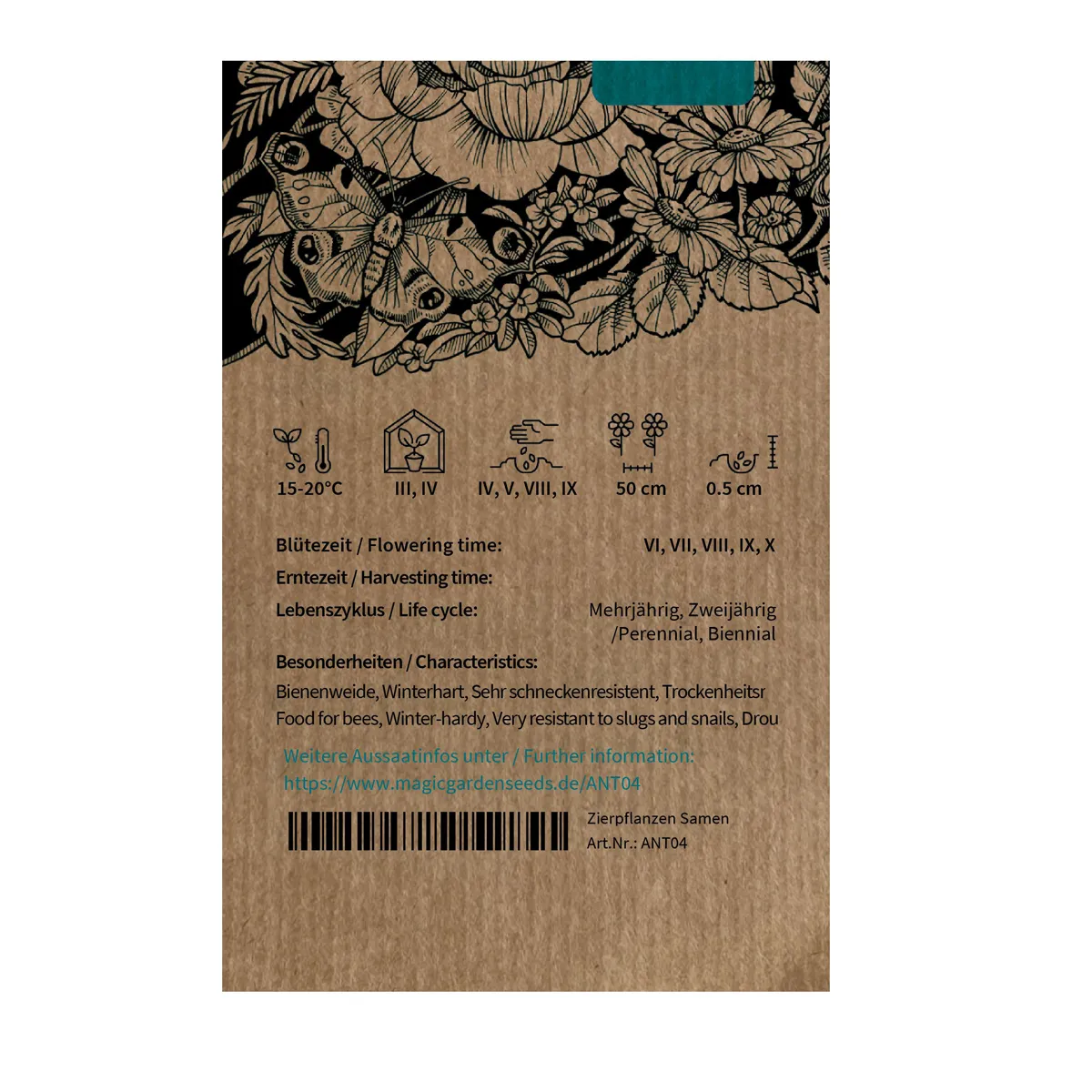
| Characteristics | Drought tolerant, Food for bees, Self-seeds, Very resistant to slugs and snails, Winter-hardy |
| Eventual height | 20-60 cm |
| Flower colour | Yellow |
| Flowering months | August, July, June, October, September |
| Winter hardiness zones | 6 (-23 bis -18 °C) |
Growing instructions
| When to sow outdoors | April, August, May, September |
|---|---|
| Sowing depth | 0.5 cm |
| Germination temperature | 15-20°C |
| Germination time | 1-2 weeks |
| Climate | Dry, Temperate |
| Soil type | Dry, Free-draining, Fresh, Low nutrient levels, Sandy |
| Sunlight | Full sun |
| Water requirement | Low |
| Nutrient requirements | Light feeder |
| Planting distance | 50 cm |
Sowing and care
Usually a perennial, though somewhat short-lived wildflower, which will readily self-seed in a suitable location. Sow directly outdoors in spring or autumn. Only lightly cover the seeds with soil and press down firmly. Keep evenly moist until germination.
This perennial prefers well-drained, poor soil and does not tolerate waterlogging at all.
Cutting back in August encourages a longer flowering period and keeps the plant compact and sturdy for the winter.
Other names
Botanical name: Anthemis tinctoria, Cota tinctoria,
German: Färberkamille, Färber-Hundskamille,
English: Dyer's Chamomile, Golden Marguerite, Yellow Chamomile, Oxeye Chamomile, Boston Daisy, Paris Daisy,
French: Anthémis des teinturiers, Camomille jaune, Cotta des teinturiers, Œil de bœuf
Italian: Camomilla dei tintori
Spanish: Margarita dorada, Camomila amarilla, Manzanilla de los tintoreros, Manzanilla de tintes
Dutch: Gele kamille
Login