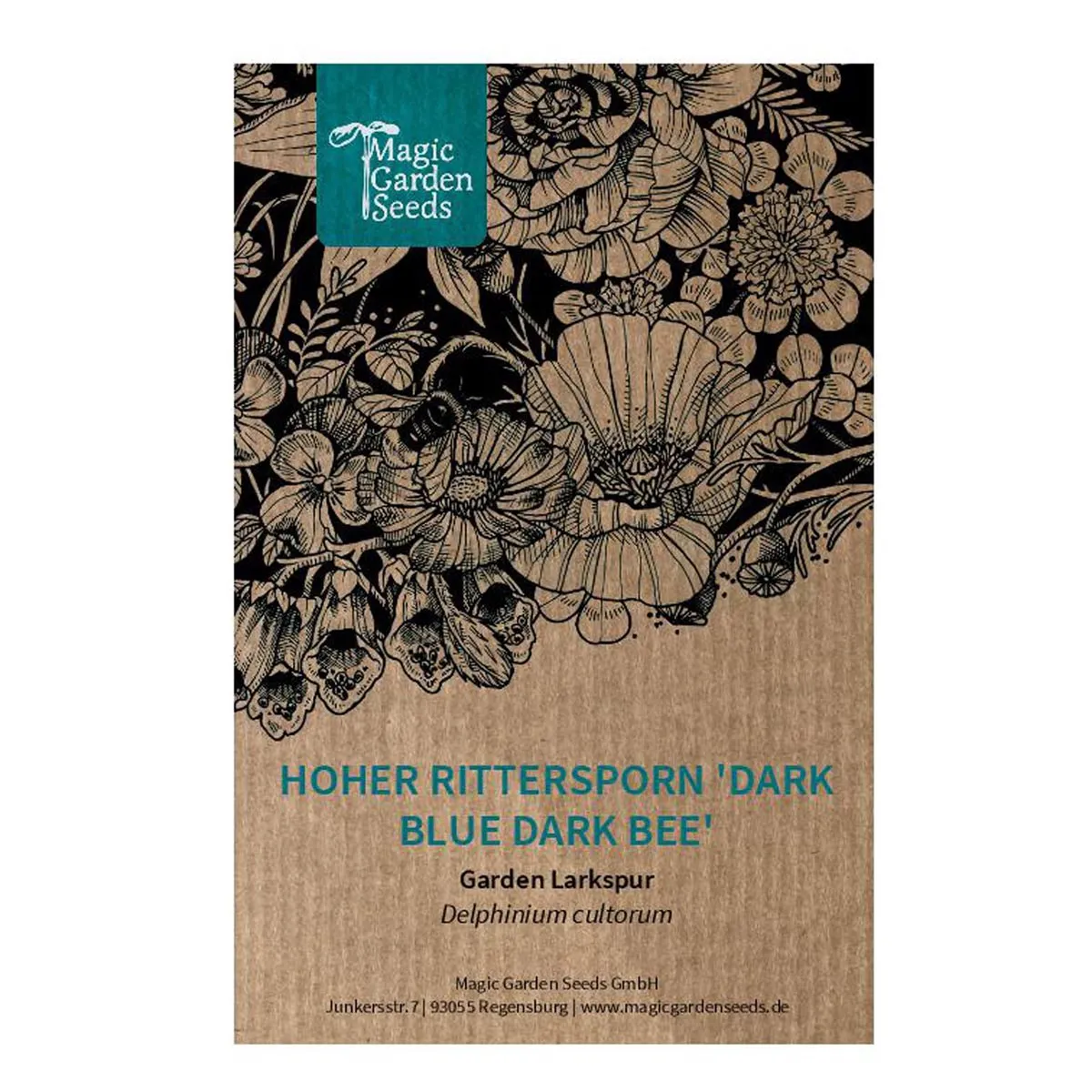
Garden Larkspur 'Magic Fountains-Dark Blue Dark Bee' (Delphinium cultorum) seeds
- Contents: Approx. 10 seeds
- Open-pollinated variety, seed tested regularly
Regular price:
€2.49
Product number: DEL02 GTIN: 4251420518026
Description
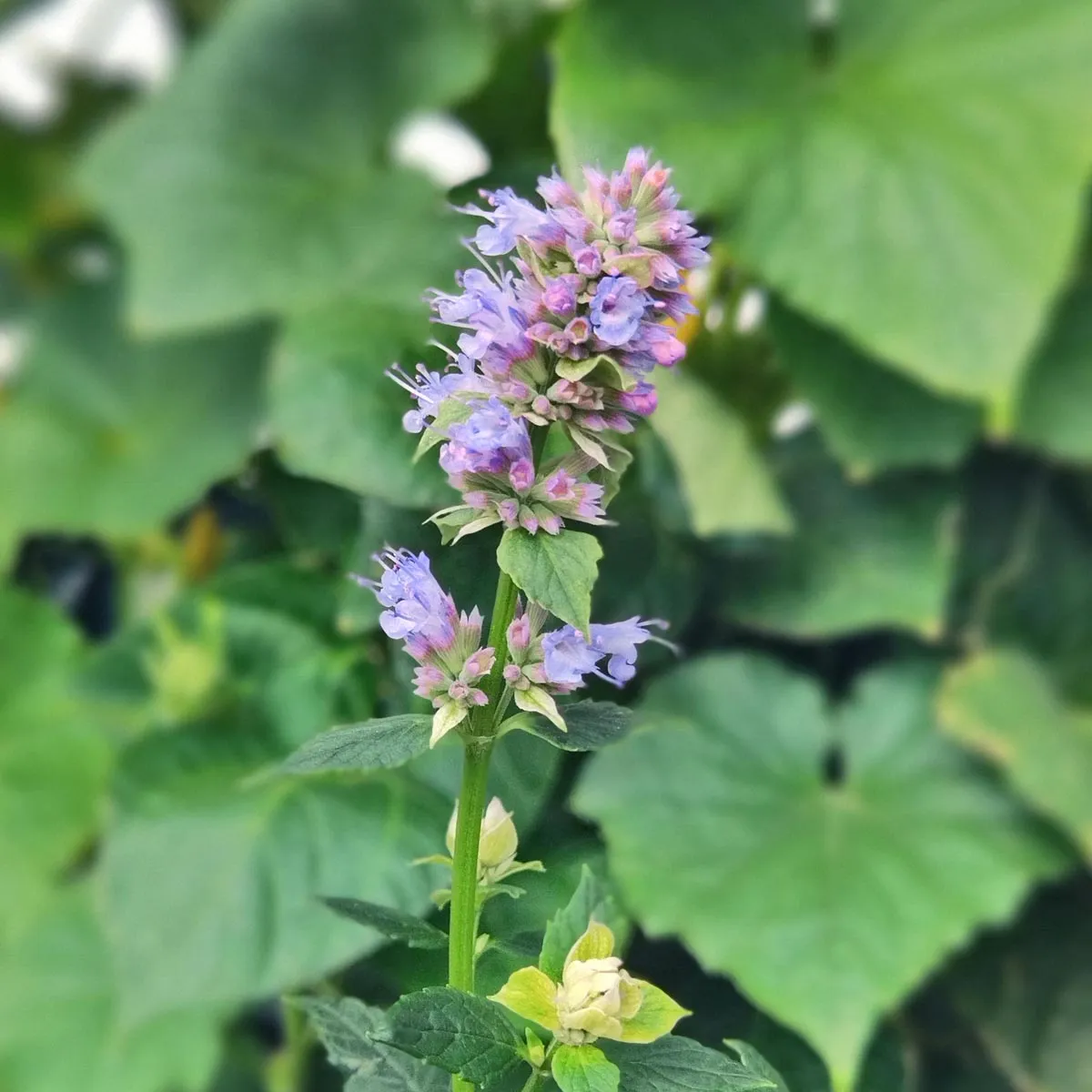
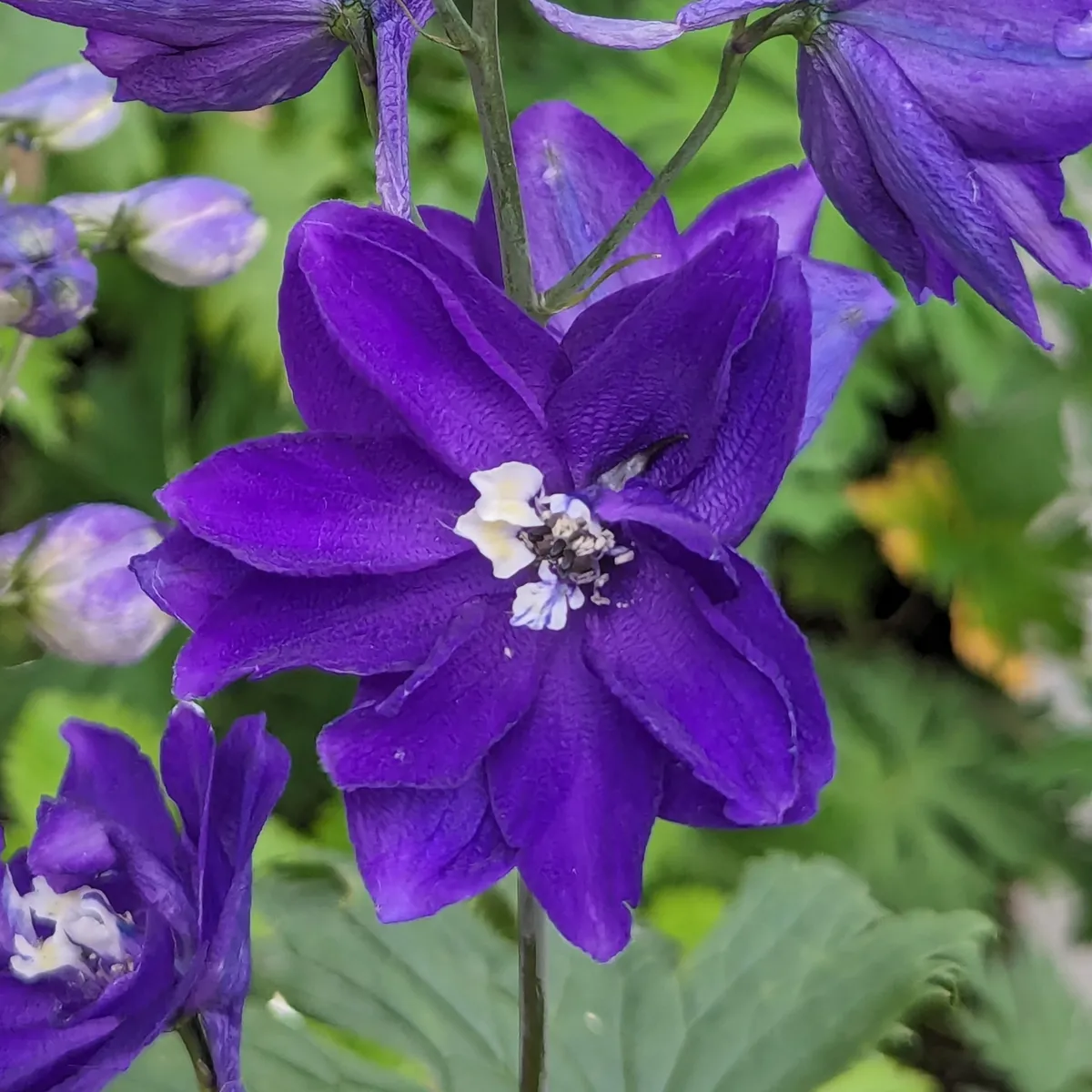
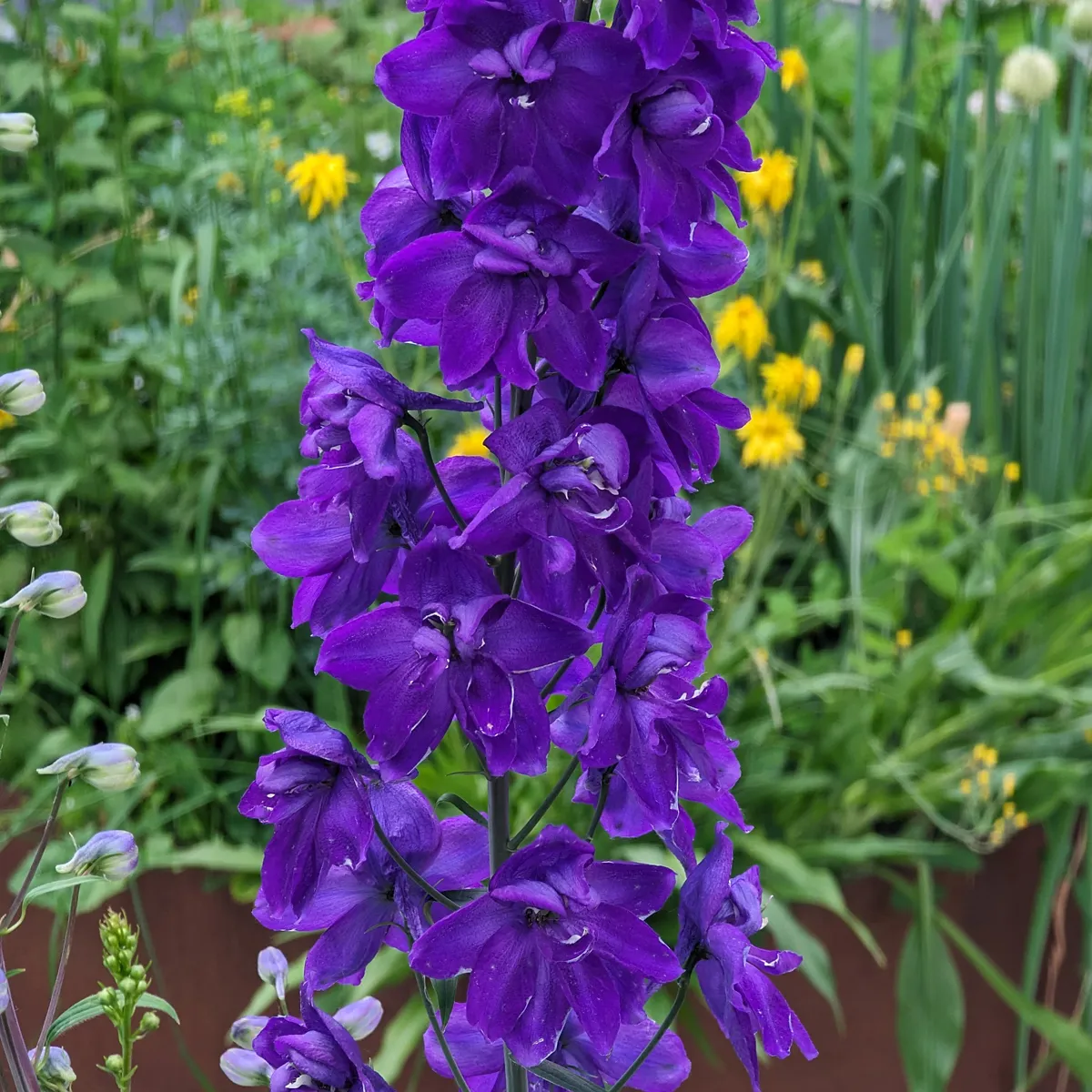
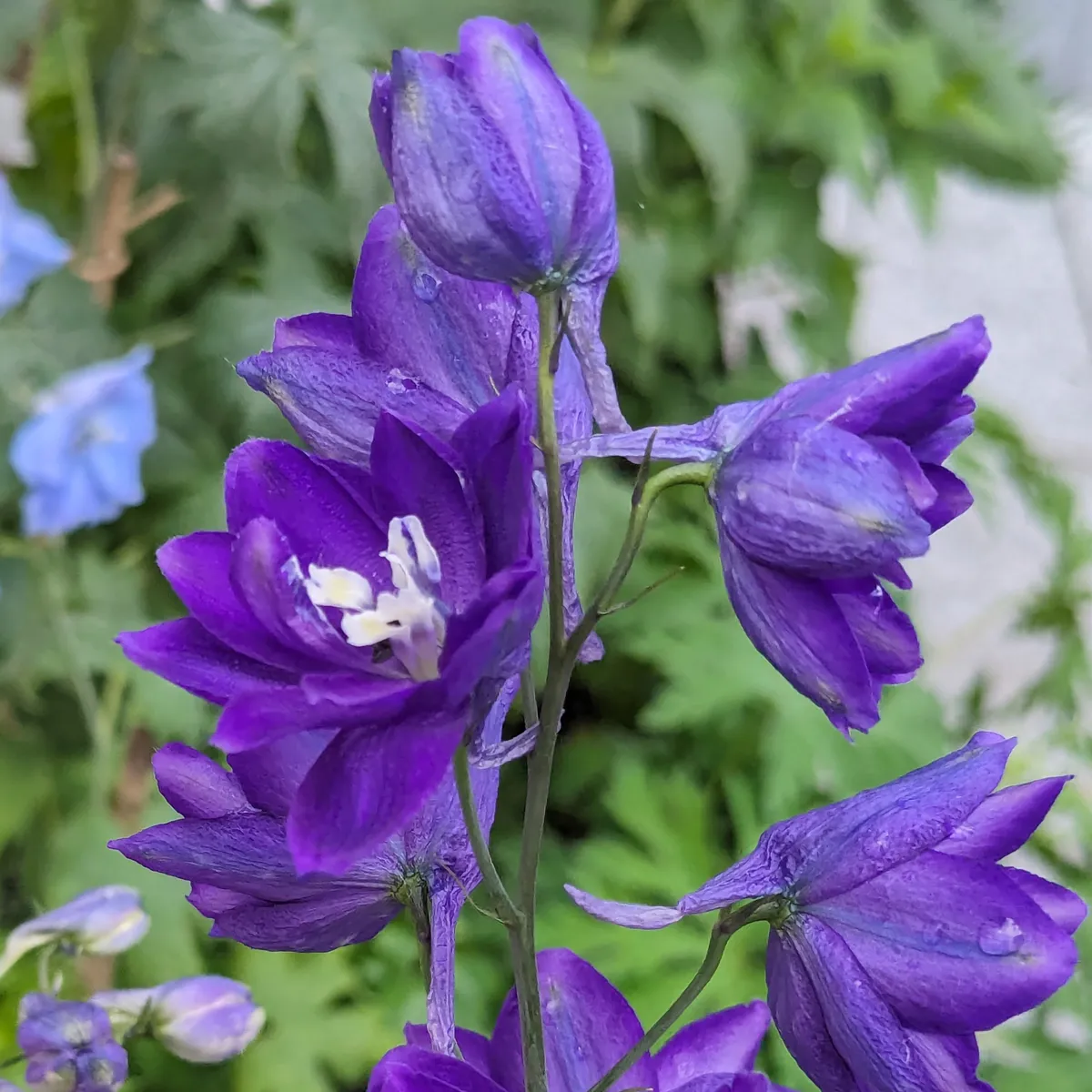
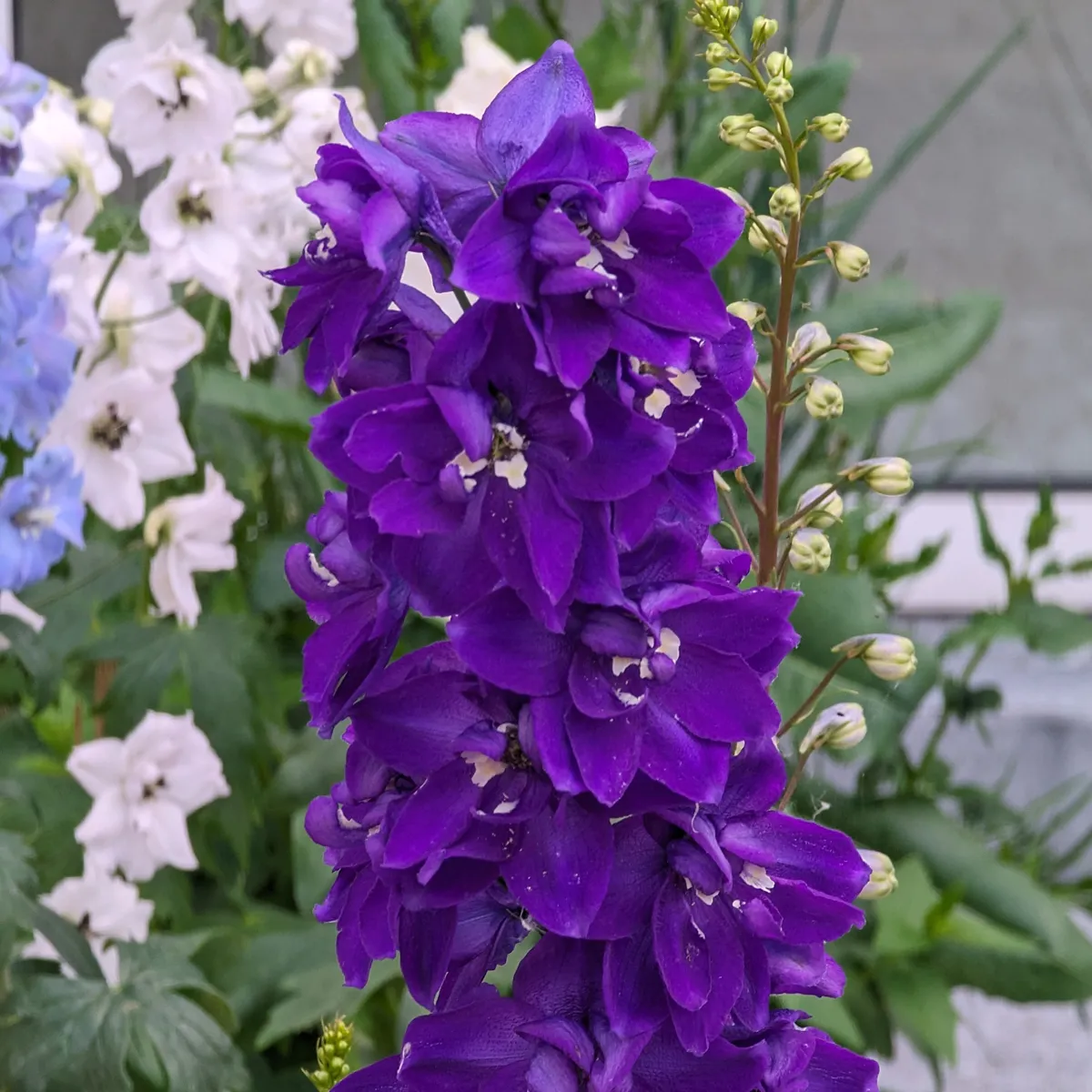
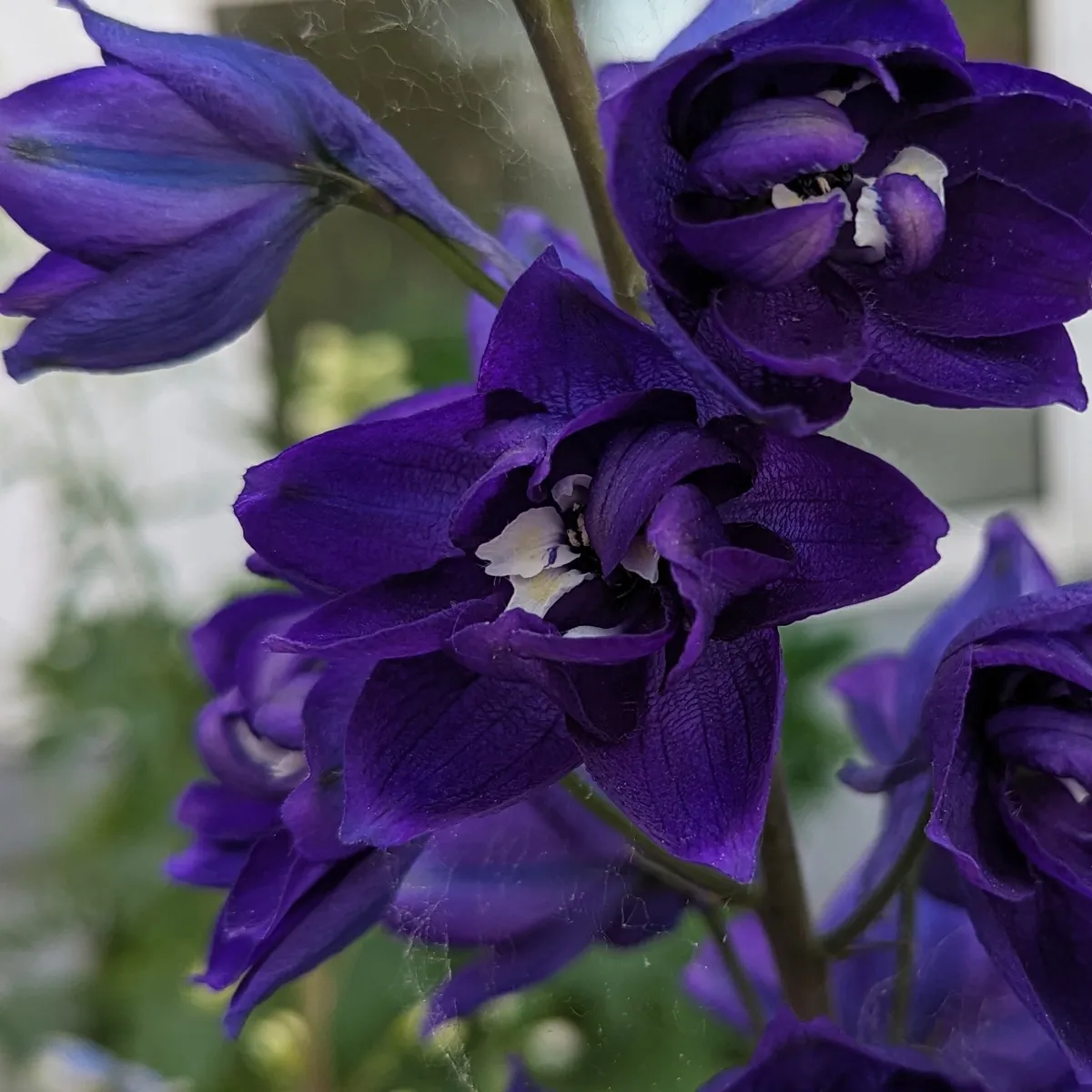
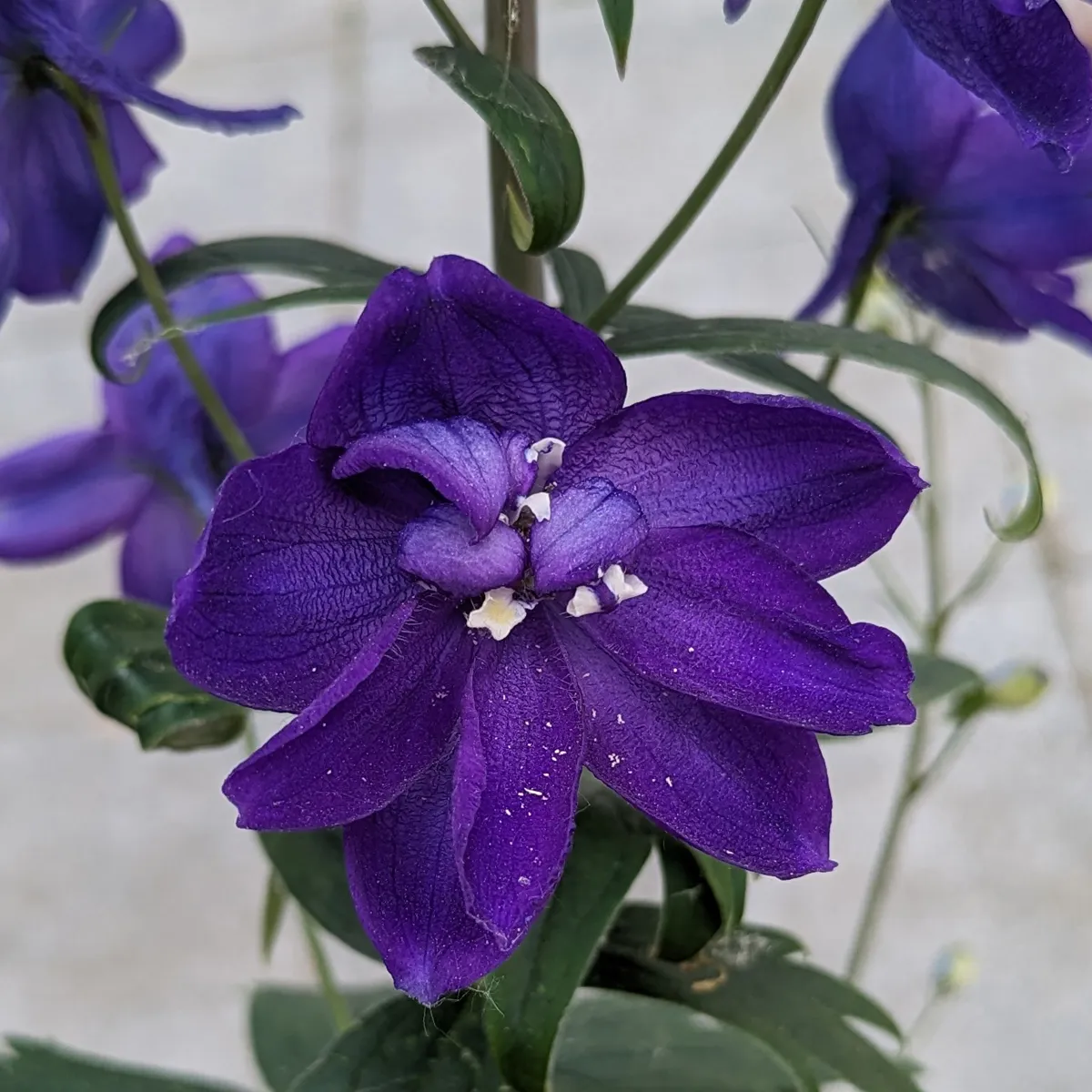
The variety 'Dark Blue Dark Bee' is a beautiful cultivar of the Garden Larkspur. The blossoms appear dark blue with a black blossom eye.
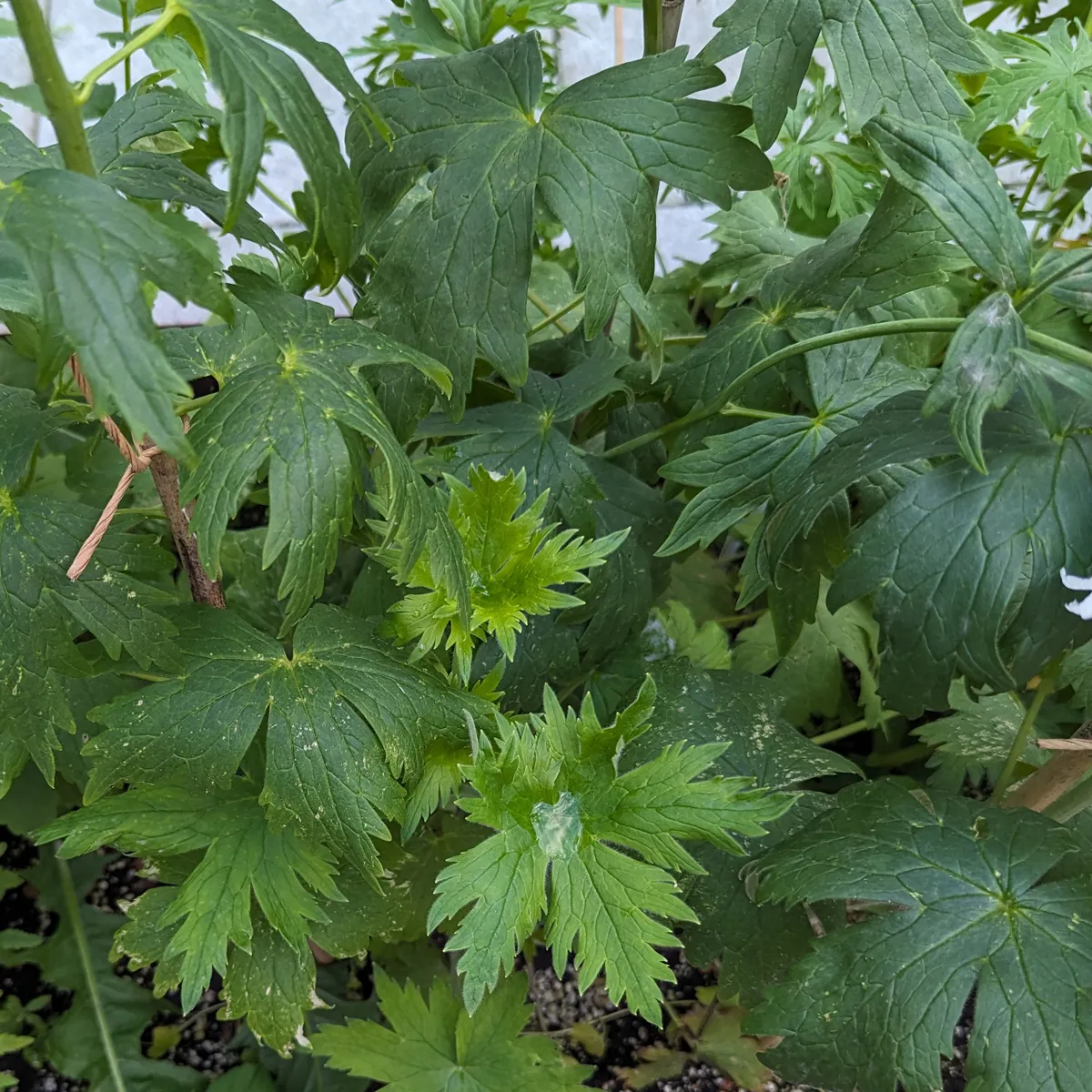
This garden larkspur variety belongs to the pacific type from the breeding group Magic Fountains. All associated varieties reach 80cm in height and, for this reason, remain rather small. That has the great advantage that the heavy inflorescences don't snap as easily as it may happen with the very high varieties. It, moreover, forms especially strong stalks and pleases with very green, bright foliage, which appears very beautiful in contrast to the blossom colour.
The garden larkspur has been cultivated since 1578 and belongs to the very classic, traditional decorative plants. Originally, it has been native to the Mediterranean region, respectively in some areas of Asia. There, it can be found in light forests, creek banks, moist rock heaps, and subalpine tall herbaceous vegetation until heights of up to 2000 metres. Its preferred location in the garden is especially warm, wind-protected, and sunny. However, the garden larkspur needs a shaded foot. Therefore, planting partners in direct proximity, which can provide enough shade, are recommended, for example, peonies, daylilies, or oriental poppy. If you cut the inflorescences back up to 20cm after the first blossom, it's likely to bloom a second time in late summer. These inflorescences can be left as it will then sow itself.
Garden larkspur is a must for the cottage garden and the splendid shrub bed. It's a very beautiful rose companion and grows well in the plant tub. Unfilled varieties are great honey plants. The inflorescences are tolerant to cutting and durable for the flower vase. Indeed, they can be dried well to continue to use them as dried flowers. Last but not least, you should absolutely know that all parts of the garden larkspur are very poisonous. For sure, due to some of the substances responsible for this, the plant had a short career as a medicinal plant. However, these days, this is only shown by the homeopathic remedy anymore.
Plant profile
| Plant type | Container plant, Herbaceous plant |
|---|---|
| Use | Container plant, Cut flower, Dried flower, Good insect food plant, Medicinal plant, Ornamental plant |
| Lifecycle | Perennial |
| Species | Ranunculaceae |
| Seed propagation | Conventional production |
| Region of origin | Asia, Mediterranean Region |
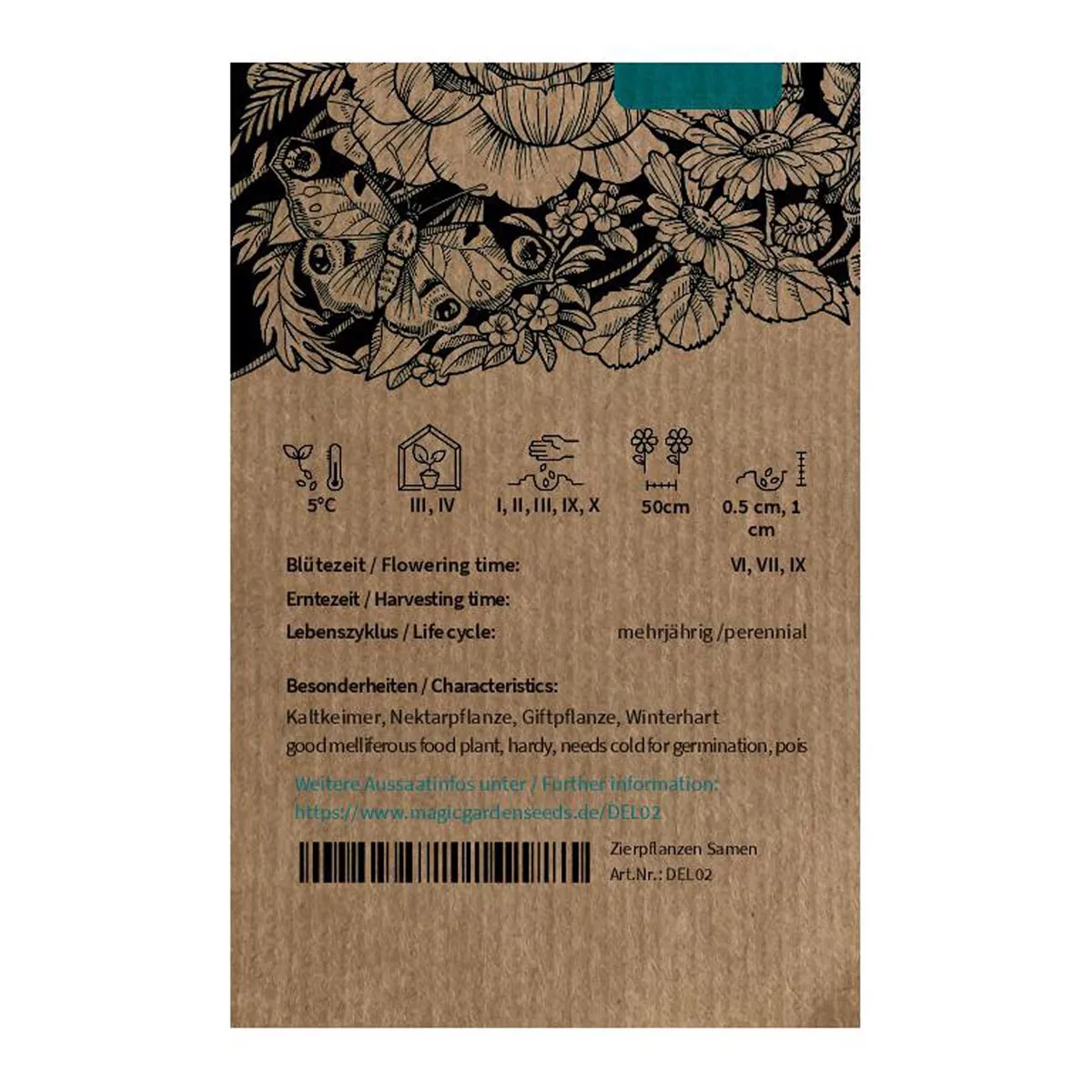
| Characteristics | Food for bees, Needs cold to germinate, Poisonous plant, Winter-hardy |
| Eventual height | 40-80 cm |
| Flower colour | Blue |
| Flowering months | July, June, September |
Growing instructions
| When to sow outdoors | February, January, March, October, September |
|---|---|
| Sowing depth | 0.5 cm, 1 cm |
| Germination temperature | 3-5°C |
| Germination time | 2-6 weeks |
| Climate | Temperate |
| Soil type | Chalky, Deep, Free-draining, Humus-rich, Nutrient-rich |
| Sunlight | Full sun, Shade |
| Water requirement | High |
| Nutrient requirements | Heavy feeder |
| Planting distance | 50 cm |
Sowing and care
Perennial shrub, cold germination: Sowing period outdoors at the beginning of spring or in autumn. Alternatively, a cold stratification of the seeds in the fridge is possible. Therefore, the seeds are mixed with a little bit of moist sowing compost (coconut soil is especially well suited) and packed into plastic bags. As the plastic bags are water-resistant, normally, you don't have to moisturize them again. In the following, the filled bags are first placed in an approx. 20°C warm location for 2-4 weeks. Then, the bags are placed in the fridge.
The fridge, therefore, has to be set as cold as possible: 5°C or a little bit less is ideal. The seeds should be controlled regularly (once per week) and, as soon as germination starts, sown into pots. Sowing depth: 0.5-1cm. The seedlings can be placed outdoors from mid-May.
Other names
Botanical name: Delphinium cultorum
German: Hoher Rittersporn, Pazifischer Rittersporn, Garten-Rittersporn, Bergrittersporn, Hochmut
English: Garden Larkspur, Garden Delphinium
French: Pied d’alouette, Dauphinelle
Reviews
Login
No reviews yet. Will you write the first one?