Garlic Mustard / Jack-By-The-Hedge (Alliaria Petiolata) seeds
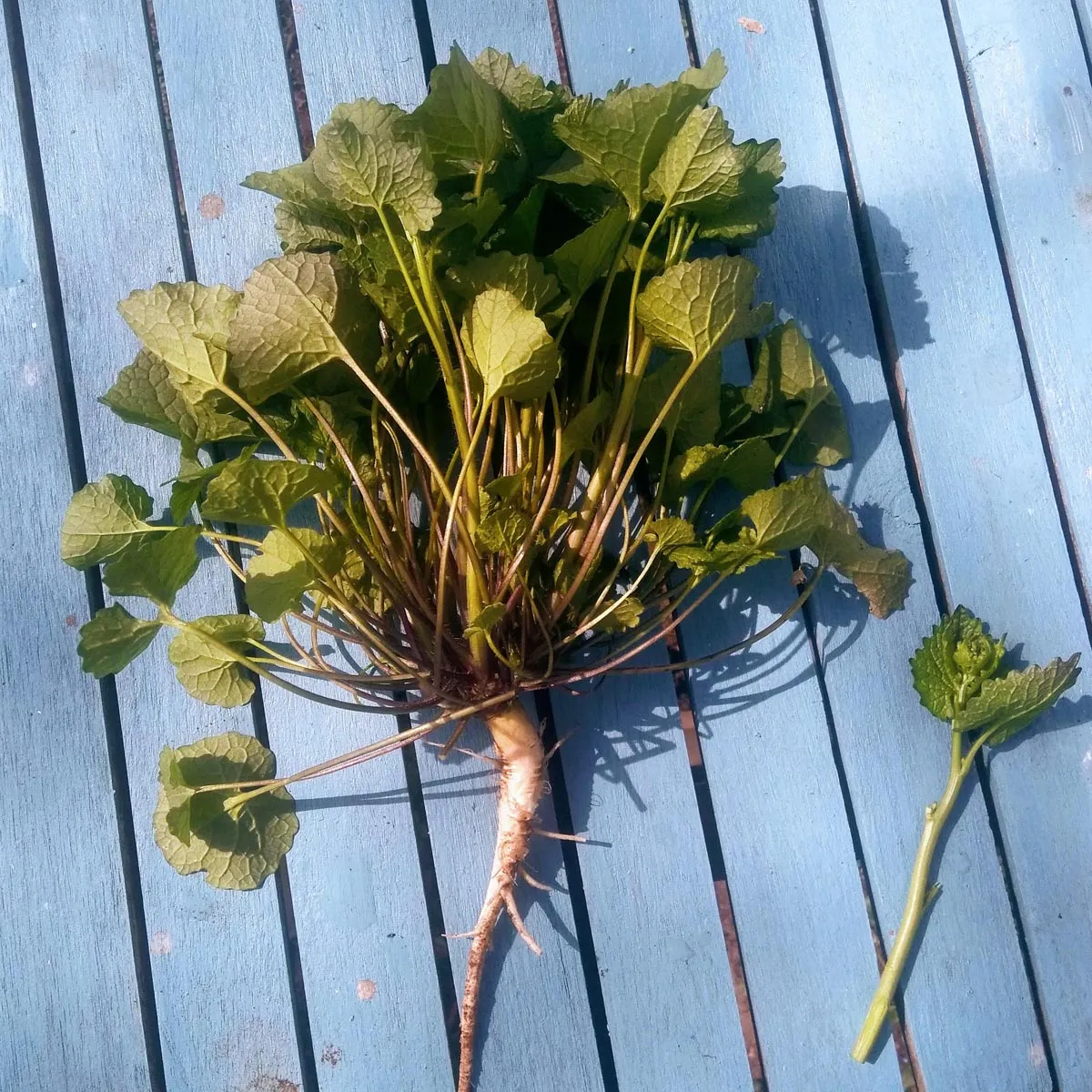
- Very popular spice and medicinal plant in the Middle Ages. The fresh leaves have a cress-like flavour and the unpeeled roots strongly resemble horse radish.
- Contents: Approx. 200 seeds
- Open-pollinated variety, seed tested regularly
€2.29
Description
Garlic flavour from the dappled shade
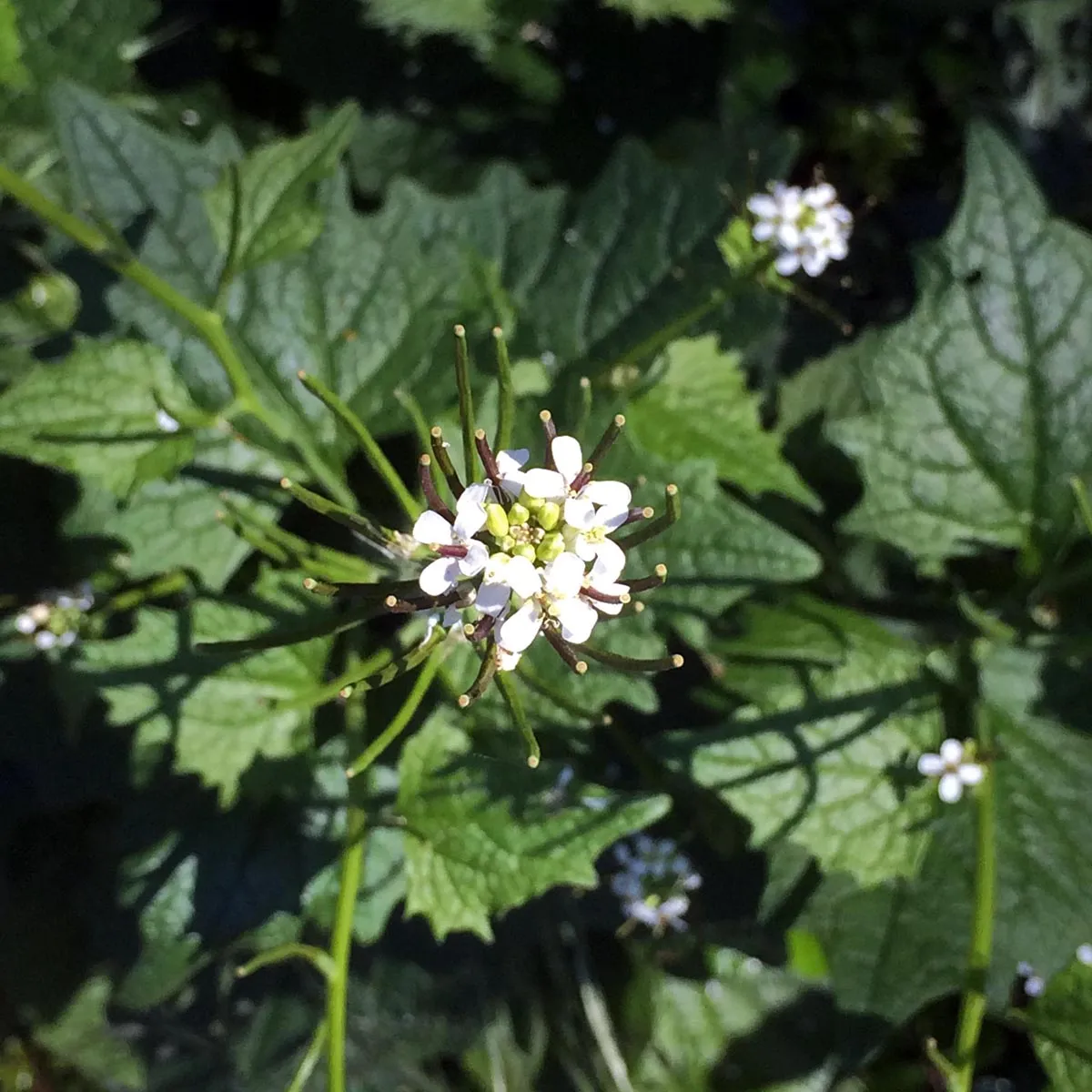
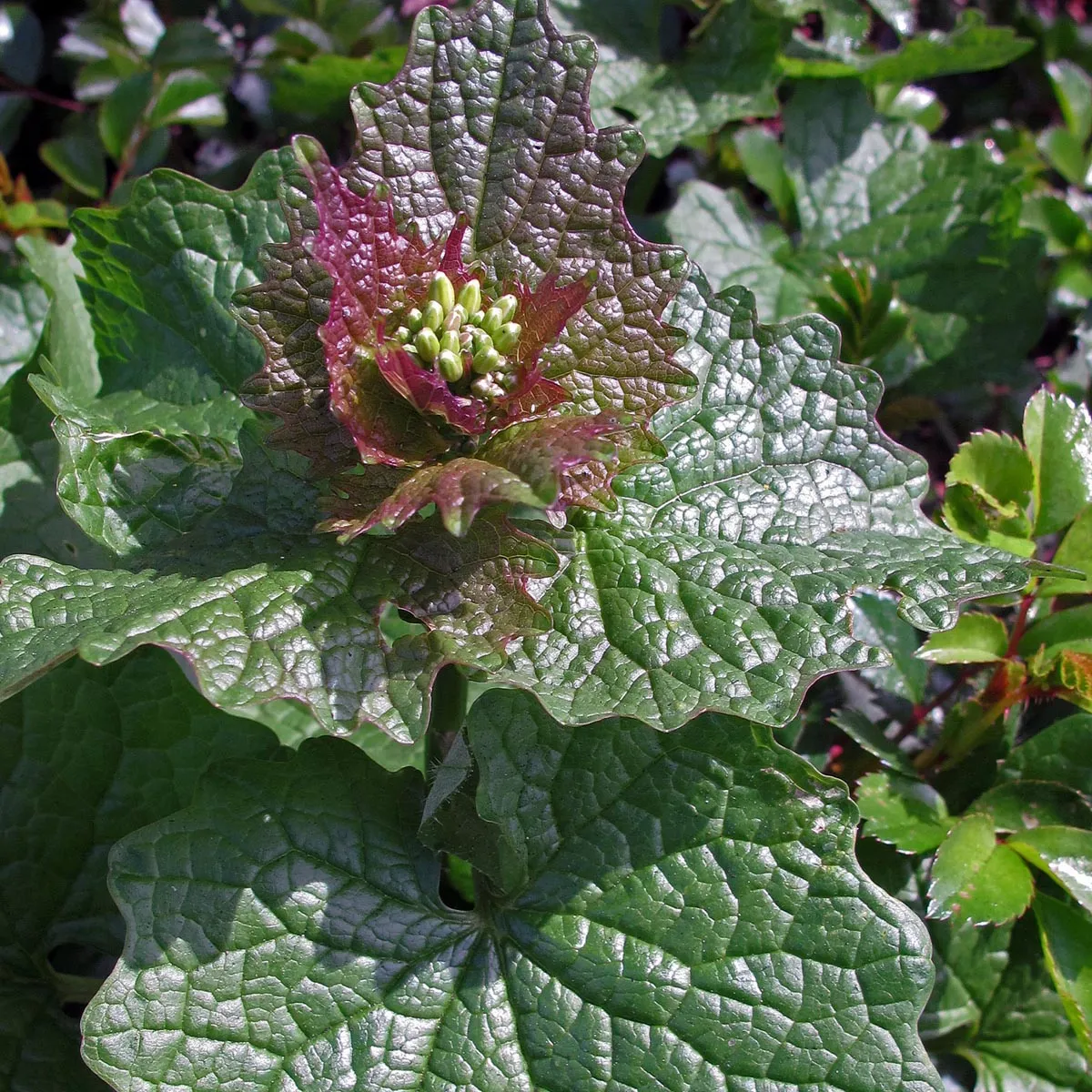
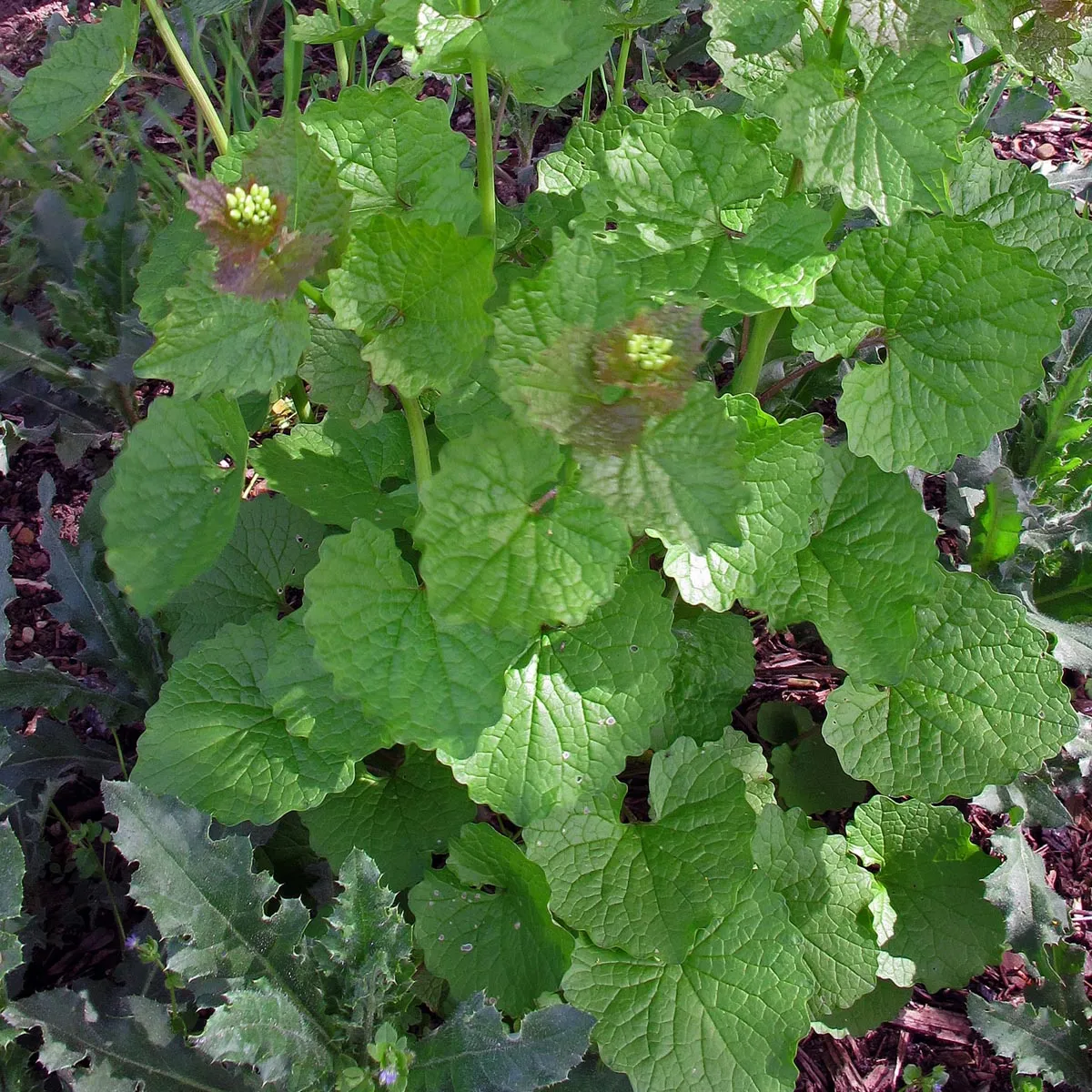
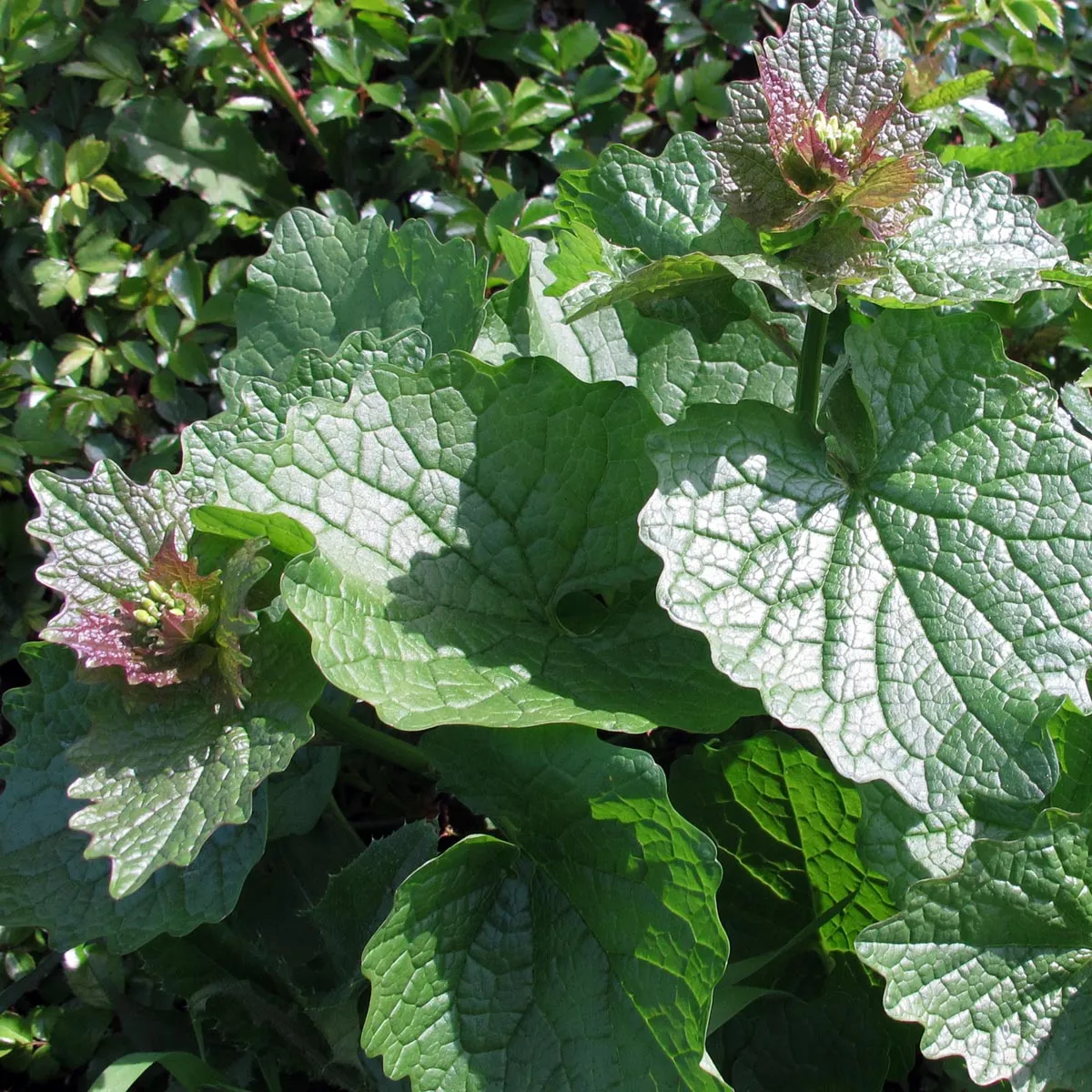
Garlic mustard is an interesting native wild plant from the crucifer family and is therefore related to species such as field mustard and shepherd’s purse. It prefers to grow along woodland edges, beneath hedges, in thickets, along paths and in natural gardens and parks. In its first year, it forms a low-growing rosette of heart- to kidney-shaped, coarsely toothed leaves that are slightly reminiscent of nettle leaves. In its second year, it develops upright flowering stems, usually 20 to 100 cm tall, with small white flowers and long, narrow seed pods.
Its distinctive garlic scent, which is released when the leaves are crushed, is particularly characteristic. Depending on the season, its flavour is reminiscent of garlic, cress or mild mustard. Young leaves and shoots can be used raw in salads, on bread, in herb butter, pesto or other cold dishes. Some of the typical aroma is lost during cooking. The white flowers and young seed pods are also edible and have a spicy garlic flavour. The crushed, oil-rich seeds can be used to make an aromatic herb mustard.
A traditional wild herb for the kitchen and household
Garlic mustard has a long history of use as a seasoning and wild vegetable. Archaeological finds suggest that its seeds were already being used to flavour food several thousand years ago. During the Middle Ages, this readily available wild herb was a valuable seasoning plant, particularly for the rural population, and served as a native alternative to expensive spices. Today, garlic mustard is being rediscovered in modern wild herb cuisine.
The roots are also said to be suitable for use. Particularly when the plants have grown in nutrient-rich garden soil, the unpeeled roots can be used in a similar way to horseradish. In addition to its use as a seasoning, salad green and wild vegetable, garlic mustard can also be used as a dye plant.
A valuable food plant for butterflies and other insects
From April to June or July, the small white flowers appear, providing nectar and pollen for various insects. This native shade plant is particularly valuable for the orange-tip butterfly and several other butterfly species. It serves the orange-tip butterfly not only as a source of food, but also as an important food plant for its caterpillars.
In suitable locations, garlic mustard readily reproduces by self-seeding and may spread more extensively over time. Anyone wishing to limit its spread should remove the long seed pods before the seeds have fully ripened.
Plant profile
| Use | Herb/spice plant, Medicinal plant |
|---|---|
| Lifecycle | Biennial, Hardy |
| Species | Brassicaceae |
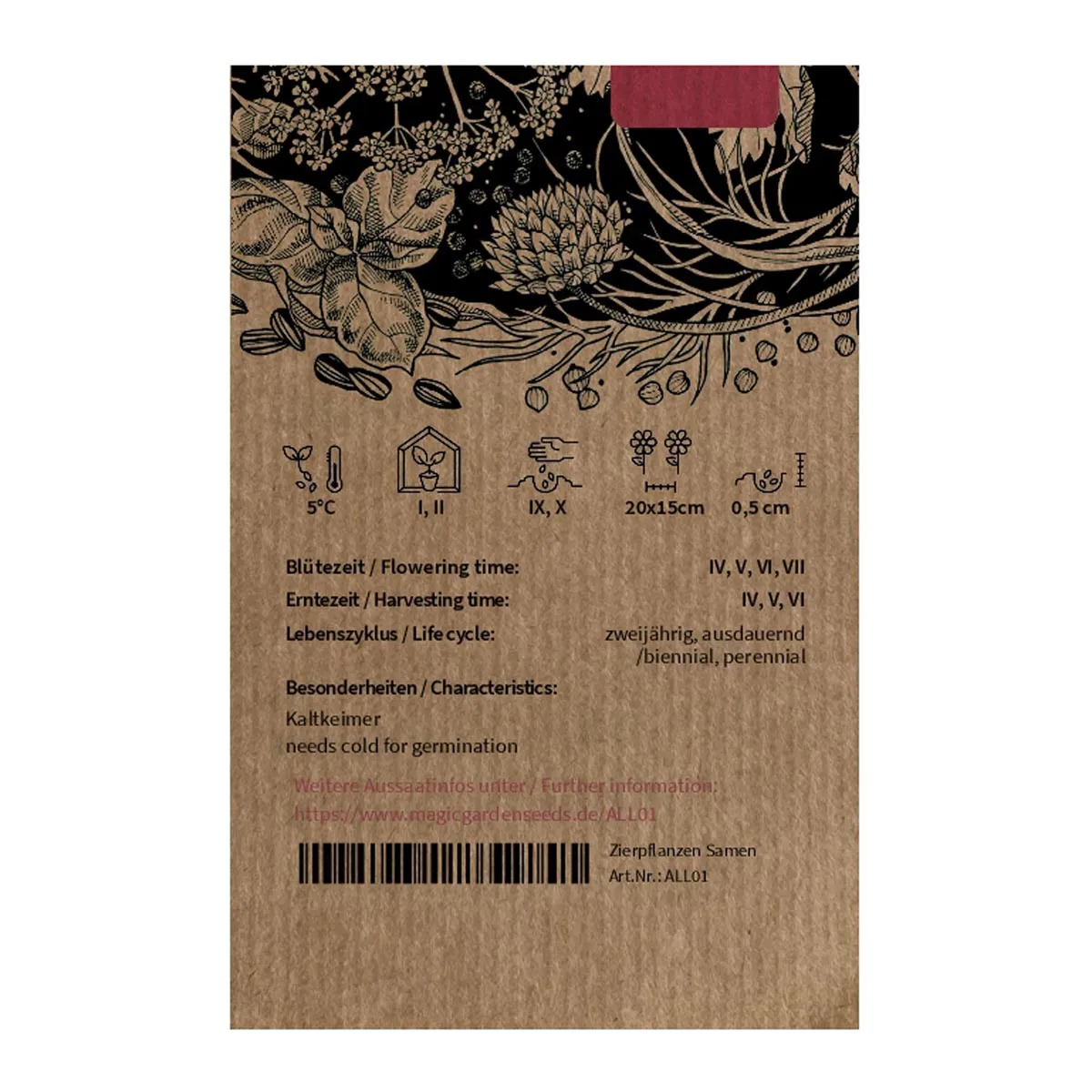
| Characteristics | Needs cold to germinate |
| Eventual height | 30-150 cm |
| Growth habit type | determinate / bush type |
| Flower colour | White |
| Flowering months | April, July, June, May |
| Main harvest | April, June, May |
| Root system | Taproot |
Growing instructions
| When to sow outdoors | October, September |
|---|---|
| Sowing depth | 0.5 cm |
| Germination temperature | 3-5°C |
| Sunlight | Full shadow, Shade |
| Water requirement | Medium |
| Planting distance | 15 cm |
| Row spacing | 20 cm |
Sowing and care
Sowing and care of garlic mustard
Garlic mustard is a persistent plant that is predominantly biennial and only rarely perennial. As a cold germinator, its seeds require exposure to cold in order to break dormancy. The easiest method is to sow the seeds directly outdoors in autumn. They are then exposed to the natural temperature fluctuations of winter and usually germinate the following spring.
For controlled sowing, the seeds can first be left to swell in moist growing medium for around three days at approximately 15 °C. They should then be kept at a temperature of around 0 to 5 °C until germination, for example in a refrigerator. During this period, the growing medium should be kept evenly moist but not wet.
A partially shaded to shaded location with humus-rich, nitrogen-rich and nutrient-rich soil that remains fresh to moist is ideal. Garlic mustard also thrives in deeper shade, provided that it receives a sufficient supply of water. Beneath trees and shrubs, along the edges of hedges or in natural garden areas, this robust wild herb requires very little care.
Other names
Botanical name: Alliaria petiolata, A. officinalis, Arabis petiolata, Clypeola alliacea, Erysimum alliaceum, Sisymbrium alliaria
German: Knoblauchsrauke, Knoblauchskraut, Lauchkraut, Knoblauchhederich
English: garlic-root, garlicwort, hedge-garlic, Jack-by-the-hedge, Jack-in-the-bush, mustard-root, poor-man's-mustard
French: alliaire officinale, alliaire, herbe à ail
Italian: alliaria, alliaria comune, erba aglina
Spanish: aliaria, ajera, hierba del ajo, hierba de ajo, hierba ajera, yerba del ajo
Dutch: Look-zonder-look
Login