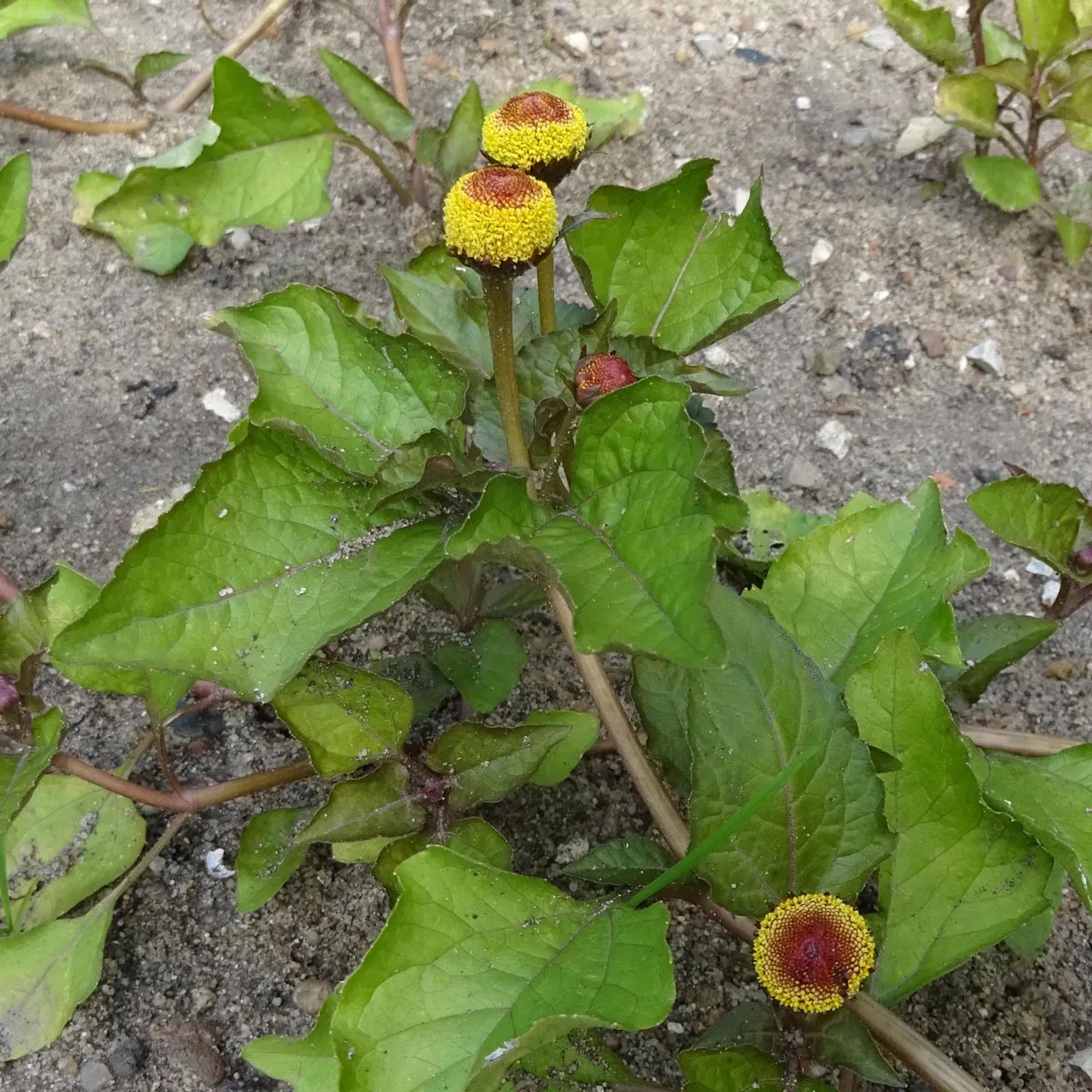
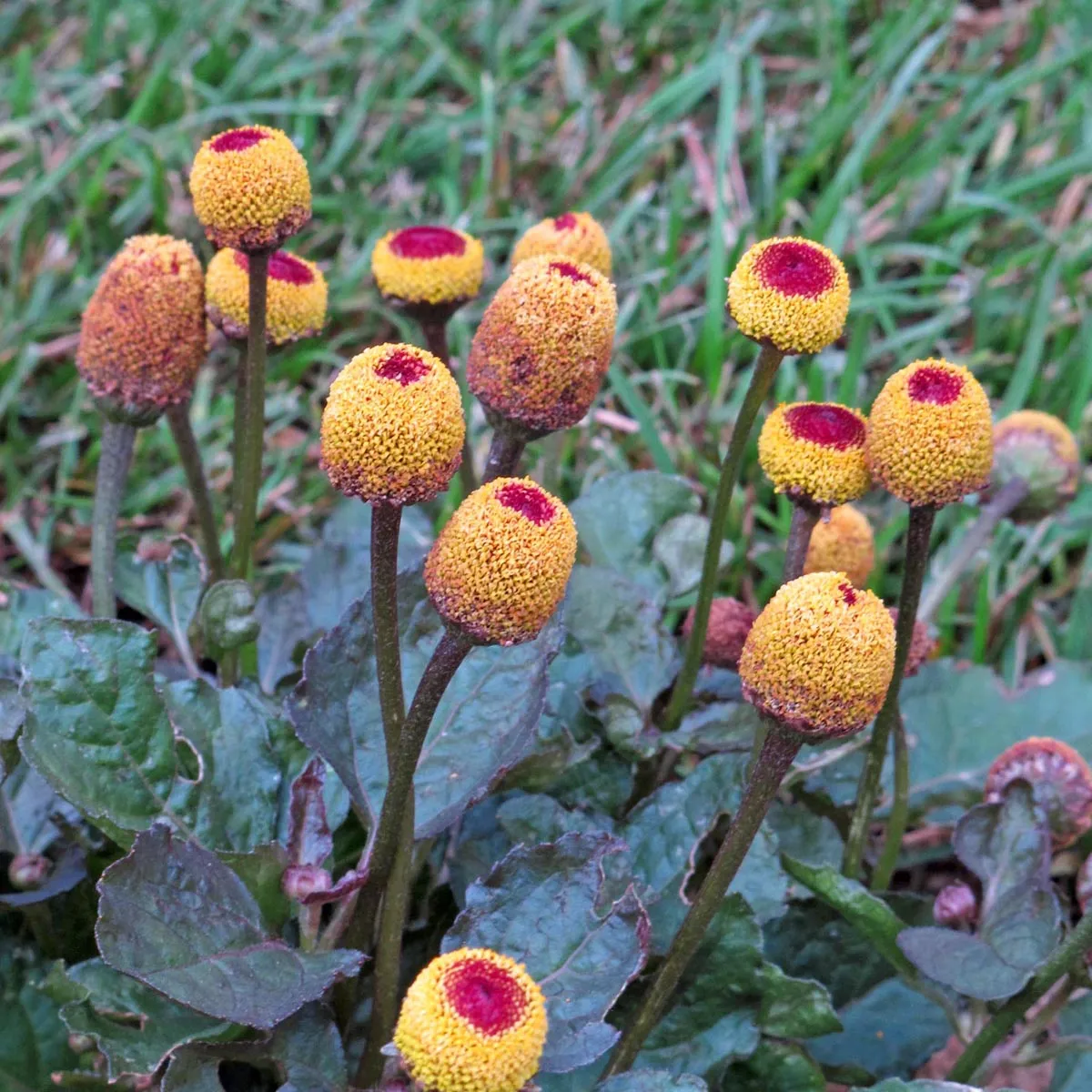
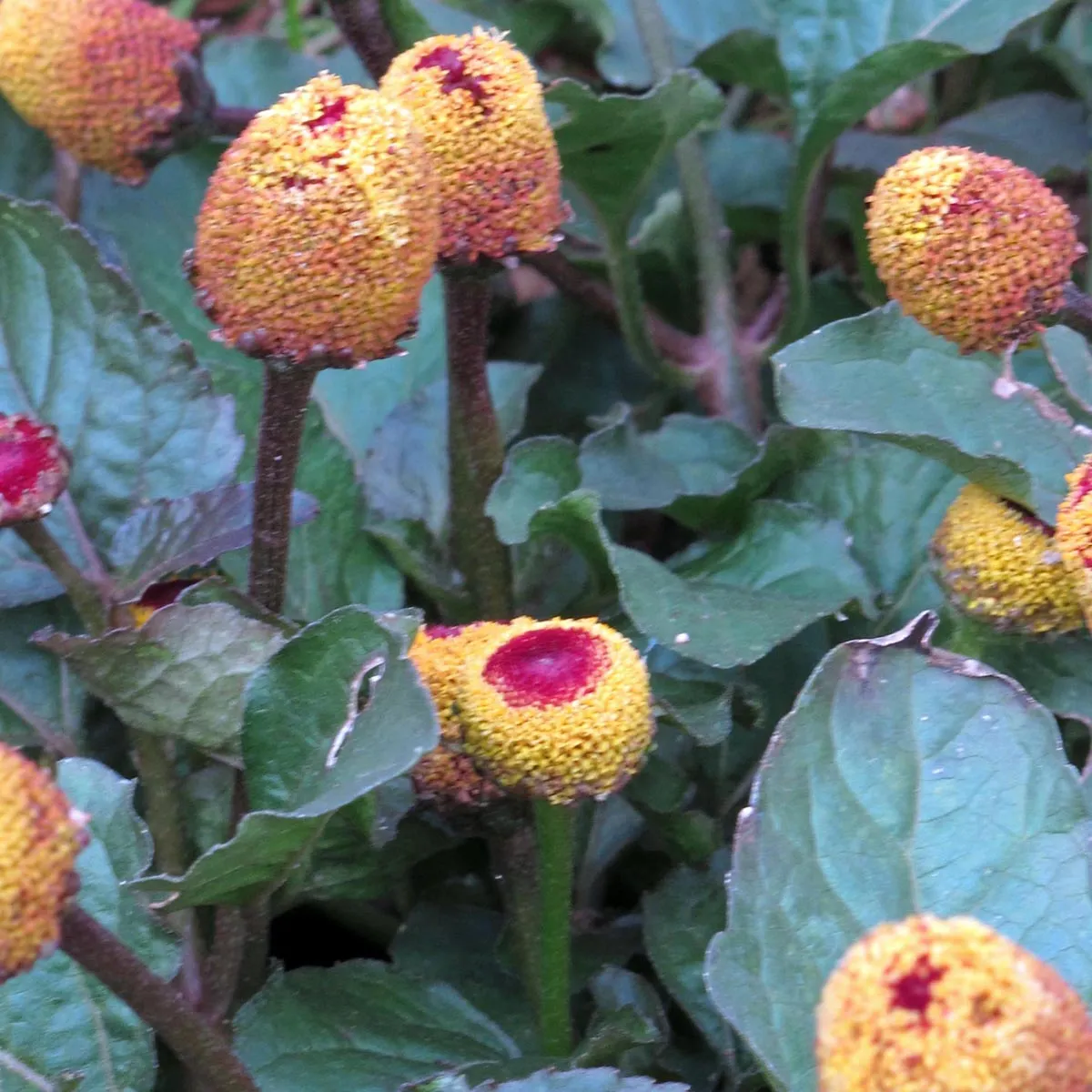
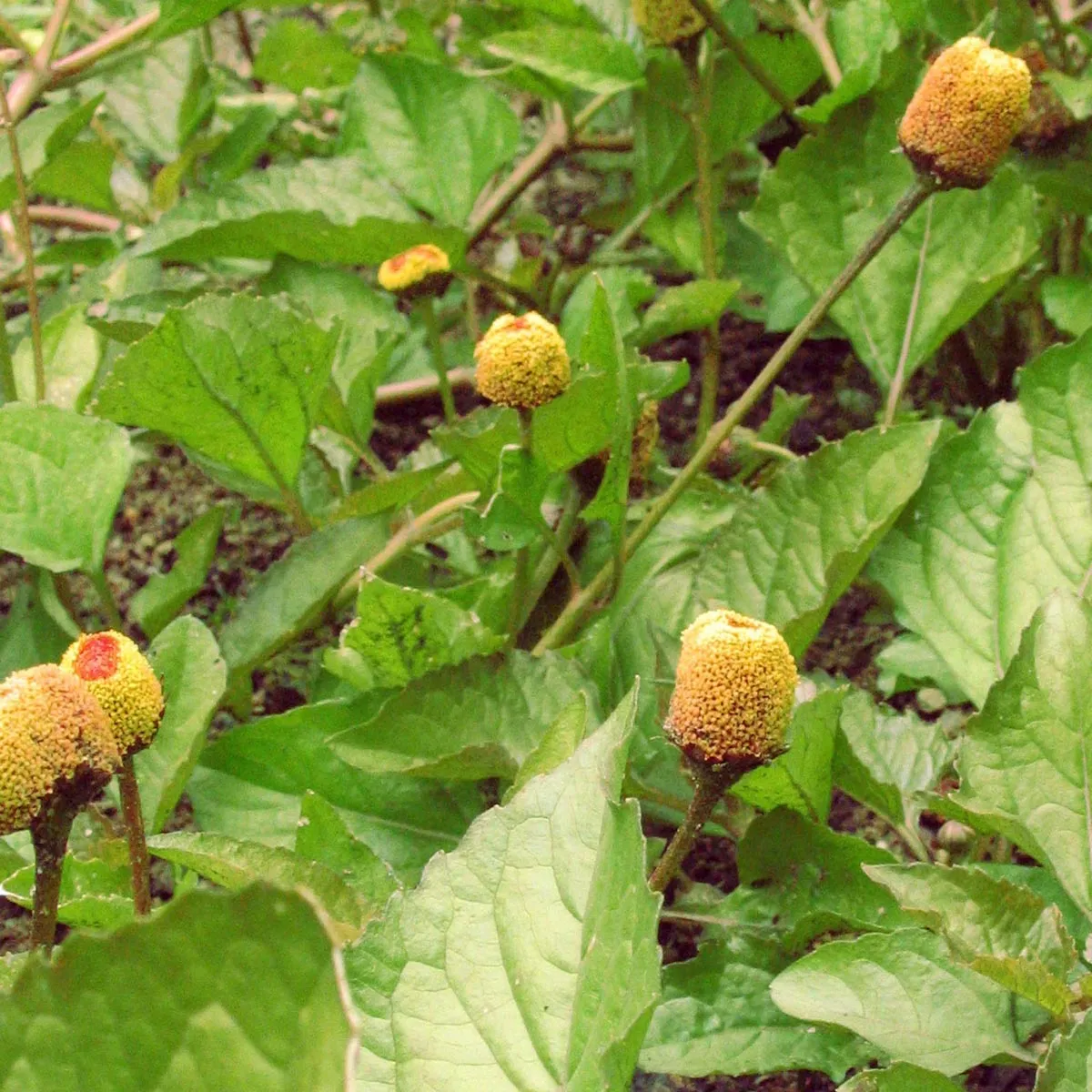
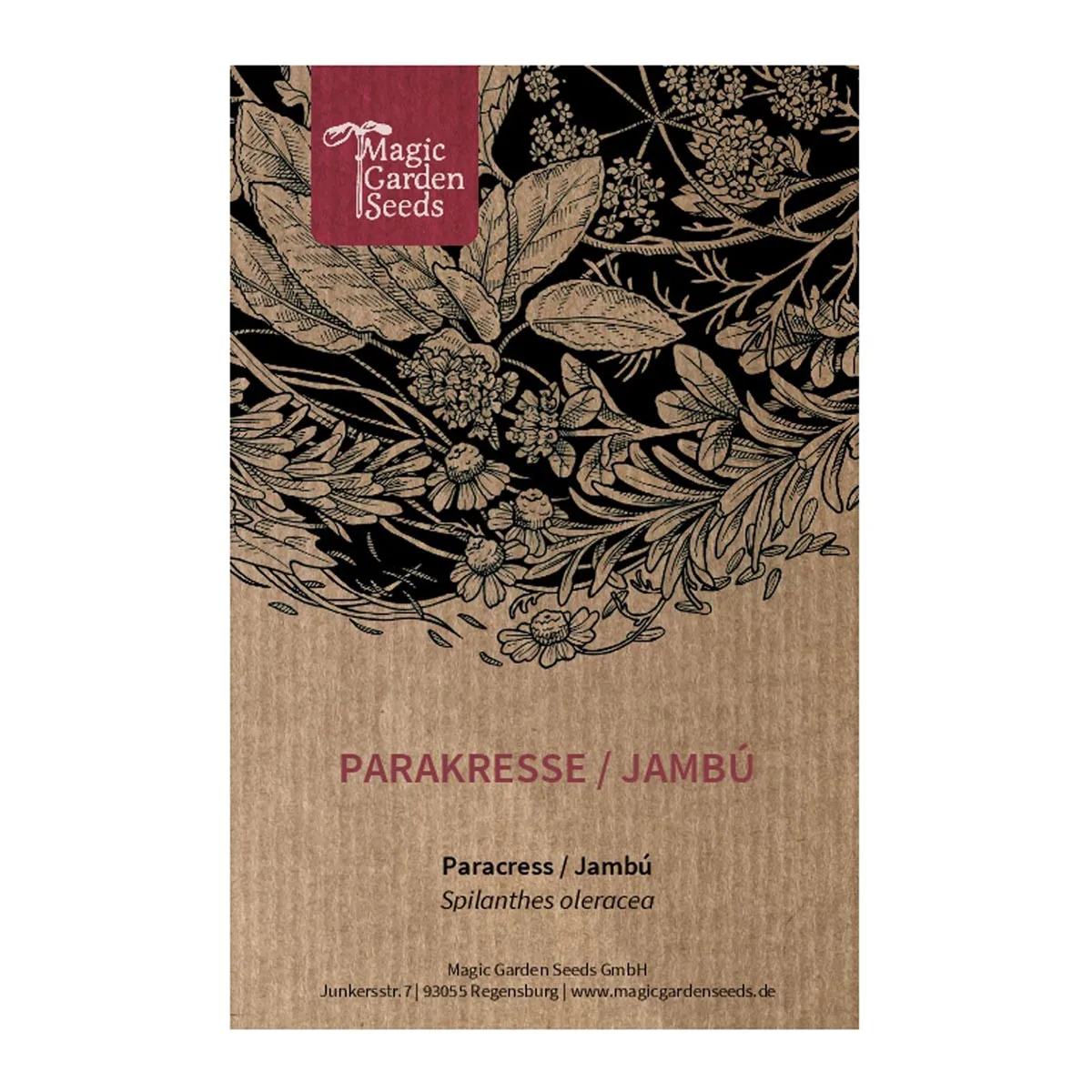
Paracress/ Jambú (Spilanthes oleracea) seeds
- The leaves of the Paracress from Peru produce an uncommonly prickly tanginess similar to Szechuan pepper.
- Contents: Approx. 250 seeds
- Open-pollinated variety, seed tested regularly
Regular price:
€2.79
Product number: 1033 GTIN: 4250601204550
Description
Paracress or jambú is a Peruvian herb, which has an unusual prickly and spicy flavour. If you chew on the leaves, already after a couple of seconds a prickly, numbing sensation will affect the tip of your tongue, which is exciting and new for anyone rather used to European cooking. However don’t be alarmed, the sensation will cease within a couple of minutes.
Traditionally paracress is often used either cooked or as a raw cooking ingredient in north Brazil.
Jambú also has a long standing tradition as a potent ingredient in herbal medicines, and is thus also know as "toothache plant". The leaves carry anti-inflammatory properties and are commonly used to treat toothache, rheumatisms and bouts of gout.
Plant profile
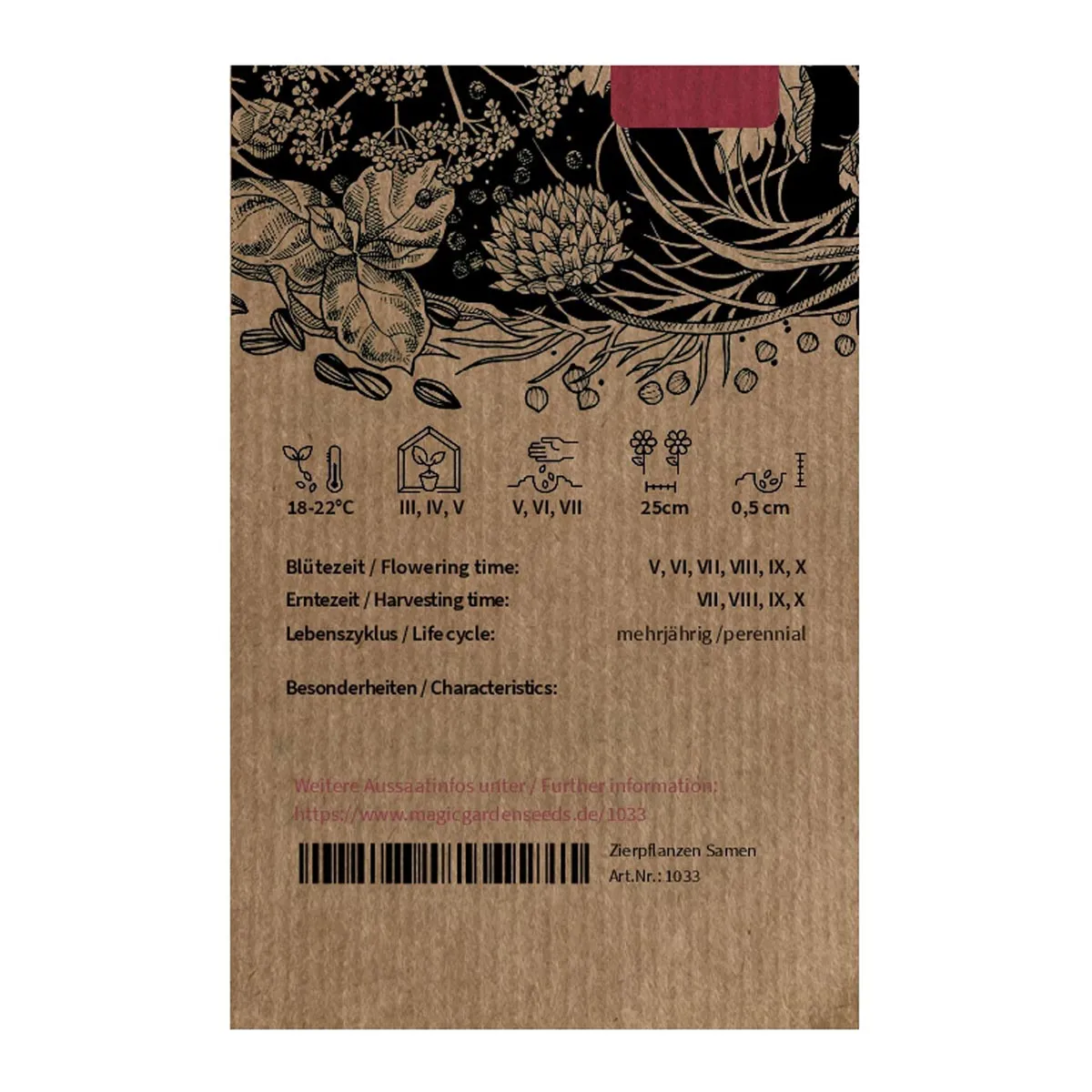
| Lifecycle | Perennial |
|---|---|
| Species | Asteraceae |
| Eventual height | 20-60 cm |
| Flower colour | Brown, Red, Yellow |
| Flowering months | August, July, June, May, October, September |
| Main harvest | August, July, October, September |
Growing instructions
| When to sow outdoors | July, June, May |
|---|---|
| Sowing depth | 0.5 cm |
| Germination temperature | 18-24° C |
| Germination time | 1-2 weeks |
| Sunlight | Full sun |
| Planting distance | 25 cm |
Sowing and care
Jambú is a perennial, ‘weed-like’ plant, sensitive to frost, which is mostly cultivated as an annual herb in European climates.
The seeds can be grown indoors in pots as a pre-culture from February or sown directly outdoors past the ‘Frost Saints’ period in May. Paracress belongs to the seeds which need light to germinate and should therefore hardly be covered with soil. It will also need to be kept at +18-20°C to germinate successfully.
The plants prefer a sunny, protected location and needs to be watered regularly. Attention: Paracress Jambú attracts slugs and caterpillars.
Other names
Botanical name: Spilanthes oleracea, S. acmella var. oleracea, Acmella brasiliensis, A. oleracea
German: Husarenknopf, Parakressekraut, Prickelknopf
English: Toothache plant, Eyeball plant, Electric daisy
French: Kimalao
Spanish: Hierba de los dientes
Reviews
Login
No reviews yet. Will you write the first one?