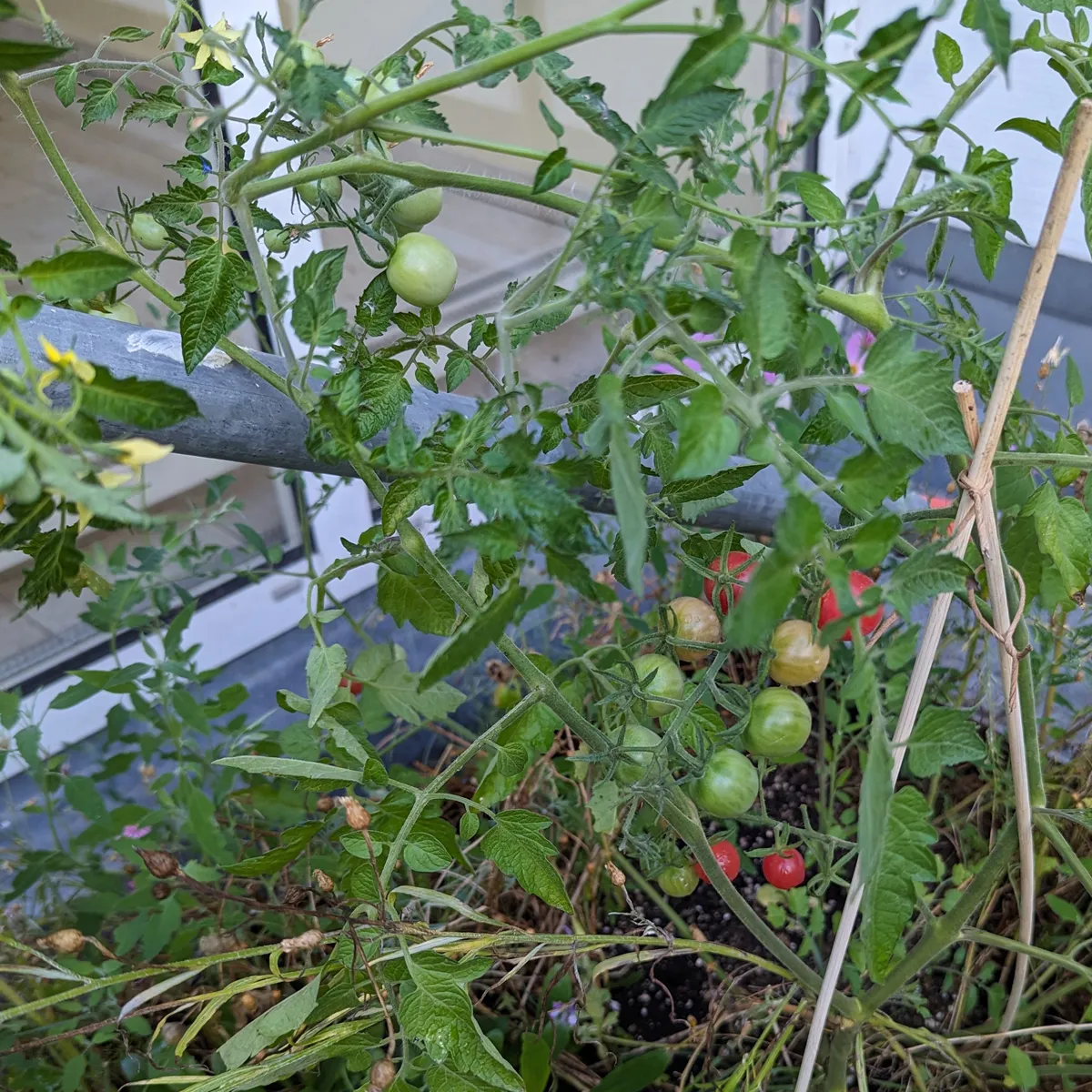
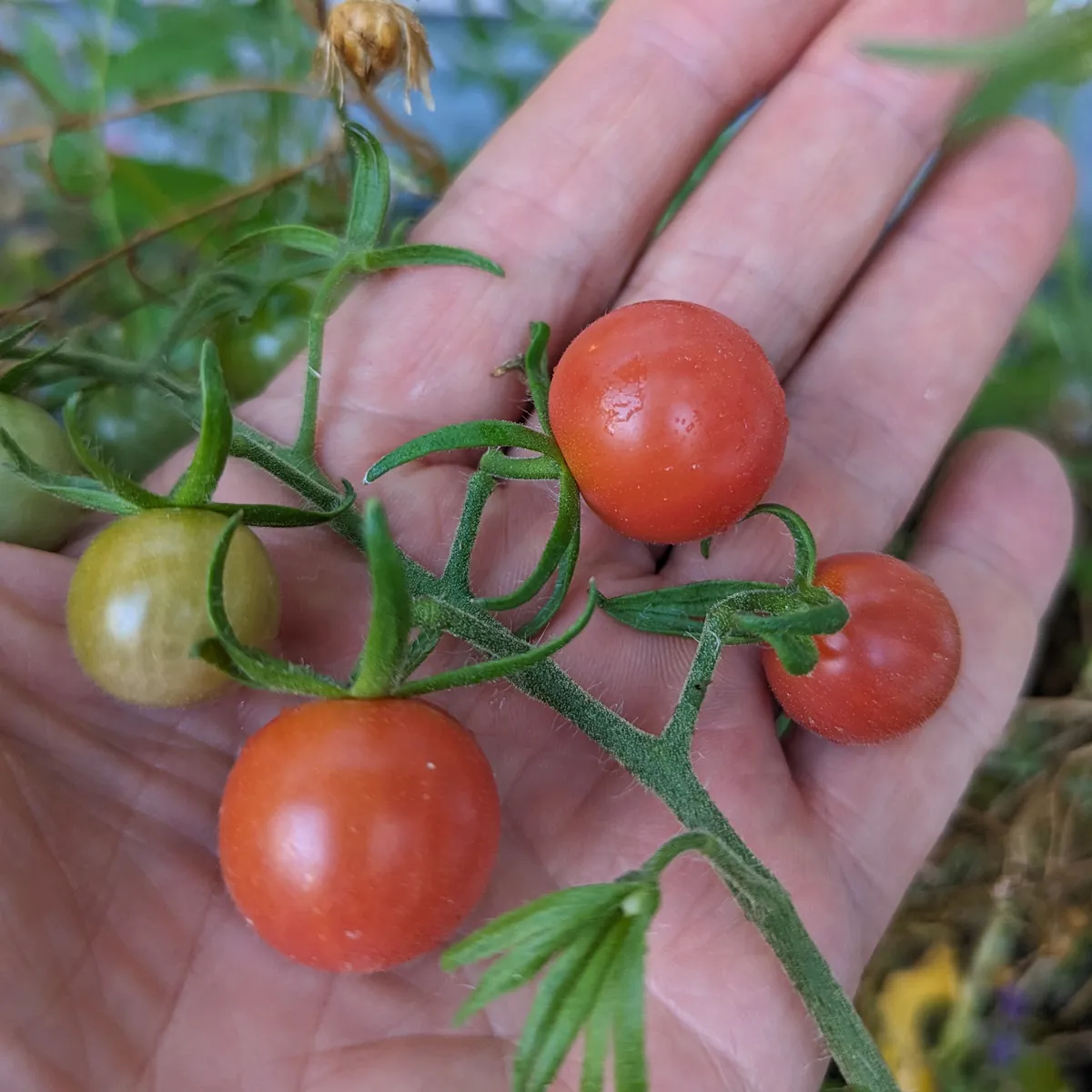


Pink Wild Tomato (Solanum pimpinellifolium) seeds
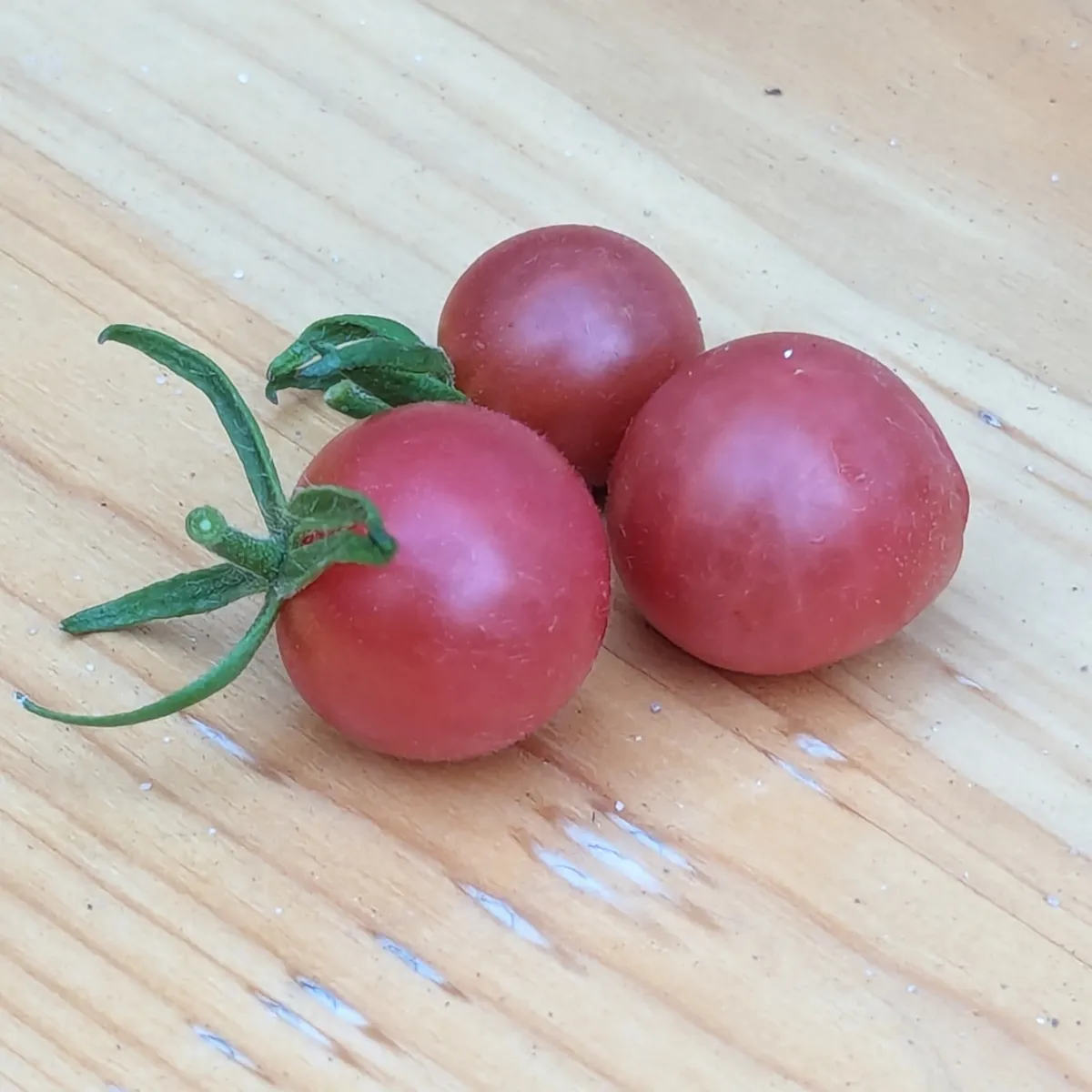
- Tiny, sweet ancestral tomatoes with a pink hue – an original wild variety for snack gardens and tomato enthusiasts.
- Contents: Approx. 10 seeds
- Open-pollinated variety, seed tested regularly
€2.59
Description
The Wild Ancestor of the Tomato with Pink-Coloured Fruits
The pink wild tomato (Solanum pimpinellifolium) is considered one of the oldest known forms of tomato and originates from the Andean regions of Ecuador and Peru. Botanically, it is the wild progenitor of many modern cultivated tomatoes and is still used in breeding today due to its valuable genetics.
Its tiny, pink fruits grow in long, heavily branched trusses and are remarkably sweet, flavourful, and resistant to splitting. The plants display vigorous, almost sprawling growth with countless flowers and fruits throughout the summer. Thanks to its natural resilience, this variety is particularly robust against common tomato diseases – ideal for naturalistic or organic gardens. It is especially well suited as a snack plant for beds or containers.
Plant profile
| Lifecycle | Annual |
|---|---|
| Species | Solanaceae |
| Characteristics | Needs darkness to germinate, Not winter-hardy |
| Growth habit type | Indeterminate / climbing type |
| Flower colour | Yellow |
| Flowering months | August, July, June, September |
| Main harvest | August, July, October, September |
| Fruit colour | Rosa, Rot |
| Fruit form | rund |
| Root system | Heart roots |
Growing instructions
| Sowing depth | 0.5 cm |
|---|---|
| Germination temperature | 22-28°C |
| Germination time | 5-10 days |
| Sunlight | Full sun |
| Planting distance | 100 cm |
| Row spacing | 100 cm |
| Good companion plants | Basil, Celeriac, Knoblauch, Kohlrabi, Lettuce, Marigold, Nasturtium, New Zealand Spinach, Parsley, Radish, Spinach, Winter Radish |
| Bad companion plants | Cucumber, Fennel, Peas, Potatoes, Sweet Pepper |
Sowing and care
Sowing and Care of the Pink Wild Tomato
Sowing begins indoors from March. Sow the seeds about 0.5–1 cm deep in seed compost, and keep the soil evenly moist and warm (20–24 °C). Germination takes 7–14 days. Once the seedlings emerge, place them in a bright location and prick out when ready. From mid-May, after the last frosts, the plants can be moved outdoors or into large pots. Choose a sunny, well-ventilated spot. Pruning is not required – these wild tomatoes are best left to grow freely, producing plenty of side shoots and flowers. Regular watering and occasional organic feeding will encourage strong yields. Harvesting usually starts in July and can continue well into autumn.
Other names
German: Paradeiser, Paradeisapfel, Paradiesapfel, Goldapfel, Liebesapfel, Tomate
English: Tomato
French: Tomate
Italian: Pomodoro
Spanish: Tomate, Tomatera, Jitomate
Login