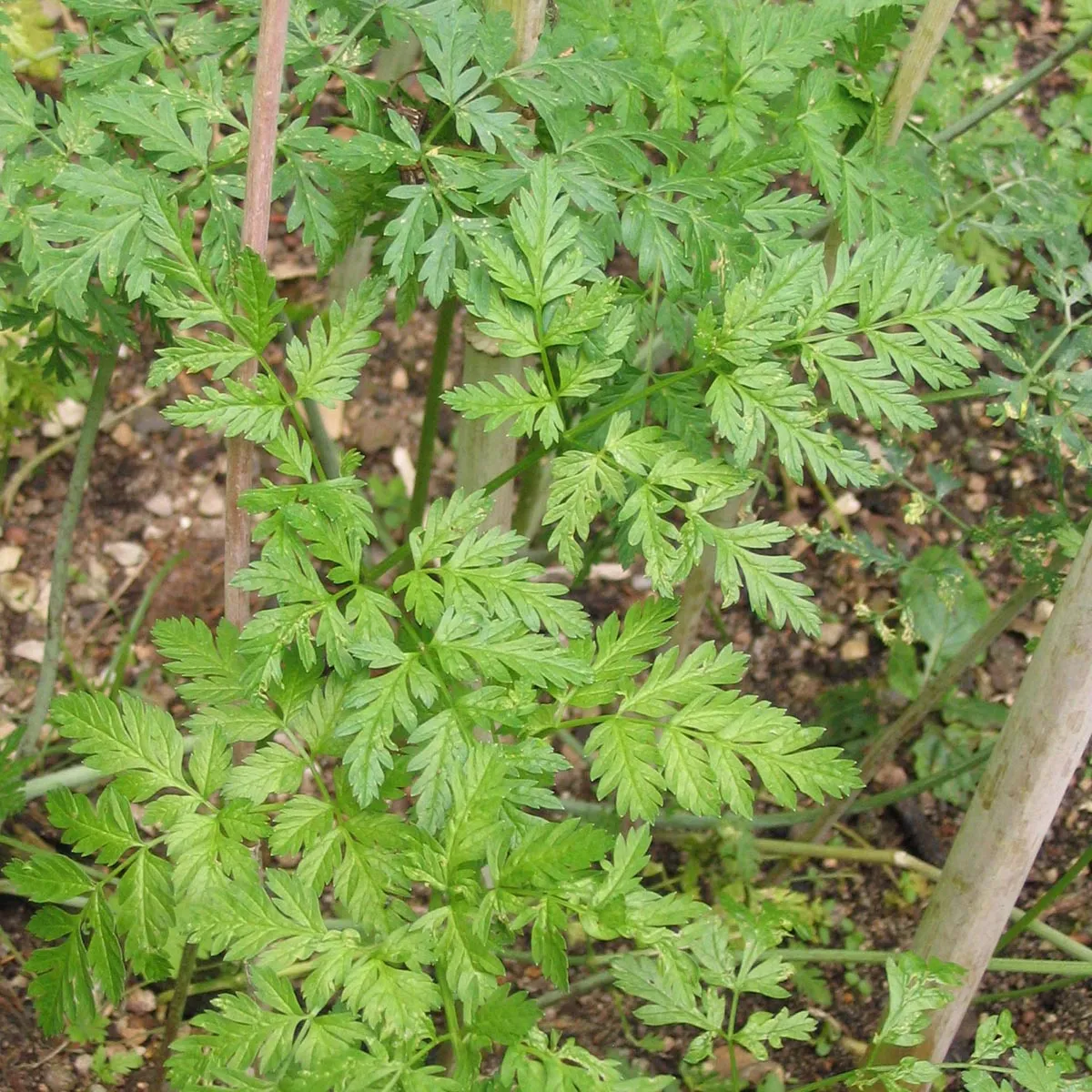
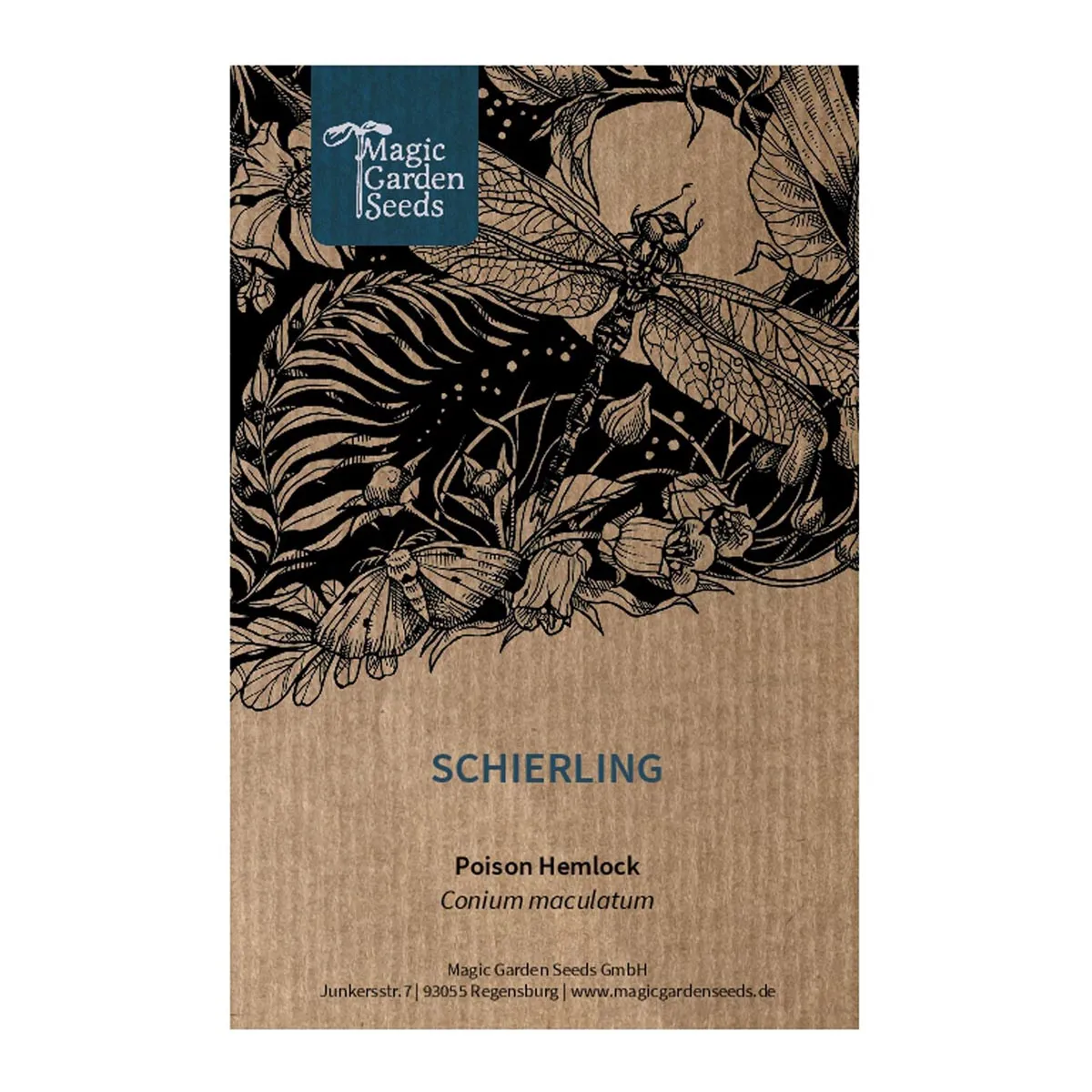
Poison Hemlock (Conium maculatum) seeds
- Famous poisonous plant from antiquity.
- Contents: Approx. 30 seeds
- Open-pollinated variety, seed tested regularly
€3.79
No longer available
Description
Medieval witches are said to have used poison hemlock for their purposes, especially for preparing their flying ointment. This is probably due to the fact that it has a paralyzing effect on the skin which might evoke the sensation of 'flying'. Hemlock was also a common sight in European monastery gardens where it was grown for use as a local anesthetic. It can still be found growing as a wild plant around those spots.
The main active ingredient of Conium Maculatum, coniine, was isolated in 1831 and was the first alkaloid to be synthetically recreated in 1886. Coniine is a clear, oily liquid with a burning hot taste and smell of mouse urine. It is readily absorbed by the skin and the mucous membranes and causes increased excitability, followed by an ascending paralysis of the spinal cord. Its effect is similar to curare or nicotine - centrally and peripherally paralyzing, with a distinct impact on the release of adrenalin. Since it is very hard to dose, in today's medicine hemlock is only used in homeopathic preparations to combat tumors.
Caution: The whole hemlock plant is very poisonous and particularly dangerous for children!
Plant profile
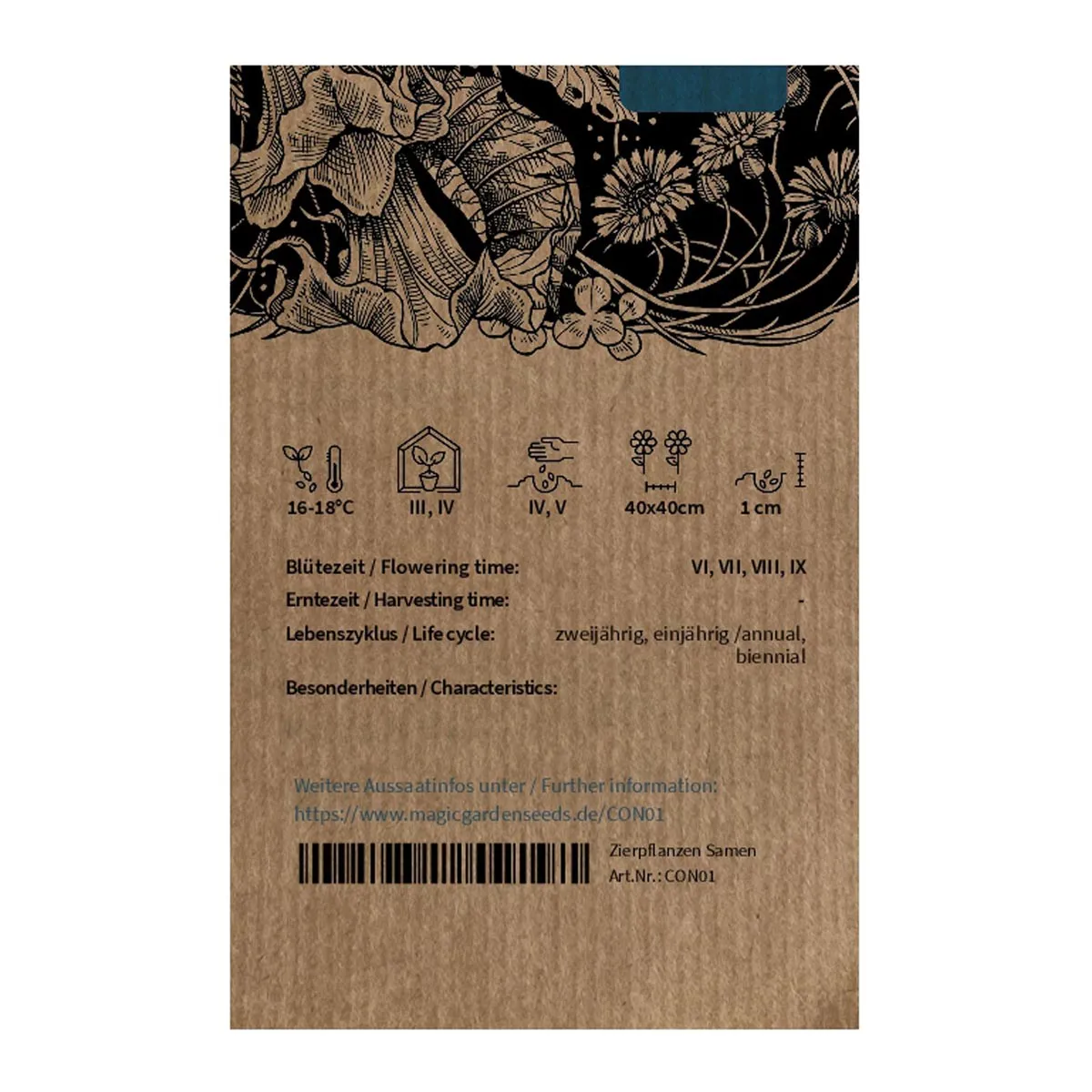
| Lifecycle | Annual, Biennial |
|---|---|
| Species | Apiaceae |
| Eventual height | 50-300 cm |
| Flower colour | White |
| Flowering months | August, July, June, September |
| Root system | Taproot |
Growing instructions
| When to sow outdoors | April, May |
|---|---|
| Sowing depth | 1 cm |
| Germination temperature | 15-20°C |
| Sunlight | Full sun |
| Planting distance | 40 cm |
| Row spacing | 40 cm |
Sowing and care
Other names
Botanical name: Cicuta officinalis, C. cicuta, C. croaticum, Conium maculatum, Coriandrum cicuta, Selinum conium
German: Bangenkraut, Bitscherling, Blutpeterlein, Blutschierling, Butzerling, Düllkrut, Erdschierling, Gartenschierling, Kalberkern, Krottenpeterling, Pipkraut, Scharnpiepen, Schirsing, Teufelspeterling, Tollkörfel, Tollkraut, Wogeltod, Wüterich, Wütscherling, Wutscherling, Ziegendill
English: poison hemlock, carrot fern, devil's bread, devil's porridge, poison parsley, spotted corobane, spotted hemlock, poison parsley, herb bennet, beaver poison, musquash root
French: Ciguë des officines, Ciguë de Socrate, Ciguë tachetée, Mort-aux-oies
Spanish: acebuda, azecuta, budoños, canaveira, cañaeja, cañafierro, cañafleja, cecuta, cicuta manchada, diversa de la ferula, dibleto, embudejo, huelemanos, jecuta, linojo, mastrancho, perejil lobuno, perejil de las brujas, perejil de tontos, sarnosa, secuta, siblatos, zecuta
Login