
Purple Salsify (Tragopogon porrifolius) organic seeds
- Purple Salsify is a tasty root vegetable. The plant is closely related to black salsify but the root has a lighter skin that can be eaten.
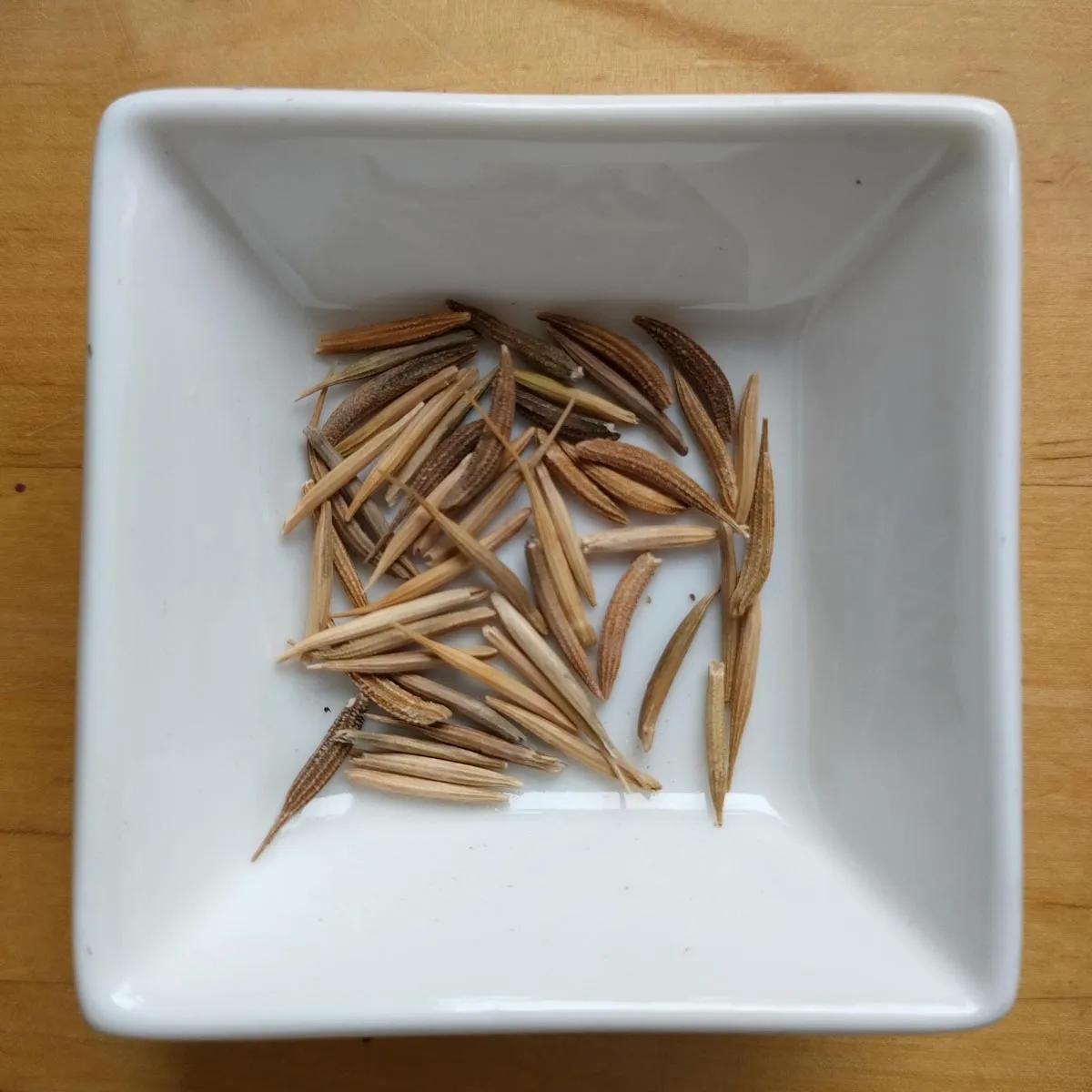
- Contents: Approx. 100 seeds
- Open-pollinated variety, seed tested regularly
Regular price:
€3.59
Product number: TRA01-BIO GTIN: 4251420513571
Description
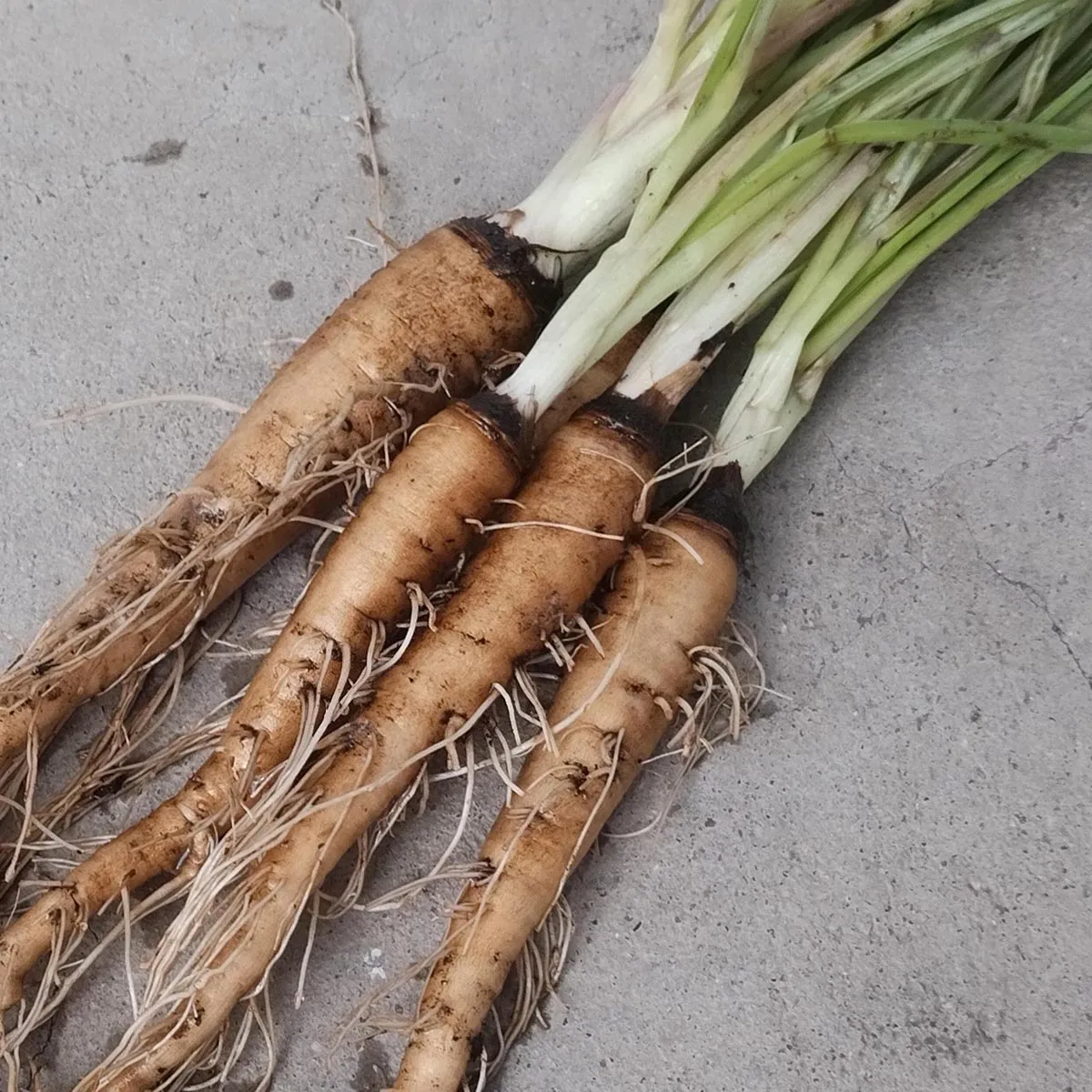
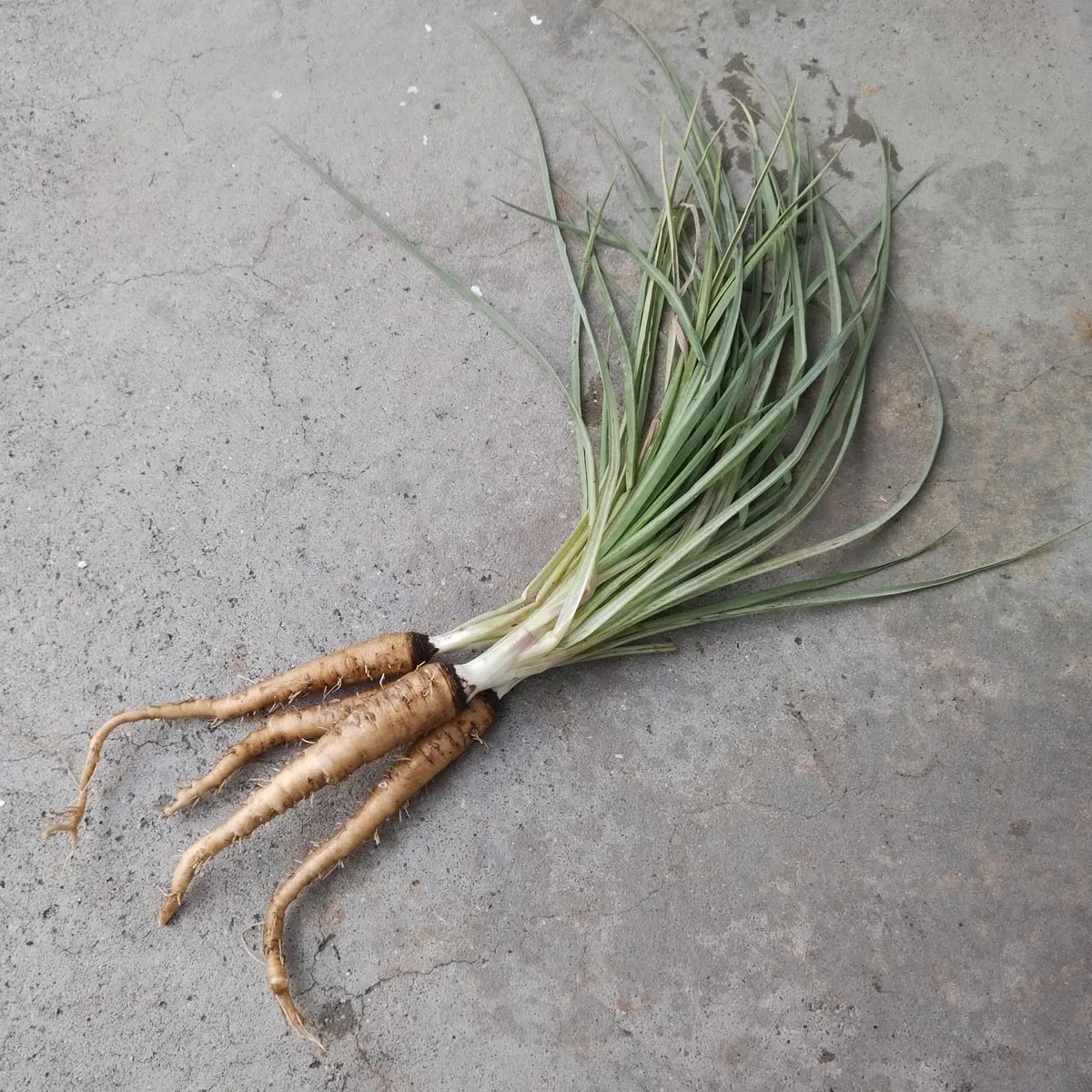
Purple salsify (Tragopogon porrifolius) is a very old root vegetable that has been known since ancient times in Europe and especially cultivated in England, Belgium and France. Nowadays it increasingly finds its way into gourmet cuisine. For consumption, the approximately 30 cm long and 2-4 cm thick white root is used. Its nutty-tart flavor reminiscent of artichoke and oyster has led to the names 'Oyster Plant' or 'Vegetable Oyster'.
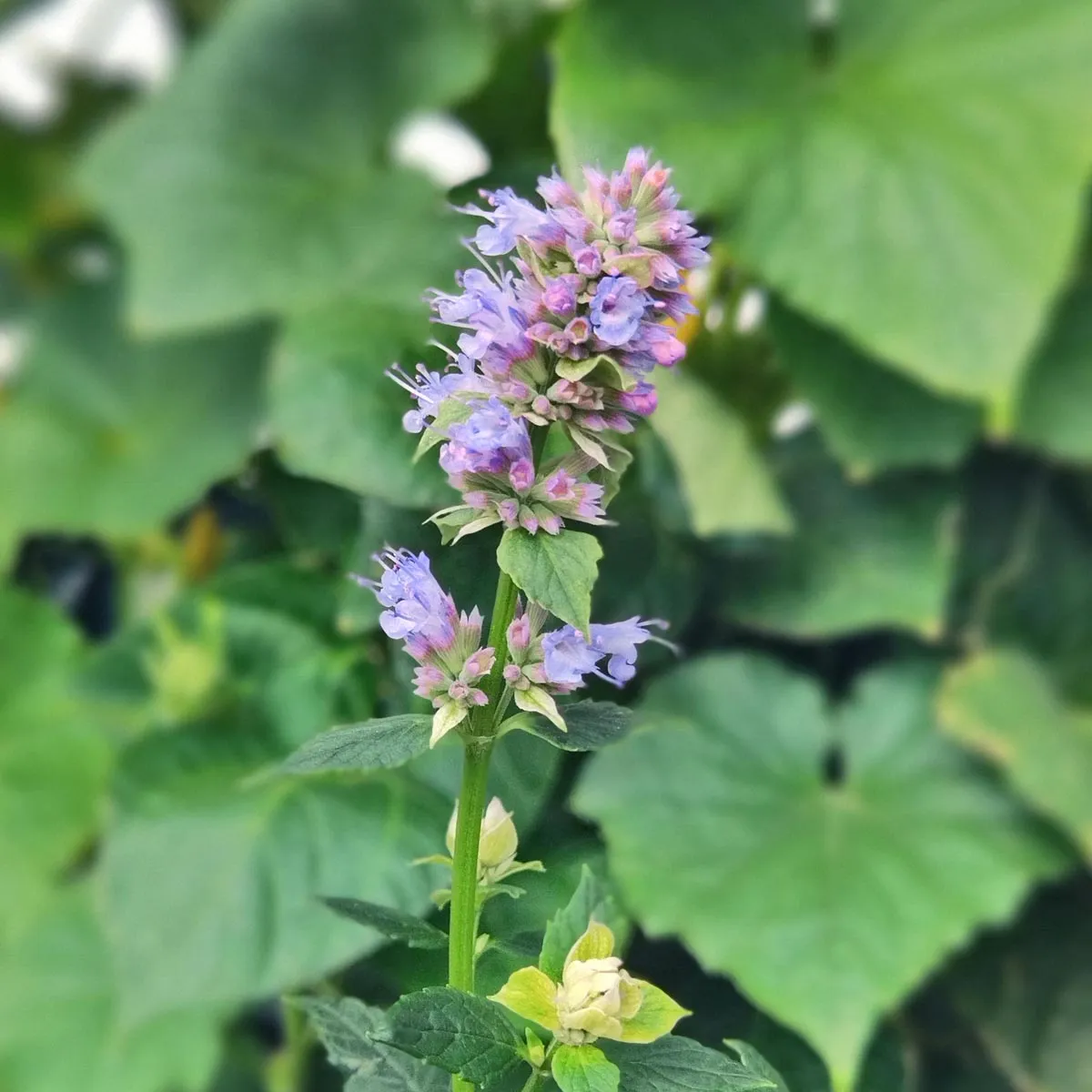
The root can be boiled, fried or mashed. Similar to black salsify, a milky sap pours from the root when it is peeled, which discolors your hands brown, so you should wear gloves, peel under cold water or after cooking. Furthermore, the young leaves can be cut and eaten as a salad or used as a spicy component in soups. Still closed buds can be sautéed briefly, and the beautiful purple flowers are also edible and adorn salads.
The root can be boiled, fried or mashed. Similar to black salsify, a milky sap pours from the root when it is peeled, which discolors your hands brown, so you should wear gloves, peel under cold water or after cooking. Furthermore, the young leaves can be cut and eaten as a salad or used as a spicy component in soups. Still closed buds can be sautéed briefly, and the beautiful purple flowers are also edible and adorn salads.
Plant profile
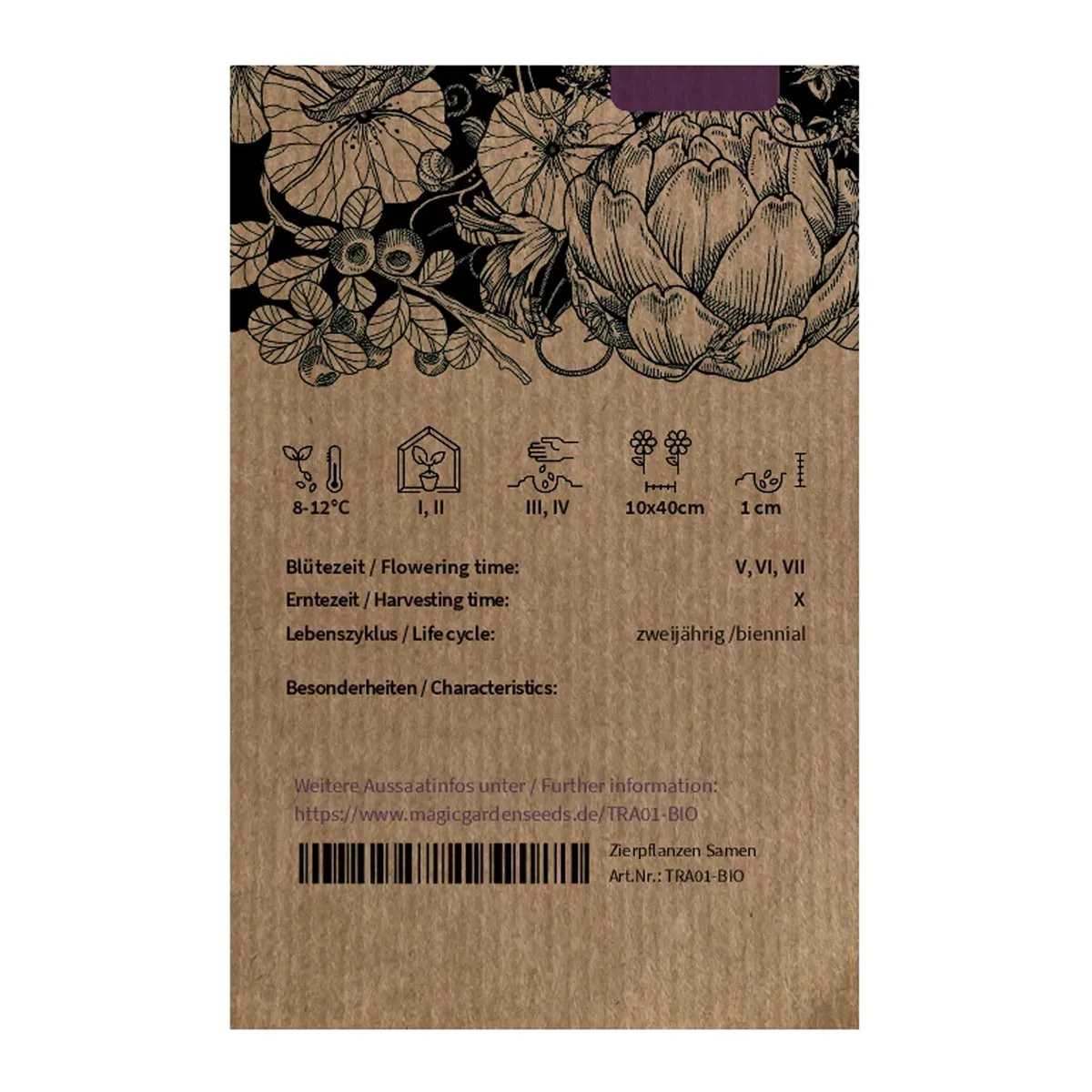
| Lifecycle | Biennial |
|---|---|
| Species | Asteraceae |
| Eventual height | 30-150 cm |
| Flower colour | Lilac |
| Flowering months | July, June, May |
| Main harvest | October |
| Root system | Taproot |
Growing instructions
| When to sow outdoors | April, March |
|---|---|
| Sowing depth | 1 cm |
| Germination temperature | 5-12°C |
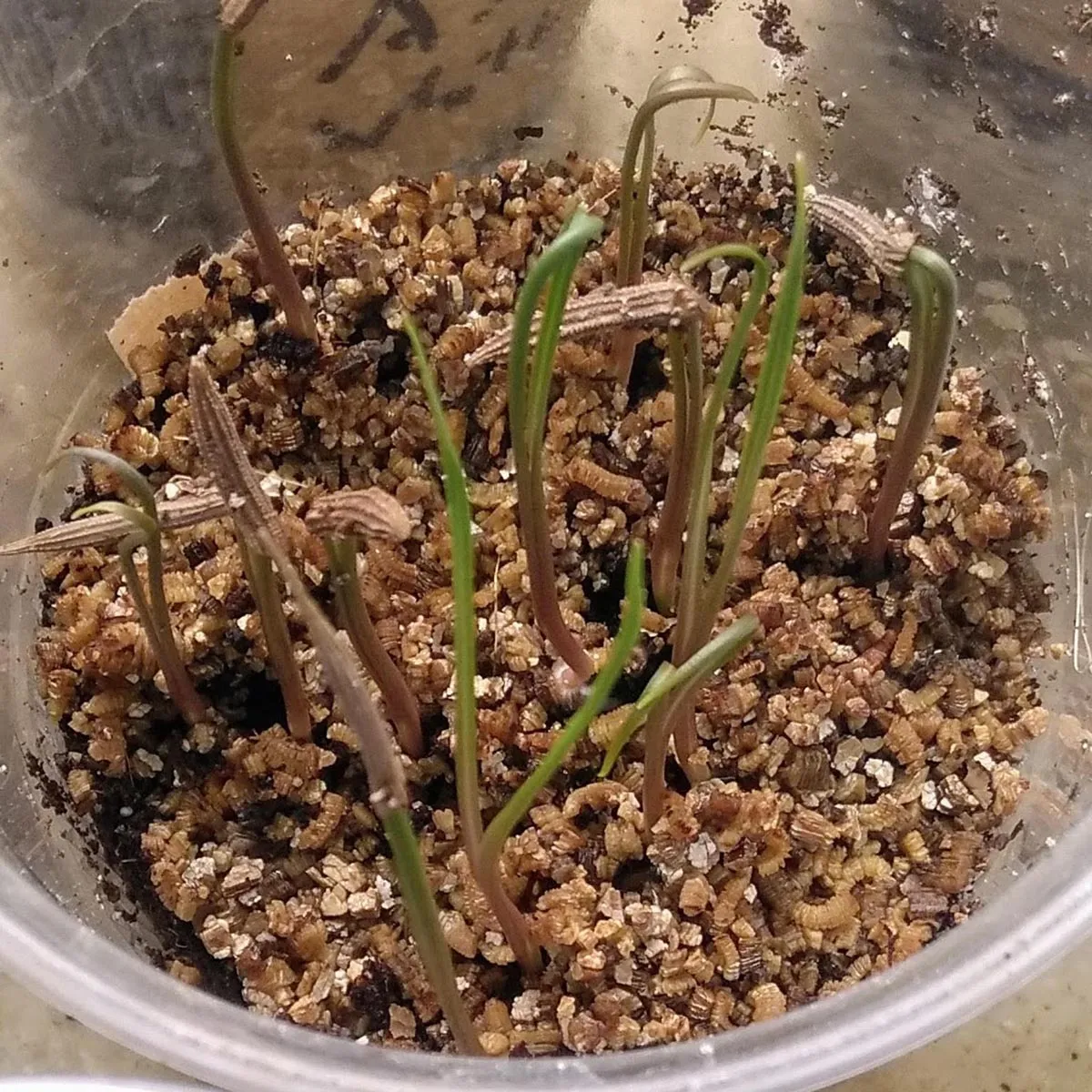
| Germination time | 2-6 weeks |
| Sunlight | Full sun |
| Planting distance | 10 cm |
| Row spacing | 40 cm |
Sowing and care
- Sowing period: Directly outdoors from mid-March to the end of April. It's also possible to sow during the frosts from the end of December but, like this, the germling might be damaged by a late frost.
- Sowing depth: 2-3cm deep in rows
- Ideal germination temperature: +8-12°C
- Row spacing: 30-40cm
- Planting distance: 8-10cm
- Location: Sunny to half-shady
- Soil: Deep, humous, well-loosened and well-fertilized soils that can also be slightly calcareous but not sour.
- Care: Loosen the soil regularly and keep it consistently moist. The more condensed and drier the soil is, the more does Purple Salsify form many small secondary roots instead of a strong, large main root as desired. Therefore, you should also irrigate additionally in very hot months.
Purple Salsify belongs to the moderate feeders and only needs a little bit of additional compost for fertilization. - Harvest: In October, the root fairly gains thickness once again. Therefore, don't harvest before October. Throughout winter and until the time around April, the root can continually be harvested freshly. Allegedly, the taste still improves by a hard frost. When the plant starts blooming, the roots lose their taste and become stringy. However, it's also possible to harvest Purple Salsify and store it in a case filled with sand.
- Family: Asters (Asteraceae)
In-depth guide for growing root vegetables such as common salsify from seed
Other names
Botanical name: Tragopogon porrifolius, T. sativus
German: Purpur-Bocksbart, Hafermaukel, Habermark, Austernpflanze, Weißwurzel, Haferwurz
English: oyster plant, vegetable oyster, common salsify, Jerusalem star, goatsbeard
French: salsifis à feuilles de poireau, salsifis austral, salsifis blanc, barbe de bouc, cercifis commun
Spanish: barba de cabra
Reviews
Login
No reviews yet. Will you write the first one?