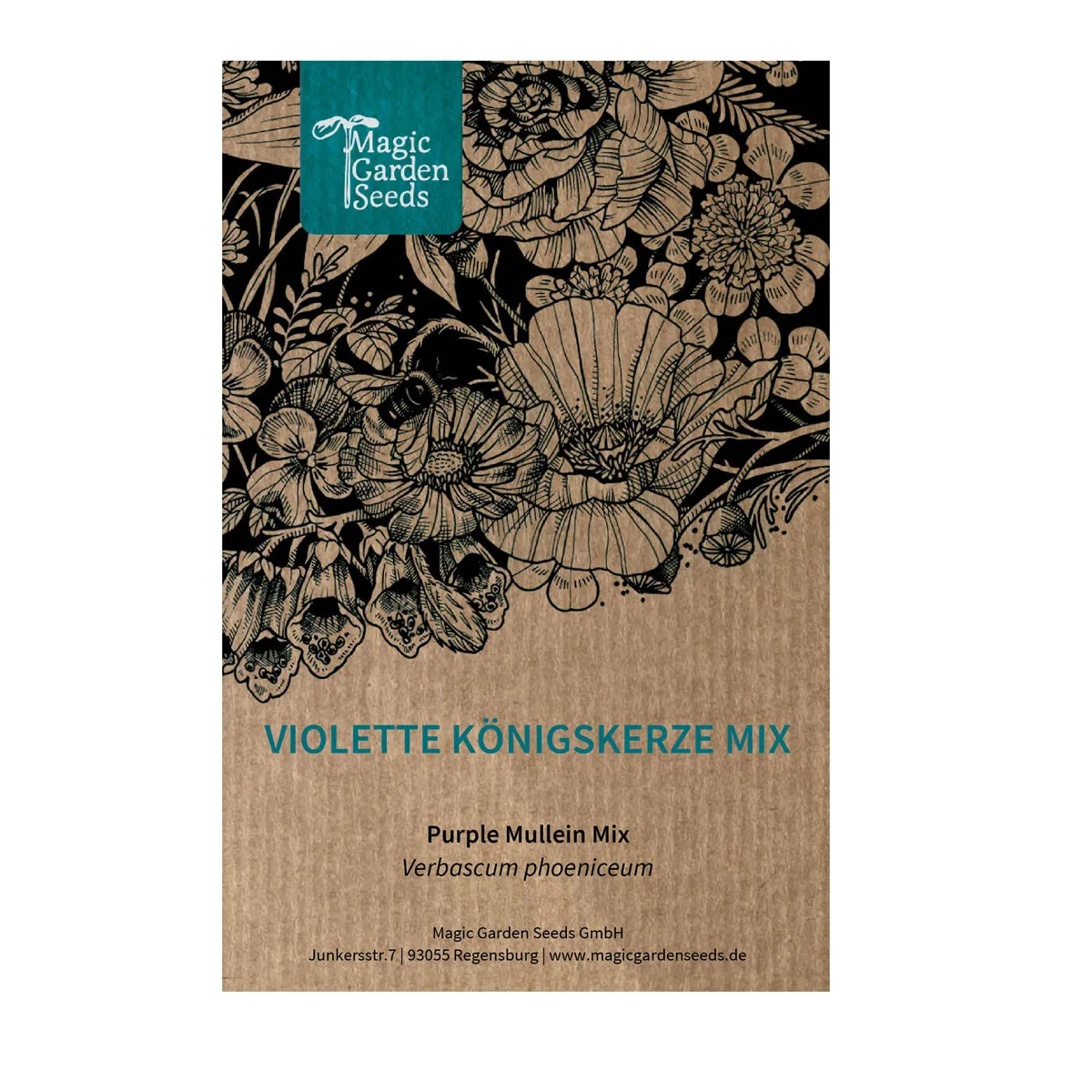
Purple mullein mix (Verbascum phoeniceum) seeds
- Airy mullein mix with violet, purple, pink and white flowers on slender, upright stems.
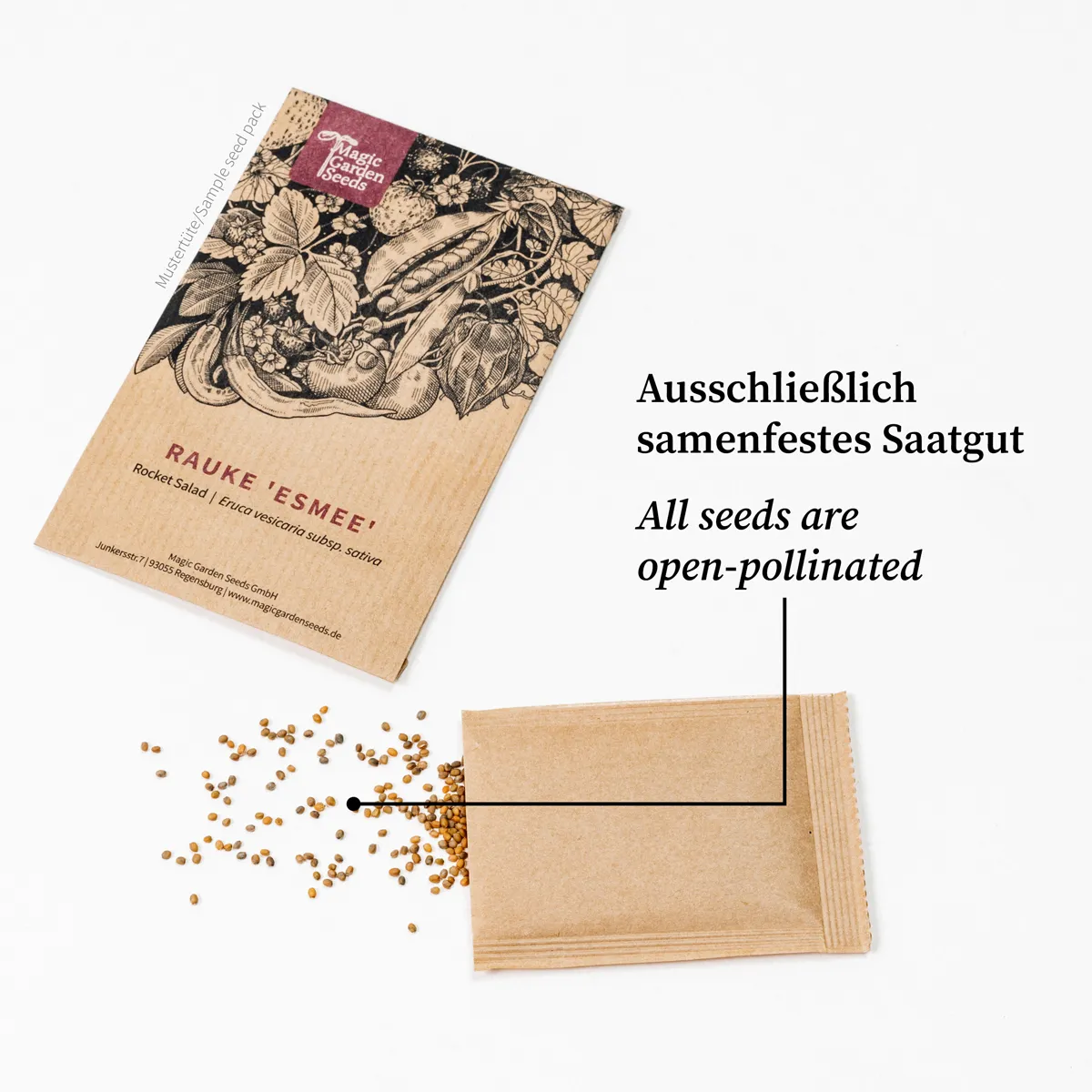
- Open-pollinated seeds - seed packet containing approx. 1000 seeds.
- Drought-tolerant, pollen-rich perennial for natural gardens, steppe beds, gravel gardens and sunny mixed plantings.
€2.49
Description
Purple mullein brings floating accents of colour to dry perennial beds
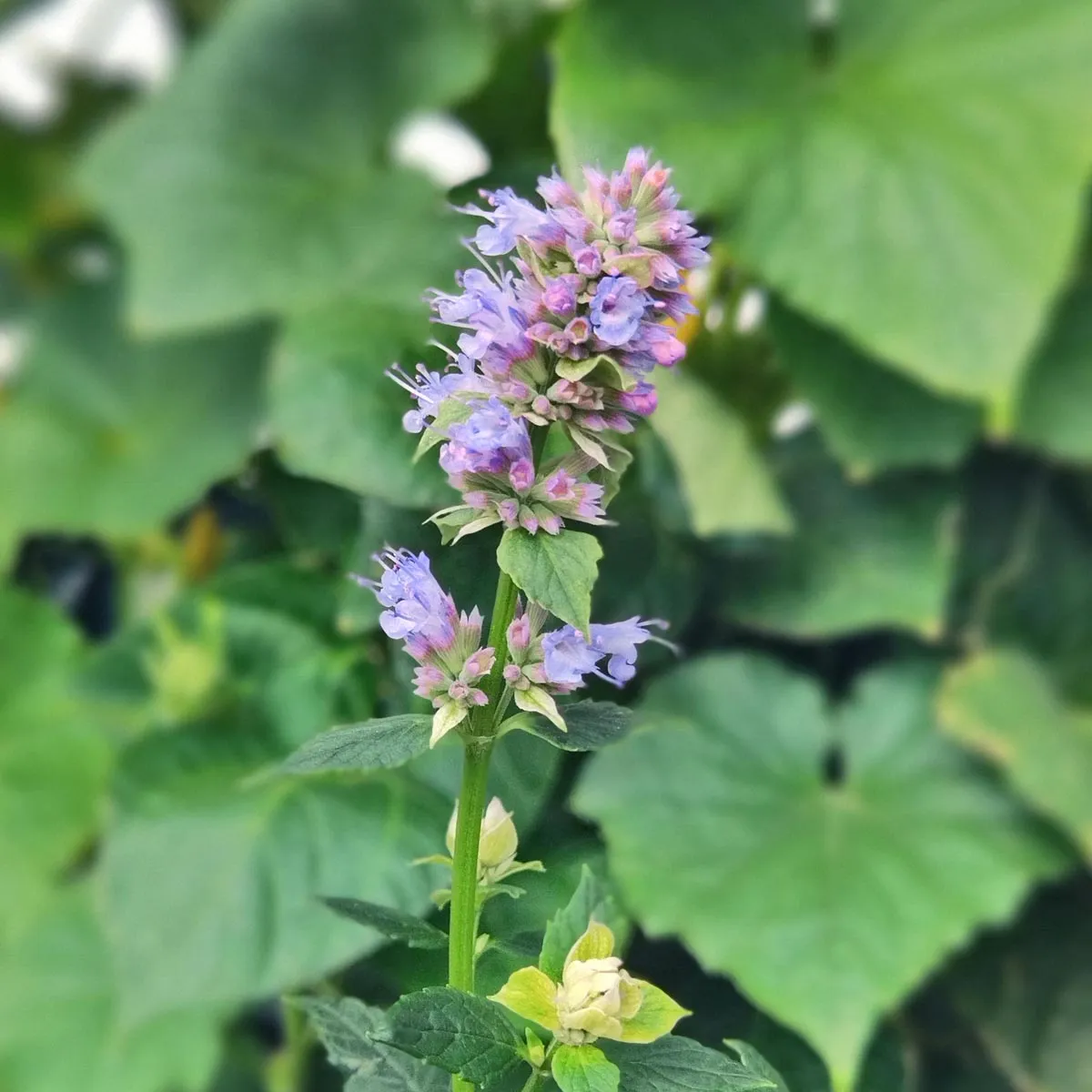
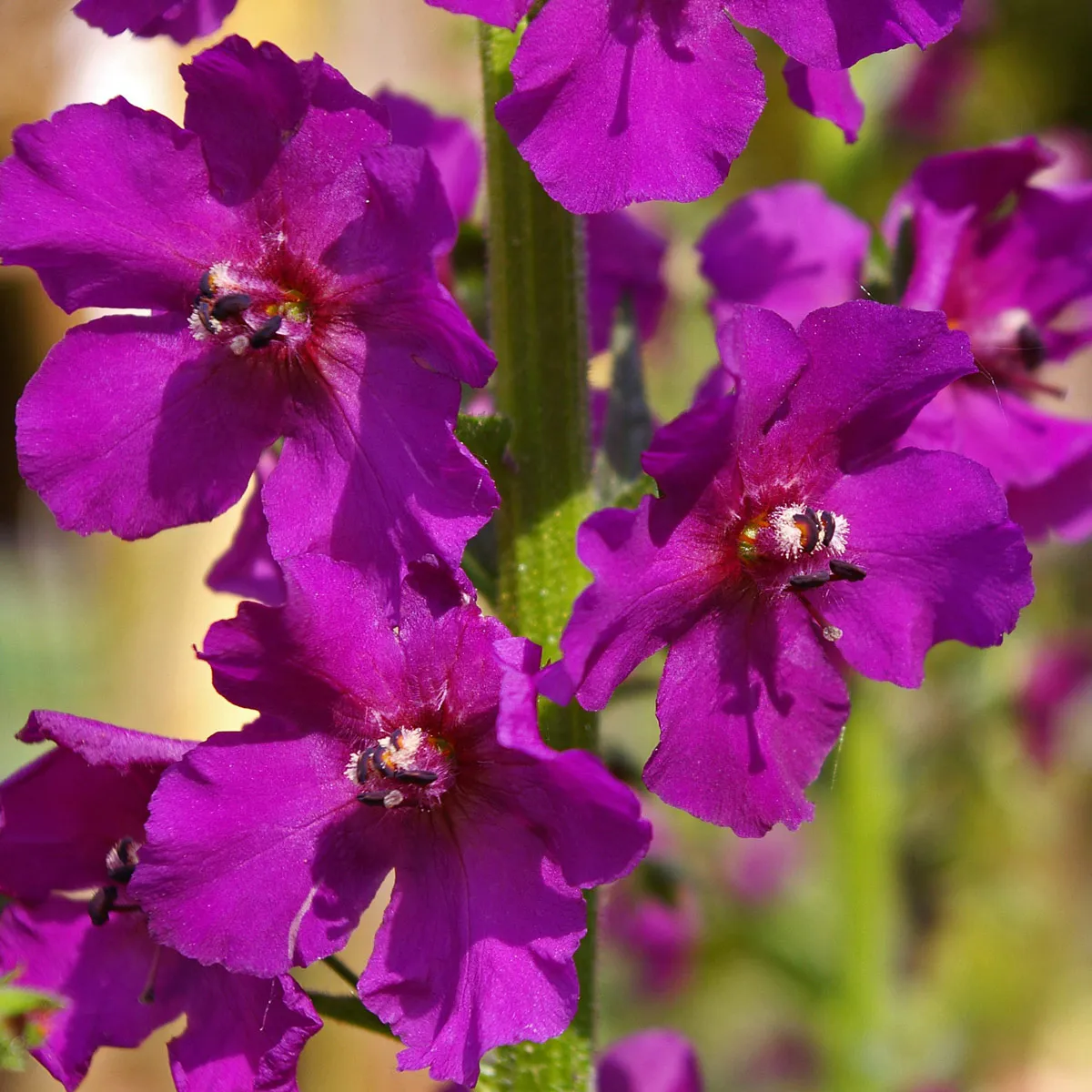
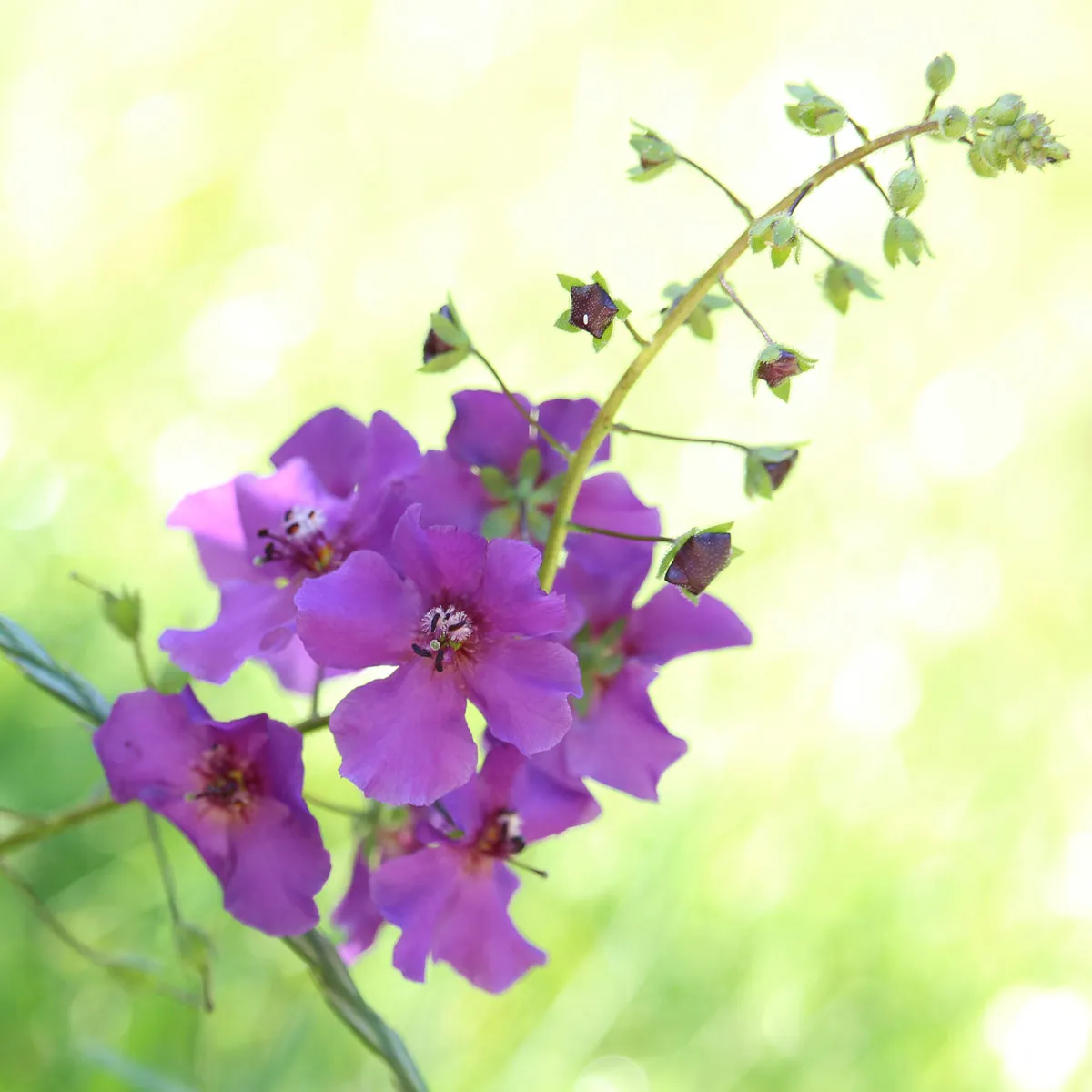
Purple mullein mix is an elegant, short-lived perennial with loose flower spikes in violet, purple, pink and white, adding height to the garden without appearing heavy.
Verbascum phoeniceum differs clearly from the mighty yellow mulleins: the plants usually remain lower, grow more slenderly and carry their coloured individual flowers loosely on upright stems. Above the basal leaf rosette, the flowers almost seem to float, creating fine vertical lines between grasses and other drought-tolerant perennials.
The colour mix is particularly suitable for natural gardens, steppe beds, gravel gardens and sunny perennial plantings. It looks beautiful in small groups between ornamental grasses, iris, spurge and other plants that prefer dry, poor sites. Its pollen-rich flowers are visited by bees, hoverflies, beetles and other insects.
Purple mullein also has an interesting botanical history. As early as the 18th century, it was observed that pollination with its own pollen often does not lead to seed formation. This so-called self-incompatibility made Verbascum phoeniceum an early model plant in pollination research and at the same time promotes the natural diversity of flower colours and seedlings.
The plants are short-lived, but can persist in the garden through self-seeding in suitable locations. Those who want new seedlings should allow some seed heads to ripen. Cutting back faded stems, on the other hand, can encourage the formation of further flowers.
Plant profile
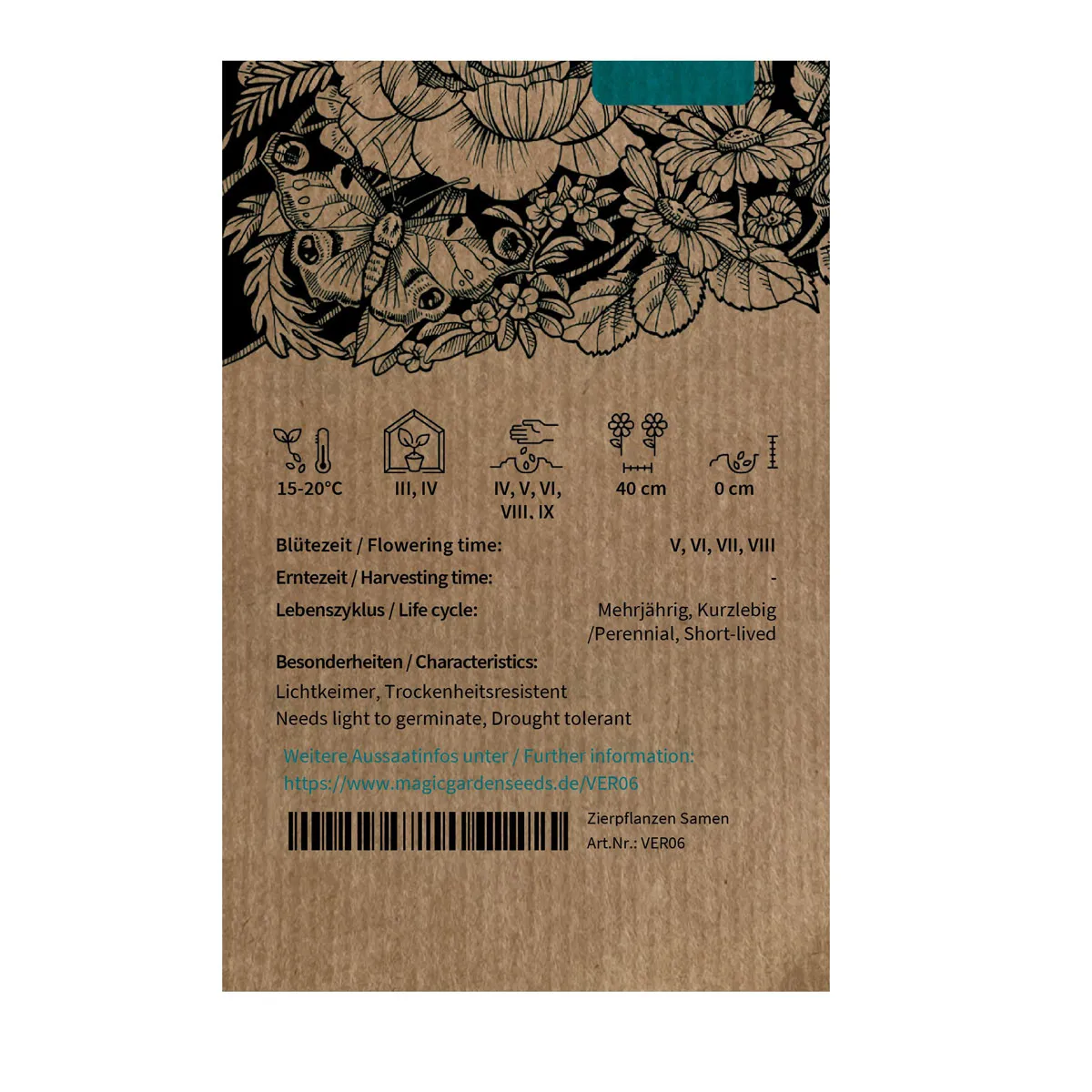
| Plant type | Herbaceous plant, Wildflower |
|---|---|
| Use | Good insect food plant, Medicinal plant, Ornamental plant, Scented plant |
| Lifecycle | Perennial, Short-lived |
| Species | Scrophulariaceae |
| Seed propagation | Conventional production |
| Region of origin | Central Asia, Eastern Europe, Mediterranean Region, Southern Europe |
| Characteristics | Drought tolerant, Food for bees, Needs light to germinate, Self-seeds, Short-lived |
| Eventual height | 40-80 cm |
| Flower colour | Lilac, Purple, Rosa, White |
| Flowering months | August, July, June, May |
| Root system | Taproot |
| Winter hardiness zones | 6 (-23 bis -18 °C) |
Growing instructions
| When to sow outdoors | April, August, June, May, September |
|---|---|
| Sowing depth | 0 cm |
| Germination temperature | 15-20°C |
| Germination time | 1-4 weeks, irregular |
| Climate | Dry, Temperate |
| Soil type | Chalky, Free-draining, Low nutrient levels, Undemanding |
| Sunlight | Full sun |
| Water requirement | Low, No waterlogging |
| Nutrient requirements | Light feeder |
| Planting distance | 40 cm |
Sowing and care
Sowing & care of purple mullein
The fine seeds of purple mullein can be started indoors from March or sown directly outdoors in spring. As mulleins need light to germinate, the seeds are simply scattered onto moist seed compost or finely prepared soil and pressed down lightly. Do not cover with soil, or cover only very thinly. Keep the substrate evenly moist until germination, without making it wet.
The young plants are planted out in their final position after the last stronger frosts. A planting distance of about 35 to 40 cm gives the loose rosettes and flower spikes enough space. Sowing in late summer is also possible, allowing strong leaf rosettes to develop before winter.
Verbascum phoeniceum prefers a fully sunny, warm position and poor, calcareous to neutral, very well-drained soil. Heavy soil should be improved with sand or fine gravel. Waterlogging and permanently moist, humus-rich soils significantly shorten the lifespan of the plants. Established specimens are drought-tolerant and only need additional watering during prolonged dry periods.
Faded flower stems can be cut back to encourage possible repeat flowering. For natural self-seeding, individual seed heads should be left standing and allowed to ripen fully.
Other names
Botanical name: Verbascum phoeniceum
German: Violette Königskerze, Purpur-Königskerze, Purpurrotes Wollkraut
English: Purple mullein, Mullein
French: Molène de Phénicie, Molène pourpre, Molène violette, Molène fausse-blattaire
Italian: Verbasco porporino, Verbasco
Spanish: Gordolobo púrpura, Verbascum phoeniceum
Dutch: Paarse toorts, Toorts
Login