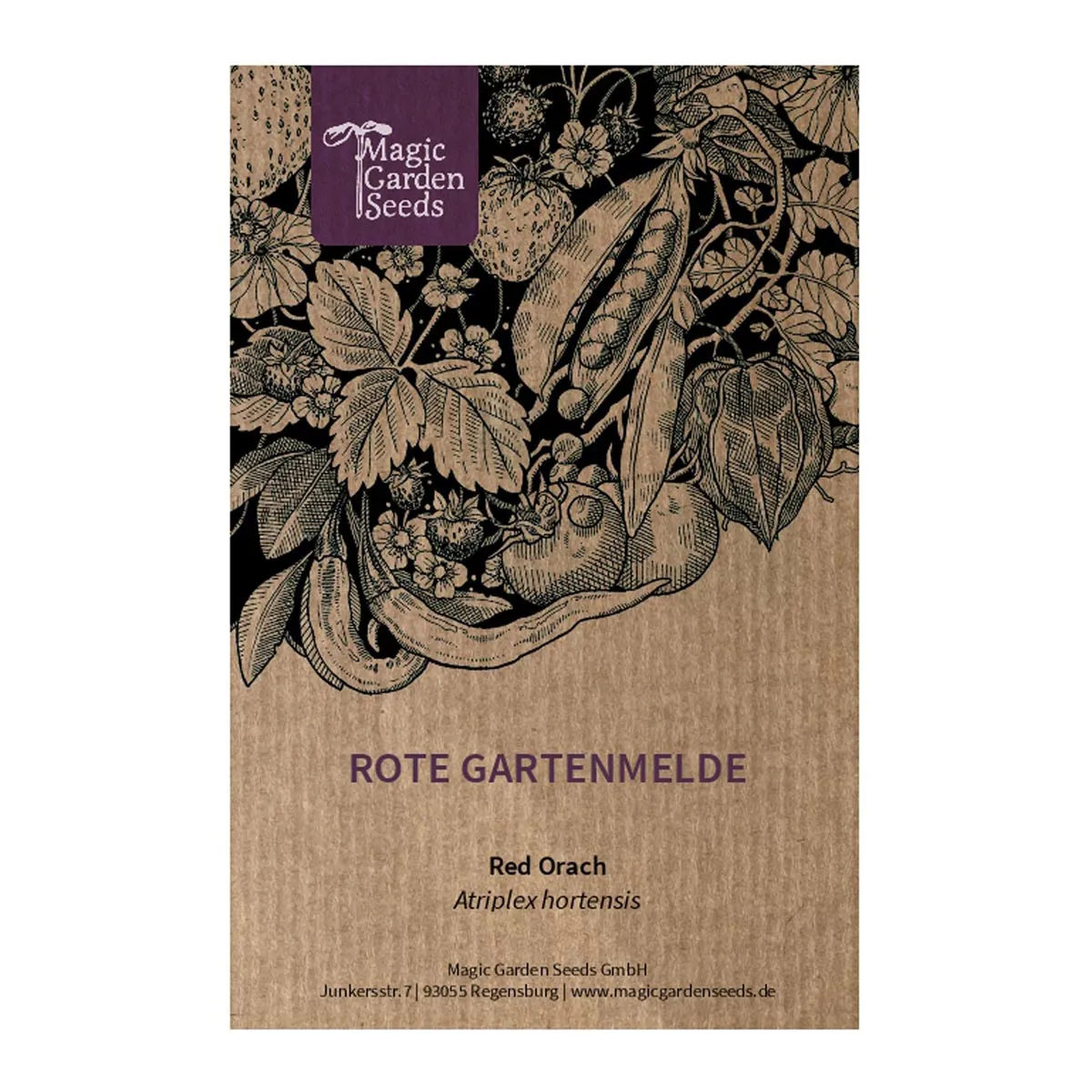
Red Orach (Atriplex hortensis) seeds
- Orach is very undemanding and provides a mild, tasty salad. Variety with red leaves.
- Contents: Approx. 200 seeds
- Open-pollinated variety, seed tested regularly.
Regular price:
€2.39
Product number: ATR04 GTIN: 4250601200743
Description
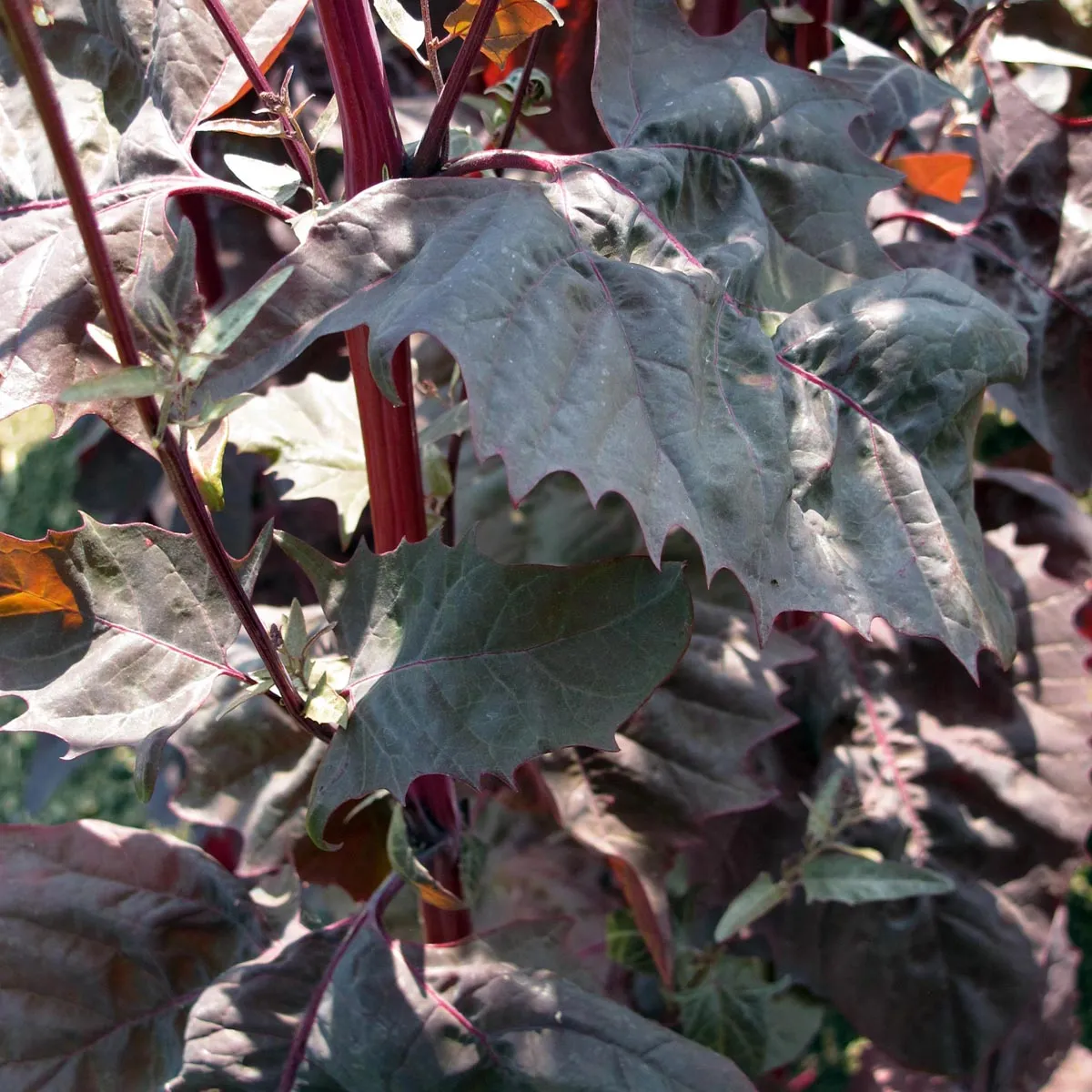
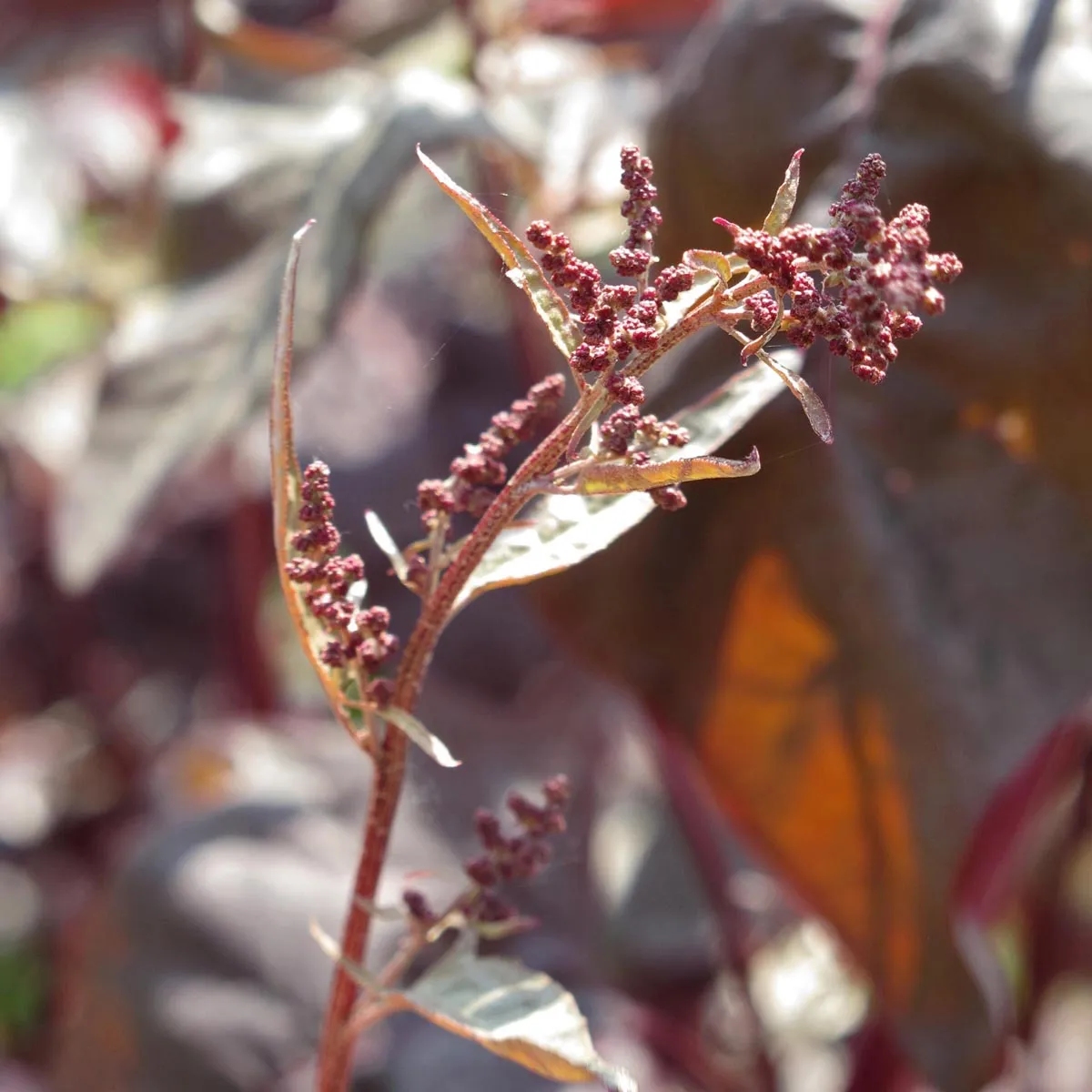
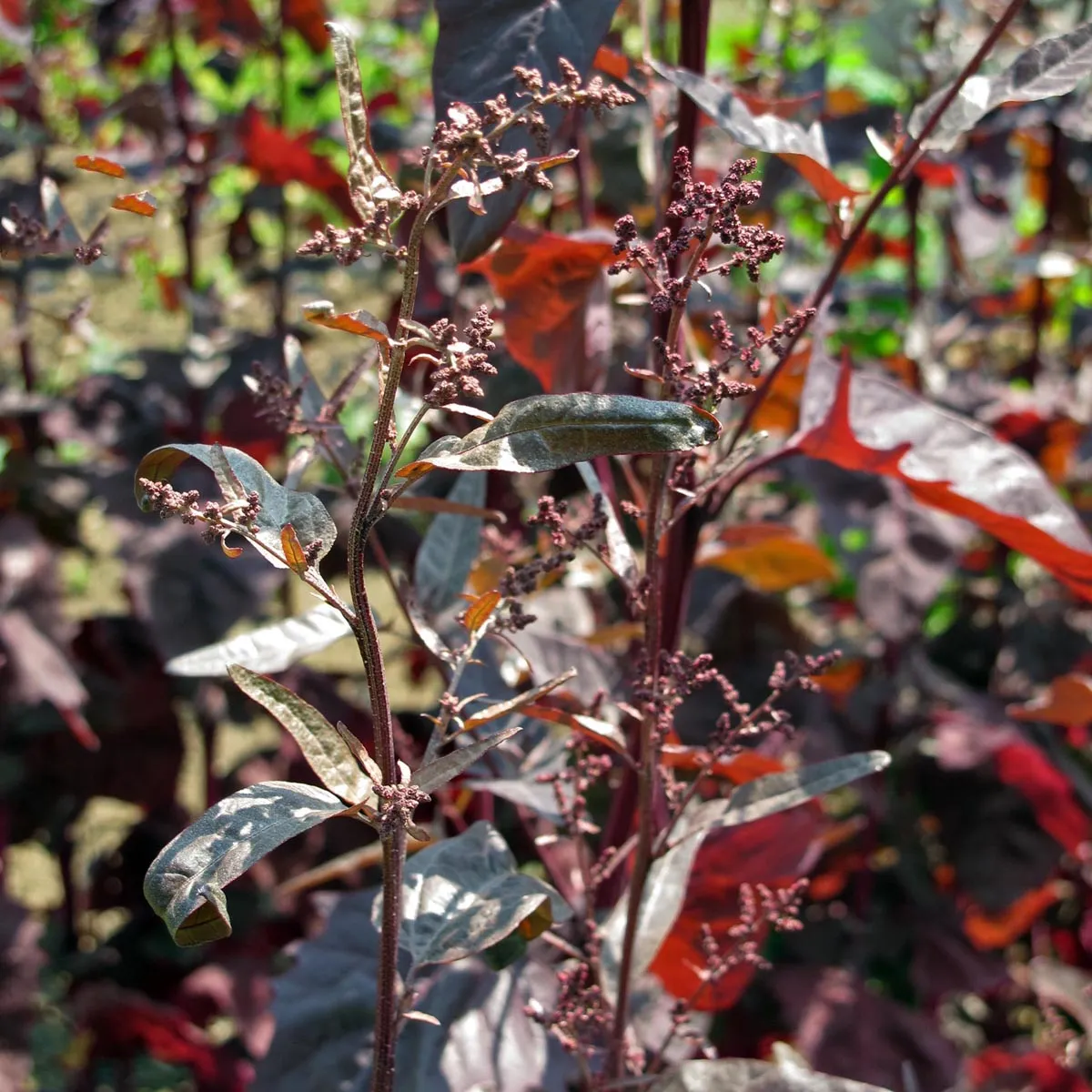
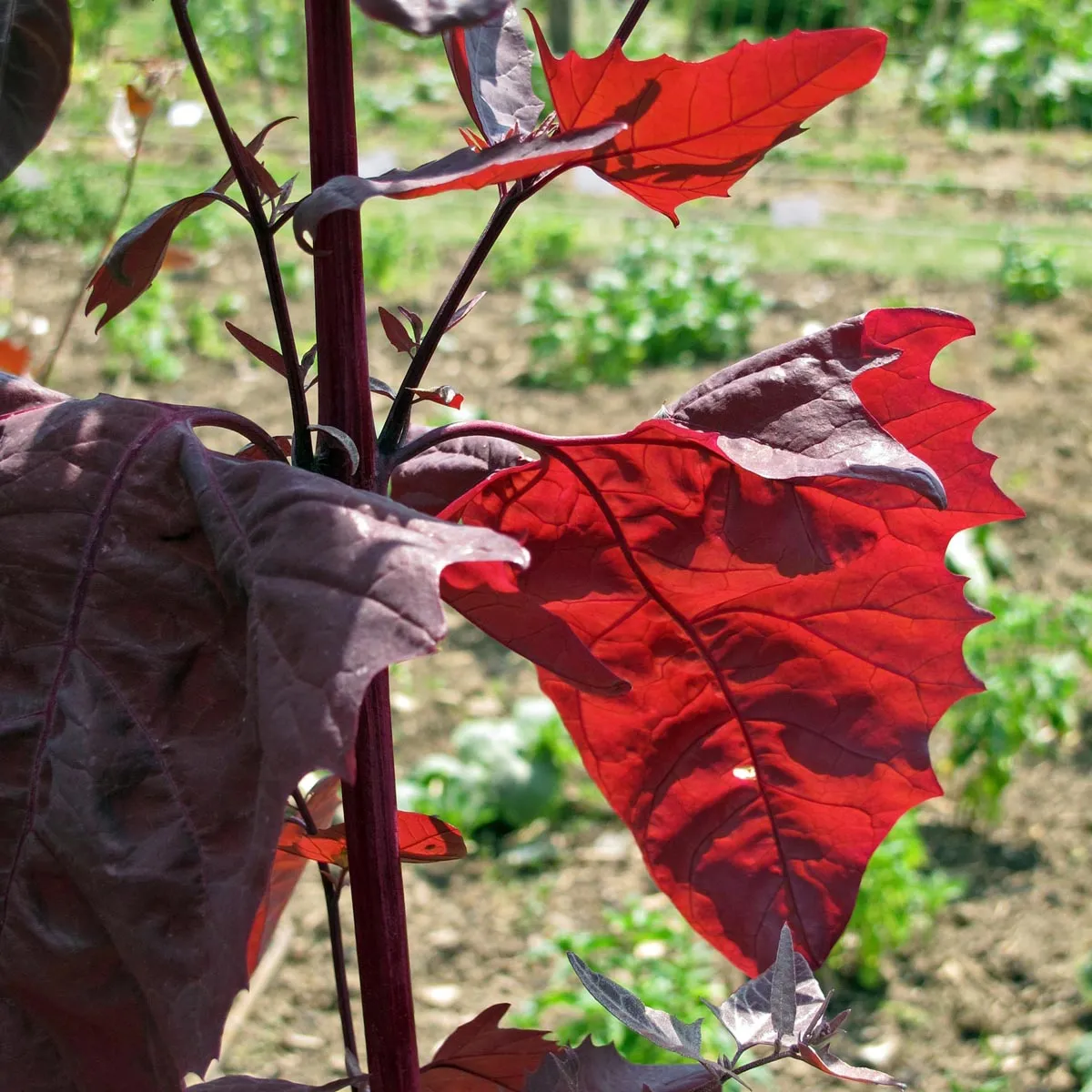
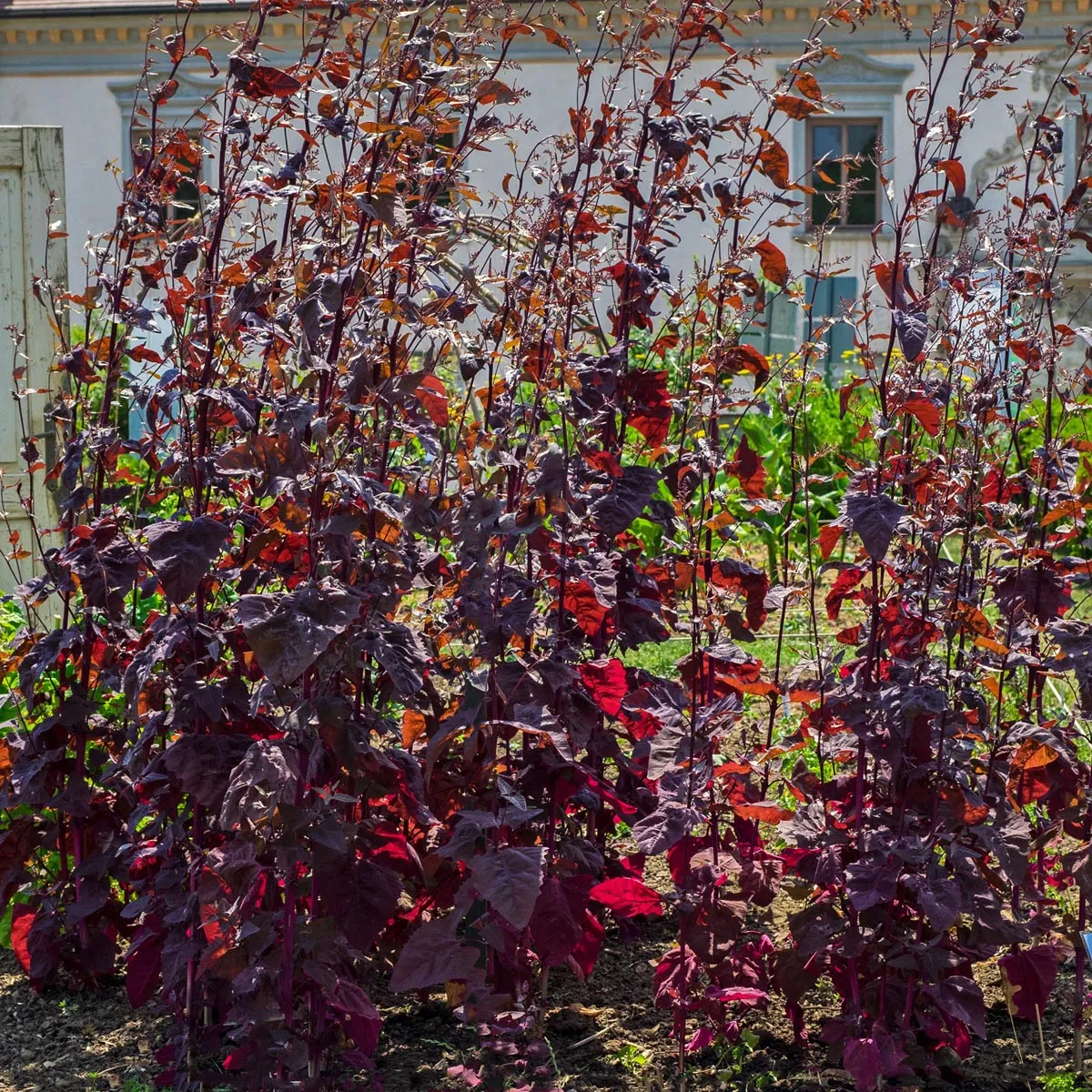
The Red Orach (Atriplex Hortensis) is a very impressive and decorative vegetable plant. Because of its high growth and the great bright red colouring of the leaves, stalks, and blossoms, it rather looks like a decorative plant than like a leaf vegetable variety.
The orach generally belongs to the old vegetable varieties or also to the rediscovered vegetable rarities. There's documentary proof of its cultivation in the Central European region as early as around 800 AC in the bequest of Charlemagne and slightly later also with Hildegard von Bingen.
What's harvested is the leaves that can either be eaten raw as a salad or boiled like spinach. With its entry into the vegetable garden in the 16th century, spinach was substantially involved in why orach has been forgotten. Nevertheless, its leaves taste more tender and milder and it's much more vigorous and more fertile.
The orach doesn't only appeal to the kitchen but is also quite noteworthy as a medicinal plant, dye plant, and biomass supplier.
Plant profile
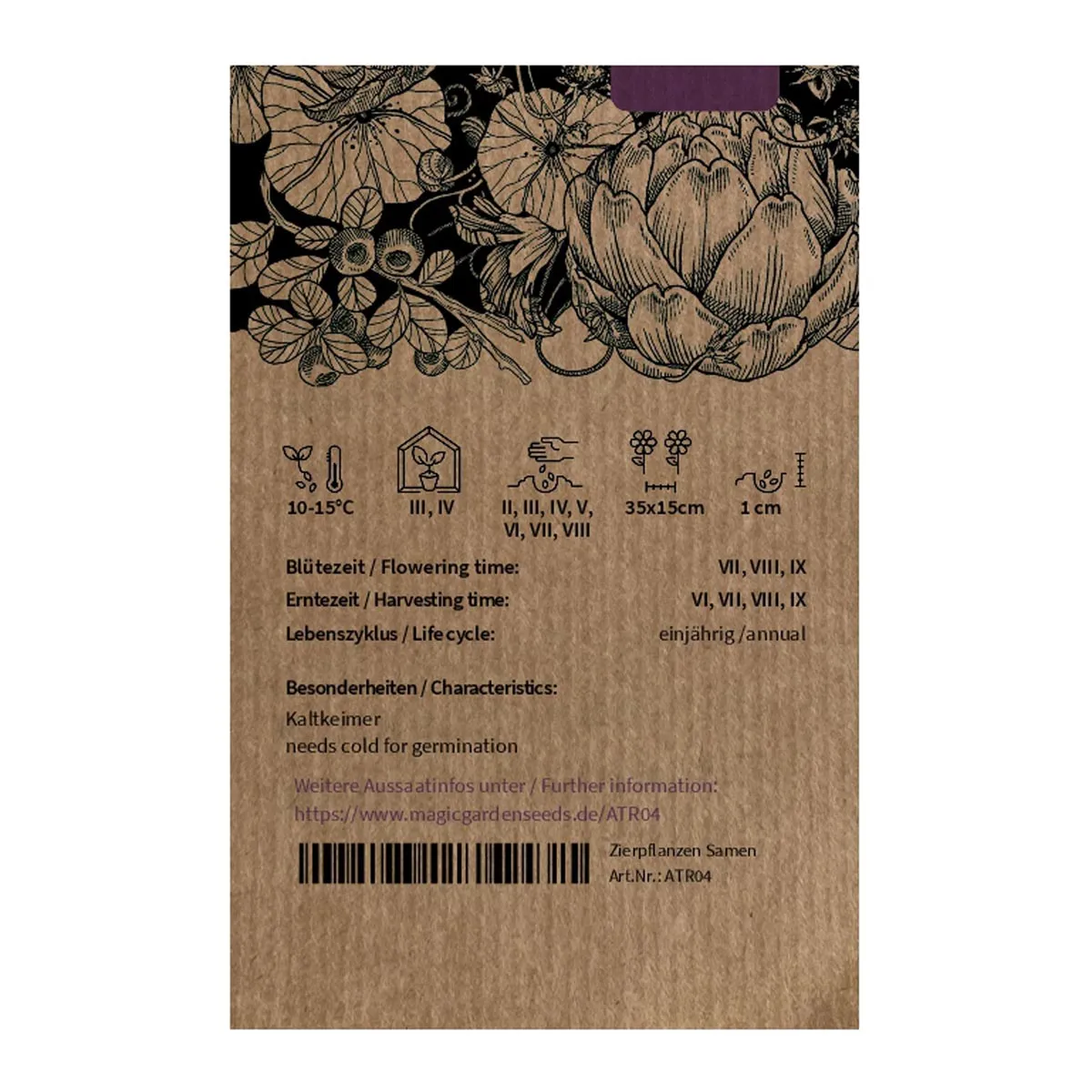
| Lifecycle | Annual |
|---|---|
| Species | Amaranthaceae |
| Characteristics | Needs cold to germinate |
| Flower colour | Green |
| Flowering months | August, July, September |
| Main harvest | August, July, June, September |
Growing instructions
| When to sow outdoors | April, August, February, July, June, March, May |
|---|---|
| Sowing depth | 1 cm |
| Germination temperature | 10-18°C |
| Germination time | 1-2 weeks |
| Sunlight | Full sun, Shade |
| Planting distance | 15 cm |
| Row spacing | 40 cm |
| Bad companion plants | Beetroot, Chard, Guter Heinrich |
Sowing and care
- Sowing period: As early as possible outdoors when the soil is still open. This is mostly the case from March. Until August, you can resow monthly.
- Sowing depth: 1-2 cm in rows or broadcast. Only work in flat.
- Ideal germination temperature: The orach already germinates at very low temperatures.
- Row spacing: 40 cm
- Planting distance: 35 x 15 cm
- Location: Loves sunny locations but also tolerates half-shade
- Soil: The orach is very undemanding and prospers on all soils, even on salty ones.
- Care: Needs little nutrients, likes it continuously moist. Regular hoeing of the seedlings promotes growth
- Harvest: 3-5 weeks after sowing if the plants have reached a minimum height of 20-30 cm by then. Either harvest the complete plant or pluck single leaves when the plant is larger. During the heyday, the plant loses taste and the leaves turn coarser. By cutting back radically to the lowest leaves, new growth can be forced and a new harvest is possible after approximately 4 weeks.
Once plucked, the leaves only last a few hours until they wilt. Therefore, they should be consumed very fast. Alternatively, the leaves of the orach can be frozen like spinach. - Family: Amaranths (Amaranthaceae)
Other names
Botanical name: Atriplex hortensis, A. acuminata, A. rubra, Chenopodium benghalense
German: Spanischer Salat, Spanischer Spinat, Orache, Molkenkraut, Maiflitsch
English: Garden orache, Mountain spinach, French spinach, Orache, Arrach
French: Arroche, Arroche des jardins, Arroche cultivée, Arronse, Belle-dame, Bonne-dame, Chou d’amour, Épinard géant, Faux épinard, Érode, Folette
Italian: Atreplice degli orti, Bietolone rosso
Spanish: Armoles, Armuelle, Armuelle de huerta, Armuelles, Armuelles blancos, Armuelles cultivados, Armuelles de huerta, Armuelles de zorra, Armuelles domésticos, Armuelles silvestres, Bledos moles, Bledos reales colorados, Cogolletes, Espinaca de carne, Ramos de coral
Reviews
Login
No reviews yet. Will you write the first one?