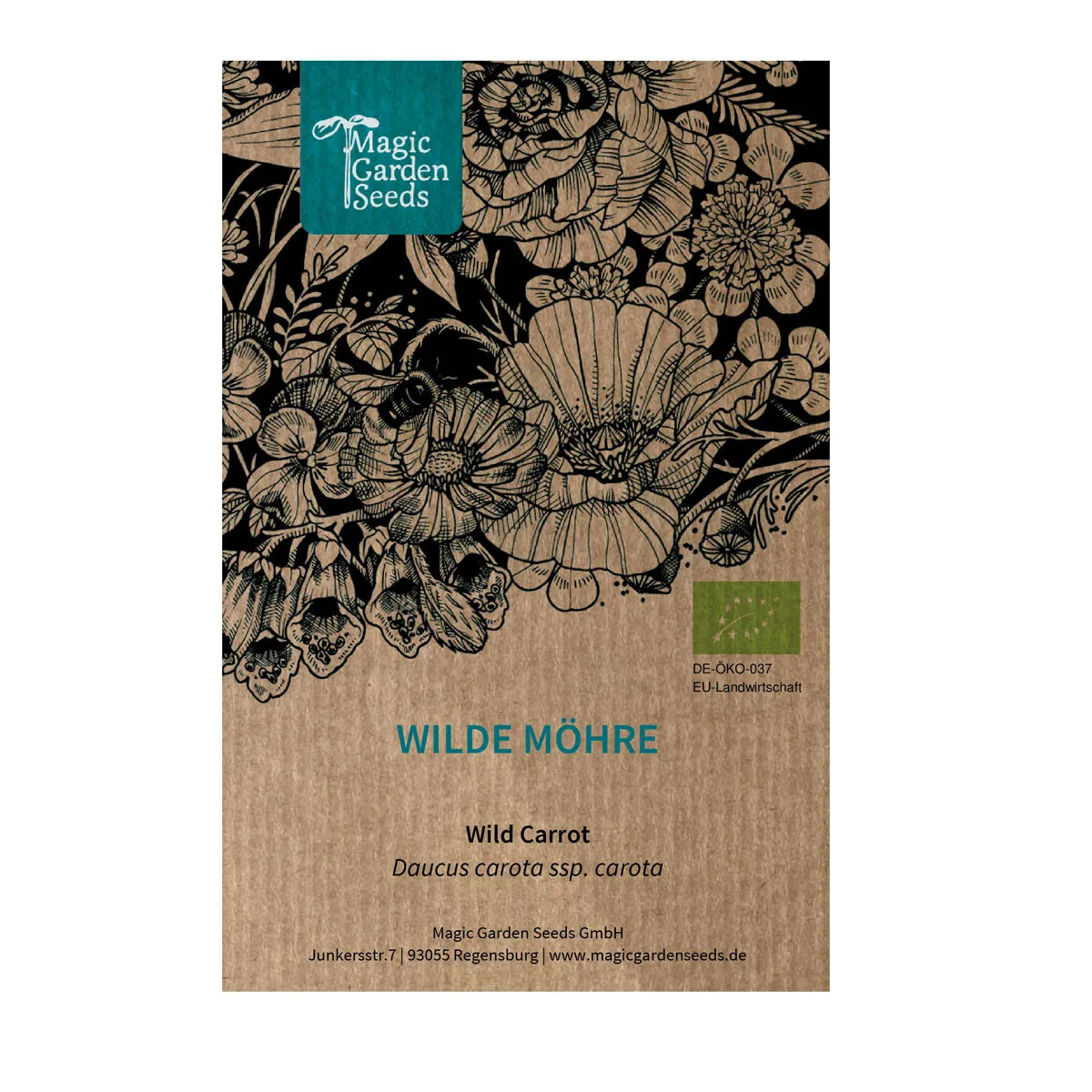
Wild Carrot (Daucus carota ssp. carota) organic seeds
- Native biennial wildflower with delicate white umbels, aromatic young roots and high value for numerous insects.<ai>
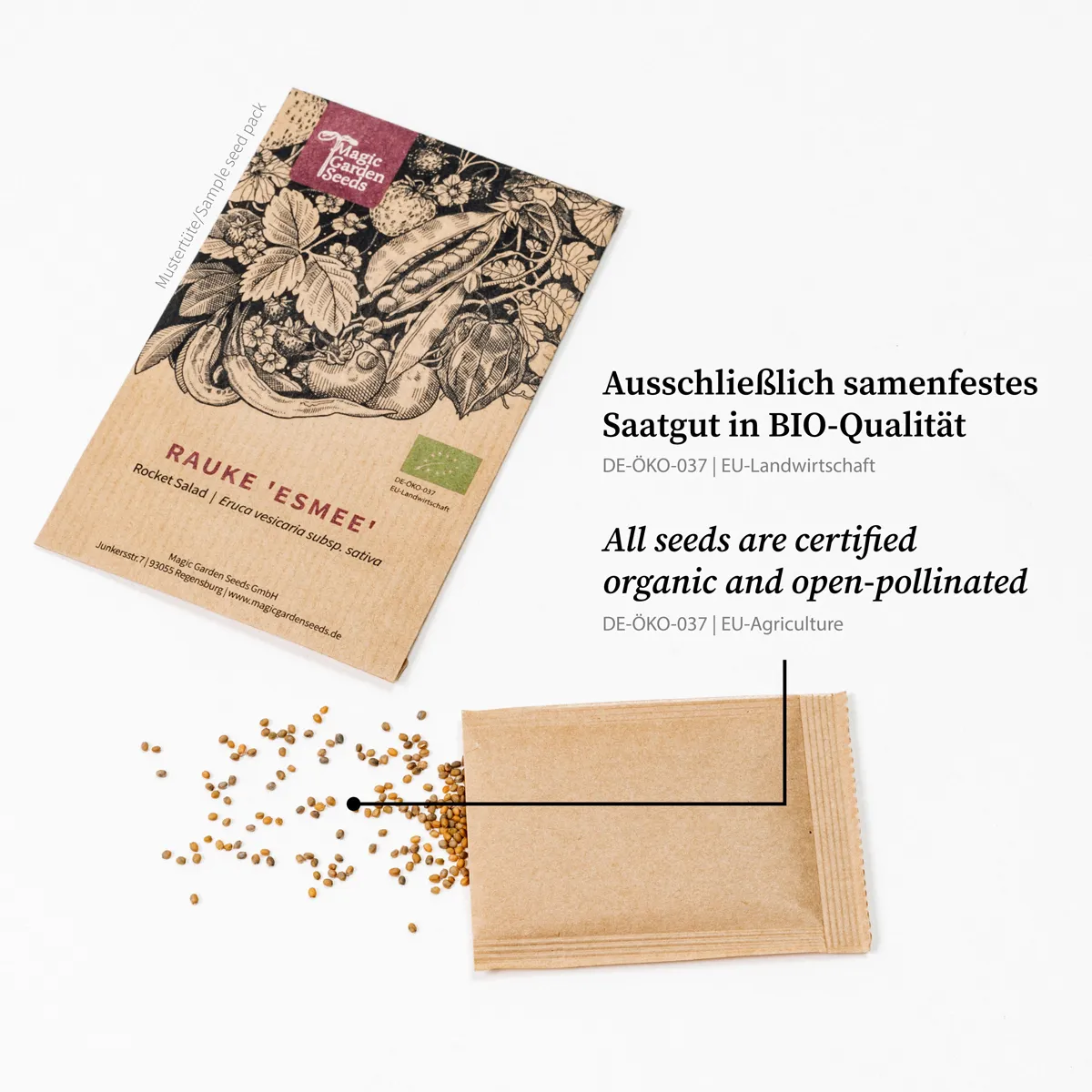
- The seed packet contains approx. 1000 seeds of open-pollinated organic seed from certified organic cultivation.<ai>
- Robust and hardy plant for sunny natural gardens, wildflower areas and natural-style insect beds.<ai>
€2.49
Description
Native wildflower for the ecological natural garden
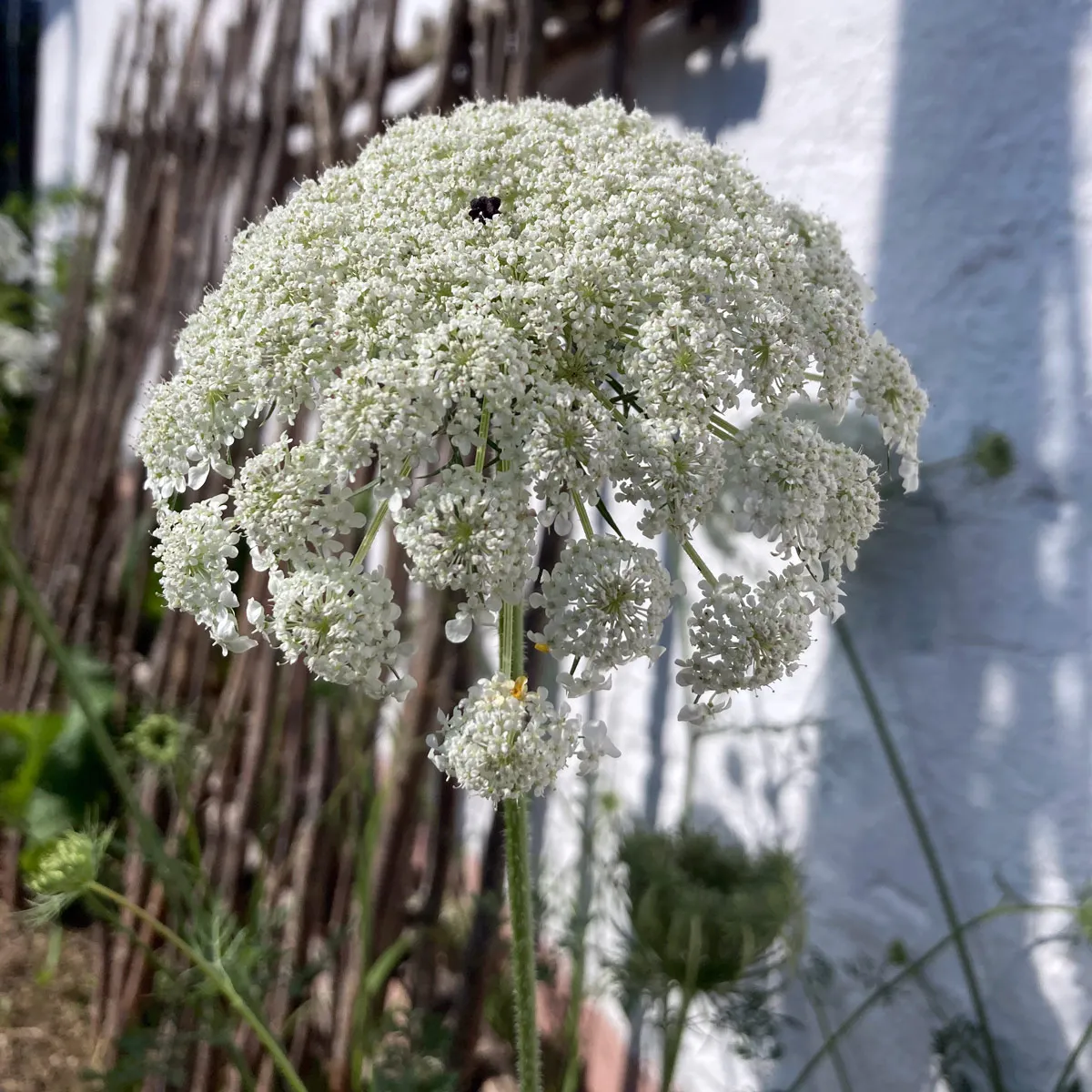
Wild carrot is a native biennial wild plant from the umbellifer family and belongs to the group of forms from which our modern garden carrots originated. In the first year, it forms a low-growing rosette of finely feathered leaves and a long taproot. In the second year, it develops upright flower stems, usually 30 to 100 cm tall, with numerous delicate white umbels.
Its roots are considerably thinner than those of cultivated carrots and are beige to brownish-white in color. Young roots are tender and have an intense carrot aroma. They can be used, for example, to prepare a flavorful vegetable bouillon. As they age, the roots become fibrous, pungent and eventually woody. Once the plant begins to flower in the second year, they should therefore no longer be harvested for the kitchen.
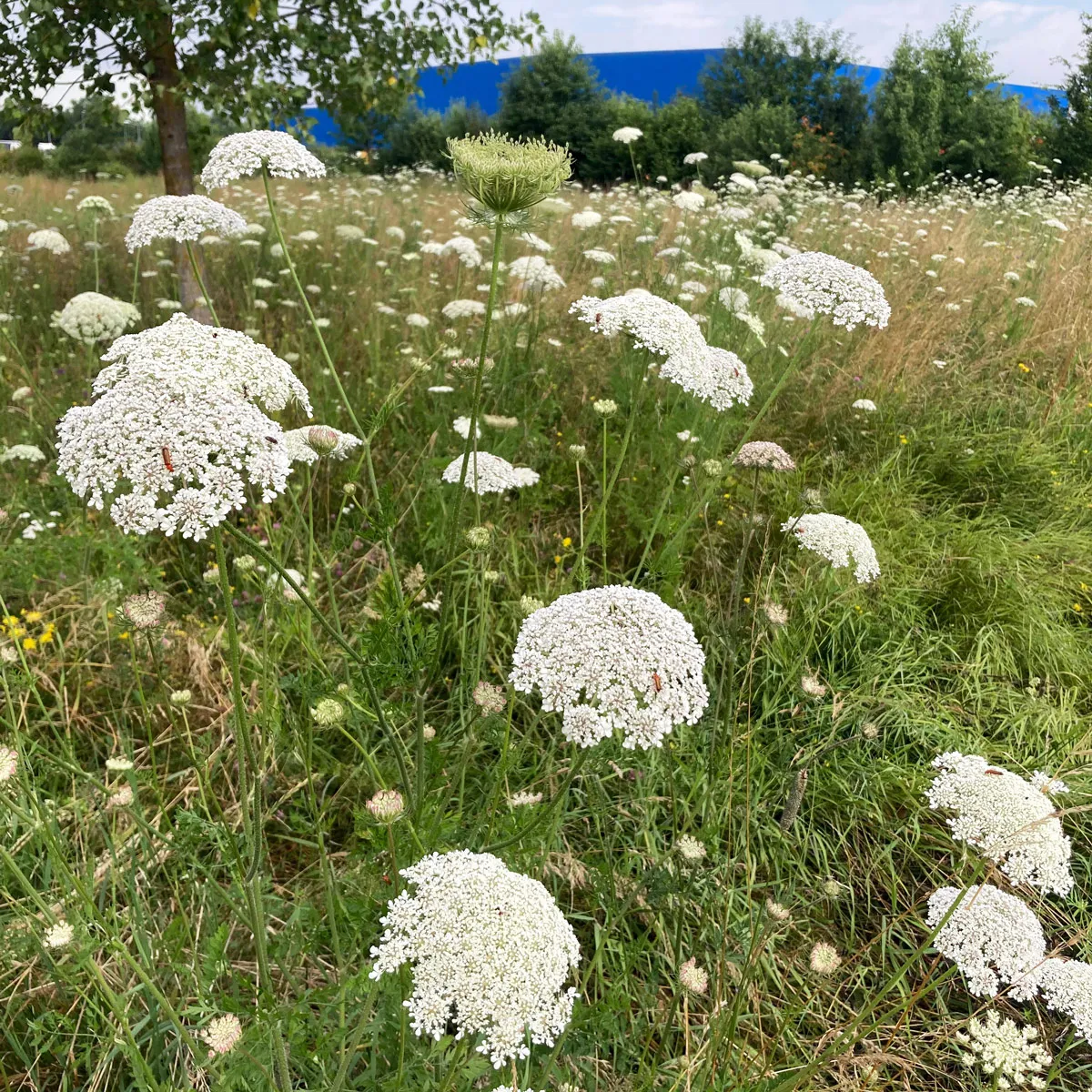
Wild carrot prefers to grow in sunny meadows, along roadsides, on slopes and in other open locations. It is extremely robust and thrives in many different soils. Loose, deep and well-drained sandy-loamy or loamy soils are especially suitable. It also copes comparatively well with rather dry, nutrient-rich or slightly saline locations.
Organic seeds for natural gardens and diverse habitats
These seeds come from organic cultivation and are especially suitable for natural-style gardens, wildflower areas, insect beds and extensively maintained garden areas. Wild carrot combines a natural, airy growth habit with high ecological value and fits well into plantings with native wildflowers and herbs.
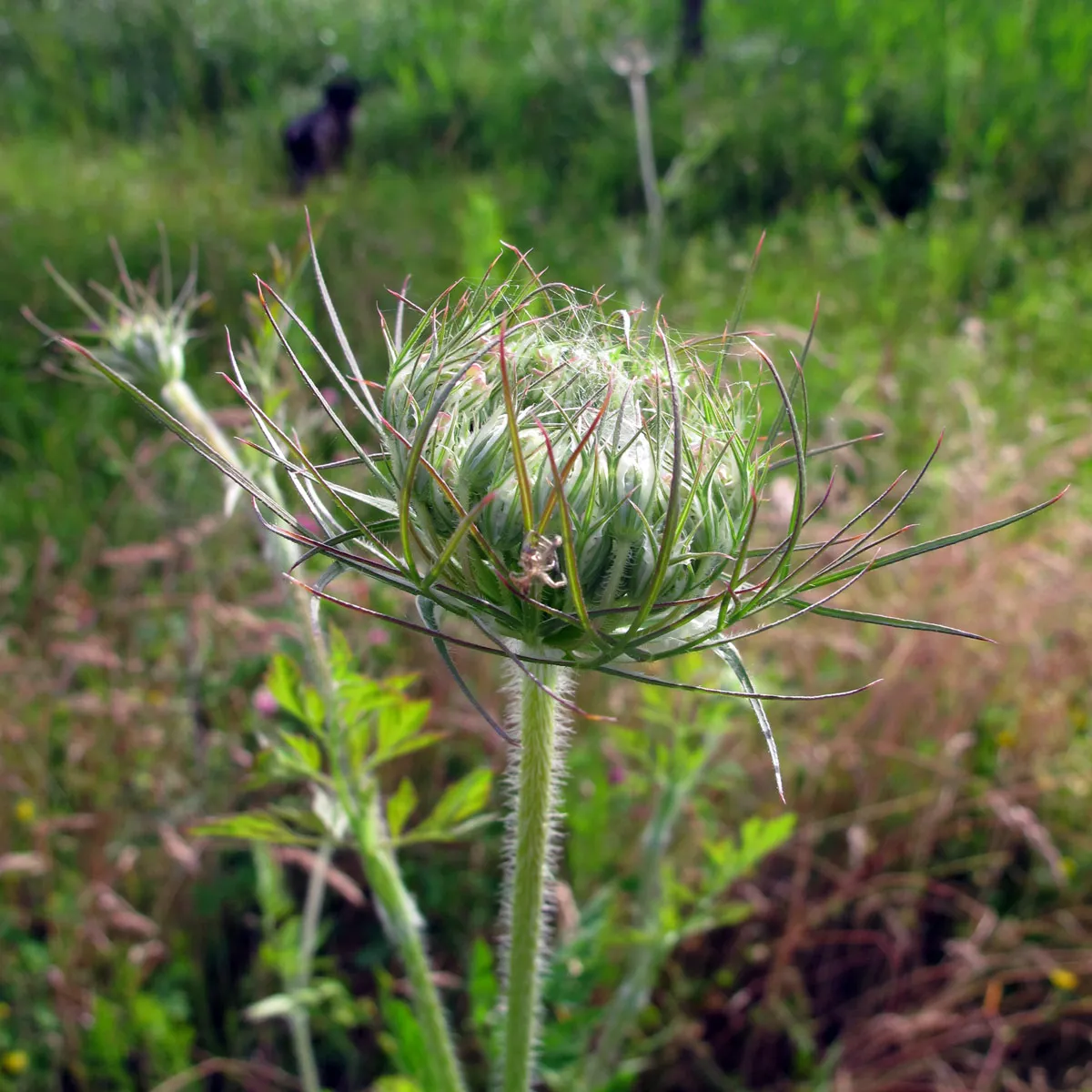
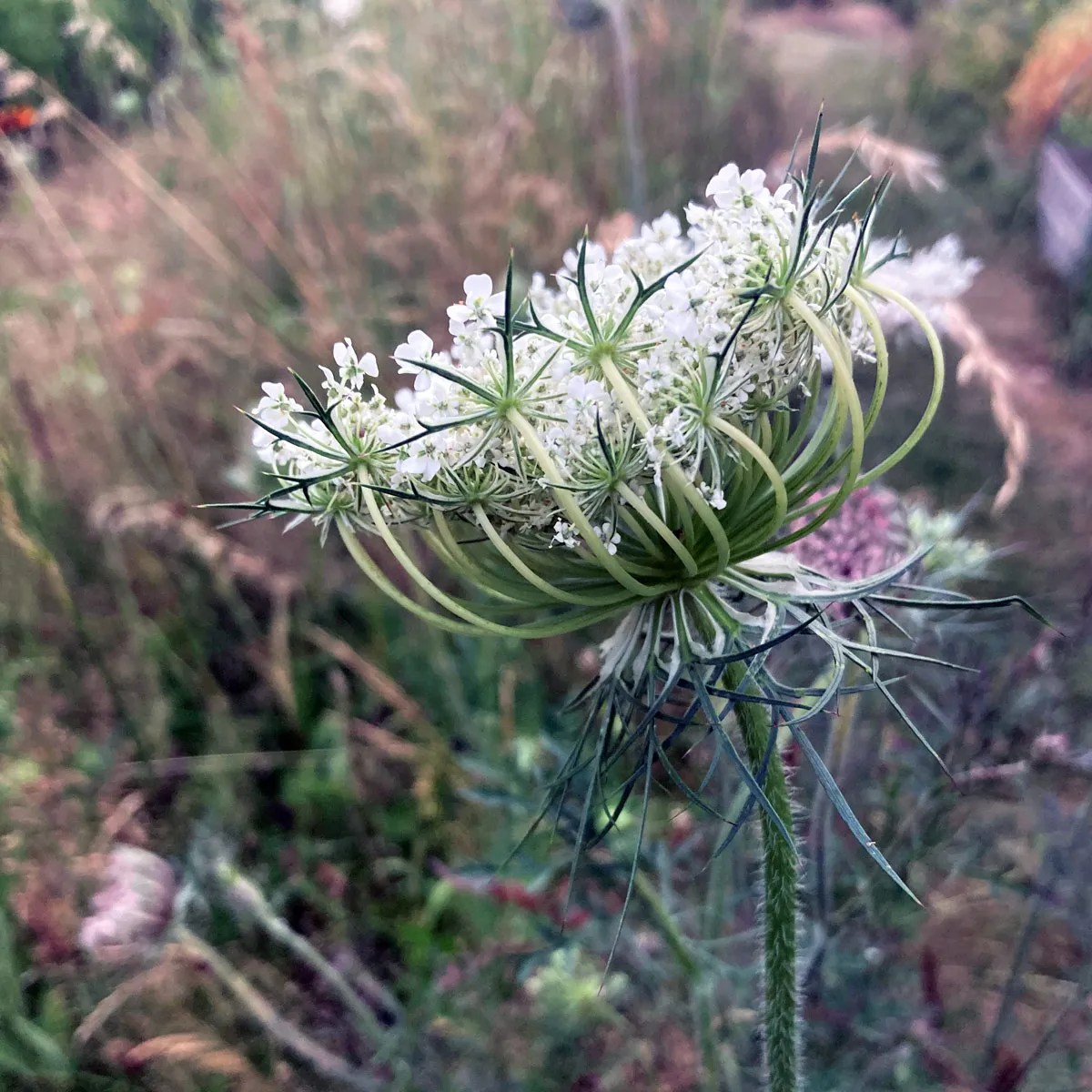
From June to September, the large white flower umbels appear. There is often a single dark red to almost black flower in the center of an umbel. After pollination, the umbels characteristically draw together into a nest-like shape. The mature seed heads are also decorative in autumn and winter and can be used for dried bouquets.
The open umbel flowers offer easily accessible nectar and pollen for bees, wild bees, hoverflies, beetles and numerous other insects. Wild carrot is also important for butterflies. Among other things, it serves as a food plant for swallowtail caterpillars. This makes it a valuable species for gardens where biodiversity and natural cycles are to be encouraged.
Ancient spice and useful plant
Wild carrot was used as a food, spice and medicinal plant long before modern garden carrots were developed. In addition to the young roots and leaves, the aromatic seeds in particular were used. Carrot seeds can be used like caraway as a bread spice and give savory dishes a spicy, slightly earthy note.
Essential carrot seed oil is also obtained from the seeds and is traditionally used in cosmetics and medicine. It should not be confused with orange-colored carrot oil, which is usually produced by macerating the roots of cultivated carrots in a fatty plant oil.
In historical and folk-medicinal traditions, the seeds of wild carrot are also mentioned in connection with contraception. However, a reliable contraceptive effect has not been sufficiently scientifically proven. The seeds must therefore not be regarded as a contraceptive or as a substitute for recognized contraceptive methods.
Plant profile
| Lifecycle | Biennial |
|---|---|
| Species | Apiaceae |
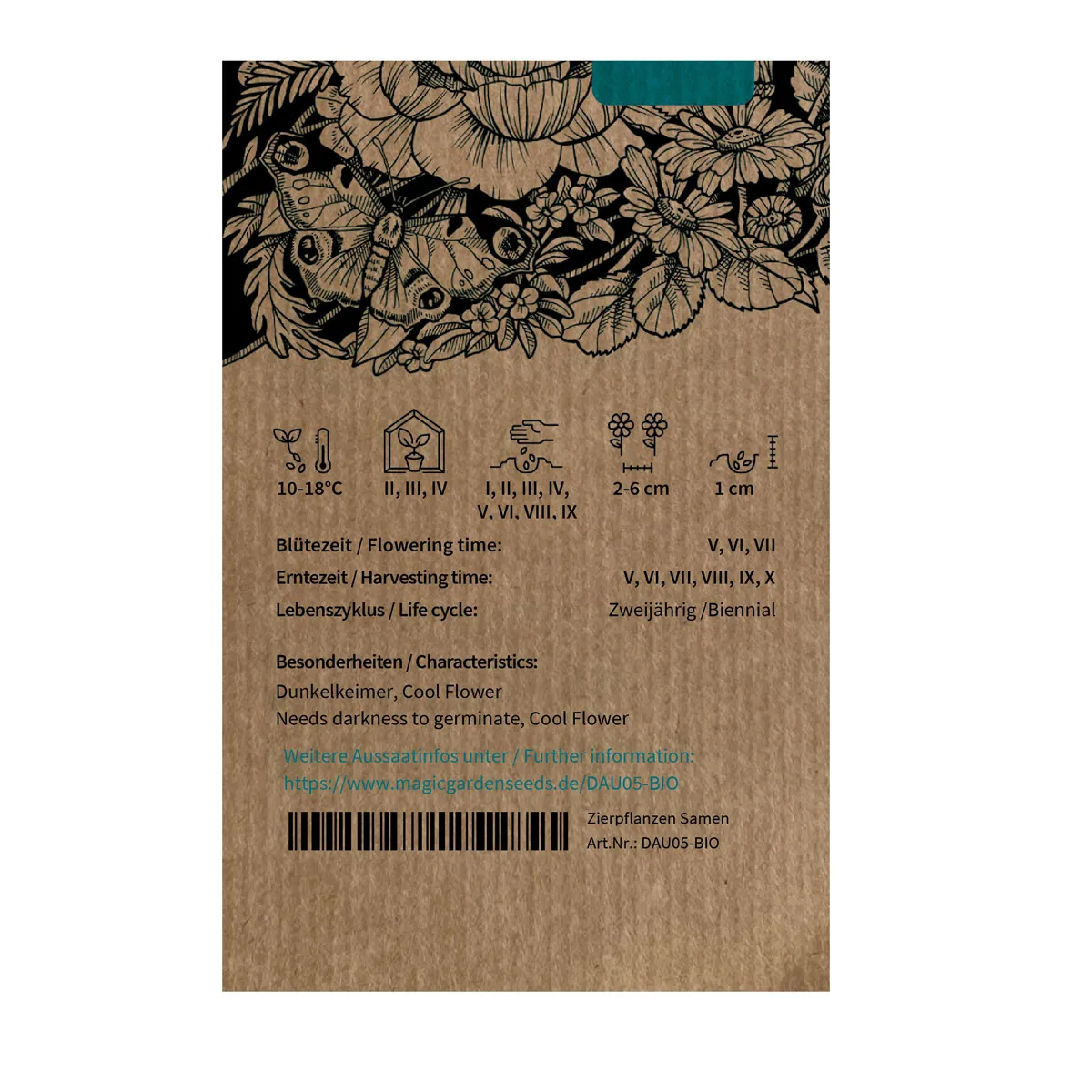
| Characteristics | Needs darkness to germinate |
| Eventual height | 30-150 cm |
| Flower colour | White |
| Flowering months | July, June, May |
| Main harvest | August, July, June, May, October, September |
| Root system | Taproot |
| Winter hardiness zones | 7 (-18 bis -12 °C) |
Growing instructions
| When to sow outdoors | April, August, February, January, June, March, May, September |
|---|---|
| Sowing depth | 1 cm |
| Germination temperature | 10-18°C |
| Germination time | 2-6 weeks |
| Climate | Temperate |
| Sunlight | Full sun |
| Water requirement | Medium |
| Planting distance | 2-6 cm |
| Good companion plants | Cauliflower, Chard, Dill, Endive, Knoblauch, Leaf Lettuce, Leek, Lettuce, Onion, Peas, Radish |
| Bad companion plants | Celeriac, Fennel, Parsley, Parsnip |
Sowing and care
Sowing and caring for Wild Carrot
Wild Carrot is best sown directly in its final location, as its long taproot makes later transplanting difficult. Outdoor sowing is possible from March to July. Sowing in September or October can also be successful. Early sowing under glass is possible from January, although the young plants should be planted out as early and carefully as possible.
Sow the organic seeds about 0.5 to 1 cm deep, cover lightly with soil and press down carefully. In heavy soils or soils that dry out quickly, the seeds can be sown a little deeper, but preferably not deeper than about 2 cm. A spacing of around 30 to 45 cm between the rows is recommended. After emergence, the young plants can be thinned to about 5 to 20 cm apart, depending on the desired growth habit.
Germination is slow and sometimes irregular. Under favorable conditions, the first seedlings appear after about two to four weeks, though it can occasionally take longer. During this time, the soil should be kept evenly moist without waterlogging. A few fast-germinating radish or dill seeds can be mixed in to mark the rows. Radishes are harvested early and at the same time help loosen up the stand. Dill should be removed as soon as it shades the young carrot plants too much.
A sunny location with deep, loose and preferably stone-free soil is ideal. Fresh manure is unsuitable. If fertilization is necessary, only a small amount of mature compost should be used. Since the young plants grow slowly at first, the area must initially be kept regularly free of weeds. Crusted soils should be loosened carefully after heavy rainfall.
During germination and during longer summer dry periods, an even water supply is important. Well-rooted plants later tolerate drought and require little care. Wild Carrot is hardy and normally survives winter without special protection.
After the seeds have ripened, the plant often self-seeds in suitable locations. If a natural development of the stand is desired, some seed heads can be left standing. If spreading is to be limited, the umbels should be cut off before the seeds are fully ripe.
Other names
Botanical name: Daucus carota
German: Wilde Möhre, Wilde Karotte, Gewöhnliche Möhre, Gemeine Möhre
English: Wild Carrot, Queen Anne’s Lace, Bird’s Nest, Bee’s Nest Plant
French: Carotte sauvage, Carotte commune
Italian: Carota selvatica, Carota comune
Spanish: Zanahoria silvestre, Zanahoria salvaje
Dutch: Wilde peen, Wilde wortel, Peen
Login