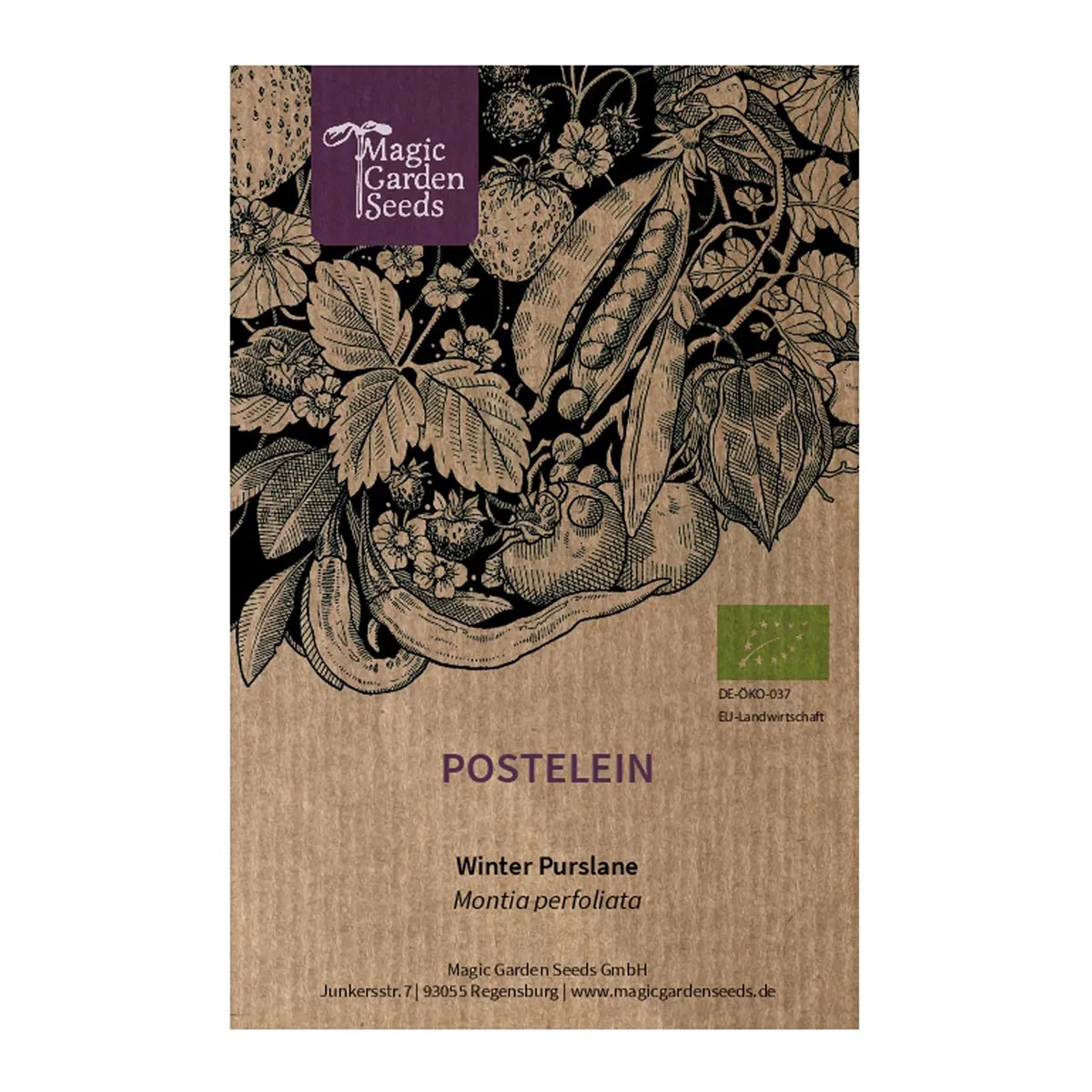
Winter Purslane (Montia perfoliata) organic seeds
- Very versatile, healthy, early leaf vegetable with good taste.
- Contents: Approx. 750 seeds
- Open-pollinated variety, seed tested regularly
Regular price:
€2.79
Content: 750 Single seed
Product number: MON02-BIO GTIN: 4251420515995
Description
Winter Purslane, Indian Lettuce, Spring Beauty, or Miner's Lettuce: All of these are names for Montia or Claytonia perfoliate, very delicious and healthy winter lettuce.
The names Indian Lettuce and Miner's Lettuce are both an indicator of the plant's derivation as it originates from the North American West Coast, where it has already been used as a food and medicinal plant by American natives at the time of Christoph Columbus. Later, at the time of the gold rush, white purslane also nourished many gold miners. That's where its journey to Europe has started. There, it can be found as a neophyte widely spread on acres and weed fields, especially in the North West, today.
Winter purslane is rich in vitamin C, magnesium, calcium, and iron and, for a leaf vegetable, contains very little nitrate. It's easy to cultivate and a true allrounder in use as every part of the plant can be processed: Leaves and stalks can be eaten as a salad when they are freshly harvested and are mild and nutty in taste like lamb's lettuce - blanched shortly they make good spinach. The blossoms are edible as well. They can be used as a decoration for salads and the closed buds can be pickled like capers. Even the roots are a tasty vegetable that, briefly boiled in water, unfold a flavour similar to water chestnuts
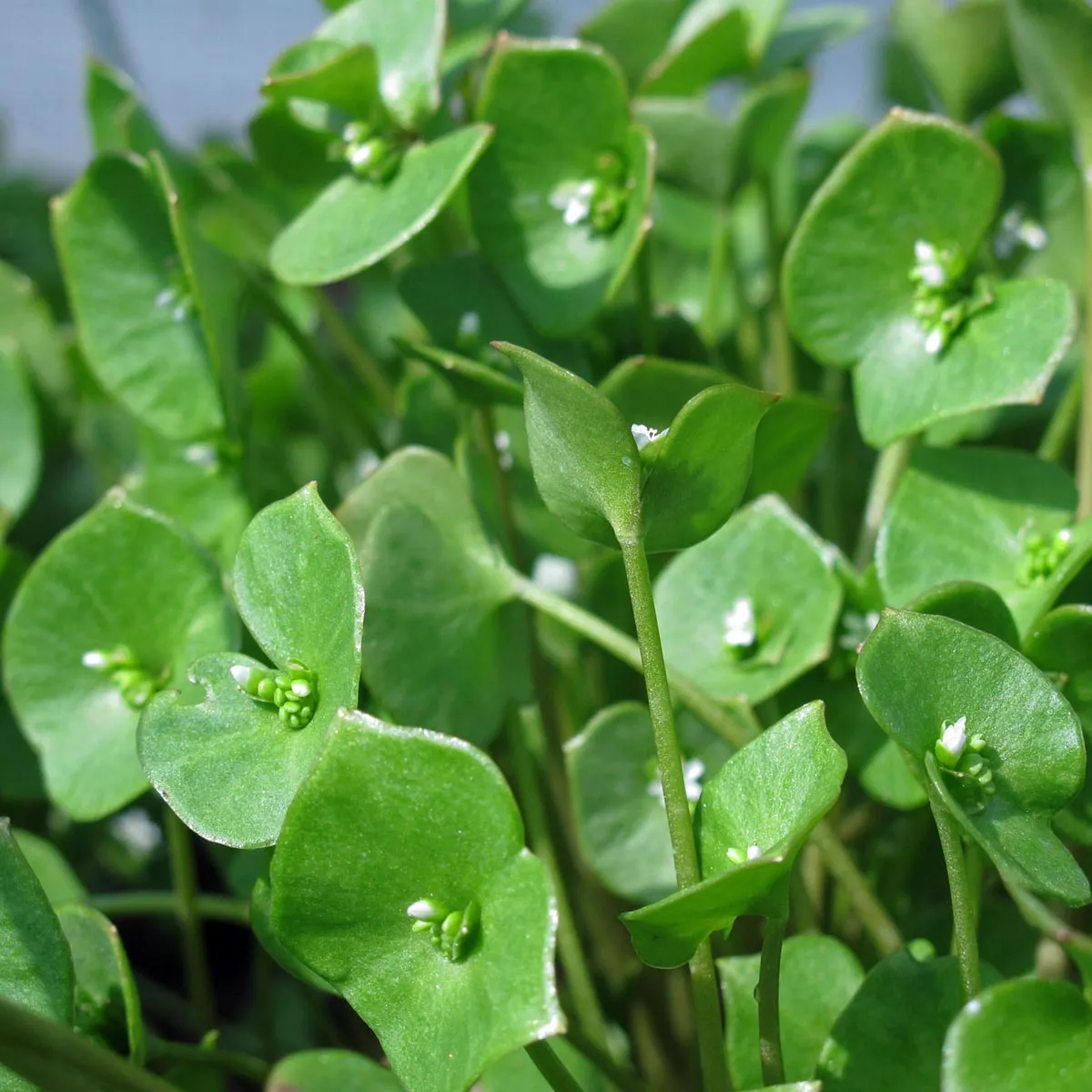
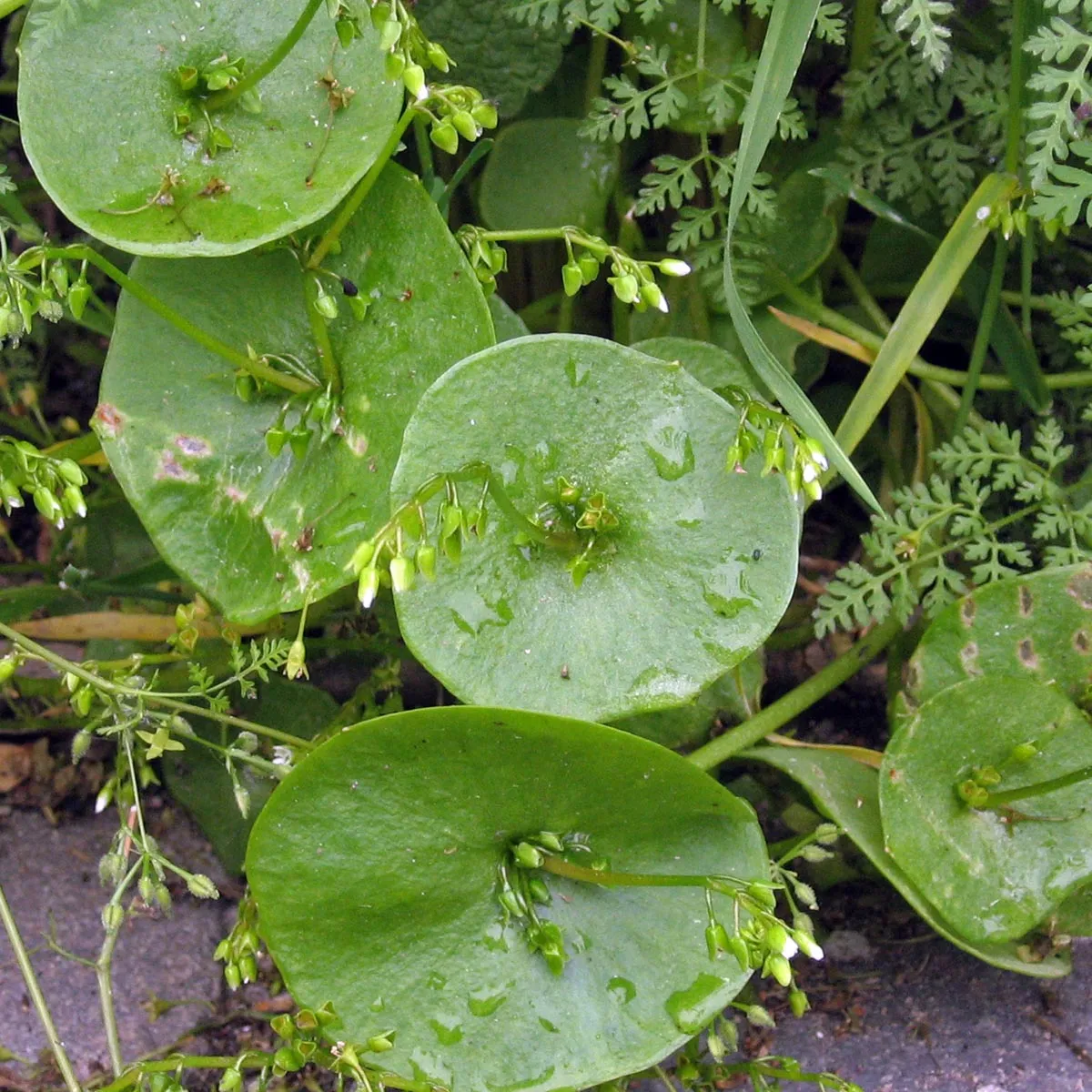
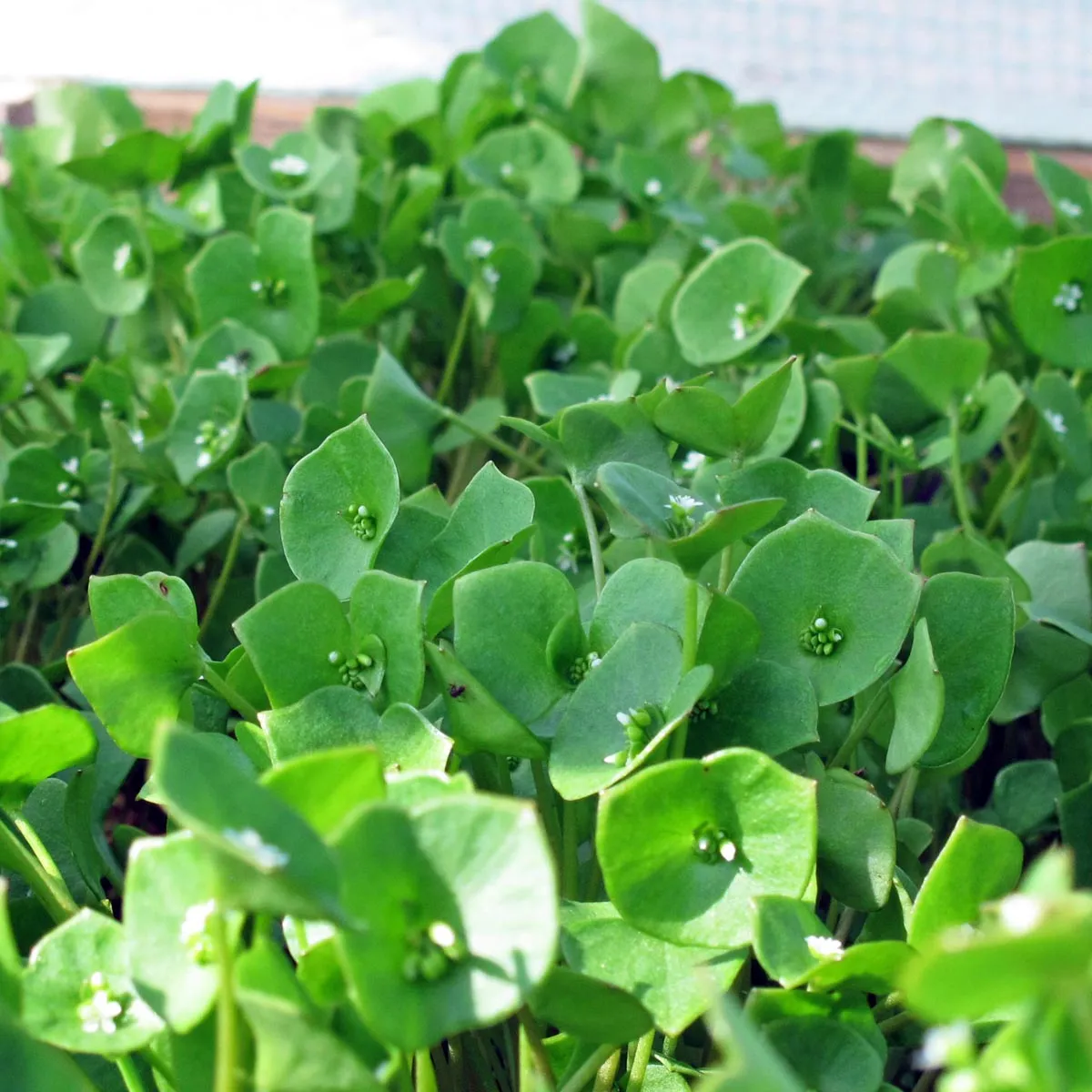
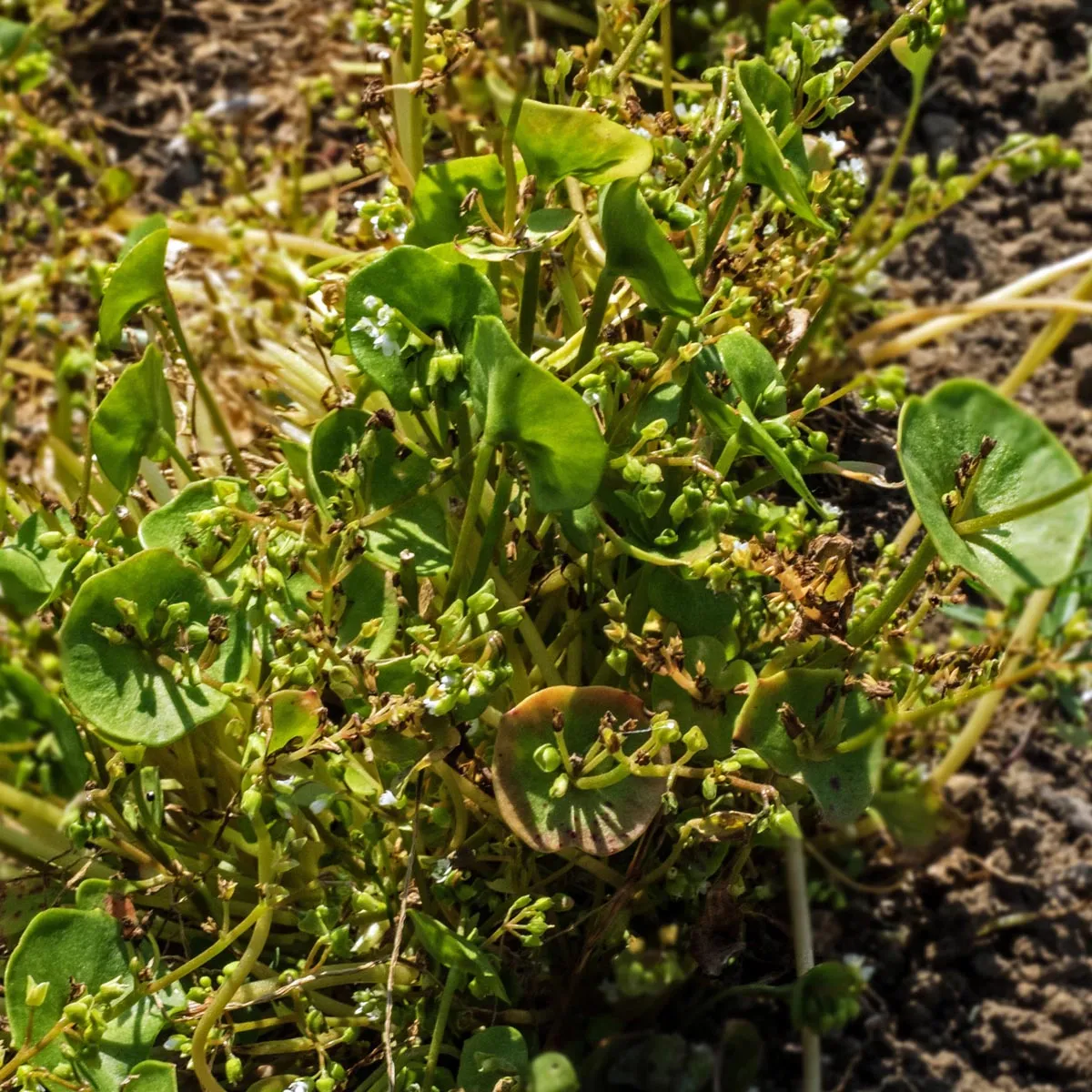
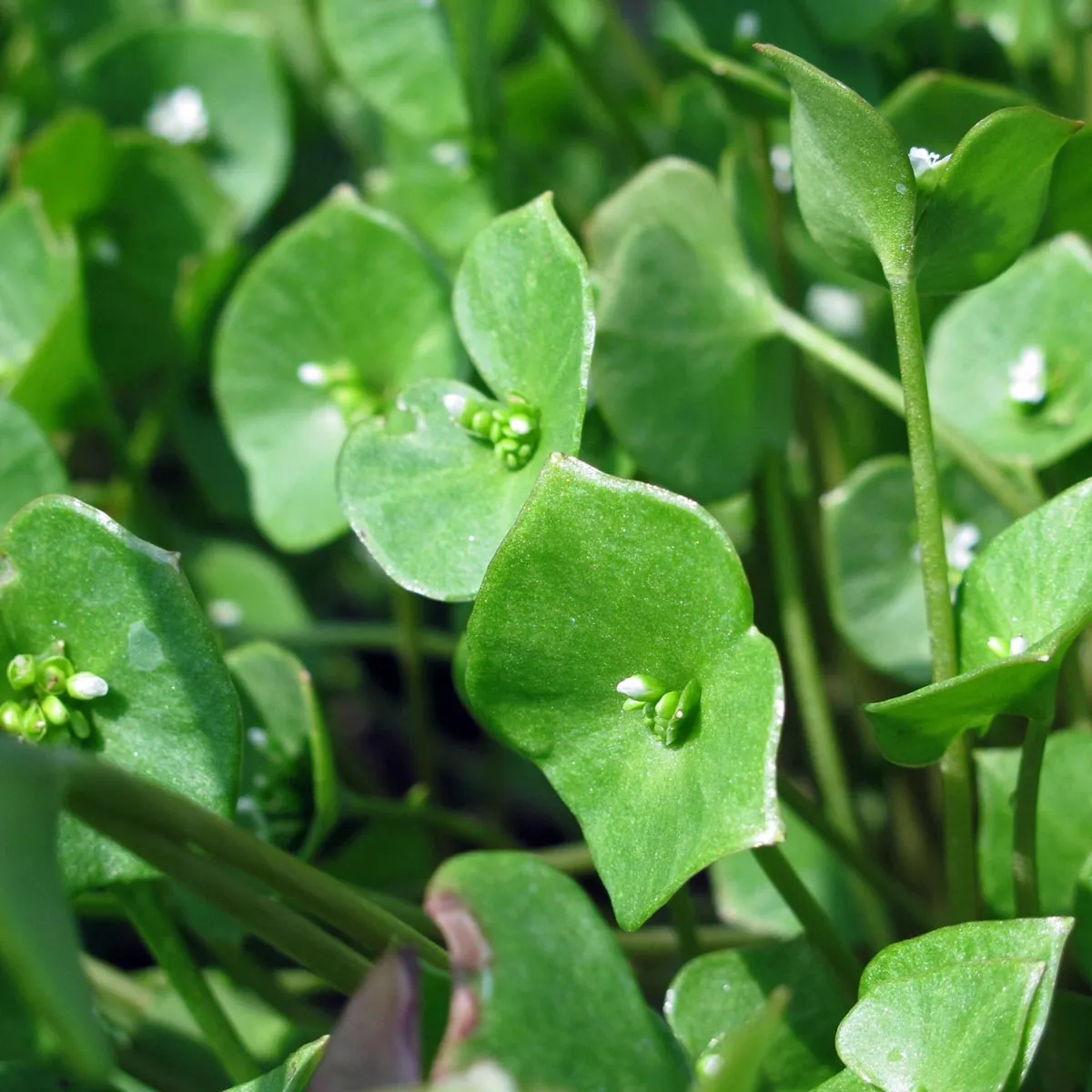
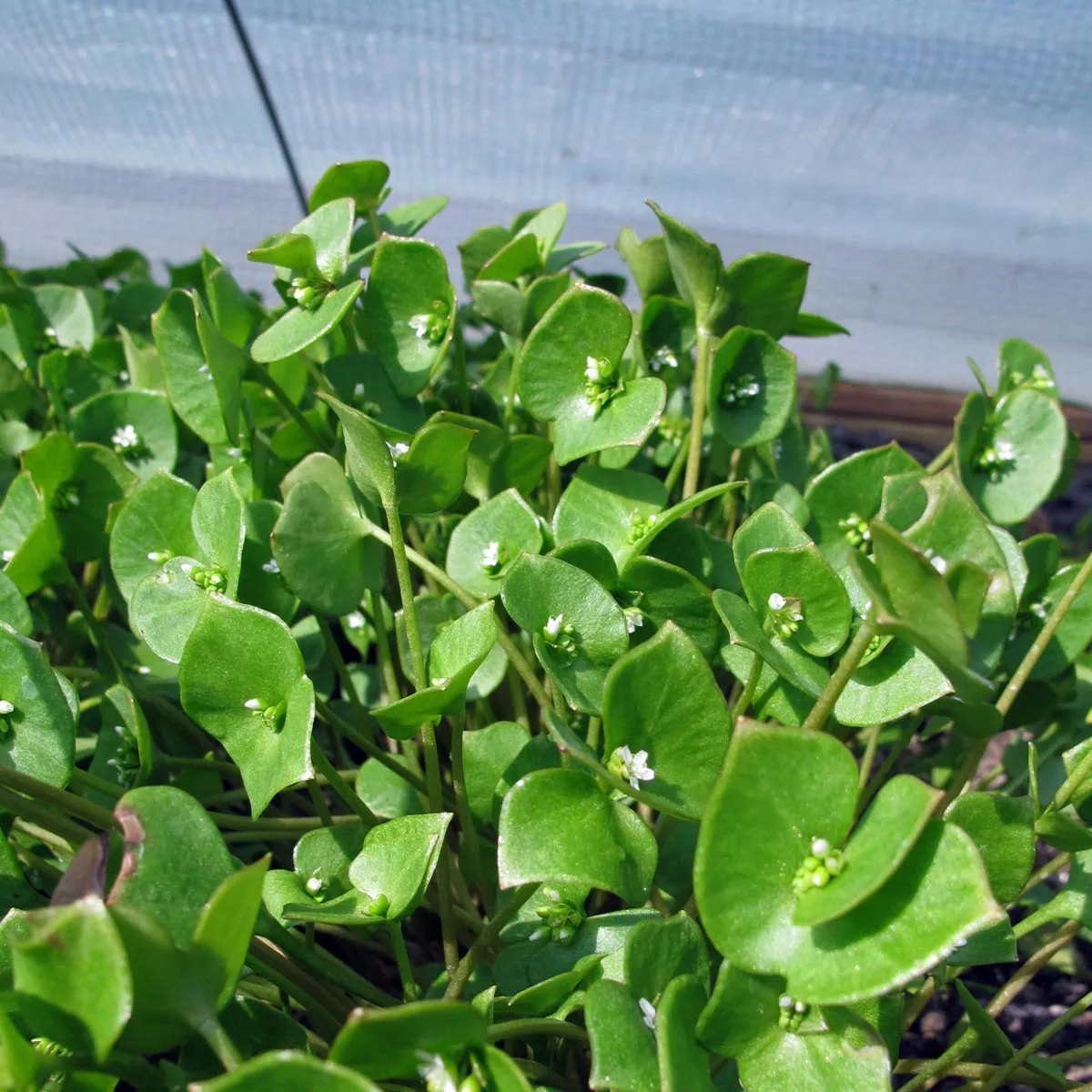
As a medicinal herb, purslane is said to be anti-inflammatory and antibacterial and to help against heartburn and gastritis. In former days, it has already been used against intestinal parasites due to its curative effect. It can be easily recognized by its very typical rhombic, broad leaves that can be found in fascicles. If you cut the stalks close to the ground and leave the basal leaves, the plant regrows and several harvests are possible.
Plant profile
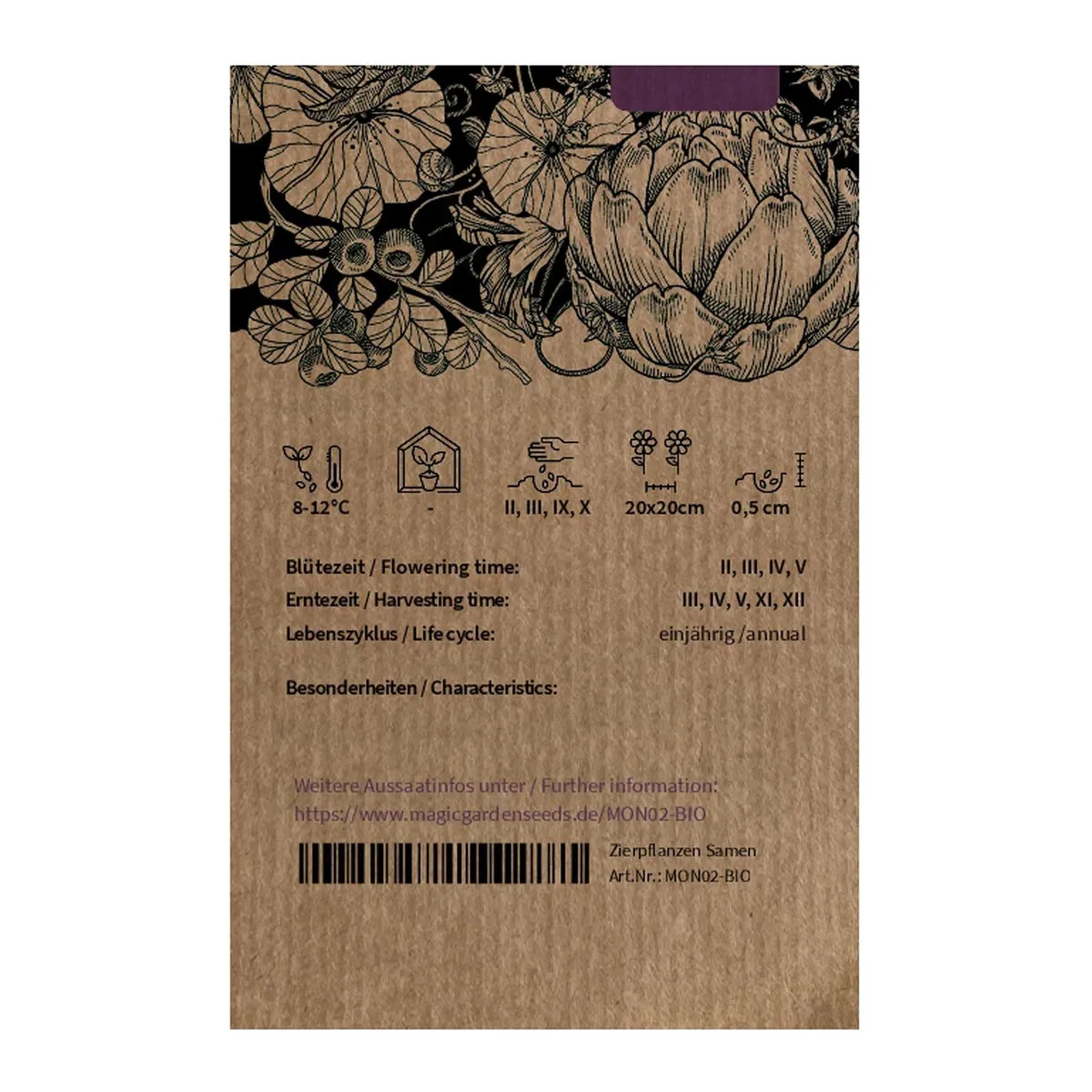
| Lifecycle | Annual |
|---|---|
| Species | Montiaceae |
| Eventual height | 15-30 cm |
| Flower colour | White |
| Flowering months | April, February, March, May |
| Main harvest | April, December, March, May, November |
Growing instructions
| When to sow outdoors | February, March, October, September |
|---|---|
| Sowing depth | 0.5 cm |
| Germination temperature | 5-12°C |
| Sunlight | Full shadow, Shade |
| Planting distance | 20 cm |
| Row spacing | 20 cm |
Sowing and care
- Sowing period: The best sowing period for winter purslane seeds is September to March as purslane only germinates at temperatures below +12°C.
- Sowing depth: 0.5cm, slightly cover with soil and press on well
- Ideal germination temperature: +8-12°C
- Row spacing: 15-20cm
- Plant distance: 10-15cm
- Location: Half-shady to shady
- Soil: Winter purslane grows nearly everywhere. However, it especially likes permeable, fresh-moist soils.
- Maintainance: Sow and let it grow.
- Harvest: 6-8 weeks after sowing, the leaves can be harvested. If you leave the basal leaves, the plant regrows inter-seasonal. Like that, you can harvest fresh purslane all year round except for the summer months, also in deep winter!
- Family: Montiaceae
Other names
Botanical name: Montia perfoliata, M. mexicana, Claytonia perfoliata, Limnia angustifolia
German: Winterportulak, Postelein, Gewöhnliches Tellerkraut, Kuba-Spinat
English: Miner's lettuce, spring beauty, Indian lettuce, Winter purslane
French: claytonia perfoliée, claytone de Cuba, le pourpier d'hiver
Italian: Lattuga dei minatori, portulaca invernale
Spanish: verdolaga de Cuba, Lechuga del minero, Claytonia
Reviews
Login
Bis jetzt noch nichts gekeimt
Ich hatte das Postelein jetzt schon 2mal aus gesät ins Freiland, aber bis jetzt hatte nichts gekeimt, ich denke, das wird dieses Jahr auch nichts mehr und ich probiere es dann nächstes Jahr nochmal, noch ist ja Saatgut in der Tüte.