
Why Does My Lettuce Bolt So Quickly?
Garden consultation
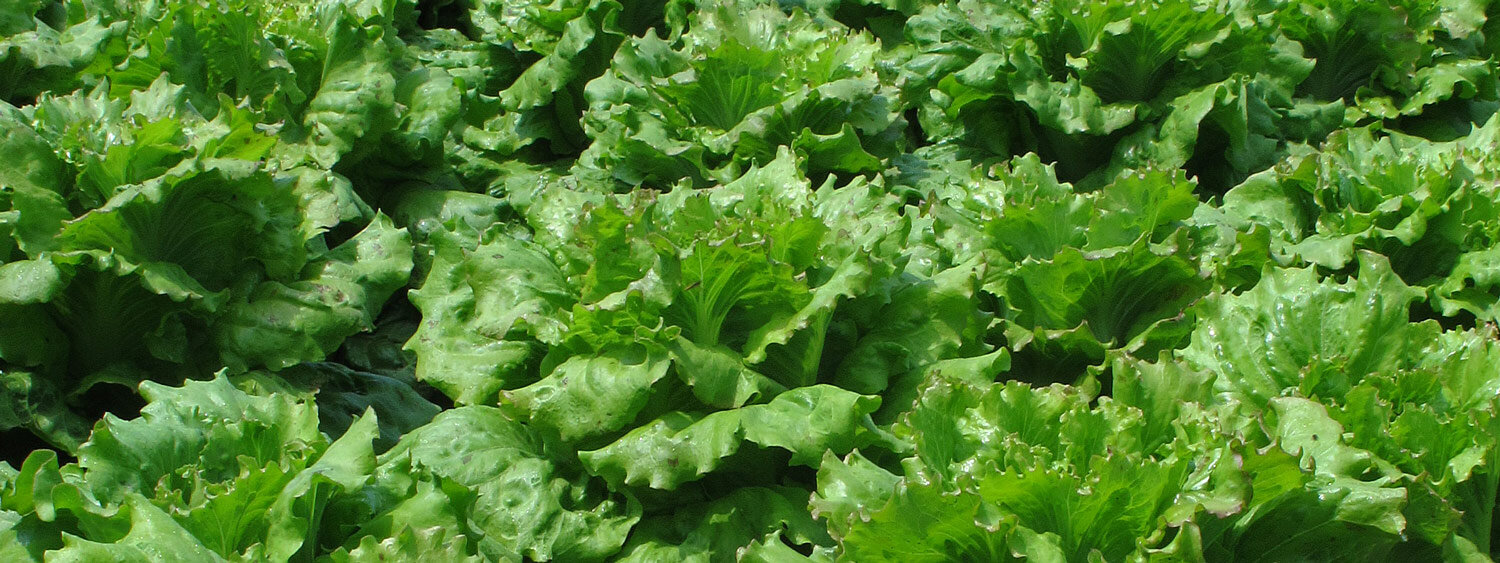
Your lettuce suddenly shoots up, forms a firm stem and tastes bitter? Then it has probably “bolted”.
Welcome to our Magic Garden Seeds Garden Clinic. Here we answer specific questions from everyday gardening: simply, clearly and with practical tips that really help you in your bed, raised bed or window box.
Today’s question is one that troubles many gardeners, especially in late spring and summer: Why does my lettuce bolt so quickly?
Perhaps this sounds familiar: at first everything looks wonderful. The first leaves are growing, the lettuce looks healthy, and you are already looking forward to the harvest. But suddenly the plant stretches upwards. A firm stem grows out of the centre, the lettuce loses its lovely shape, and the leaves become tough or bitter.
That is annoying, but it is no sign that you don’t have green fingers. Your lettuce is simply telling you very clearly: I am stressed, and I want to flower quickly now.
What Does It Mean When Lettuce “Bolts”?
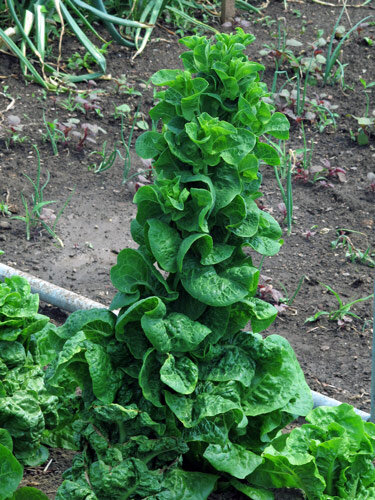
When lettuce bolts, the plant switches from leaf growth to flower formation. It no longer forms a nice head or a tender leaf rosette, but stretches its central shoot instead. Sometimes the round lettuce head turns into something almost like a little “Christmas tree”.
Botanically, this is completely normal. Lettuce is a plant that wants to flower and set seed at some point. For us, this moment just often comes too early, namely when we actually still wanted to harvest.
As soon as lettuce bolts, the taste usually changes too. The leaves become firmer, tougher and more bitter, especially near the stem. Bolted lettuce is not poisonous. You can still taste and use individual leaves if you like them. Often, however, the quality is no longer as tender as with lettuce harvested young.
How to Recognise It
Bolted lettuce is easy to recognise. Typical signs are:
- The lettuce suddenly grows rapidly upwards.
- A firm stem forms in the centre.
- The head stays loose or opens up.
- The leaves become smaller, harder or bitter.
- Later, buds, flowers and seeds form.
The sooner you notice these signs, the better. At the beginning you can often still harvest before the leaves become very bitter.
The 4 Most Common Causes: Why Does Lettuce Bolt?

1. Heat: Lettuce Prefers It Cool
Lettuce is not a typical heat-loving plant. It grows particularly well at fairly mild temperatures. Around 15 to 18 °C is ideal. If it gets significantly warmer, the plant comes under stress more quickly.
If temperatures rise above about 22 °C for a sustained period, lettuce often speeds up its life cycle. Instead of continuing to form tender leaves, it begins to stretch and form flowers. That is why lettuce bolts particularly often in May, June and July, when the days are warm and bright.
What this means for you: lettuce is usually less complicated in spring and autumn than in high summer. For summer you need the right position, suitable varieties and particularly even care.

2. Long Days: Lettuce Reacts to Light
Many lettuce varieties react not only to temperature, but also to day length. As the days get longer, this can encourage flower formation. Especially in late spring and summer, the days in Germany are considerably longer than 12 hours, which for many lettuces is a signal to move on to the next stage of life.
This is a natural rhythm. The plant “knows”: now is a good time to flower and later to form seeds. For our salad bowl, unfortunately, this is often too early.

3. Drought and Stress
Lettuce has fairly shallow roots and is sensitive to dry soil. If the soil dries out again and again, the plant takes this as a stress signal. Compacted soil, sharp temperature fluctuations or root damage can also cause lettuce to bolt more quickly.
The plant’s logic is simple: when conditions become difficult, it tries to complete its life cycle and form seeds as quickly as possible.

4. Plants Too Close Together
If lettuce plants stand too close together, they compete for light, water and nutrients. That also means stress. The plants then often grow unevenly, stay smaller or bolt more quickly.
This happens easily with direct-sown lettuce in particular: the seedlings look tiny at first, but later they stand far too close together. Thinning out in good time sometimes feels hard, but it helps the remaining plants enormously.
What Can You Do Straight Away When Lettuce Bolts?
If your lettuce is already starting to bolt, you usually can no longer reverse the process. But you can still make the best of it.
- Harvest quickly: if the stem is only just becoming visible, some leaves are still mild enough.
- Taste the leaves: if they are only slightly bitter, you can mix them with milder leaf lettuces or herbs.
- Remove the hard stem: the stem is often particularly tough and bitter.
- Use as mulch: very bitter leaves don’t have to end up in the kitchen. They can go back into the garden cycle as plant material.
- Let it flower: if you have space, you can leave a healthy plant standing. The flowers are interesting for insects, and with open-pollinated varieties you may later be able to save seed.
So bolted lettuce is not automatically lost. It is just often no longer ideal for the classic lettuce harvest.

How to Stop Lettuce From Bolting Too Quickly
1. Choose Suitable Sowing Times
Pay attention to the information on the seed packet. Some varieties are better suited to spring and autumn, others are intended for growing in summer. If you sow sensitive spring varieties in high summer, you will often be disappointed with the results sooner.
Extra tip: it is better to sow small batches in succession instead of sowing a lot of lettuce all at once. That way you have young plants over a longer period and can harvest regularly.
2. Choose Bolt-Resistant Varieties That Tolerate Summer
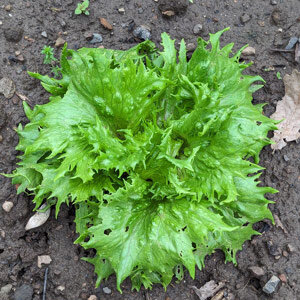
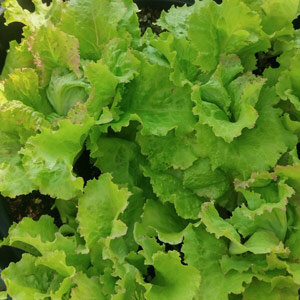
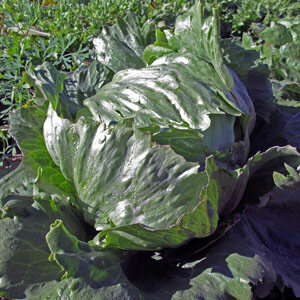
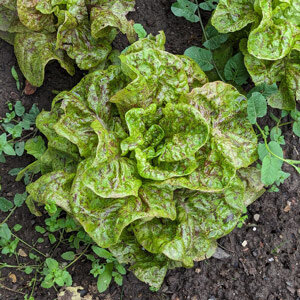
For growing in summer, it is worth looking specifically for bolt-resistant or more heat-tolerant varieties. Robust lettuce types such as Batavia or crisphead lettuce also often cope better with warmth than sensitive butterhead lettuces.
But it is important to remember: even bolt-resistant varieties are not invincible. In great heat, drought stress and with plants too close together, they too can flower at some point. They just usually hold out longer.
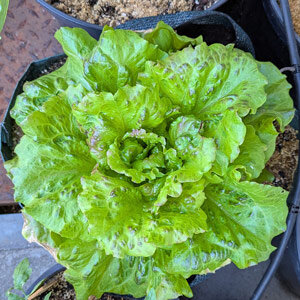
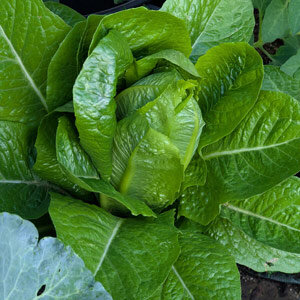
Suitable Lettuce Varieties for Growing in Summer:
3. Give More Space
Lettuce needs space, even if the young plants seem very small at first. Depending on the variety, a spacing of about 25 to 30 cm between plants makes sense. Loose-leaf lettuces can sometimes stand a little closer, head-forming lettuces need more room.
If you sow directly, you should thin out the rows in good time. You can often still use the young plants you remove as a tender harvest of baby salad leaves.
4. Plant in Partial Shade in Summer
In high summer, full midday sun is often too much for lettuce. A spot with morning sun and light shade in the afternoon is ideal. Taller crops such as tomatoes, climbing beans or sweetcorn can also provide some protection.
In a window box, you can place lettuce in a bright but not scorching hot spot in summer. South-facing walls in particular store a lot of heat and can increase the stress even further.
5. Water Evenly and Thoroughly
Lettuce needs even moisture. That does not mean the soil should be permanently wet. But it should not dry out completely again and again either.
It is best to water in the morning and directly onto the soil. A thin layer of mulch made of grass cuttings, straw or fine plant material can help to keep moisture in the soil for longer. At the same time, the soil stays cooler, which is a big advantage in summer.
6. Keep the Soil Loose and Alive
Compacted or very nutrient-poor soil can put lettuce under additional stress. Carefully loosen the soil before sowing and work in mature compost. The rule here is: lettuce needs good, humus-rich soil, but no over-fertilising.
Too much fertiliser, especially too much nitrogen, does not automatically make plants better. They often become softer and more susceptible. A calm, even supply of nutrients is much more helpful for lettuce.
7. Harvest in Good Time
In summer, don’t wait too long for the perfect lettuce head. Especially in warm weather, it is better to harvest a little earlier. With loose-leaf lettuce you can regularly cut the outer leaves and leave the heart standing. This extends the harvest period.
If you see the first signs of bolting, it is better to harvest straight away. In summer, a few days can make all the difference.
Can I Still Eat Bolted Lettuce?
Yes, in principle bolted lettuce is still edible. It is not poisonous. What matters is the taste. If the leaves are bitter, tough or unpleasant, you don’t have to use them.
You can chop young, still mild leaves finely and mix them with other lettuces, herbs or a strong dressing. Very bitter plants can go on the compost, onto the bed as mulch or, if they are healthy, be allowed to flower.
The Magic Tip
Lettuce doesn’t bolt because it is difficult. It bolts because it is telling you: I am too warm, too dry or too cramped, and I want to form seeds quickly now.
Once you understand this message, you can react much more calmly. You can harvest earlier, sow again more regularly, use partially shaded spots in summer and choose varieties that suit the season better.
Our Conclusion
If your lettuce bolts quickly, it is usually due to stress. The most common triggers are heat, long days, drought and plants too close together. Especially at temperatures above about 22 °C, lettuce often starts to flower more quickly.
With the right choice of variety, suitable sowing times, enough space, even moisture and a little shade in summer, you can significantly delay bolting. It cannot always be prevented completely, because at some point every lettuce plant wants to flower and set seed.
And there is something beautiful in that too: the garden reminds us that plants don’t just grow for our harvest. They follow their own rhythm. If we understand it better, we garden in a more relaxed, more sustainable way and with more joy.
Which plant is puzzling you right now?
Write your question in the comments, and perhaps we will answer it in the next Magic Garden Seeds Garden Clinic.