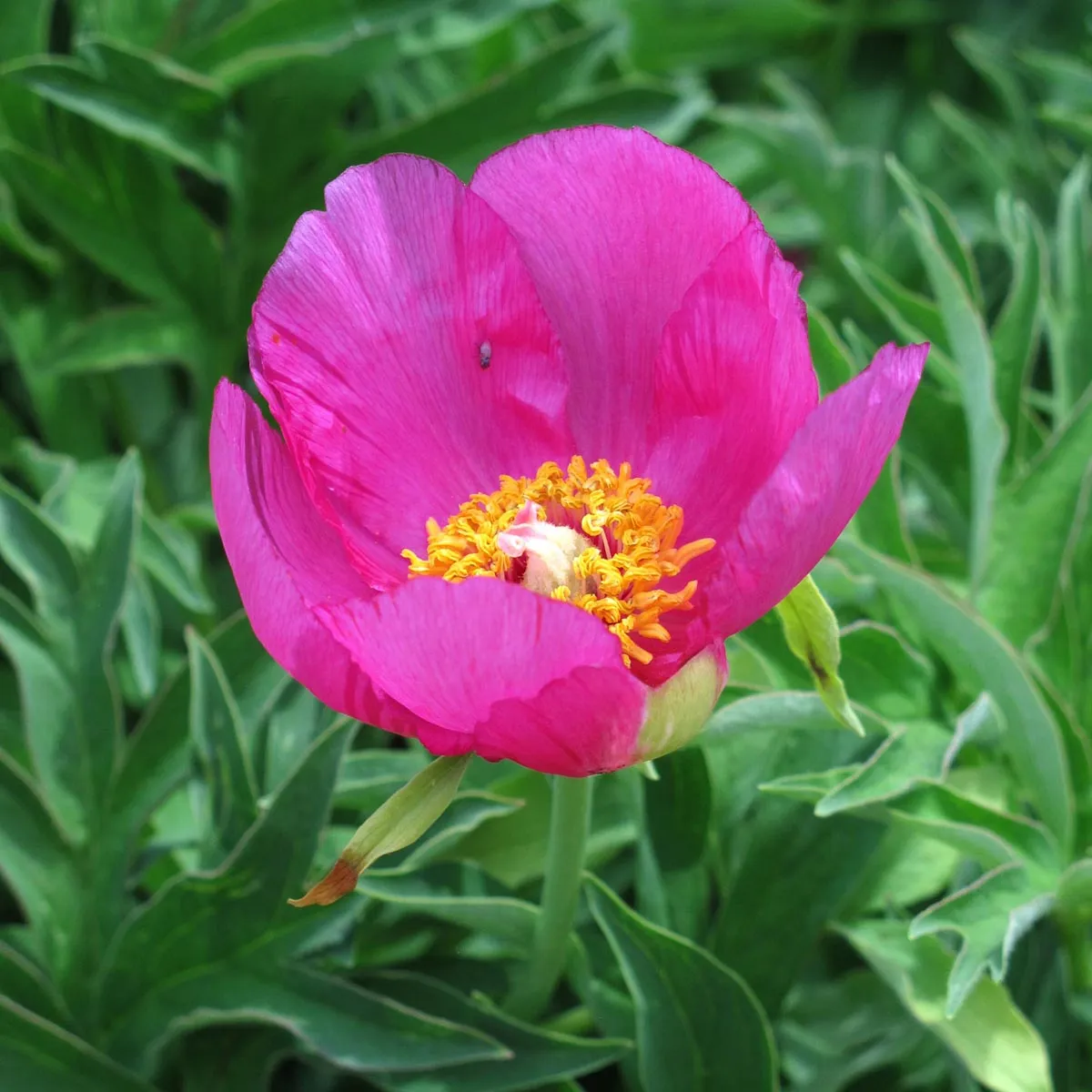
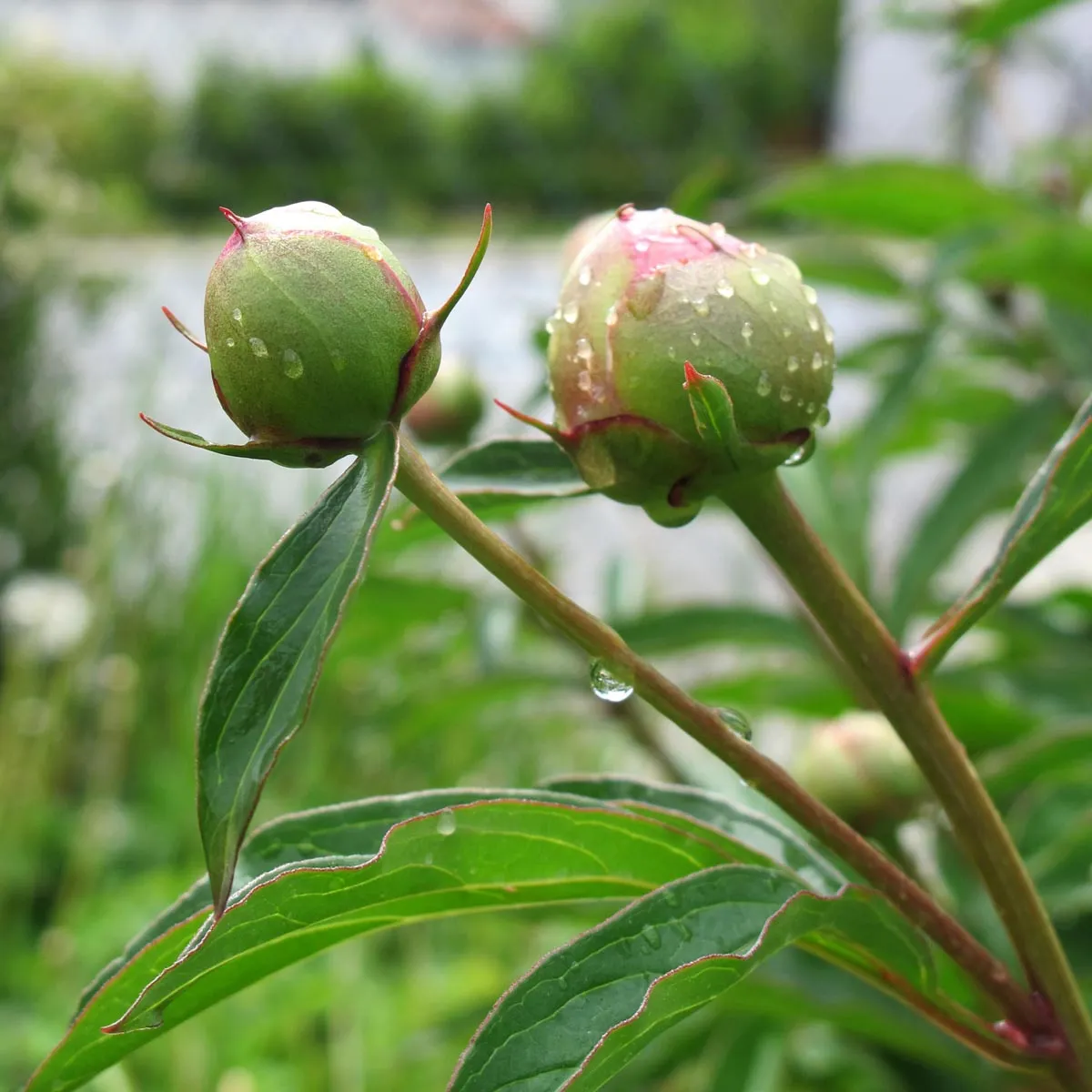
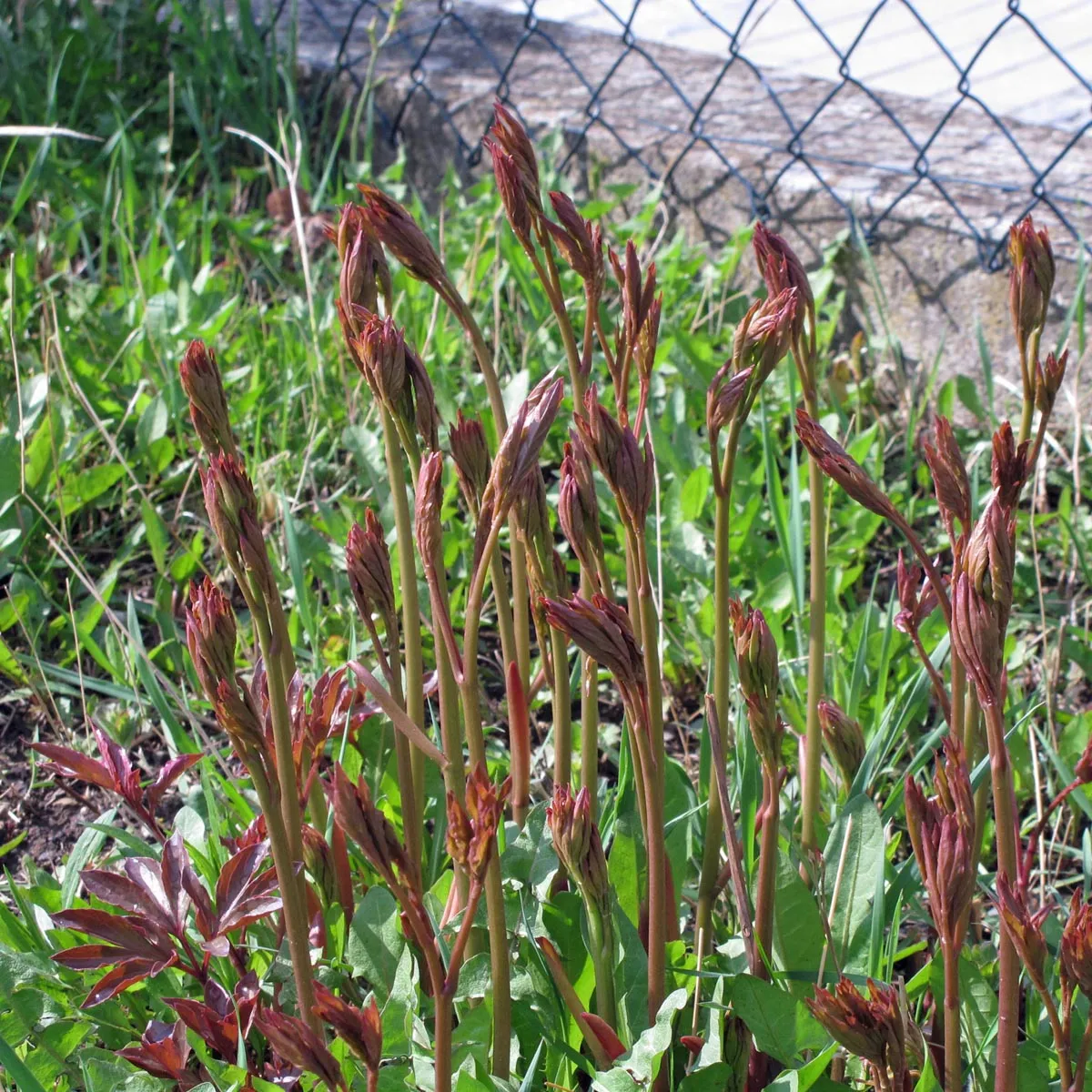
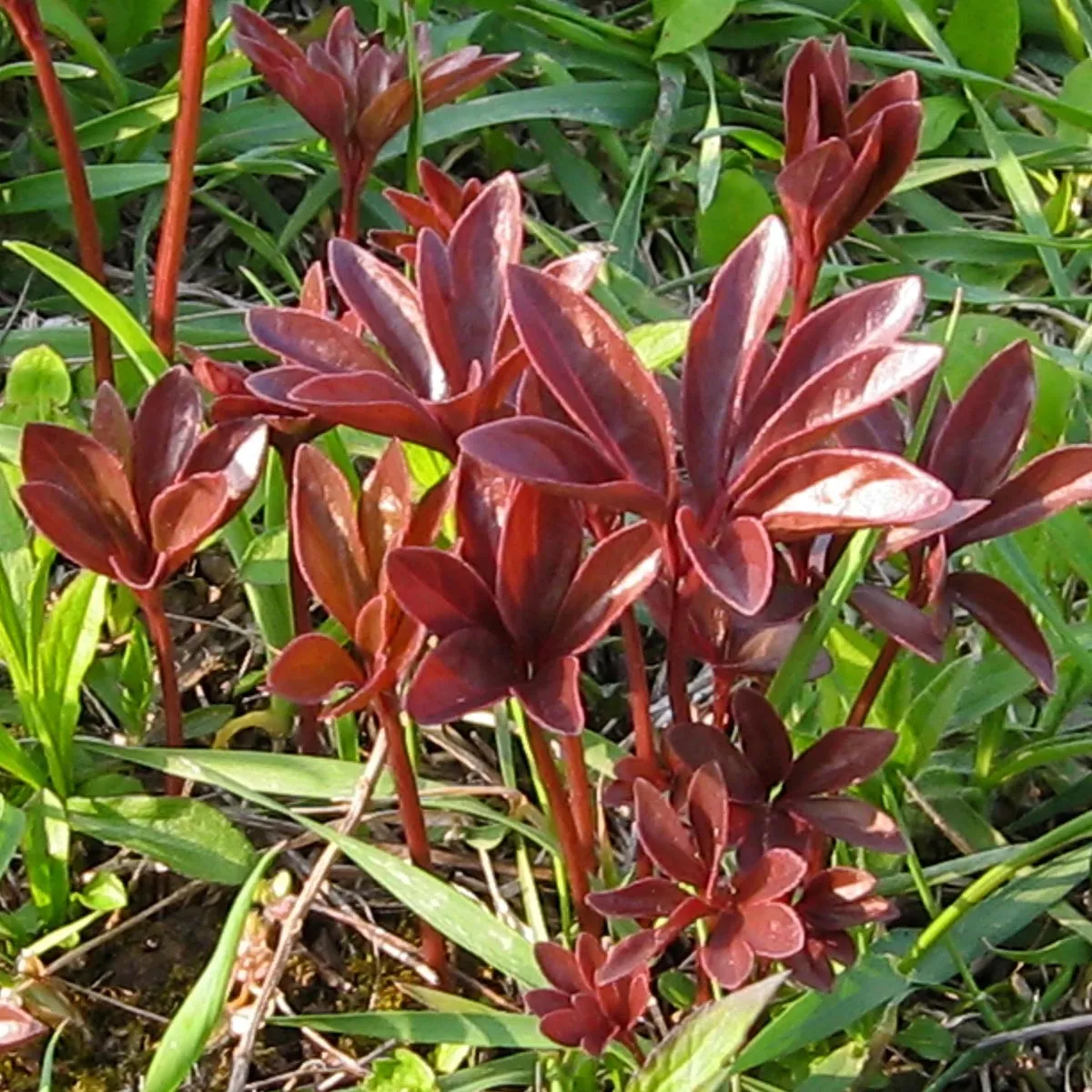
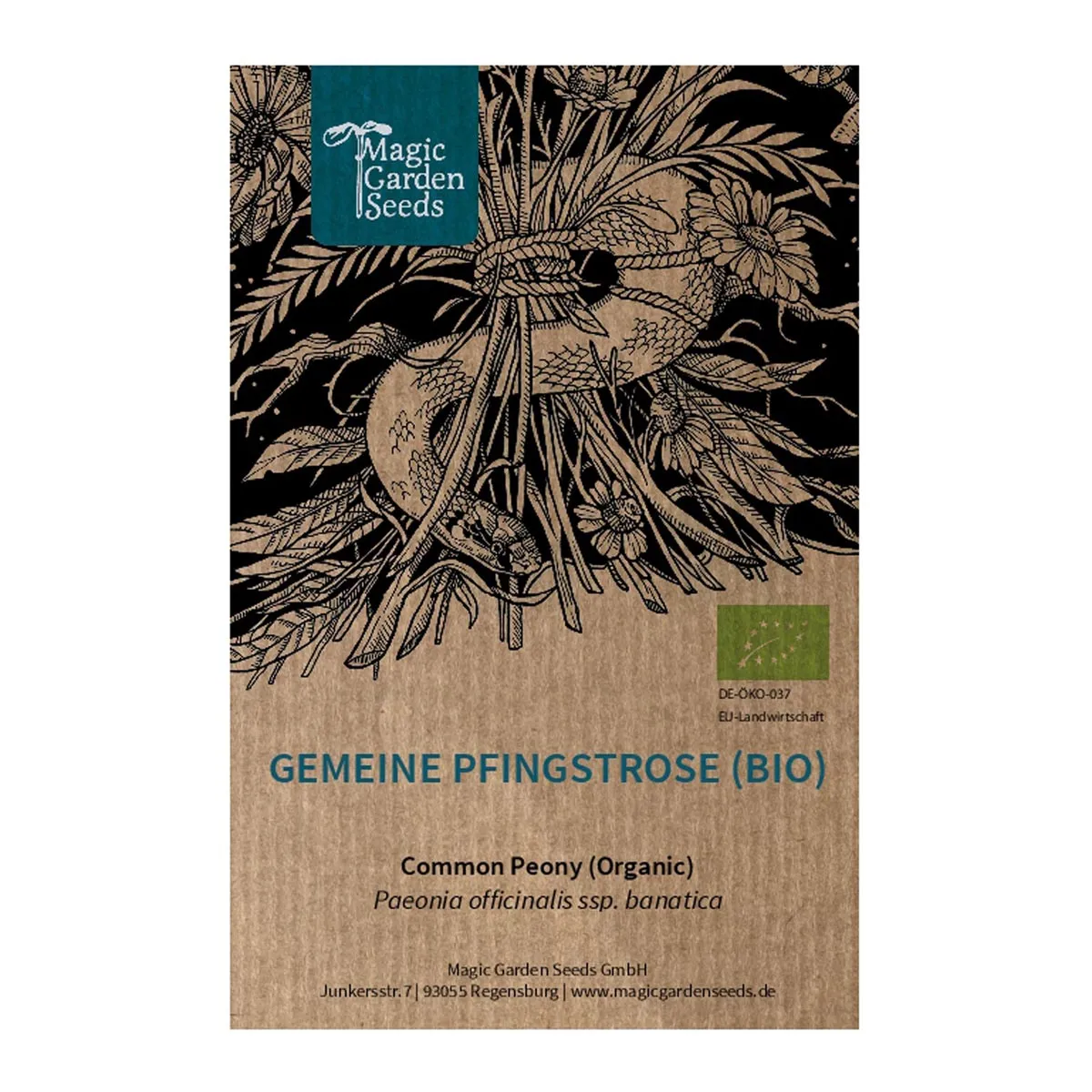
Common Peony (Paeonia officinalis ssp. banatica) organic seeds
- The rose-like blooming Paeonia officinalis is one of the oldest garden plants in Europe and has been cultivated in cottage and monastery gardens for centuries.
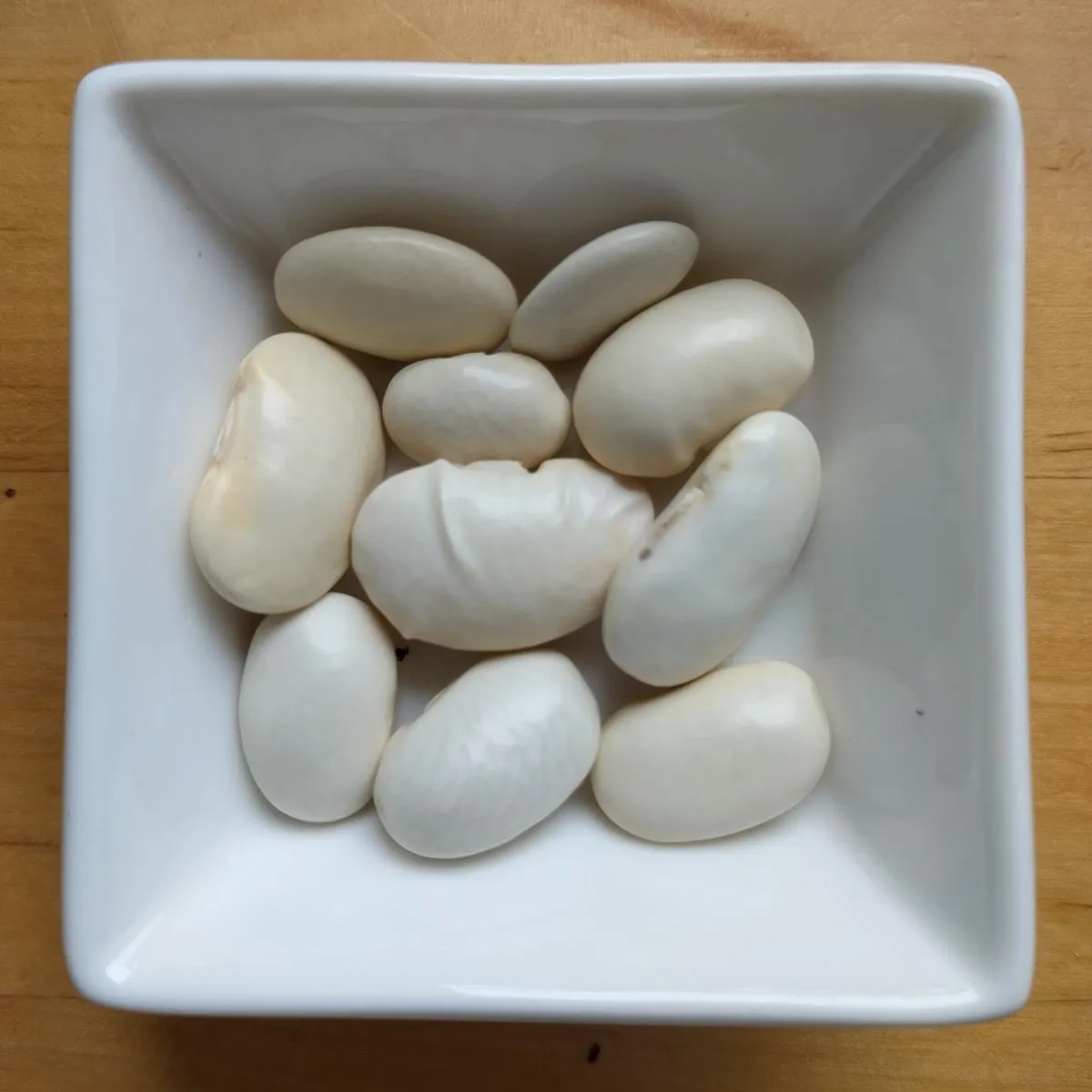
- Contents: Approx. 10 seeds
- Open-pollinated variety, seed tested regularly
€5.99
Description
The peony is toxic in all its parts, which is why it has no medical significance in Western medicine today. Moreover, no significant efficacy has been proven. However, in the Middle Ages, it was known as a medicinal plant and was used for various ailments, which is why it is also commonly known as gout rose.
In Traditional Chinese Medicine, the dried root of some peony species (especially Paeonia lactiflora) is one of the most commonly prescribed medicines. It is believed to have antispasmodic, anti-inflammatory, and pain-relieving properties.
The flowers of the common peony have the highest number of pollen grains per flower known, making the perennial an important food plant for bees and many other insects. Nowadays, it is a very popular ornamental perennial for cottage gardens and flower borders. It is also excellent as a cut flower for vases.
Plant profile
| Plant type | Herbaceous plant |
|---|---|
| Use | Cut flower, Medicinal plant, Ornamental plant |
| Lifecycle | Perennial |
| Species | Paeoniaceae |
| Region of origin | Eastern Europe, Mediterranean Region, Southern Europe |
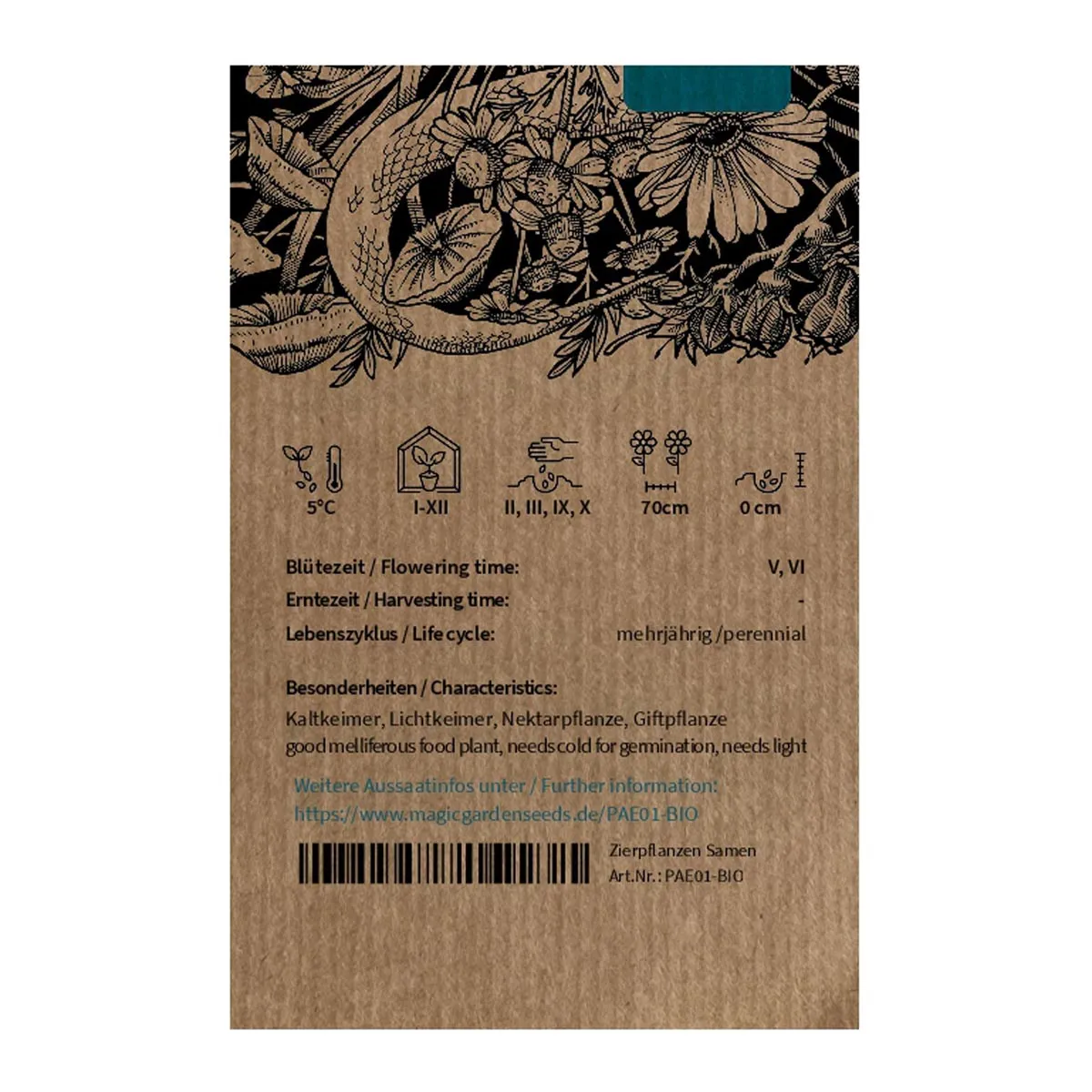
| Characteristics | Food for bees, Needs cold to germinate, Needs light to germinate, Poisonous plant |
| Eventual height | 40-80 cm |
| Flower colour | Purple, Red |
| Flowering months | June, May |
| Root system | Rhizome |
| Winter hardiness zones | 5 (-30 bis -23 °C) |
Growing instructions
| When to sow outdoors | February, March, October, September |
|---|---|
| Sowing depth | 0 cm |
| Germination temperature | 3-5°C |
| Germination time | 1-12 months, irregular |
| Climate | Temperate |
| Soil type | Chalky, Dry, Free-draining, Humus-rich, Sandy |
| Sunlight | Full sun, Shade |
| Water requirement | Medium |
| Planting distance | 75 cm |
Sowing and care
Kaltkeimer: Aussaatzeit im Freiland zu Beginn des Frühlings oder im Herbst. Ersatzweise ist eine künstliche Stratifikation möglich. Mischen Sie die Samen mit feuchtem Sand in einem Plastikbeutel. Der Beutel muss in den ersten 2-4 Wochen warm und feucht (ca. +20°C) gehalten und danach in den Kühlschrank gelegt werden, wo er bei einer Temperatur von +5°C für 5-6 Wochen bleiben sollte. Danach nehmen Sie den Plastikbeutel heraus und beobachten Sie bei Raumtemperatur regelmäßig, ob die Samen keimen. Die Sämlinge dann in Töpfe pikieren und nach den letzten Frösten Mitte Mai auspflanzen. Setzen sie die Sämlinge auf jeden Fall so tief, dass der weiße Hals unter der Erde versteckt bleibt.
Pfingstrosen bevorzugen durchlässige, humose Erde mit einem guten Sandanteil. Sie mögen sonnige bis halbschattige Standorte und sind sehr robust, langlebig und winterhart. Erst mit den Jahren entwickelt sich die volle Pracht dieser Pflanze, wenn man sie an ihrem Standort belässt, denn sie mag nicht verpflanzt werden.
Other names
Botanical name: Paeonia officinalis ssp. banatica
German: Echte Pfingstrose, Bauern-Pfingstrose, Garten-Pfingstrose, Gemeine Pfingstrose, Benediktinerrose, Antonirose, Kirchenrose, Gichtrose
English: Common peony, garden peony
French: Pivoine officinale
Italian: Peonia selvatica
Spanish: cebolla chilre, cebolla churri, celónia, coca, cocas, empaine, empeine, escaramondamanos, flor de la maldita, flor de lagarto, flor del diablo, flor maldita, flores de rejalgar, hierba casta, hierba de Santa Rosa, hinchagüez, lirio montés, lirios, peonia, peonía de flor doble, peonía hembra, peronia, perruna, peónia, pionía de los matorrales, quemaojos, rosa albardera, rosa cagalerosa, rosa de Alejandría, rosa de Pentecostés, rosa de Santa Clara, rosa de Santa María, rosa de lagarto, rosa de monte, rosa de rejalgar, rosa de sarna, rosa del diablo, rosa maldita, rosa mojosa, rosa montesa, rosa montesina, rosa montés, saltaojos, tufona
Login