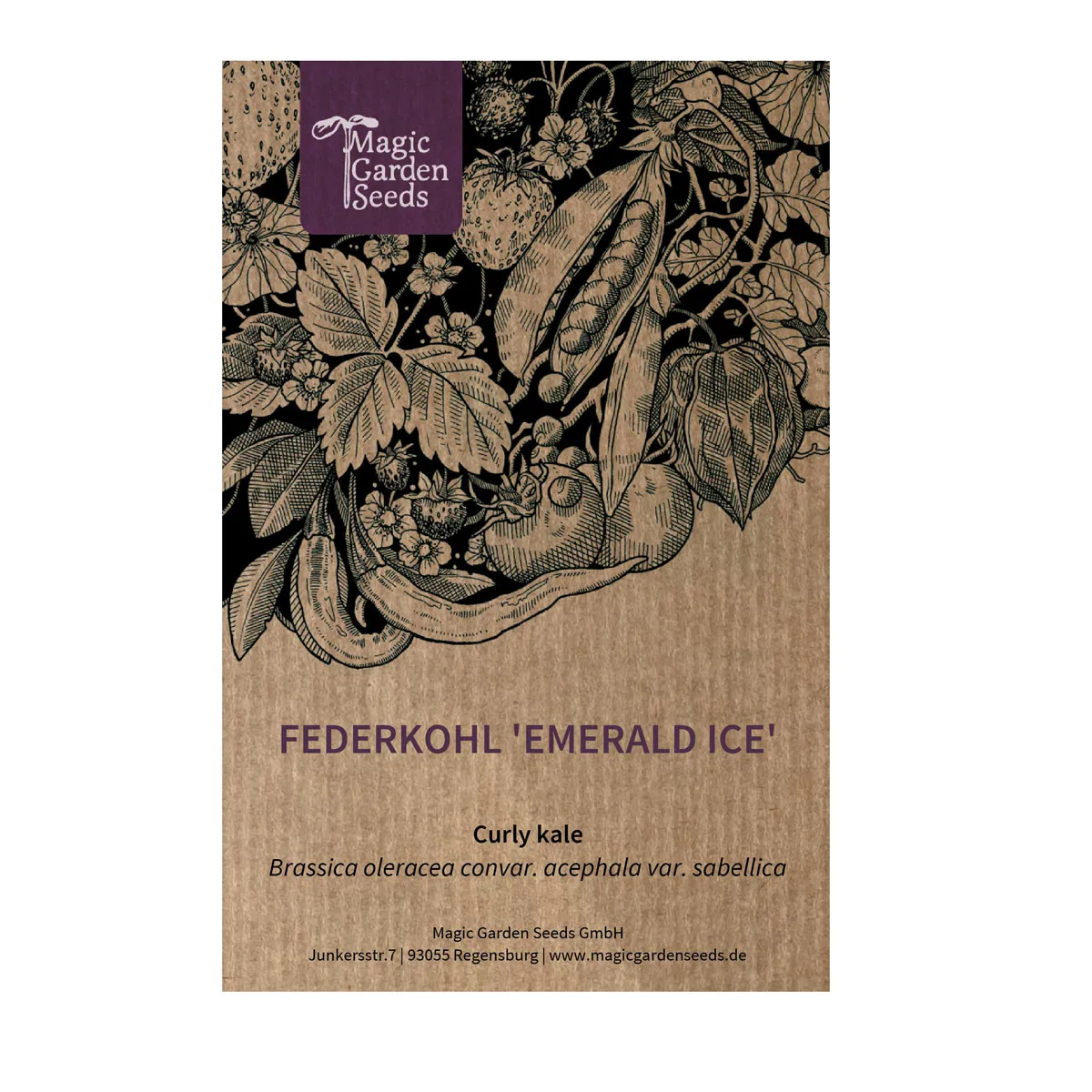
Curly kale ‘Emerald Ice’ (Brassica oleracea convar. acephala var. sabellica) seeds
- Frost-hardy kale type with green and white, strongly curled leaves - harvest from October to February, flavour often becomes milder after frost. <ai>
- Open-pollinated seeds - seed packet with approx. 20 seeds. <ai>
- Mild and slightly sweet, not strongly cabbage-like - ideal for winter cooking and beginners in sowing, harvesting leaf by leaf keeps the plant productive for a long time. <ai>
€4.19
Description
Why frost becomes an aromatic advantage here: ‘Emerald Ice’ turns milder and finer in winter
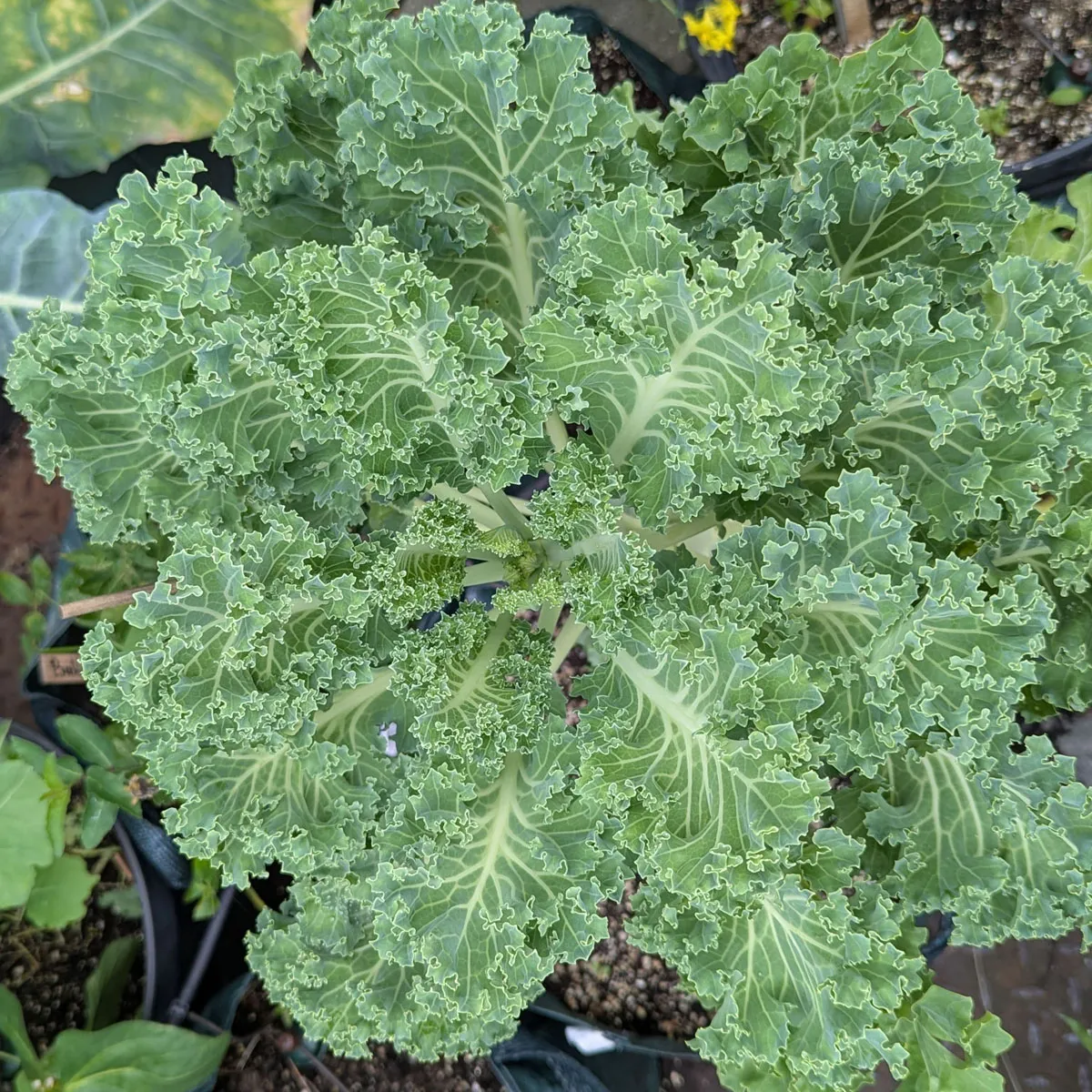
Curly kale ‘Emerald Ice’ botanically belongs to leaf kale (Brassica oleracea var. sabellica) and is therefore a type of kale. The variety grows upright and compact, reaching about 90 to 100 cm in height, and does not form heads but loose leaf rosettes with many individually harvestable leaves. This makes it productive over many months.
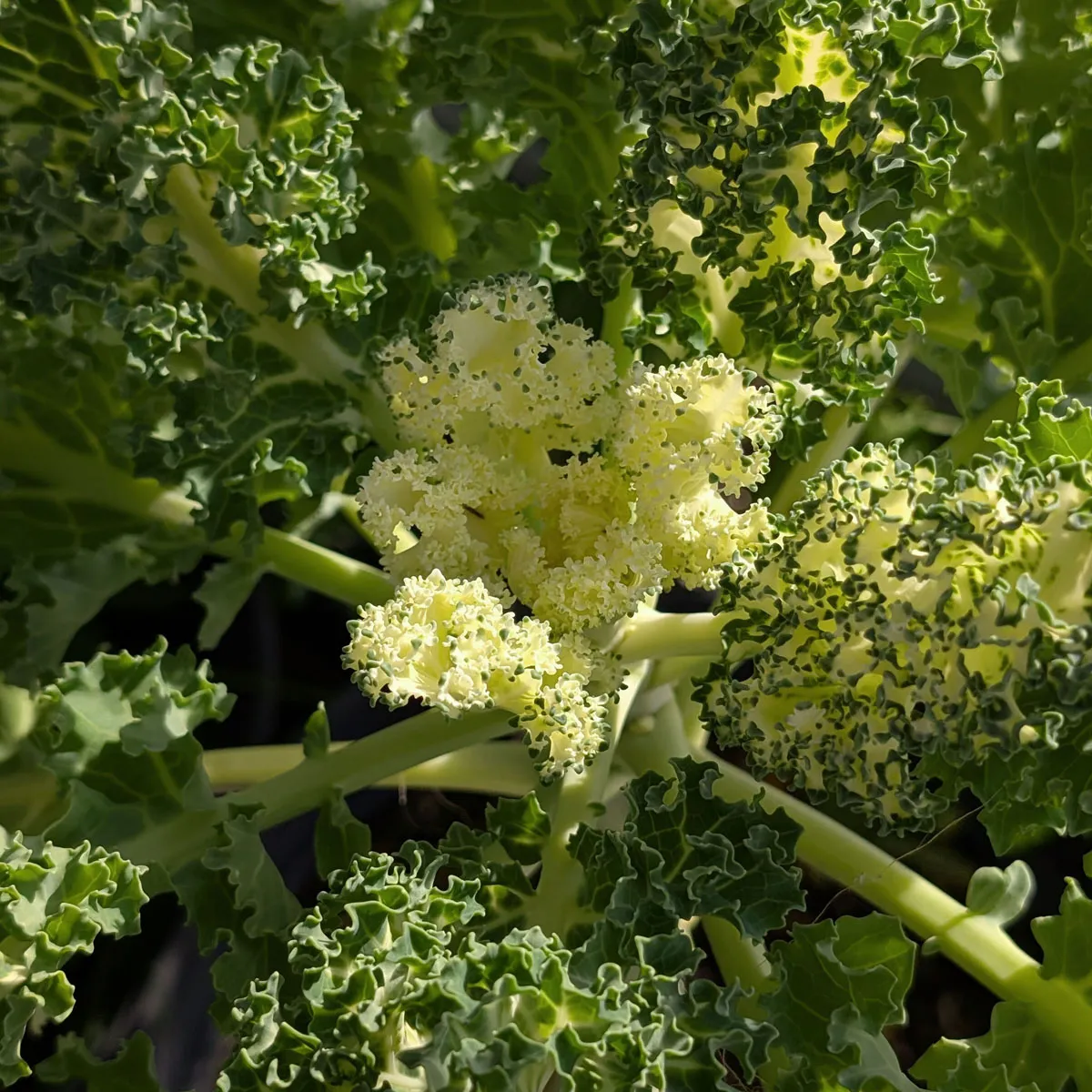
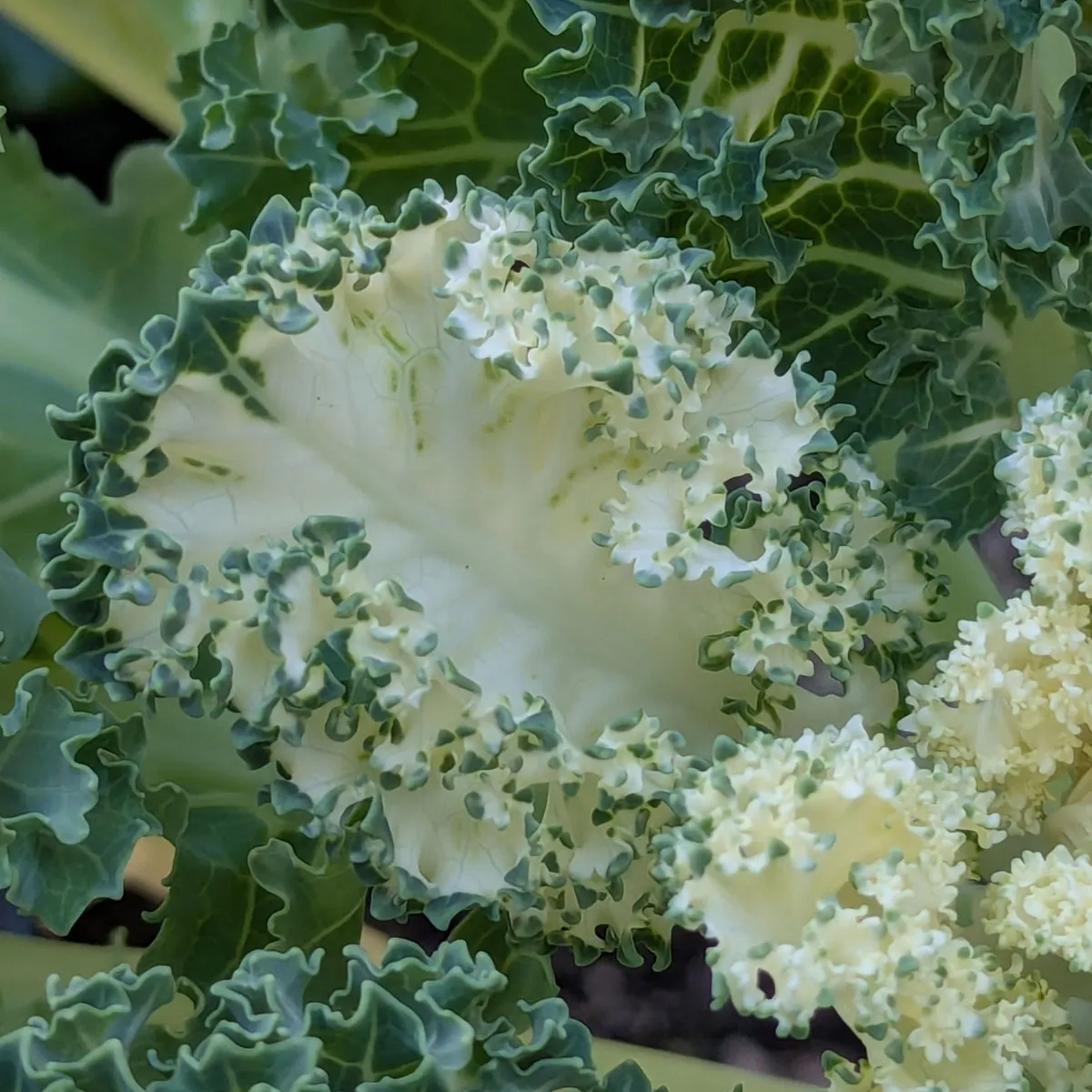
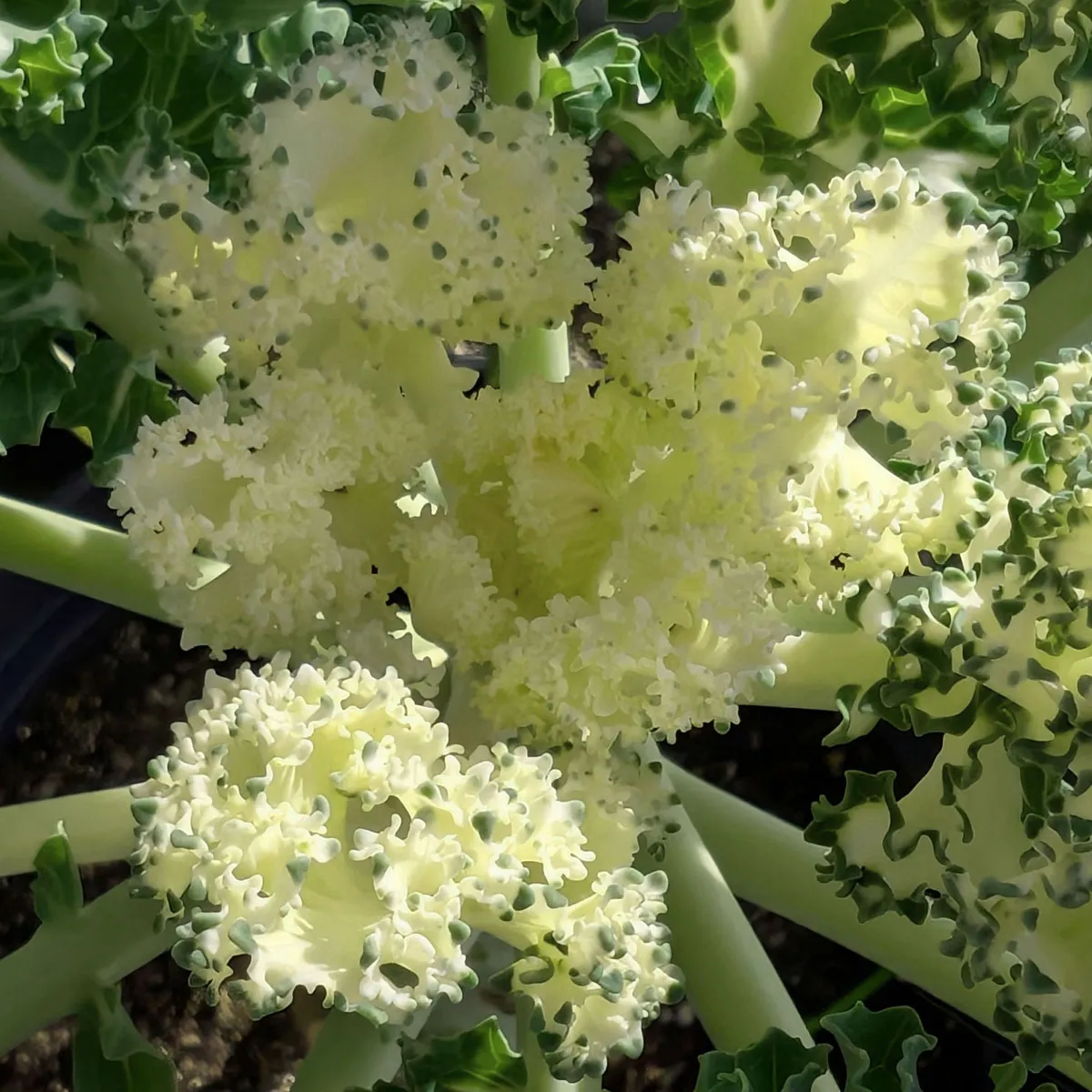
Typical of ‘Emerald Ice’ are its decorative, crinkled-looking, finely curled leaves with green and white colouring. A highlight is its strong frost tolerance: harvesting often begins in October and continues into February, and after frost the leaves frequently taste even more tender and slightly sweet. Also practical: the flavour is mild and not strongly cabbage-like, making the variety suitable even for beginners.
In the kitchen, ‘Emerald Ice’ is well suited to soups, pan dishes and winter vegetable recipes. The leaves are best lightly steamed or gently cooked. The variety is less suitable for container growing, as it performs much more reliably in open beds.
Plant profile
| Plant type | Herbaceous plant |
|---|---|
| Use | Ornamental plant, Vegetable |
| Lifecycle | Biennial |
| Species | Brassicaceae |
| Seed propagation | konventionell |
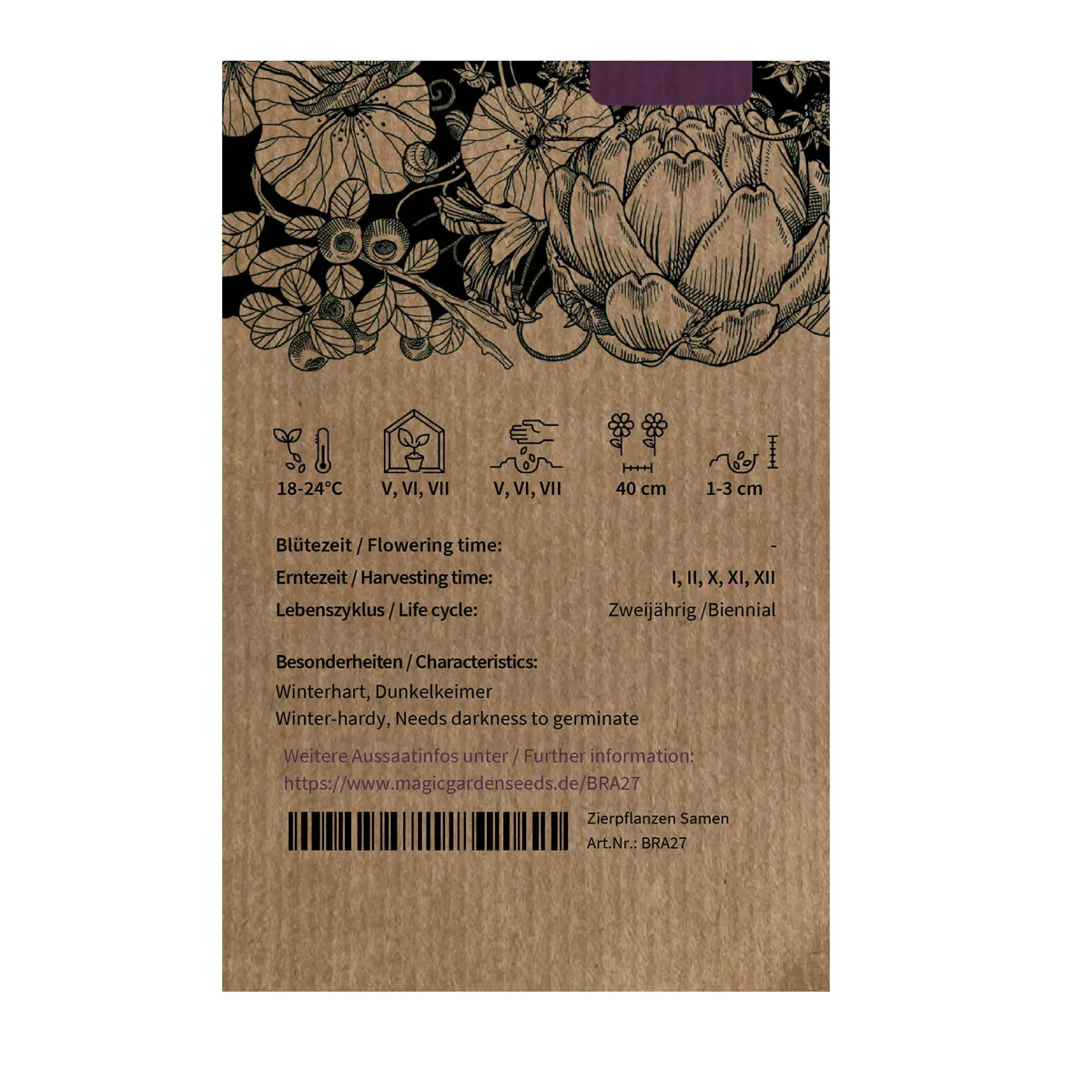
| Characteristics | Needs darkness to germinate, Winter-hardy |
| Eventual height | 80-120 cm |
| Flower colour | Yellow |
| Flowering months | -, in the second year |
| Main harvest | December, February, January, November, October |
| Root system | Taproot |
| Winter hardiness zones | 7 (-18 bis -12 °C) |
Growing instructions
| When to sow outdoors | July, June, May |
|---|---|
| Sowing depth | 1-3 cm |
| Germination temperature | 18-24° C |
| Germination time | 1-2 weeks |
| Climate | Temperate |
| Soil type | Chalky, Free-draining, Humus-rich, No waterlogging, Nutrient-rich |
| Sunlight | Full sun, Halbschatten |
| Water requirement | Medium |
| Nutrient requirements | Heavy feeder |
| Planting distance | 40 cm |
| Row spacing | 50 cm |
| Good companion plants | Celeriac, Chard, Cucumber, Dill, Peas, Potatoes, Spinach |
| Bad companion plants | Kohl, Onions, Strawberries |
Sowing and care
Sowing & Care of curly kale ‘Emerald Ice’
For early cultivation, sow from May to July at 18 to 22 °C. Germination takes approximately 7 to 14 days. Direct sowing outdoors is possible from mid-April to May, or transplant from June to early August. The sowing depth is 1 to 2 cm. Keep about 40 cm spacing within the row and 50 cm between rows so the plants can branch well.
An ideal location is sunny to partially shaded with humus-rich, calcareous, nutrient-rich soil and good drainage. The pH value should be neutral to slightly alkaline. Even moisture without waterlogging and regular, rather light fertilisation are important. Crop protection nets and early monitoring help against cabbage root fly, aphids, slugs or pigeons. Observe crop rotation and allow a break between brassica crops to prevent problems such as clubroot.
Other names
Botanical name: Brassica oleracea convar. acephala var. sabellica
German: Grünkohl, Federkohl, Krauskohl
English: Kale, curly kale
French: Chou frisé, chou kale
Italian: Cavolo riccio
Spanish: Col crespa
Dutch: Boerenkool
Login