Grass pea (Lathyrus sativus) seeds
- Almost forgotten, yet full of potential – the grass pea as a hidden gem for dry sites.
- Contents: Approx. 20 seeds.
- Open-pollinated variety, seed tested regularly
€2.79
Description
Traditional Heritage Crop with Remarkable Resilience
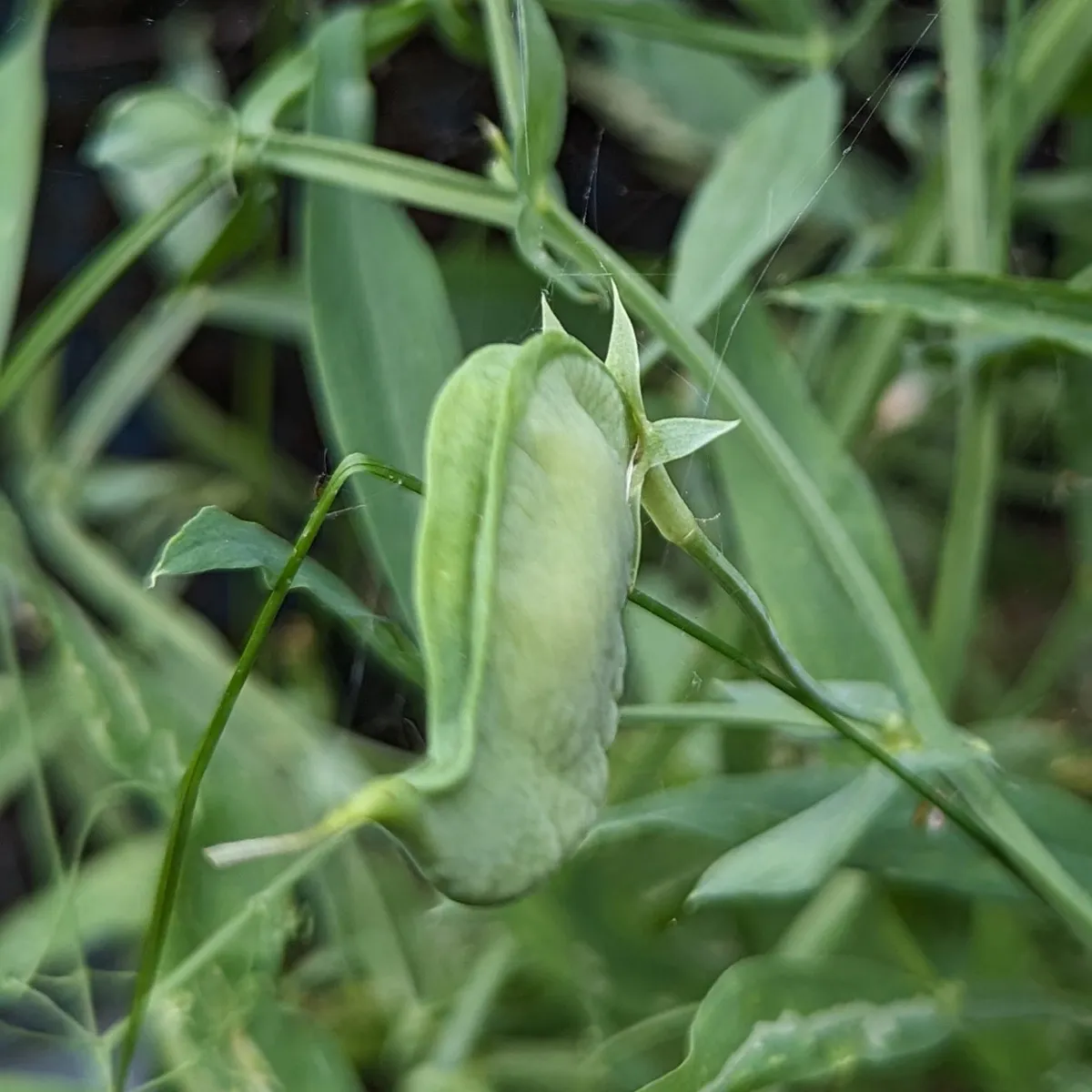
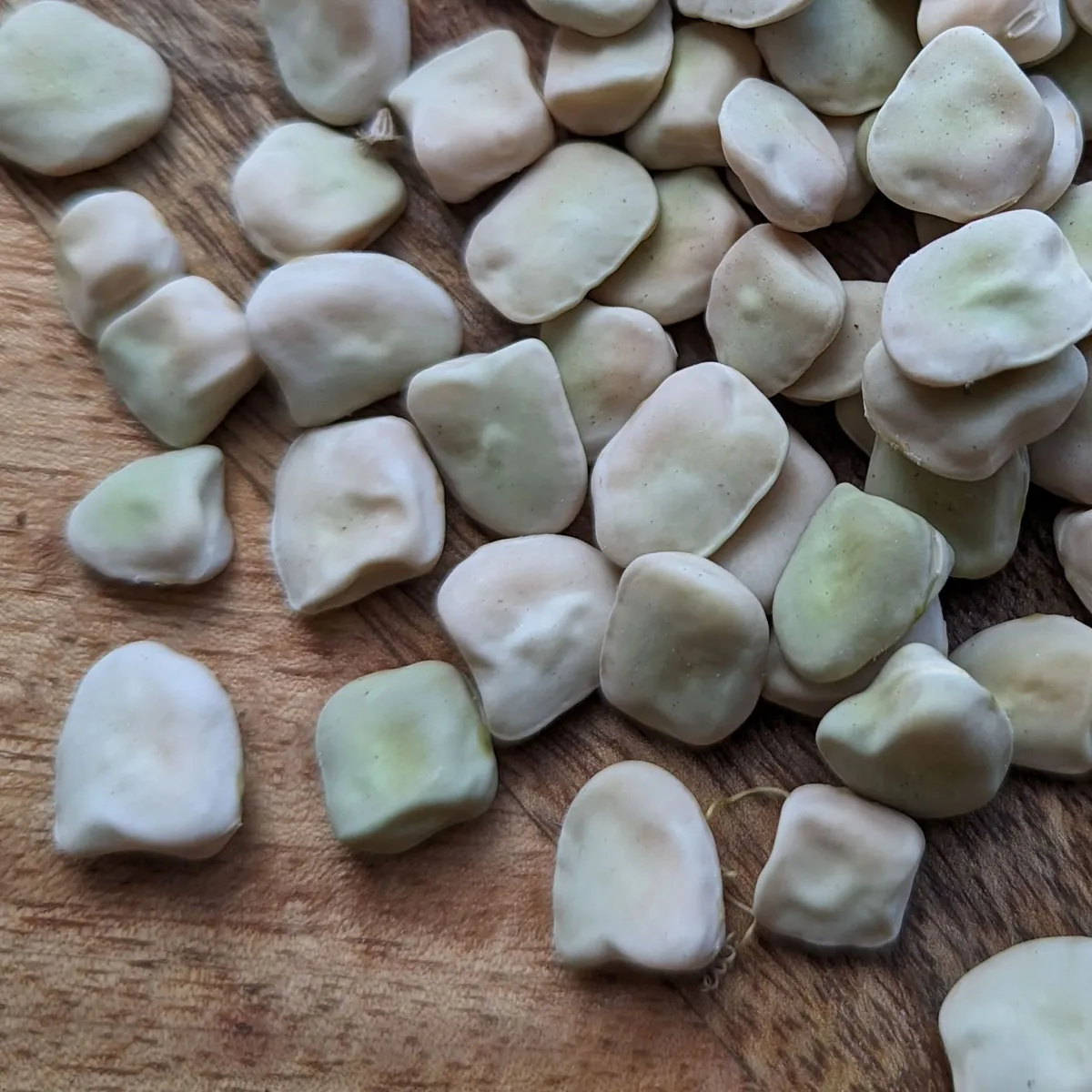
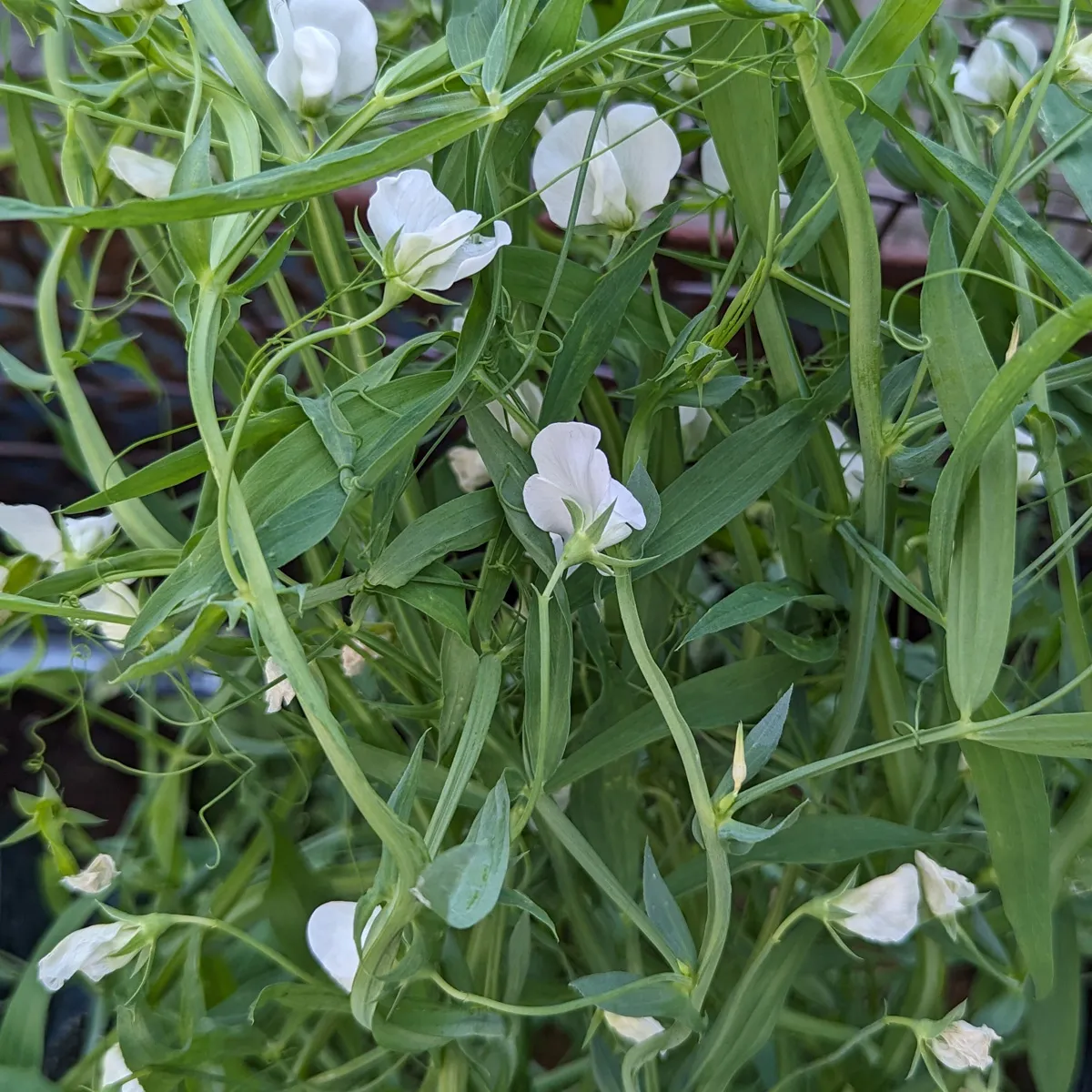
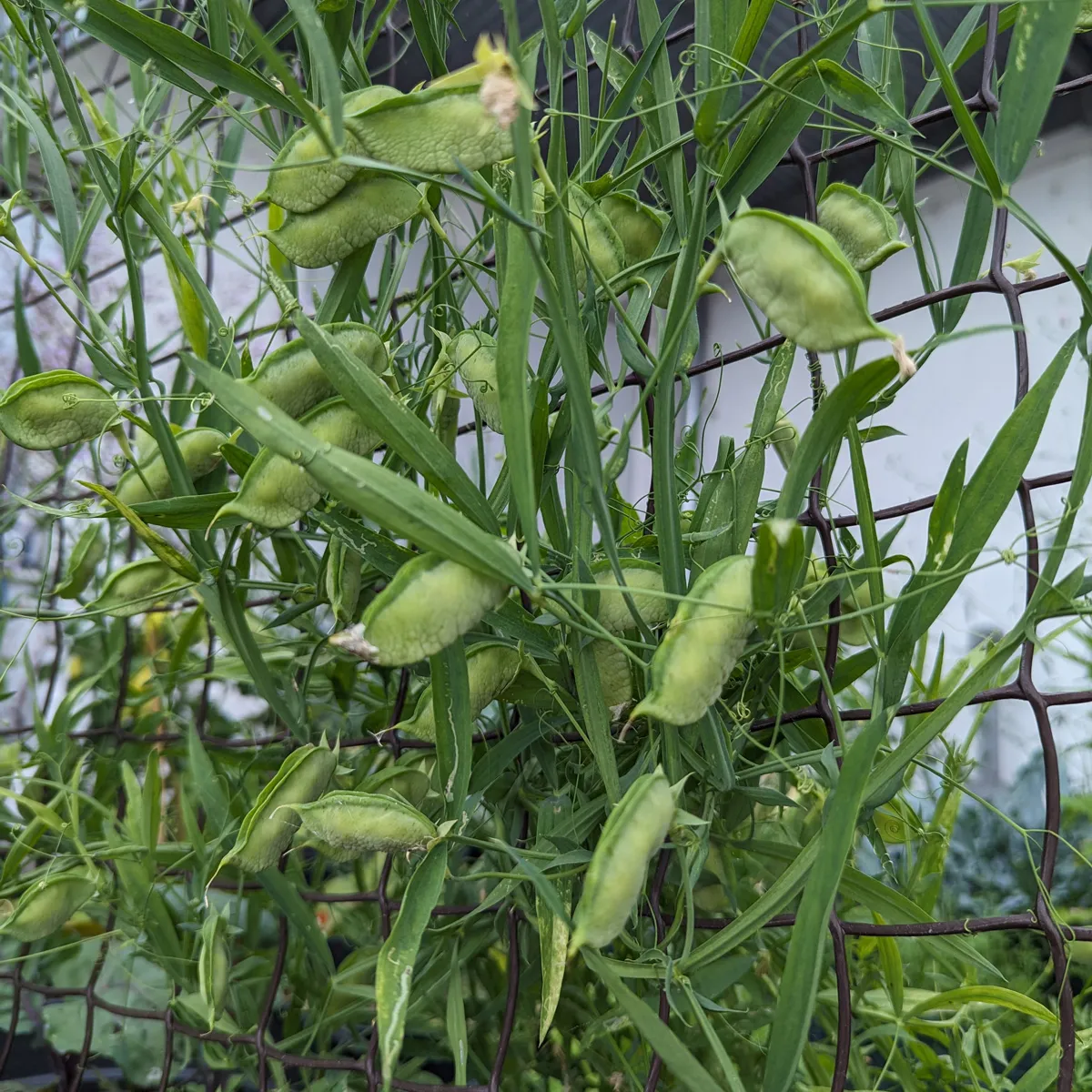
The grass pea (Lathyrus sativus), also known as chickling vetch or Spanish vetchling, is an ancient cultivated plant that has been grown for thousands of years across Southern Europe, North Africa, and Western Asia. Its use dates back to antiquity – particularly in regions with poor soils and frequent droughts, it was valued as a reliable source of protein. This climbing, pea-like plant with butterfly-shaped flowers produces flat, angular pods containing pea-sized seeds, which can be used in a variety of ways: boiled, roasted, or ground into flour. It remains an important staple in traditional Indian and Ethiopian cuisine to this day.
The flat pea naturally contains the neurotoxin ODAP, which can lead to the neurological disorder lathyrism if consumed as part of a monotonous diet for several months (more than 30% of daily intake). The variety we offer is low-toxin and is safe when used as part of a normal, varied diet. To further reduce toxin levels, we recommend soaking the seeds before preparation and discarding the cooking water. We advise against a long-term, unbalanced diet consisting primarily of flat peas. When propagating seeds on your own, the toxin content may change in subsequent generations - we therefore recommend regularly purchasing, low-toxin seeds for consumption rather than using your own saved seeds.
Grass peas are extremely hardy, drought-tolerant, and require minimal care. As legumes, they improve soil fertility through nitrogen fixation and are also well-suited for green manuring or intercropping with cereals. Today, Lathyrus sativus is once again gaining recognition in permaculture and self-sufficient gardening – valued especially for its resilience and nutritional density.
Plant profile
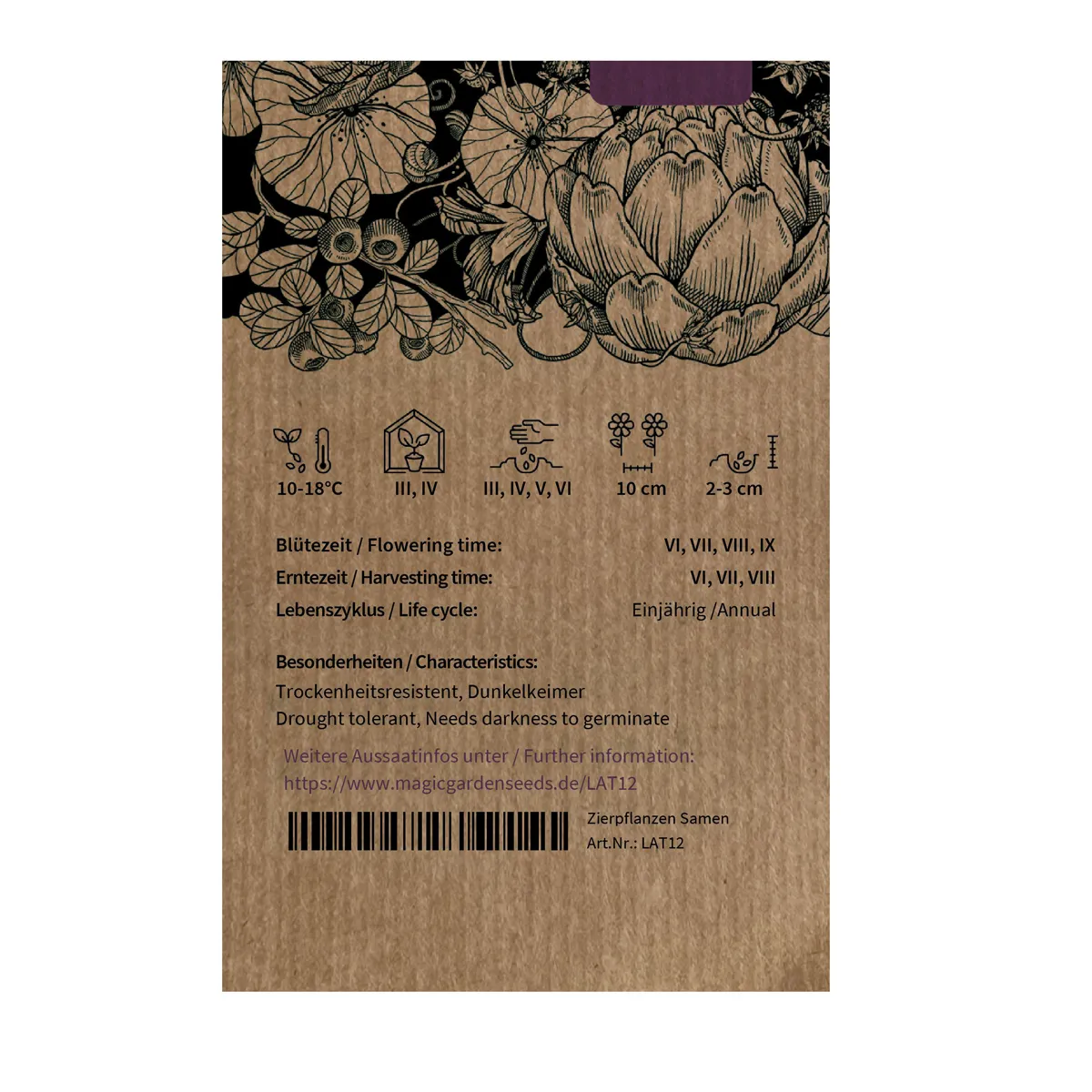
| Plant type | Climber, Ground cover, Wildflower |
|---|---|
| Use | Edible plant, Green manure, Ornamental plant, Vegetable |
| Lifecycle | Annual |
| Species | Fabaceae |
| Seed propagation | konventionell |
| Region of origin | Asia, Mediterranean Region |
| Characteristics | Drought tolerant, Needs darkness to germinate |
| Eventual height | 80-120 cm |
| Flower colour | Blue, White |
| Flowering months | August, July, June, September |
| Main harvest | August, July, June |
Growing instructions
| When to sow outdoors | April, June, March, May |
|---|---|
| Sowing depth | 2-3 cm |
| Germination temperature | 10-18°C |
| Germination time | 1-2 weeks |
| Climate | Dry, Temperate |
| Soil type | Chalky, Fresh, Nutrient-rich |
| Sunlight | Full sun |
| Water requirement | Low |
| Planting distance | 10 cm |
| Row spacing | 20 cm |
Sowing and care
Sowing and Care of Grass Pea
Sowing takes place directly outdoors from March onwards. The seeds should be sown around 3 to 5 cm deep in rows spaced approximately 30 cm apart. A fully sunny, relatively dry site with well-drained soil is ideal. Germination occurs after 10 to 20 days; pre-cultivation is not necessary. The plants grow quickly and usually begin to flower from June, depending on weather conditions. A support structure can be helpful in the case of vigorous growth, though it is not essential. Grass peas require very little water and no additional fertiliser. Harvesting begins once the pods have dried and the seeds rattle inside when shaken – typically in July or August. For seed saving, allow the pods to fully ripen and dry on the plant.
Other names
Botanical name: Lathyrus sativus
German: Speiseplatterbse, Saat-Platterbse, Blaue Platterbse, Steinlinsensaat,
English: Grass pea, Blue sweet pea, Chickling pea, Indian pea, White vetch,
French: Gesse commune, Pois carré, Gesse des champs,
Italian: Cicerchia, Pisello d’erba, Lenticchia bastarda, Cece erboso,
Spanish: Almorta, Guija, Tito, Lenteja de campo, Ervilleta,
Dutch: Grauwe erwt, Gras-ert, Veldwikke, Chickling erwt,
Login