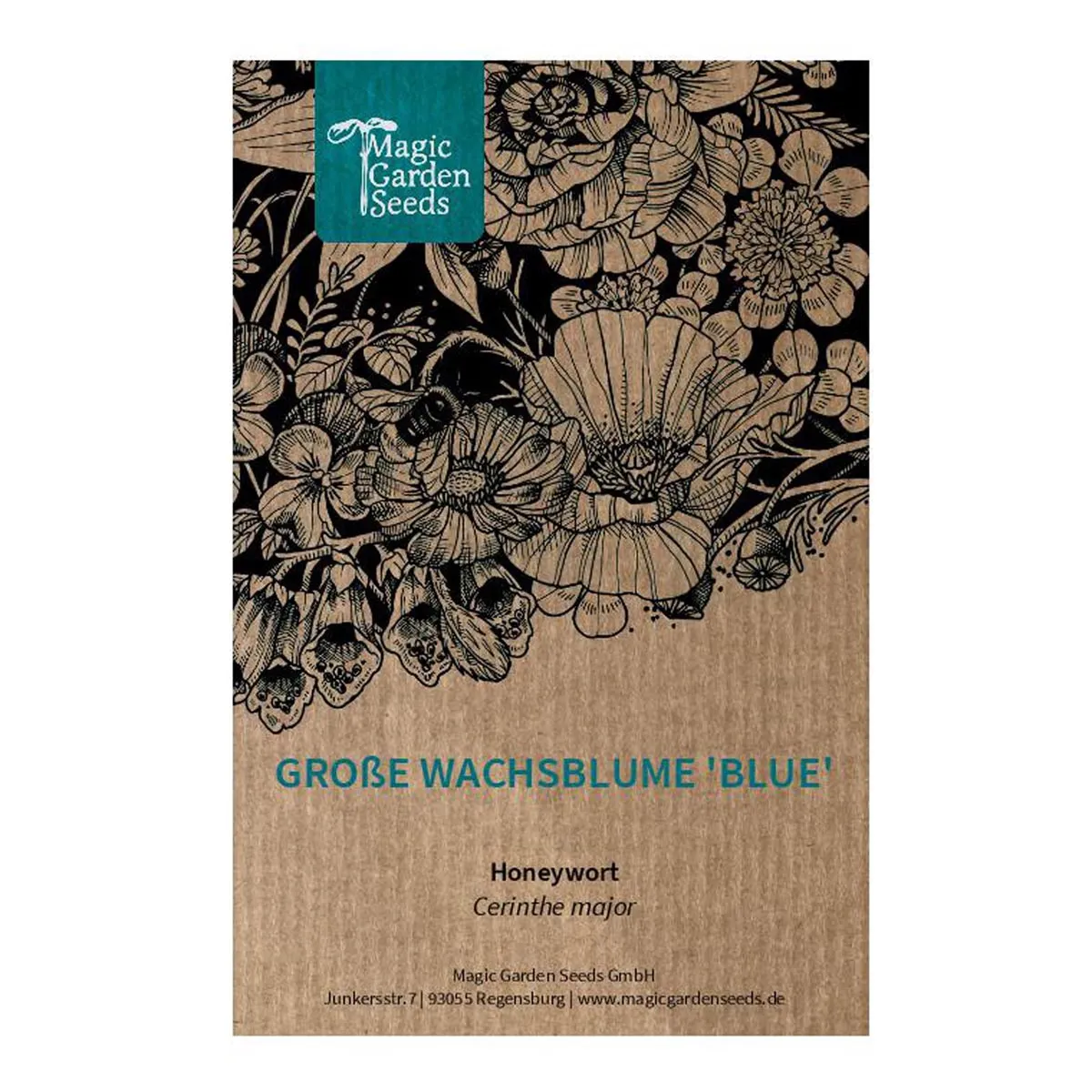
Honeywort 'Purpurascens' (Cerinthe major) seeds
- Contents: Approx. 10 seeds
- Open-pollinated variety, seed tested regularly
Regular price:
€2.59
Product number: CER02 GTIN: 4251420518194
Description
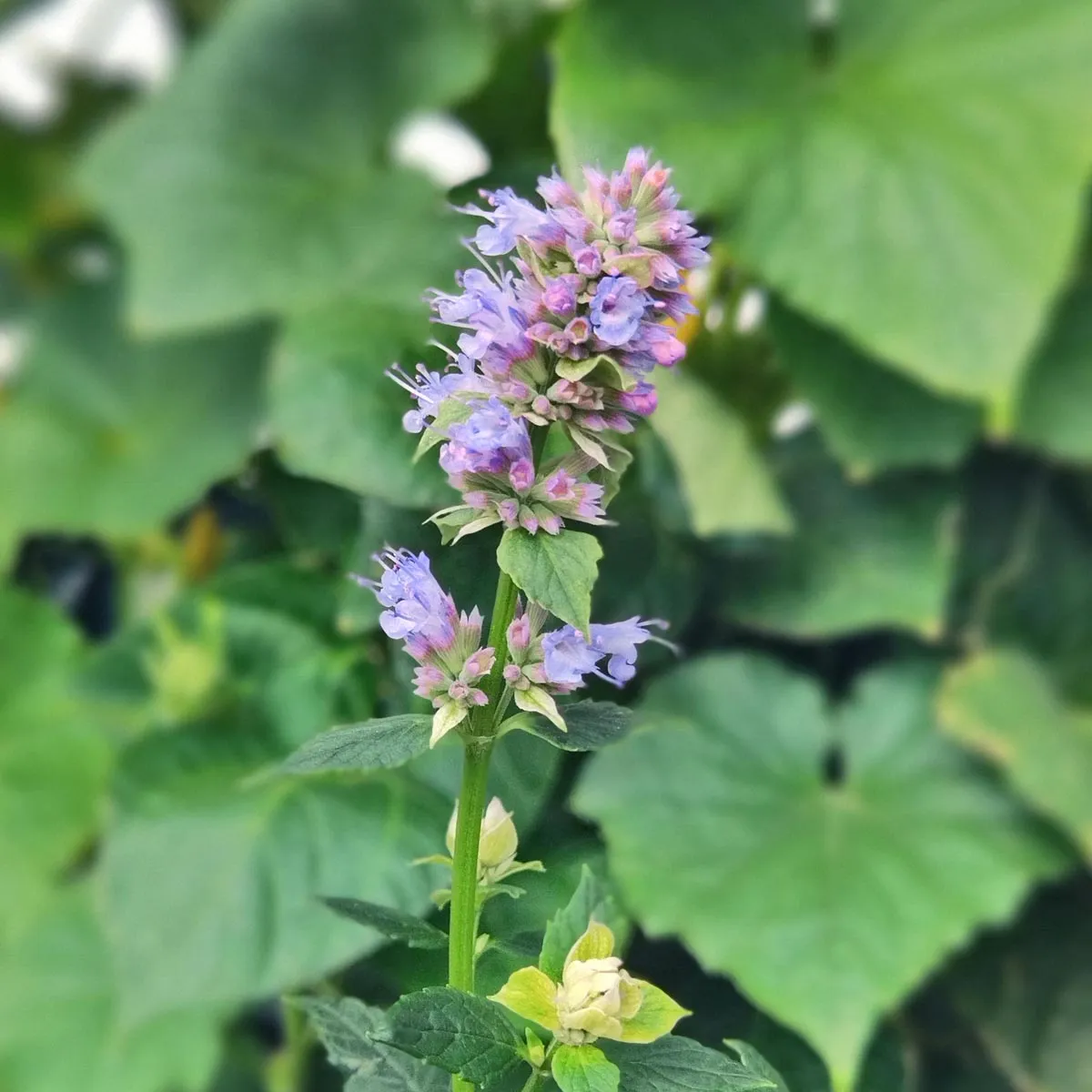
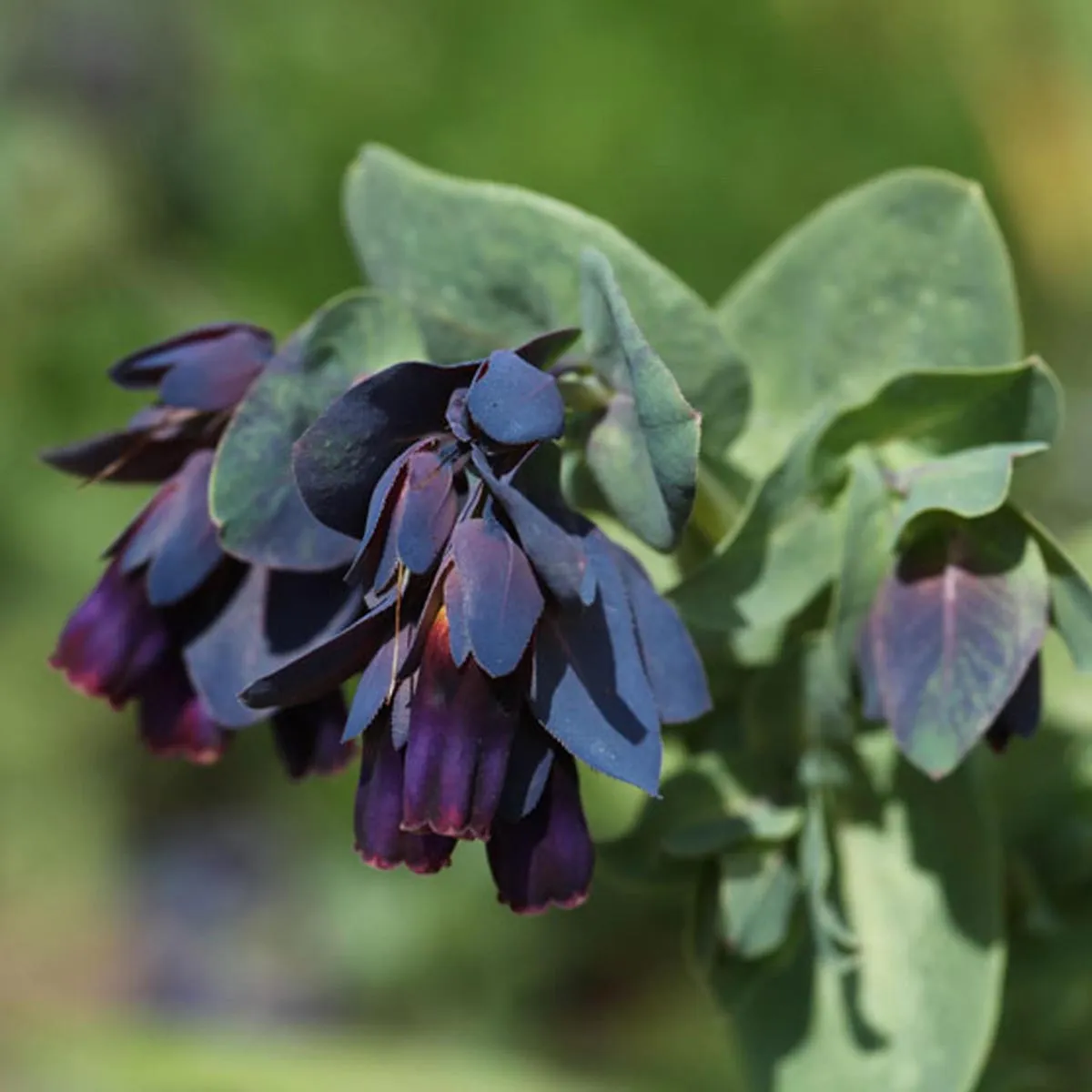
Honeywort is a beautiful wildflower from the Mediterranean region. The variety 'Blue' forms gracefully cernuous calyxes in dark purple. It's a great continuously blooming plant and brings pleasure from mid-May until autumn with its delicate, tender blossoms. A great summer flower for the shrub bed in near-natural gardens or stone gardens that can fill gaps very well but, indeed, looks attractive in the flower pot.
Here, honeywort isn't very widespread and still an insider tip. It's an excellent food plant for wild bees and other useful insects that, especially, appreciate the nectar of their blossoms. You should reserve a sunny spot in the garden for this wildflower. It likes warm, rather meagre locations. Its blossoms are very tolerant to cutting and can, therefore, be used for wild summer flower bouquets.
Here, honeywort isn't very widespread and still an insider tip. It's an excellent food plant for wild bees and other useful insects that, especially, appreciate the nectar of their blossoms. You should reserve a sunny spot in the garden for this wildflower. It likes warm, rather meagre locations. Its blossoms are very tolerant to cutting and can, therefore, be used for wild summer flower bouquets.
Plant profile
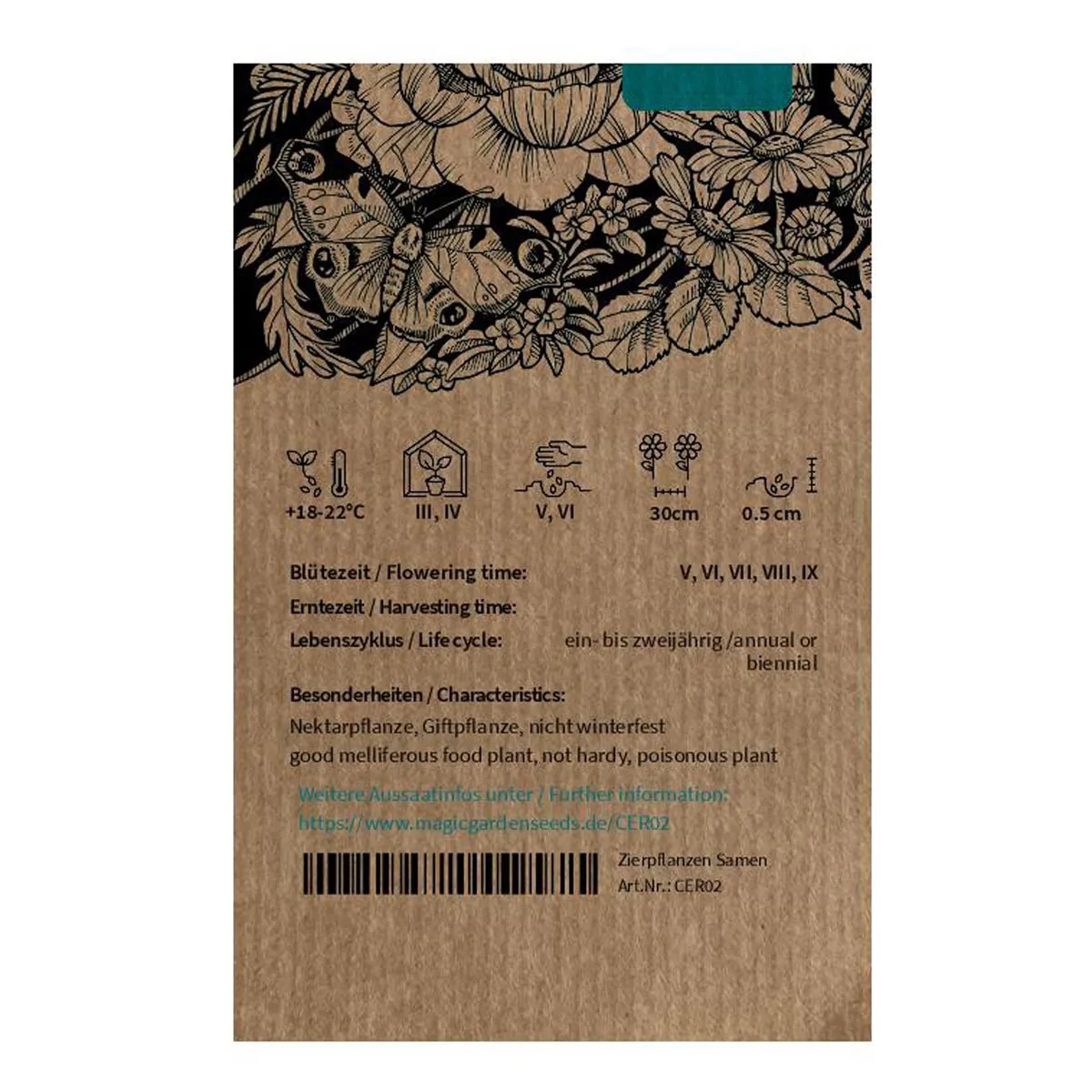
| Plant type | Container plant, Summer flower, Wildflower |
|---|---|
| Use | Container plant, Good insect food plant, Ornamental plant |
| Lifecycle | Annual or biennial |
| Species | Boraginaceae |
| Seed propagation | konventionell |
| Region of origin | Mediterranean Region |
| Characteristics | Food for bees, Not winter-hardy, Poisonous plant |
| Eventual height | 40-80 cm |
| Flowering months | August, July, June, May, September |
Growing instructions
| When to sow outdoors | June, May |
|---|---|
| Sowing depth | 0.5 cm |
| Germination temperature | 18-24° C |
| Germination time | 2-3 weeks |
| Climate | Temperate |
| Soil type | Dry, Free-draining, Humus-rich, Low in chalk, Undemanding |
| Sunlight | Full sun |
| Water requirement | Medium |
| Planting distance | 30 cm |
| Good companion plants | Catnip, Larkspur, Lavender, Oriental Poppy, Sage |
Sowing and care
Annual to biennial wildflower from the Mediterranean region that isn't hardy. Preculture indoors from mid-March is recommended. Direct sowing outdoors is possible from mid-May after the last night frosts. Only slightly cover seeds with soil. Germination within 14-21 days. If you let the seeds soak in warm water for 24 hours, this can promote germination. Precultured seedlings can move outdoors from mid-May.
Honeywort is very undemanding. It prefers a location as warm and sunny as possible and, most often, doesn't need additional irrigation.
Honeywort is very undemanding. It prefers a location as warm and sunny as possible and, most often, doesn't need additional irrigation.
Other names
Botanical name: Cerinthe major
German: Große Wachsblume
English: Honeywort
French: Mélinet, Cérinthe
Italian: Erba vajola maggiore
Spanish: ceriflor mayor, palomera, escarpela
Dutch: Blauw Wasbloempje, Grote wasbloem
Reviews
Login
No reviews yet. Will you write the first one?