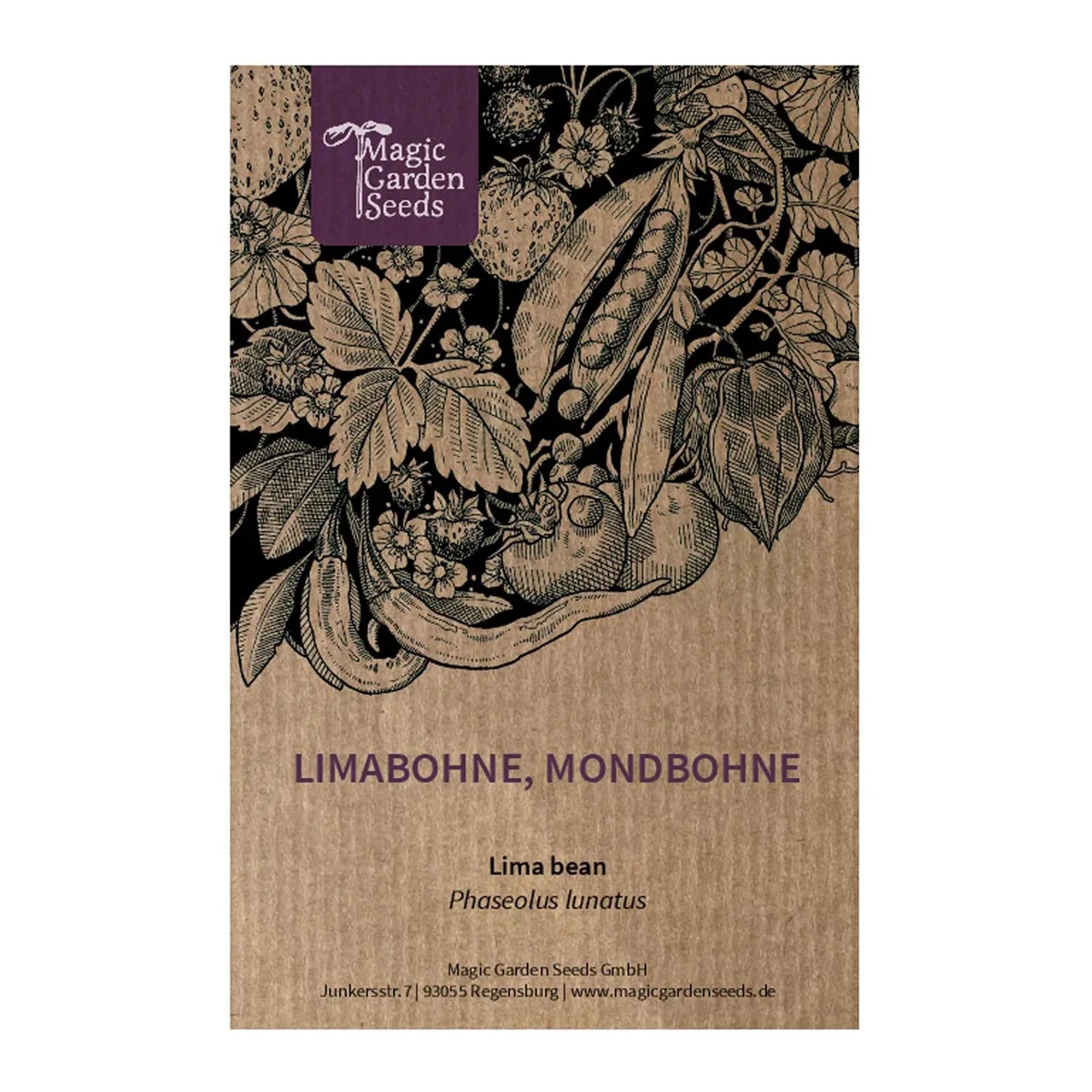
Lima Bean (Phaseolus lunatus) seeds
- An attractive, colourful, tropical bean variety from South America that thrives well as a pot plant here.
- Contents: Approx. 10 seeds
- Open-pollinated variety, seed tested regularly
Regular price:
€2.59
Product number: 1140 GTIN: 4250601205687
Description
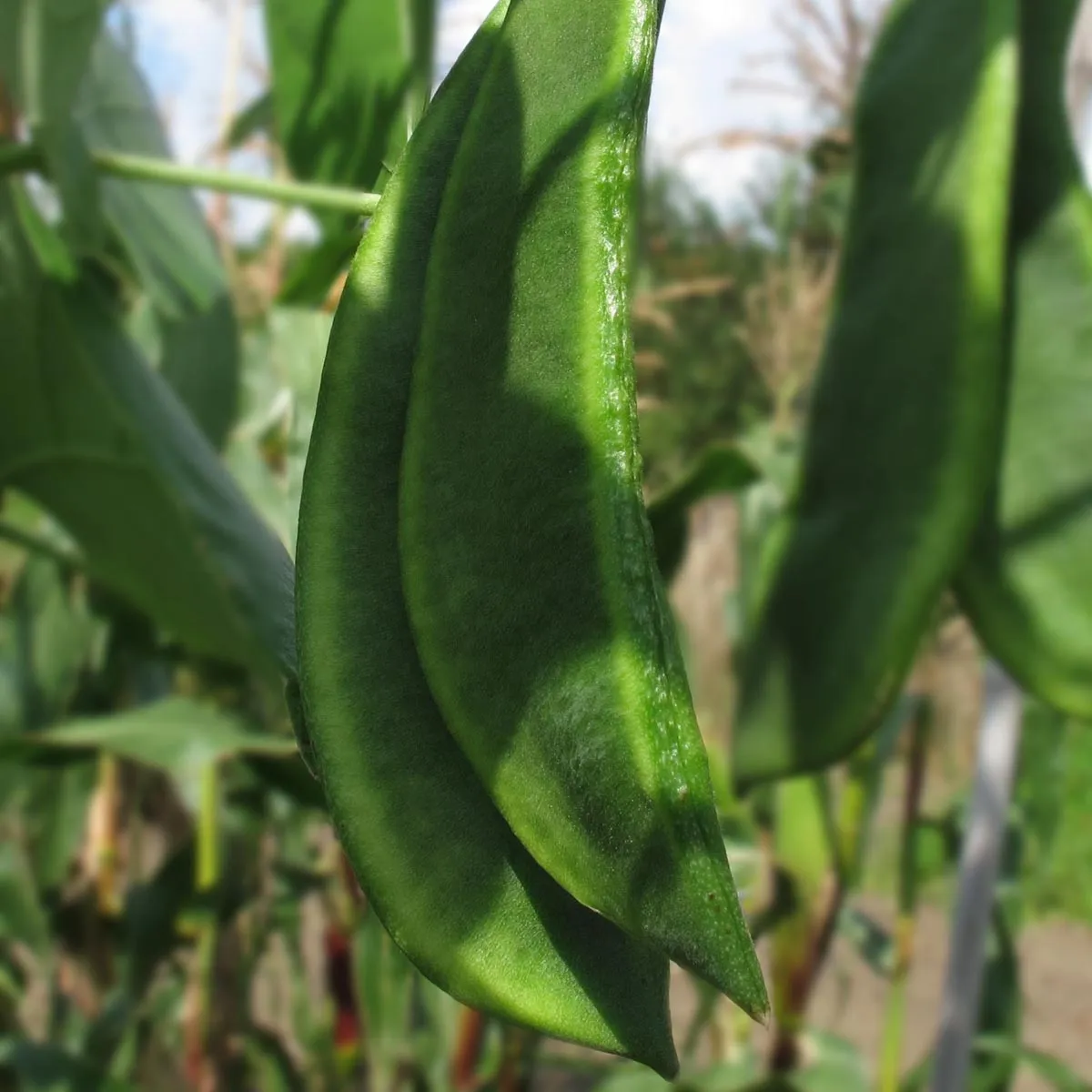
The Lima Bean originates from Guatemala, Mexico, and Peru. It likes warmth and, in Central Europe, grows best as a pot plant at a sunny location. Lima beans have a mild taste and are suitable for stews.
In tropical and subtropical climate, lima beans grow perennially. However, here, they are cultivated annually only as they can’t stand frost. As this bean variety clearly likes more warmth than our common bean, an early preculture indoors is absolutely recommended to make ripeness even possible – or complete greenhouse cultivation.
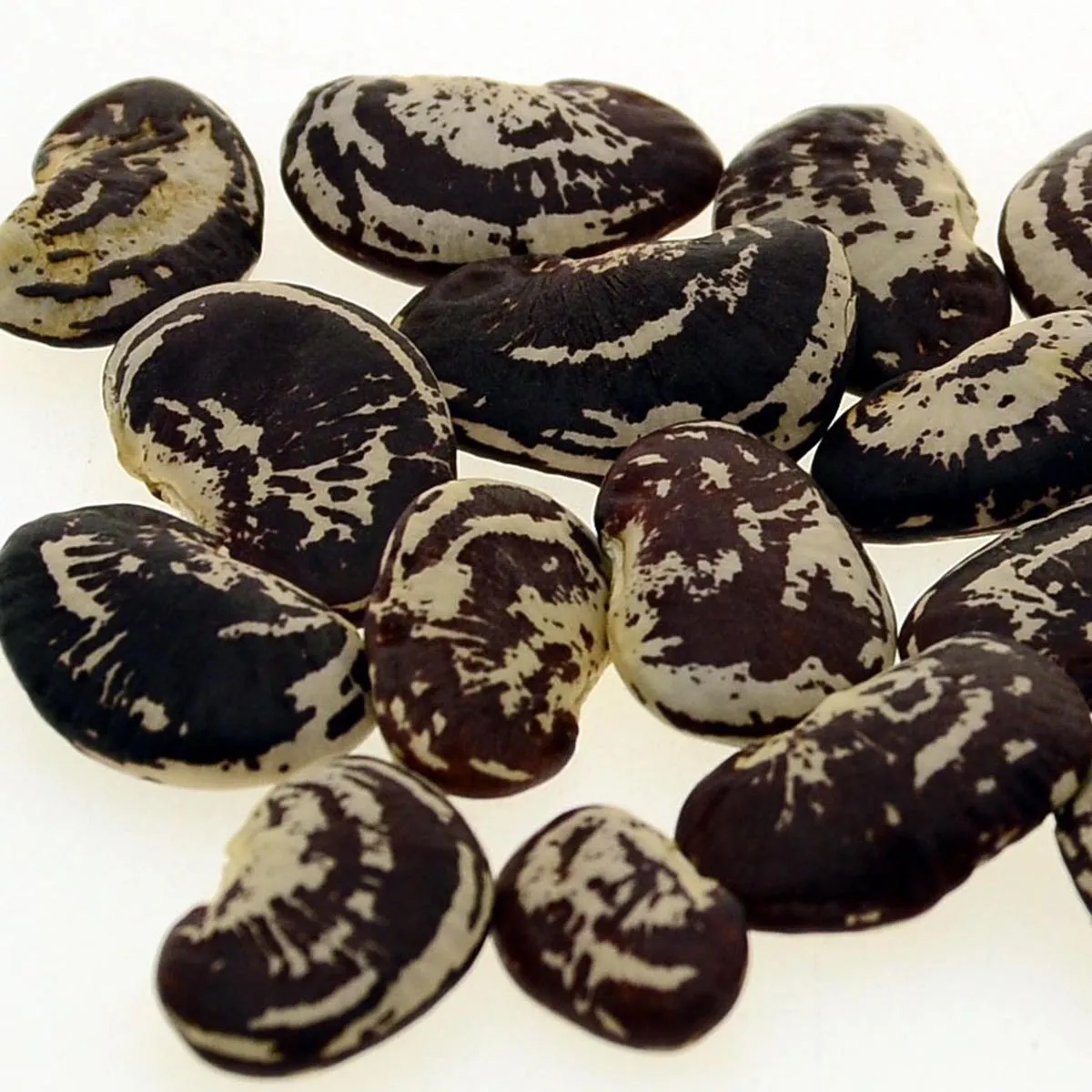
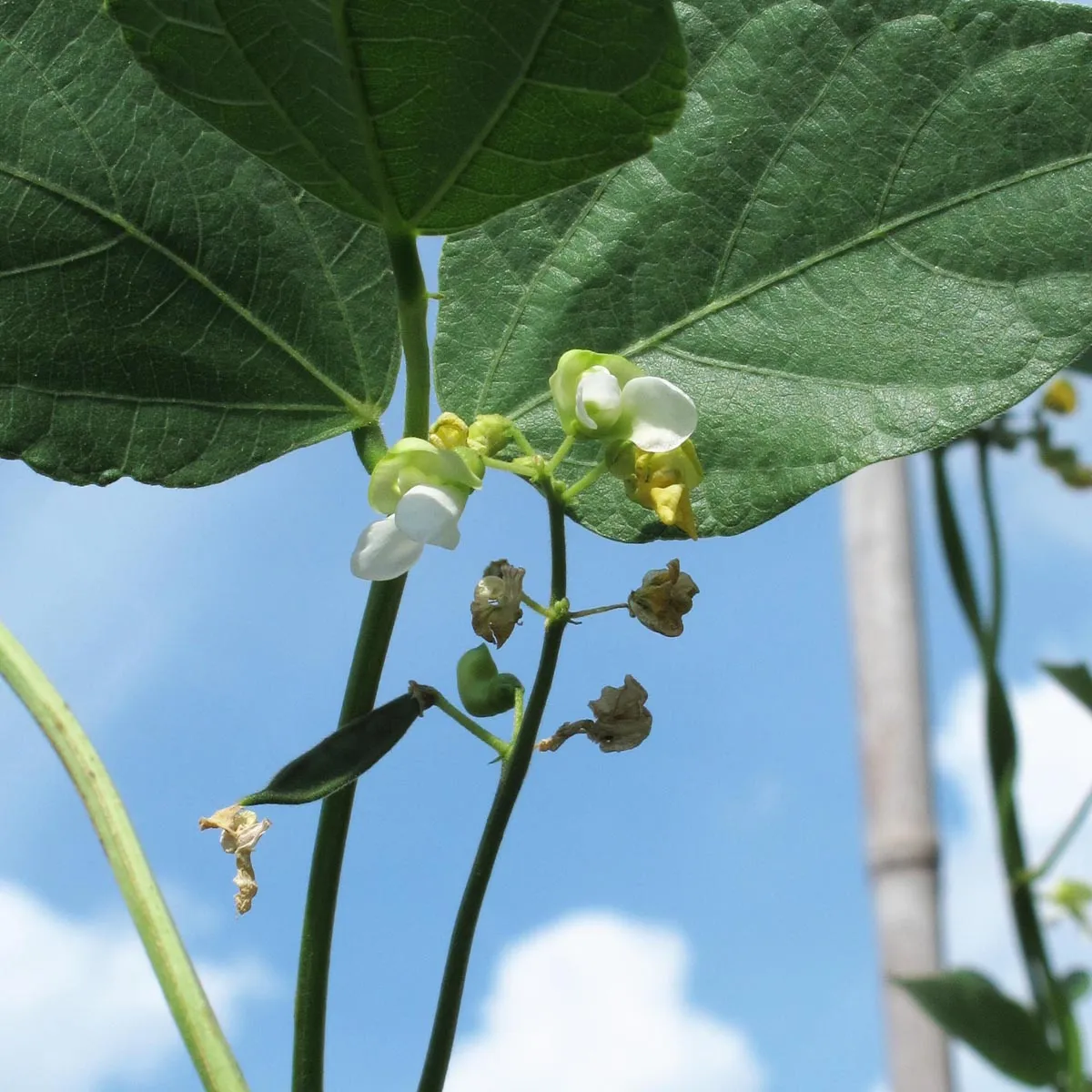
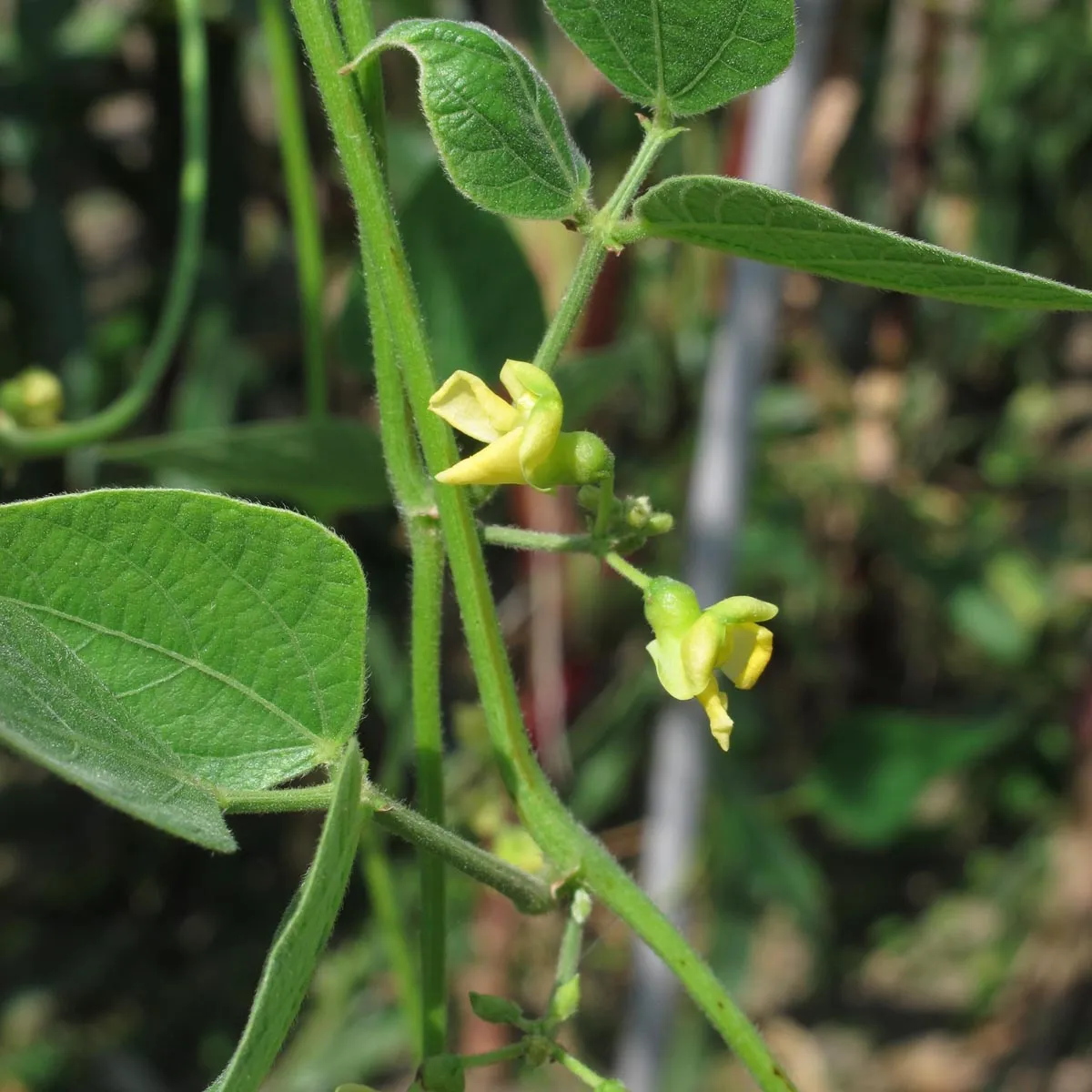
Also as ornamental plants for the garden, balcony, and terrace, lima beans, with their numerous tender blossoms standing in racemes, are very decorative. The ripe seeds are as beautiful and colourful later. Depending on the variety, they can be white, yellow, red, violet, and black, single-coloured to radial-patterned. Except for the white-skinned beans, all the others contain the toxic hydrocyanic acid glycoside linamarin. That’s why the beans necessarily have to be boiled before consumption. The boiling water must be drained. Then, the consumption isn’t dangerous.
Plant profile
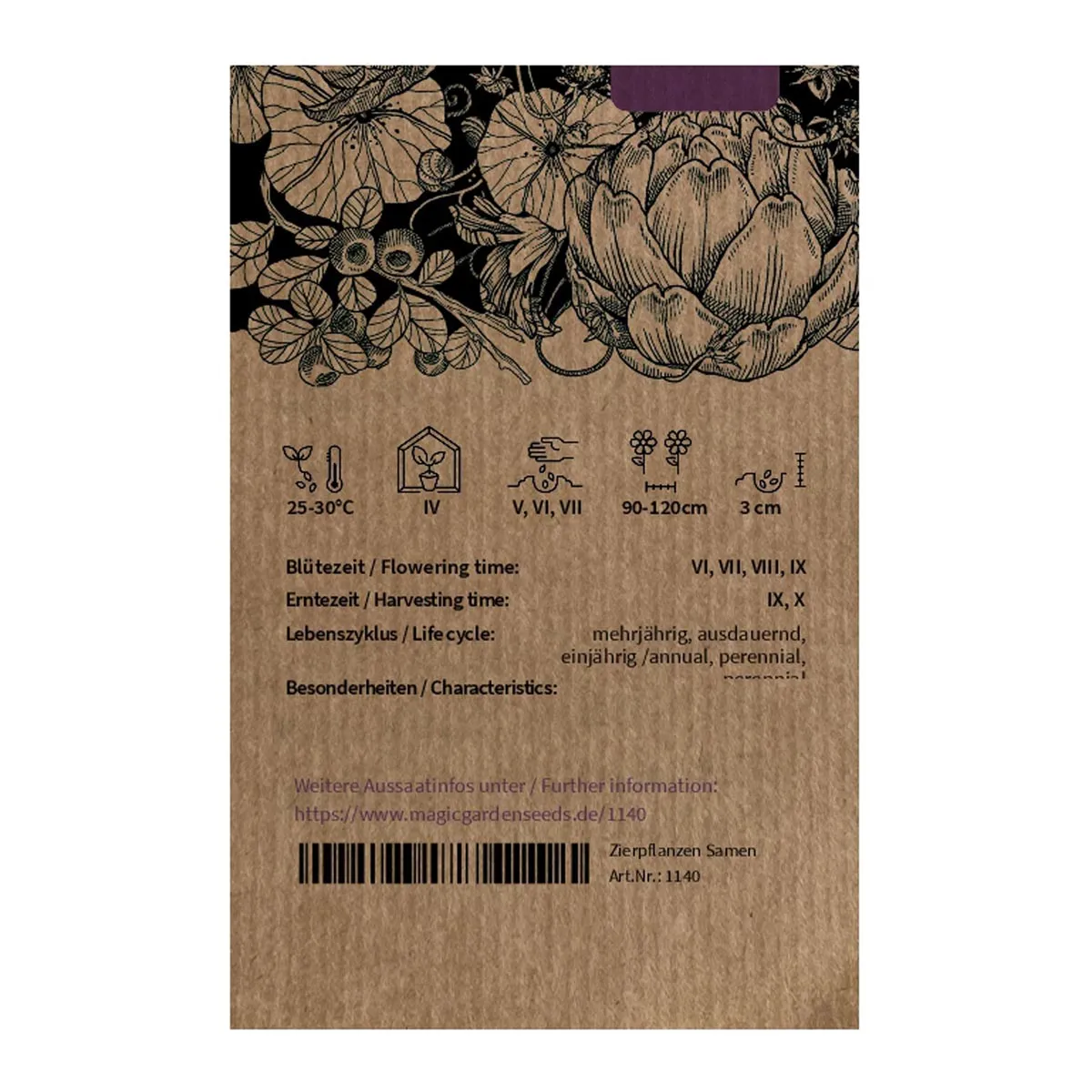
| Lifecycle | Annual, Hardy, Perennial |
|---|---|
| Species | Fabaceae |
| Flower colour | White, Yellow |
| Flowering months | August, July, June, September |
| Main harvest | October, September |
Growing instructions
| When to sow outdoors | July, June, May |
|---|---|
| Sowing depth | 2-3 cm |
| Germination temperature | 25-30°C |
| Germination time | 1-4 weeks, 2-6 weeks |
| Planting distance | 100 cm |
| Bad companion plants | Lettuce, Potatoes, Spinach, Sunflower |
Sowing and care
Sowing outdoors after the Ice Saints mid-May until the beginning of July. Depth of sowing: 2-4 cm. When cluster sowing, take 6-8 grains per rod. When sowing in rows, keep a planting distance of 40-50 cm in the row and 100-120 cm row spacing. Likes a lot of sun. Can’t stand wet soil. To increase stability, earthen up when it’s 15 cm high. Runner beans need a rod or something else to climb upon.
Other names
Botanical name: Phaseolus lunatus
German: Limabohne, Mondbohne
English: Lima bean, Butter bean, Sieva bean
French: Haricot de Lima, Haricot du Cap, Pois du Cap
Italian: Fagiolo di Lima
Spanish: Pallar, Garrofón, Habones, Judía de Lima, Haba de Lima, Poroto pallar, Guaracaro
Reviews
Login
No reviews yet. Will you write the first one?