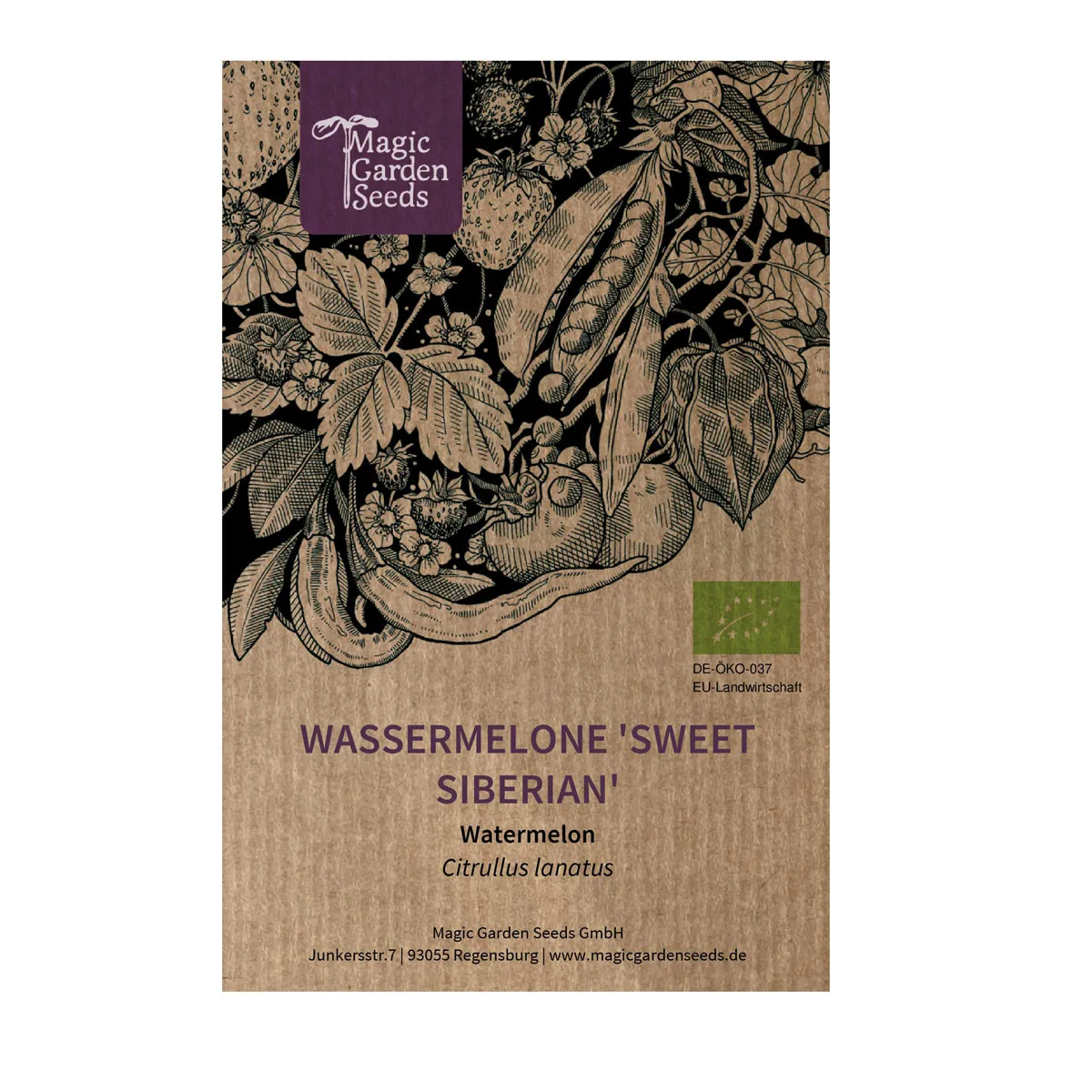
Watermelon 'Sweet Siberian' (Citrullus lanatus) Organic Seeds
- Early-ripening, robust watermelon with orange-yellow, sweet and aromatic flesh - ideal for cool regions and short summers.<ai>
- Open-pollinated seeds from organic cultivation - seed packet with approx. 5 seeds.<ai>
- Organic-certified watermelon variety with history, suitable for the garden, raised beds, large containers as well as cultivation on supports or trellises.<ai>
€3.39
Description
A watermelon for short summers with a surprising history
The watermelon 'Sweet Siberian' is a true exception among melon varieties. Originally from Russia and adapted to short, cool summers, it contradicts the classic image of the heat-loving watermelon. As early as the late 19th century, the variety reached North America and was offered there from 1898 by Peter Henderson & Co. Over decades, it was preserved in seed banks and specifically maintained for regions with a limited growing season.
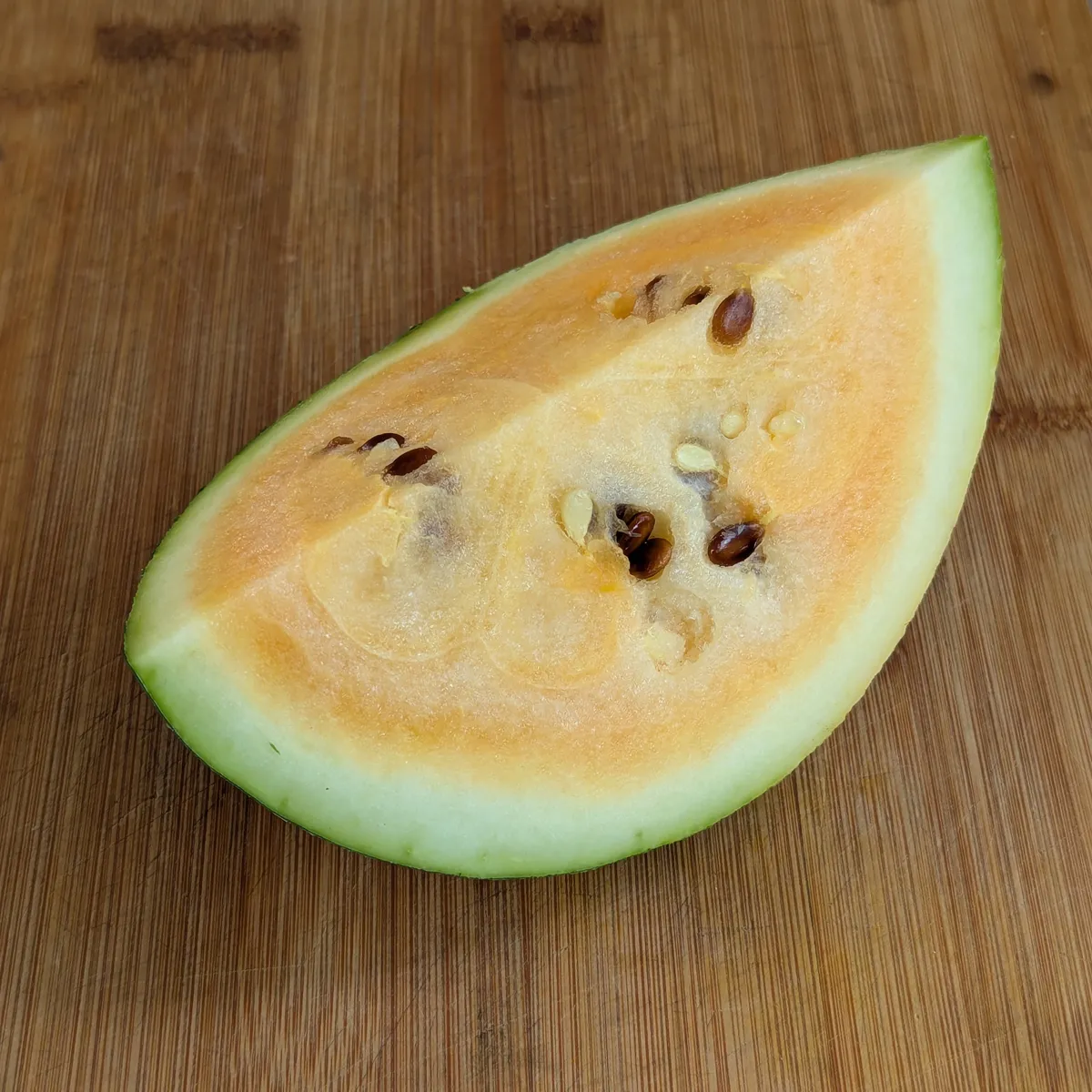
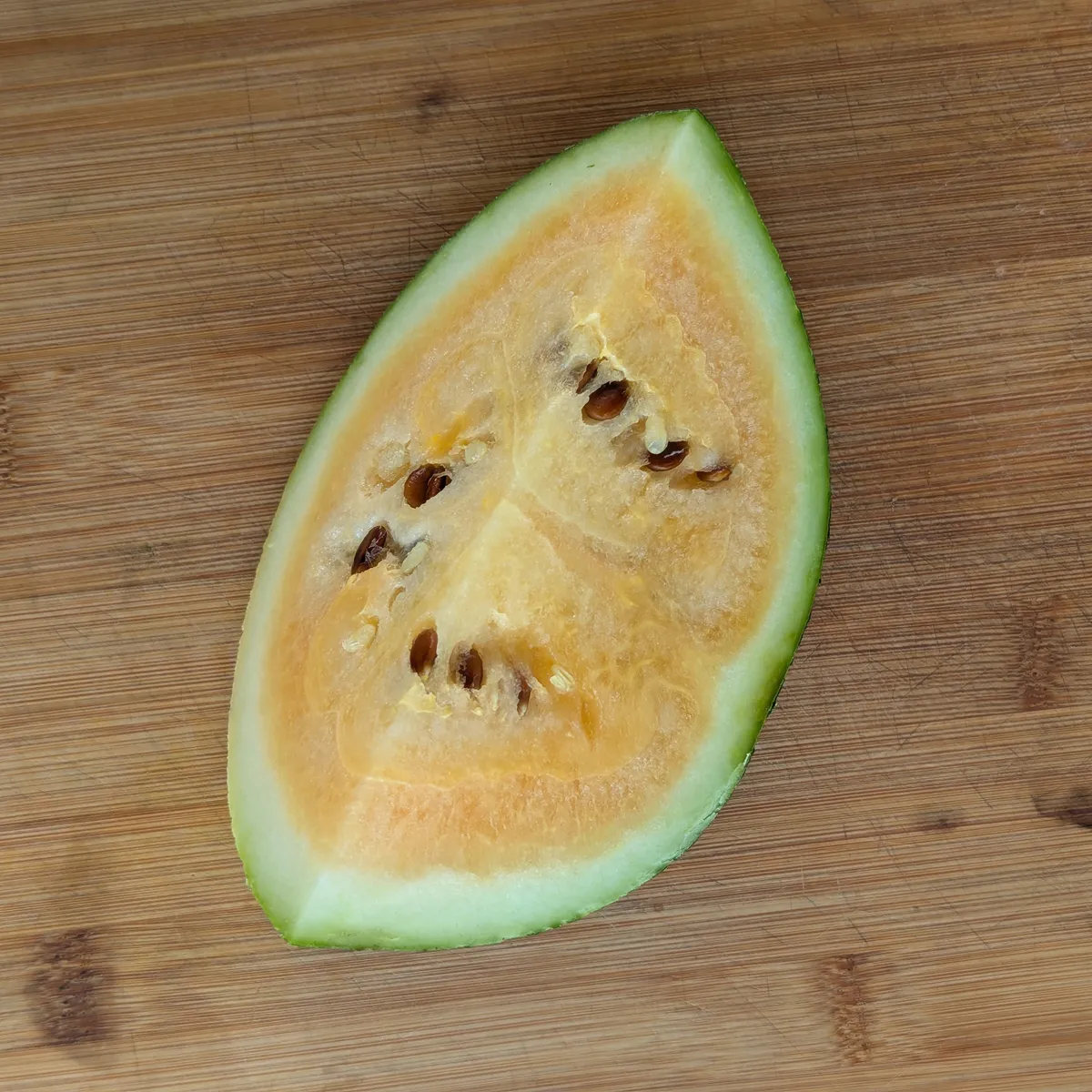
This early-ripening variety produces elongated oval fruits with a dark green mottled rind and a typical weight of 1 to 3 kg. Inside, 'Sweet Siberian' surprises with orange-yellow to apricot-coloured flesh that is exceptionally juicy and sweetly aromatic. This unusual flesh colour clearly sets it apart from classic red watermelons and makes it a rarity both visually and in terms of flavour.
The plants grow in a trailing habit with vines up to around 250 cm in length, flower from June to September with yellow, bee-friendly blossoms and reliably produce several fruits per plant. Thanks to its robustness, this organic variety is suitable not only for the garden, but also for raised beds, large containers or trellis cultivation. A watermelon with history, bred for cool regions and short summers - from gardeners for gardeners.
Plant profile
| Plant type | Climber, Container plant, Ground cover |
|---|---|
| Use | Fruit |
| Lifecycle | Annual |
| Species | Cucurbitaceae |
| Seed propagation | Organic production |
| Region of origin | Russia |
| Characteristics | Food for bees, Needs darkness to germinate, Not winter-hardy |
| Eventual height | 1-3 m |
| Flower colour | Yellow |
| Flowering months | August, July, June, September |
| Main harvest | August, September |
| Fruit colour | Grün |
| Fruit form | länglich |
| Root system | Shallow roots |
Growing instructions
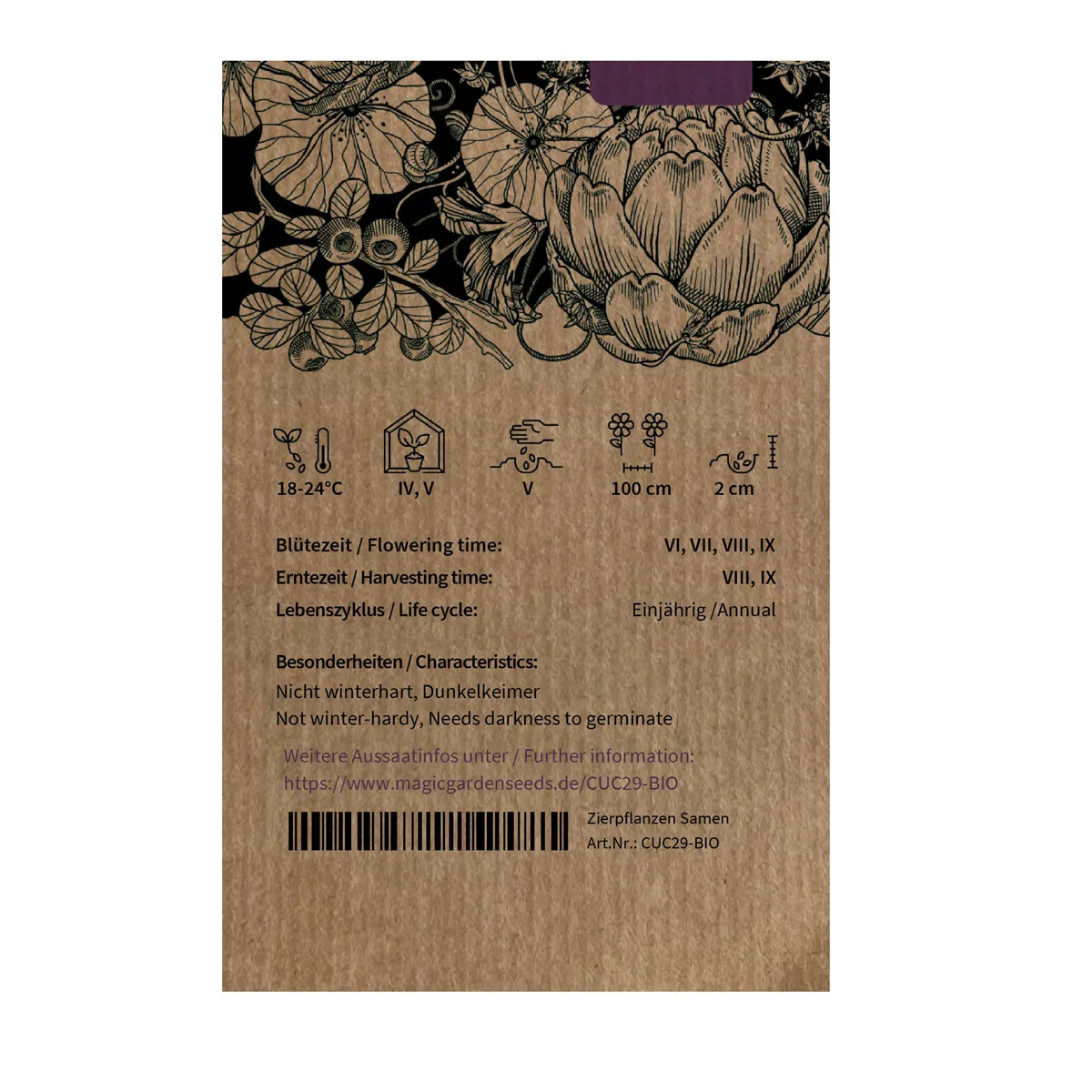
| When to sow outdoors | May |
|---|---|
| Sowing depth | 2 cm |
| Germination temperature | 18-24° C |
| Germination time | 1-2 weeks |
| Climate | Temperate |
| Soil type | Free-draining, Humus-rich, Nutrient-rich |
| Sunlight | Full sun |
| Water requirement | Medium, No waterlogging |
| Nutrient requirements | Heavy feeder |
| Planting distance | 100 cm |
| Good companion plants | Beans, Maize, Peas |
| Bad companion plants | Cucumber, Potatoes, Pumpkin / Squash, Zucchini |
Sowing and care
Sowing and care of the watermelon 'Sweet Siberian'
Sowing the watermelon 'Sweet Siberian' is ideally done as a pre-cultivation, around 30 to 40 days before planting out. The seeds are placed in nutrient-rich seed compost and germinated at consistently warm temperatures above 20 °C. After the last frosts, the young plants can be planted in a sunny, sheltered location with loose, humus-rich soil. A soil temperature of at least 15 °C is essential.
During the growth phase, the plants require regular watering and a good supply of nutrients. Waterlogging should be avoided. By training the shoots along the ground or growing them on a trellis, the fruits can be kept clean and grown in a space-saving way. Depending on the location, harvesting takes place after around 80 to 150 days, once the fruits sound hollow when tapped and the rind has fully developed its characteristic colouring.
Other names
Botanical name: Citrullus lanatus
German: Wassermelone, Melone
English: Watermelon
French: Pastèque
Italian: Anguria
Spanish: Sandía
Dutch: Watermeloen
Login