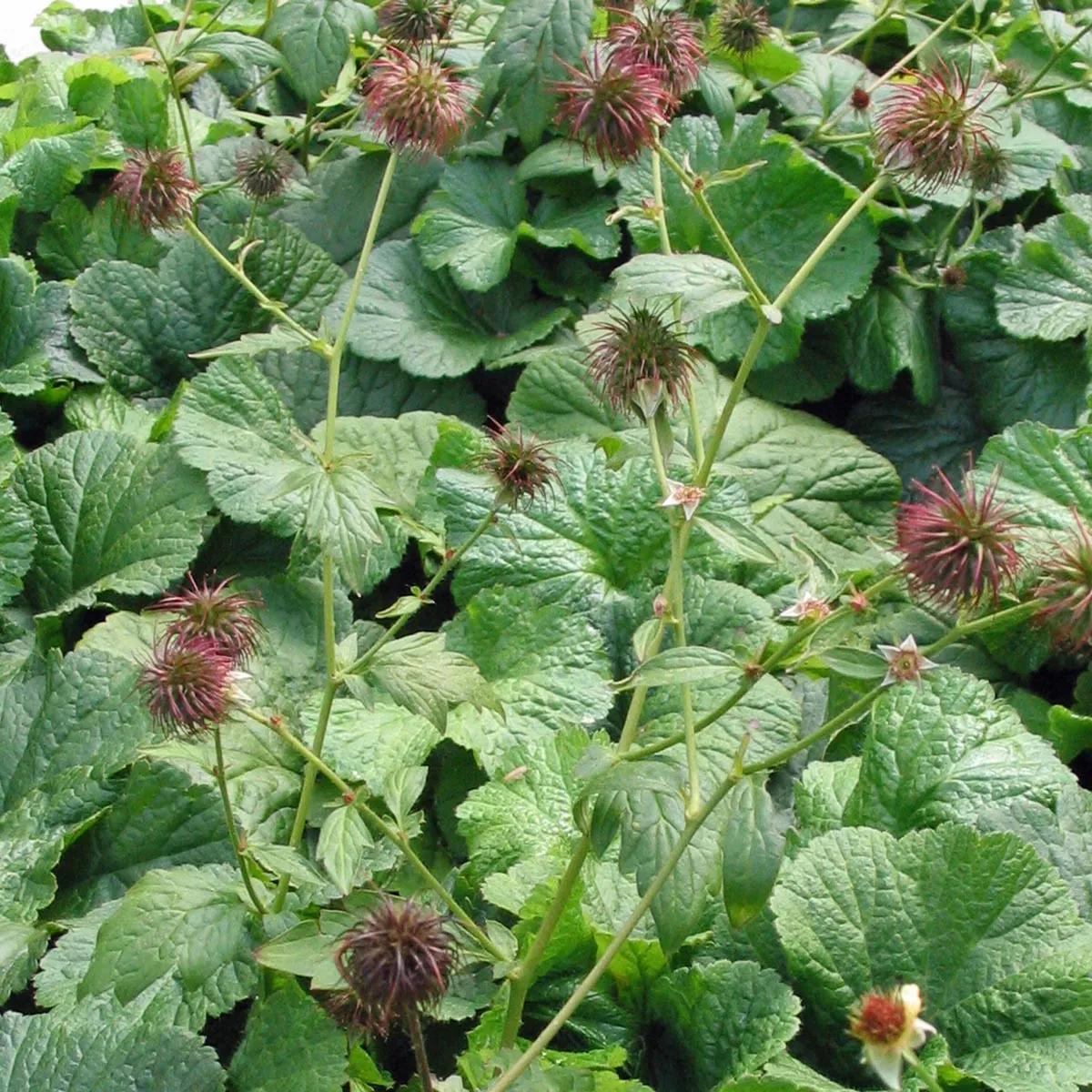
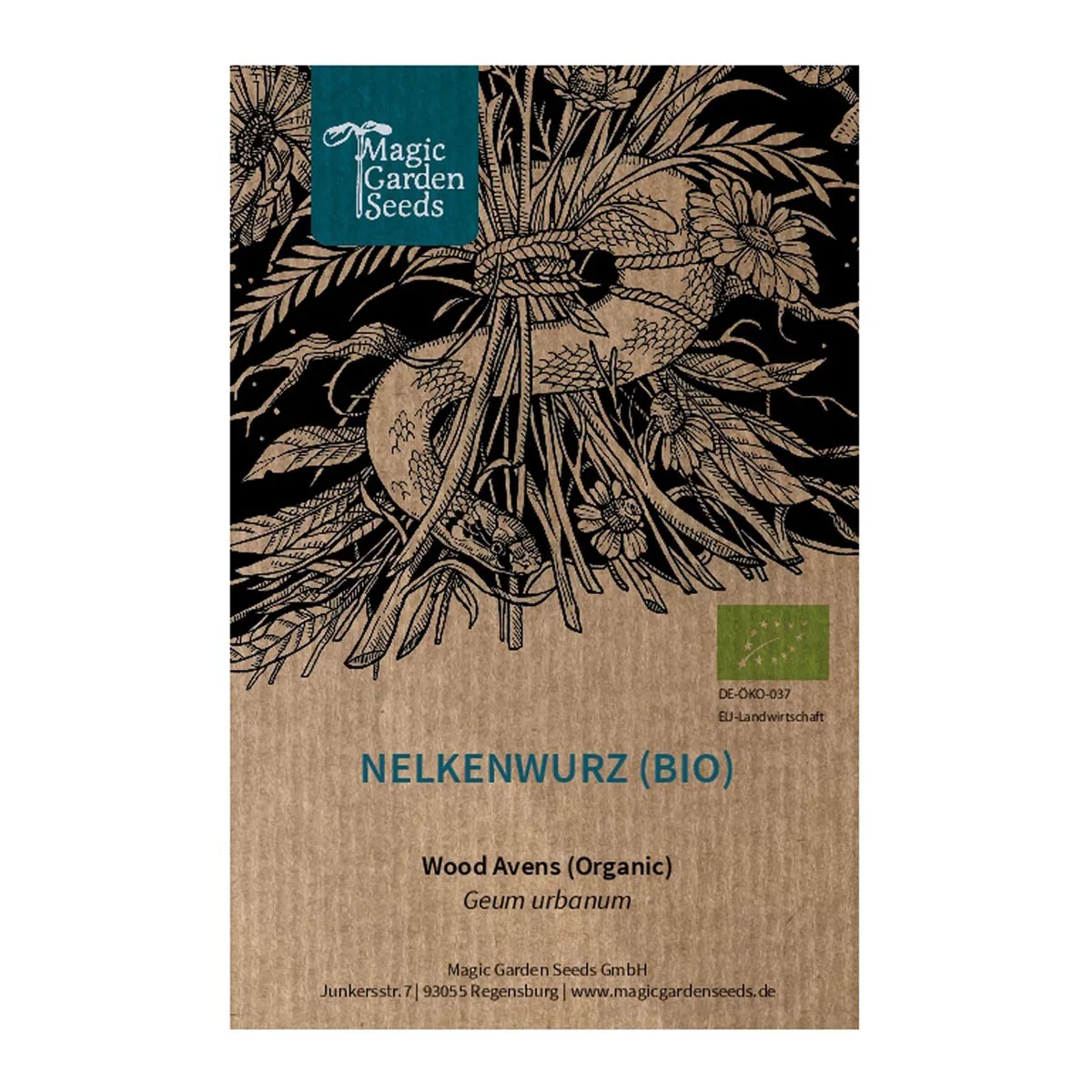
Wood Avens (Geum urbanum) organic seeds
- Indigenous wild plant with roots that scent of clove.
- Contents: Approx. 200 seeds
- Open-pollinated variety, seed tested regularly
€4.59
Description
It was also used as a spice for beer and liqueurs. The essential oils it contains, especially eugenol, which is also the main component of clove oil, give it its characteristic aroma. This also makes it a popular incense plant.
Plant profile
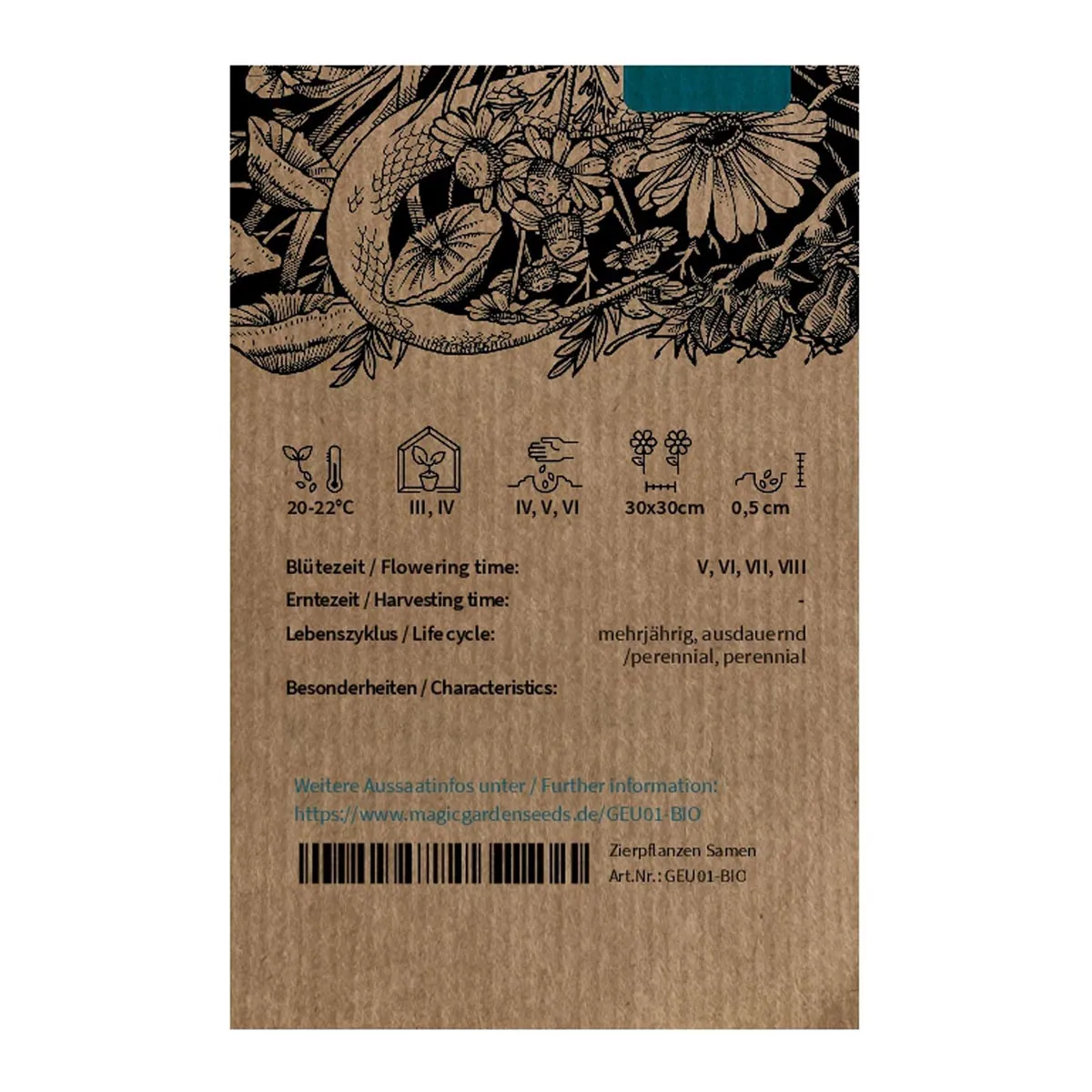
| Lifecycle | Hardy, Perennial |
|---|---|
| Species | Rosaceae |
| Characteristics | Very resistant to slugs and snails |
| Eventual height | 30-150 cm |
| Flower colour | Yellow |
| Flowering months | August, July, June, May |
| Root system | Rhizome |
Growing instructions
| When to sow outdoors | April, June, May |
|---|---|
| Sowing depth | 0.5 cm |
| Germination temperature | 18-24° C |
| Sunlight | Full sun, Shade |
| Planting distance | 30 cm |
| Row spacing | 30 cm |
Sowing and care
Harvest and Use
The aroma of wood avens is found in the rhizome and the roots attached to it. Harvest from the second or third year onwards, ideally in late autumn or early spring, when the roots are at their most aromatic. A good way to recognise a suitable root: when cut, the rhizome shows a reddish-violet colour.
Freshly dug, the root has hardly any scent. The typical clove fragrance only develops once the tissue is damaged. A plant enzyme then releases eugenol, the same aromatic compound found in cloves.
For drying, simply brush the roots off briefly, leave them whole if possible and dry them gently. Stored airtight and in the dark, they keep their aroma for a long time. Grind them and moisten them slightly just before use, and the fragrance will develop again.
In the past, the root was used as a spice in soups and sauces or to flavour wine and beer. To make an infused wine, finely chop the fresh roots, steep them in a little wine in a sealed jar for one hour, then top up.
Other names
Botanical name: Geum urbanum, Caryophyllata officinalis, Streptilon odoratum
German: Benediktenkraut, Buschnelkenwurz, Hasenauge, Igelkraut, Märzwurzel, Nägleinkraut, Nardenwurz, Weinwurz, Wilder Sanikel
Login