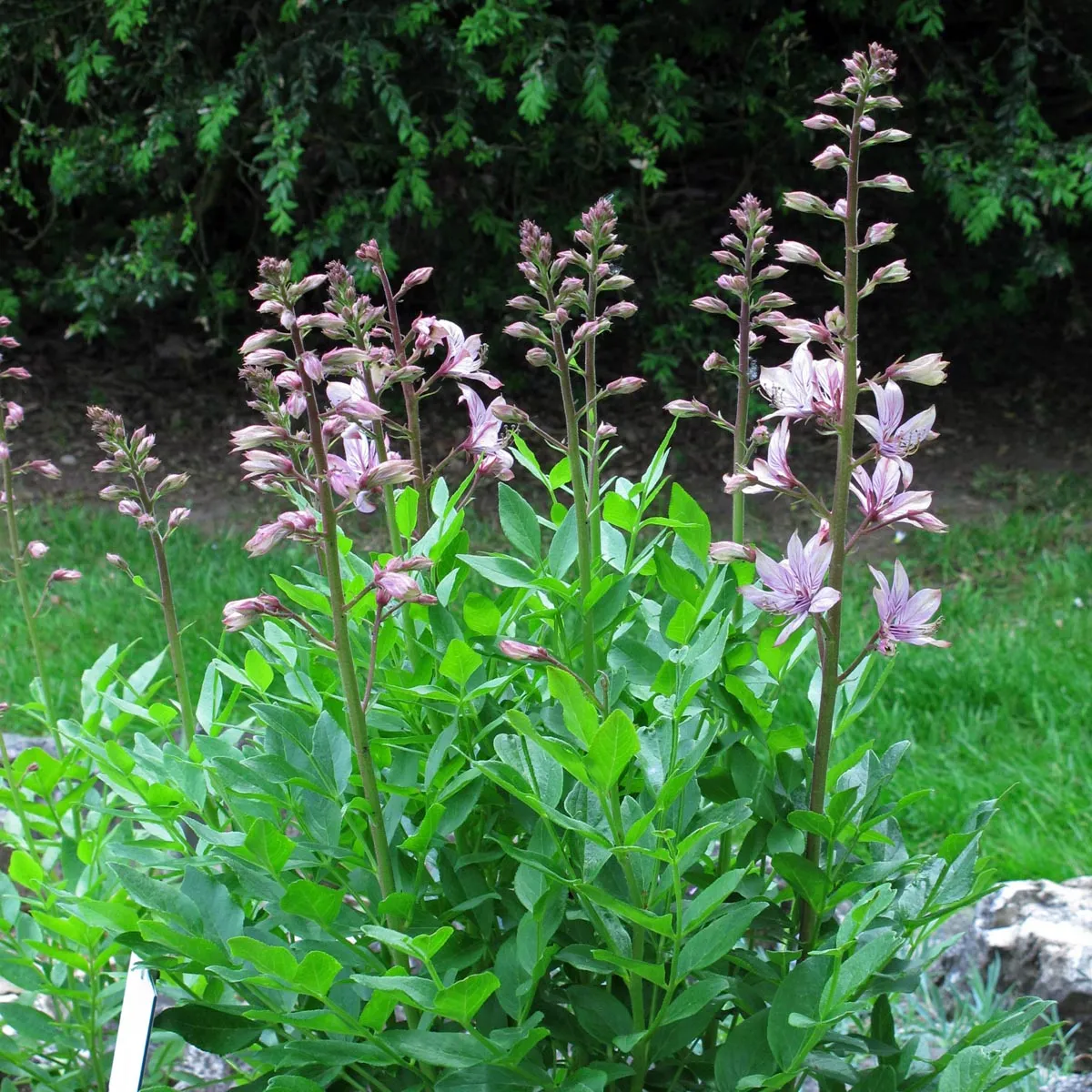
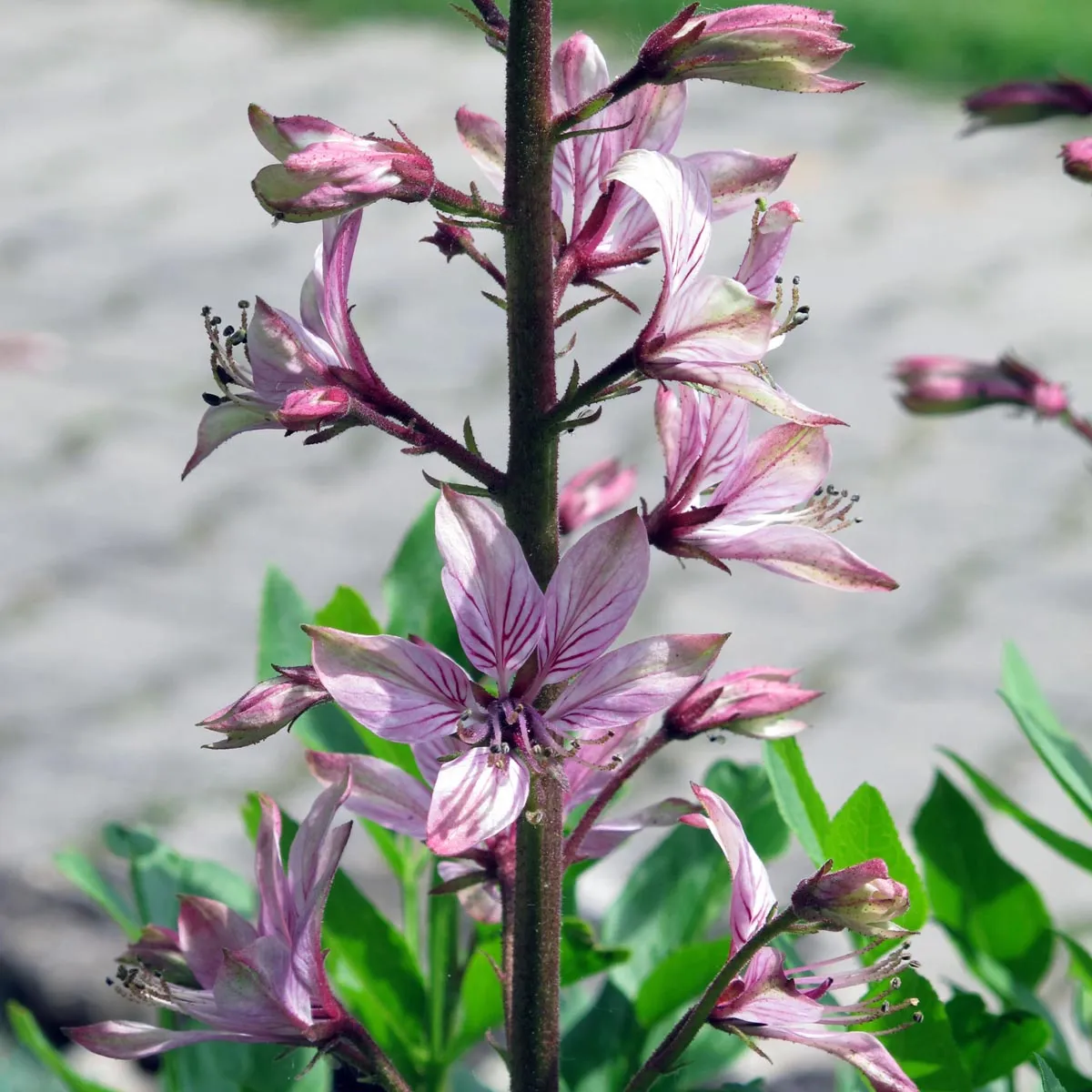
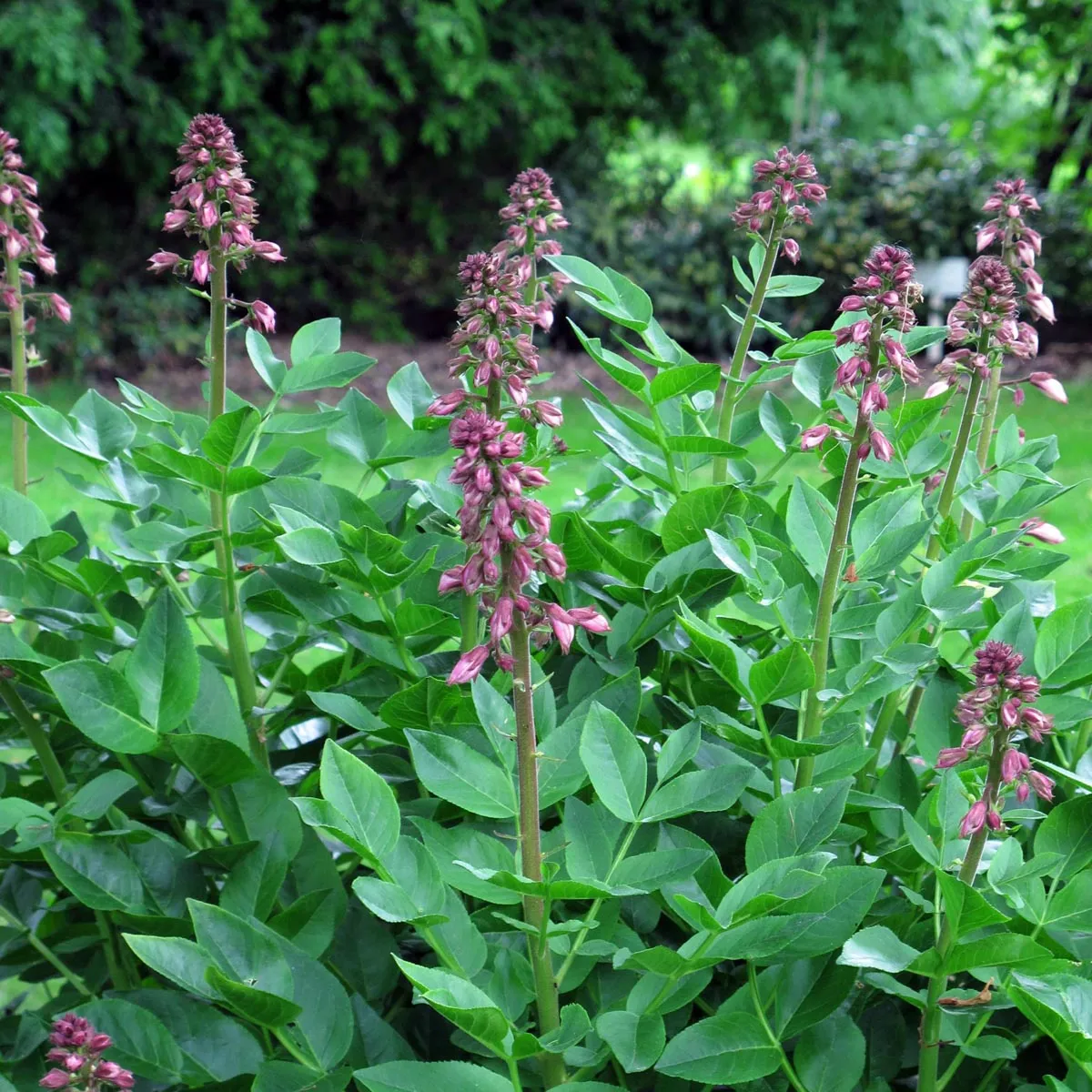
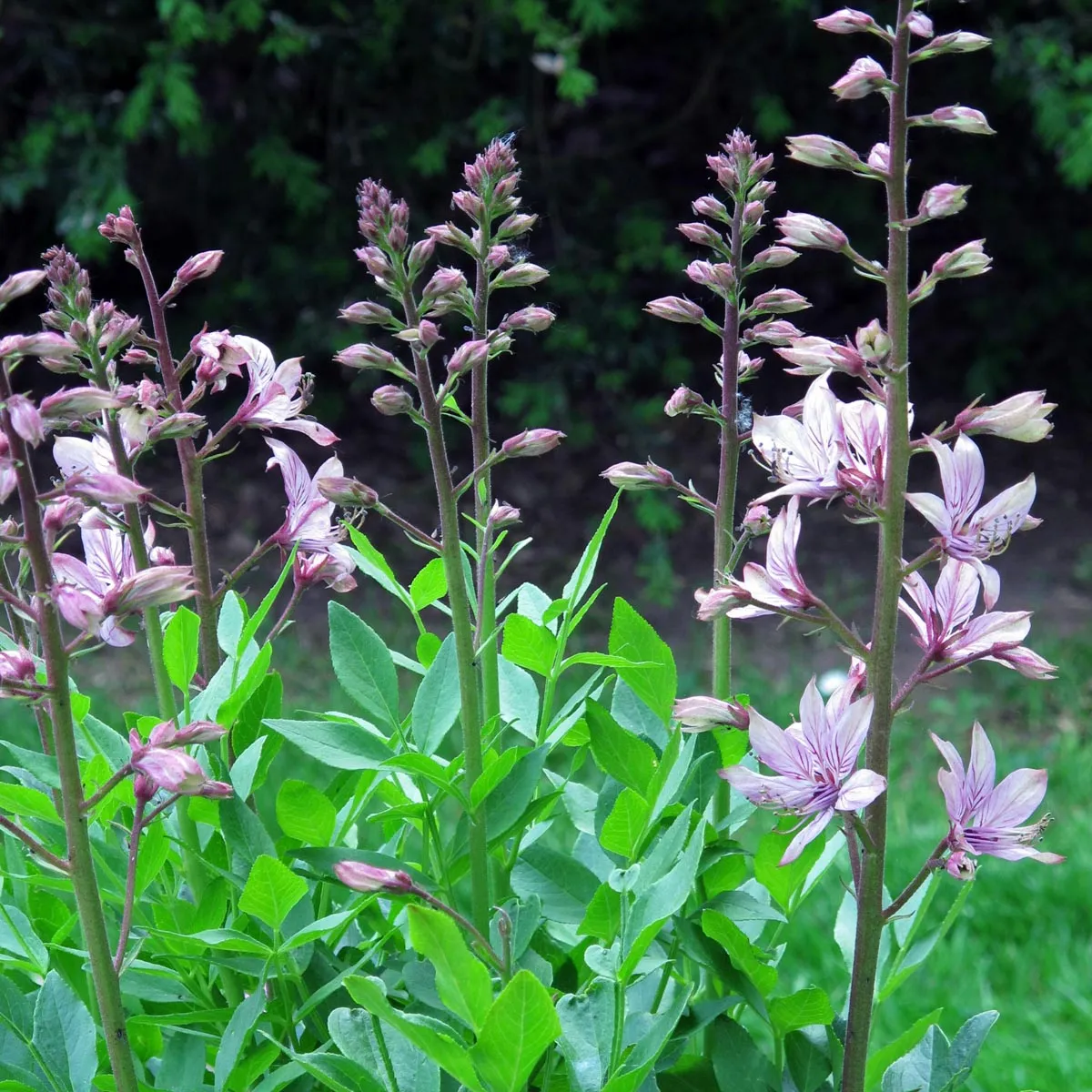
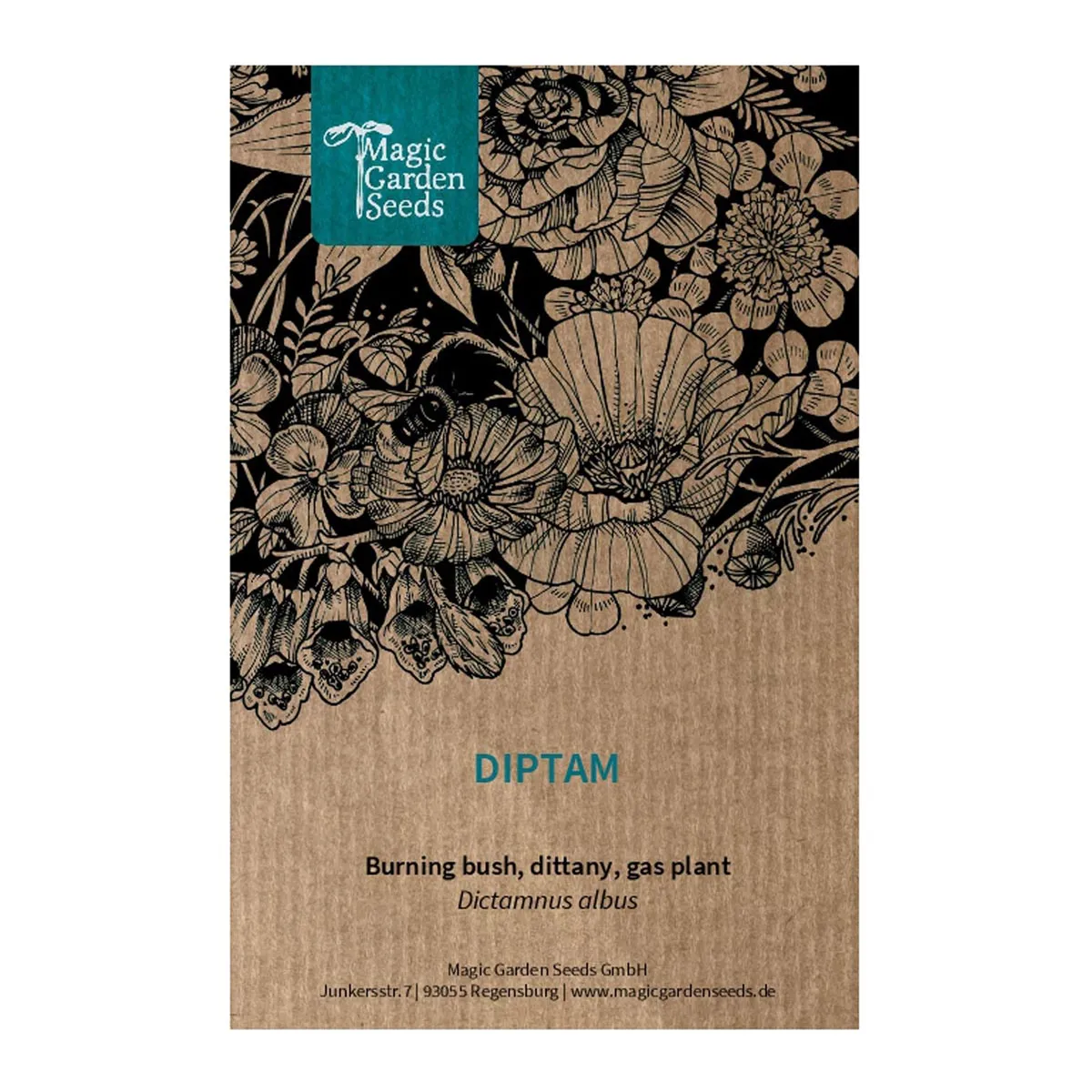
Burning Bush / Dittany / Gas Plant (Dictamnus albus) seeds
- Essential lemon-scented shrub that grows on steep slopes.
- Contents: Approx. 20 seeds
- Open-pollinated variety, seed tested regularly
Regular price:
€4.19
Content: 20 Single seed
Product number: DIC01 GTIN: 4250601202167
Description
Dittany is a rare perennial from the rue family (related to citrus plants). The very decorative and fragrant bush grows wild on stony slopes and was particularly popular in ornamental gardens in the 18th and 19th century.
The stem of the plant is covered in glands that release a volatile, inflammable, lemon-scented essential oil, which can be lit without harming the gas plant. This feature has also garnered the plant the name "burning bush", even though it is not an indigenous species in the biblical territories.
It was once used as a popular remedy, for example with Hildegard von Bingen, but because of its toxic ingredients, none of the plant parts should be ingested. Also, the above-ground parts of the perennial are phototoxic.
Plant profile
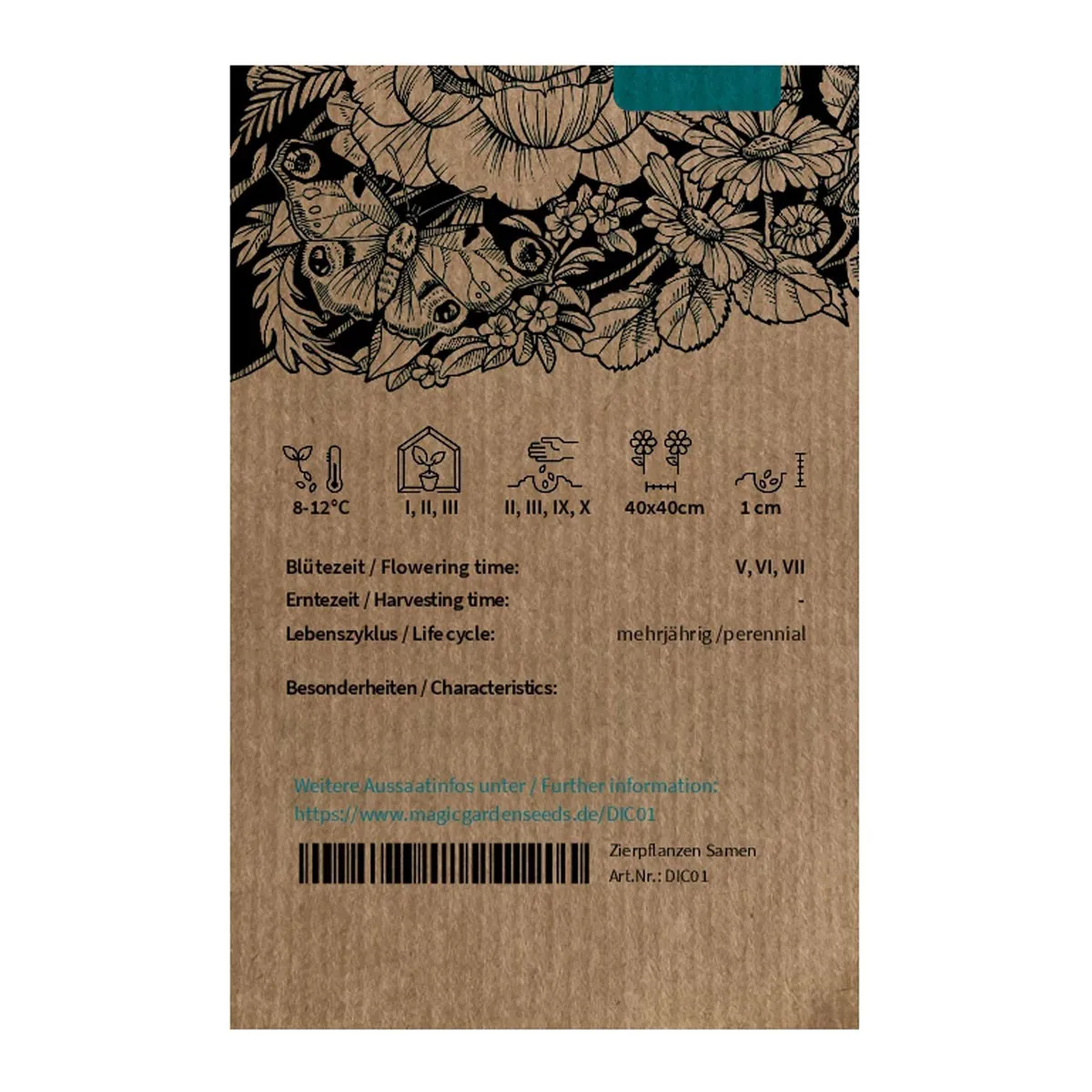
| Lifecycle | Perennial |
|---|---|
| Species | Rutaceae |
| Eventual height | 80-120 cm |
| Flower colour | White |
| Flowering months | July, June, May |
| Root system | Taproot |
Growing instructions
| When to sow outdoors | February, March, October, September |
|---|---|
| Sowing depth | 1 cm |
| Germination temperature | 5-12°C |
| Soil type | Chalky, Low nutrient levels |
| Sunlight | Full sun |
| Planting distance | 40 cm |
| Row spacing | 40 cm |
Sowing and care
The seeds need frost and light. Therefore, it's best to sow them in autumn or in early spring and to sieve only a little bit of earth over it. Outdoor sowing is preferred as the dittany doesn't tolerate replanting as it damages the taproot. It may take several months until the plant germinates. Loves permeable, chalky soils and sunny locations.
Pruning back in autumn is recommended.
Pruning back in autumn is recommended.
Other names
Botanical name: Dictamnus albus, Fraxinella dictamnus
German: Brennender Busch, Aschwurz, Spechtwurz, Eschenwurz, Feuerpflanze
Reviews
Login
No reviews yet. Will you write the first one?