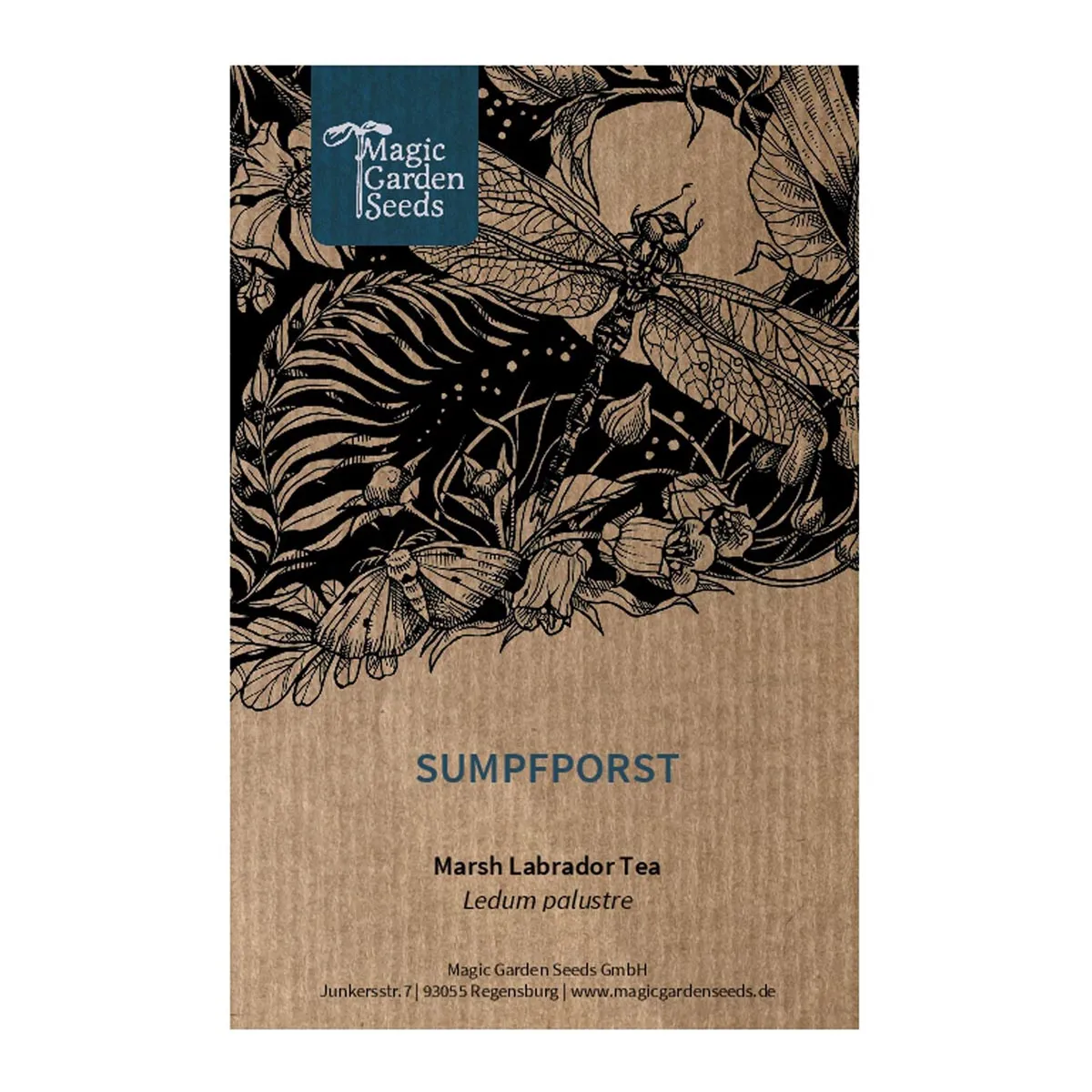
Marsh Labrador Tea (Ledum palustre) seeds
- Contents: Approx. 500 seeds
- Open-pollinated variety, seed tested regularly
Regular price:
€9.99
No longer available
Product number: LED01 GTIN: 4251420513564
Description
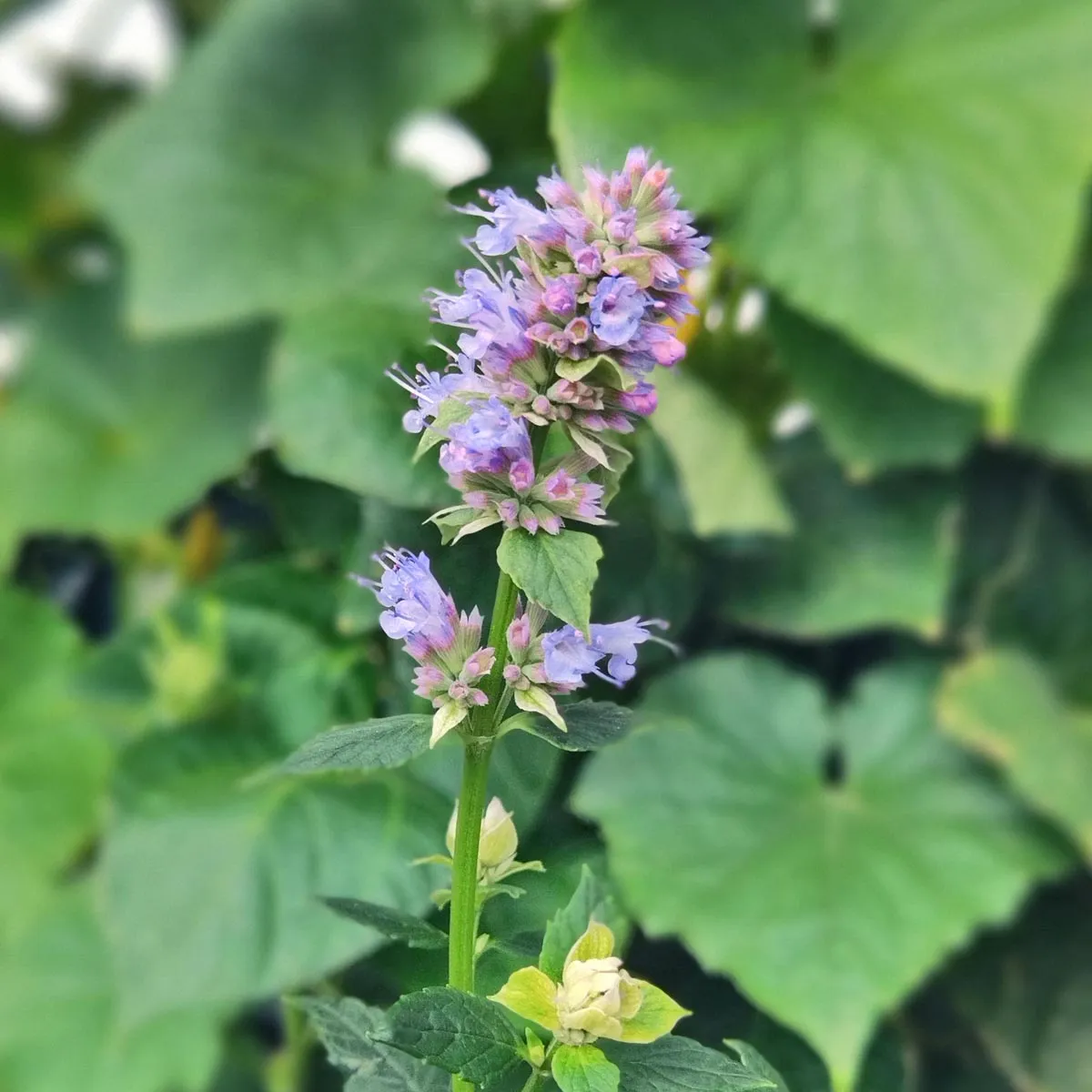
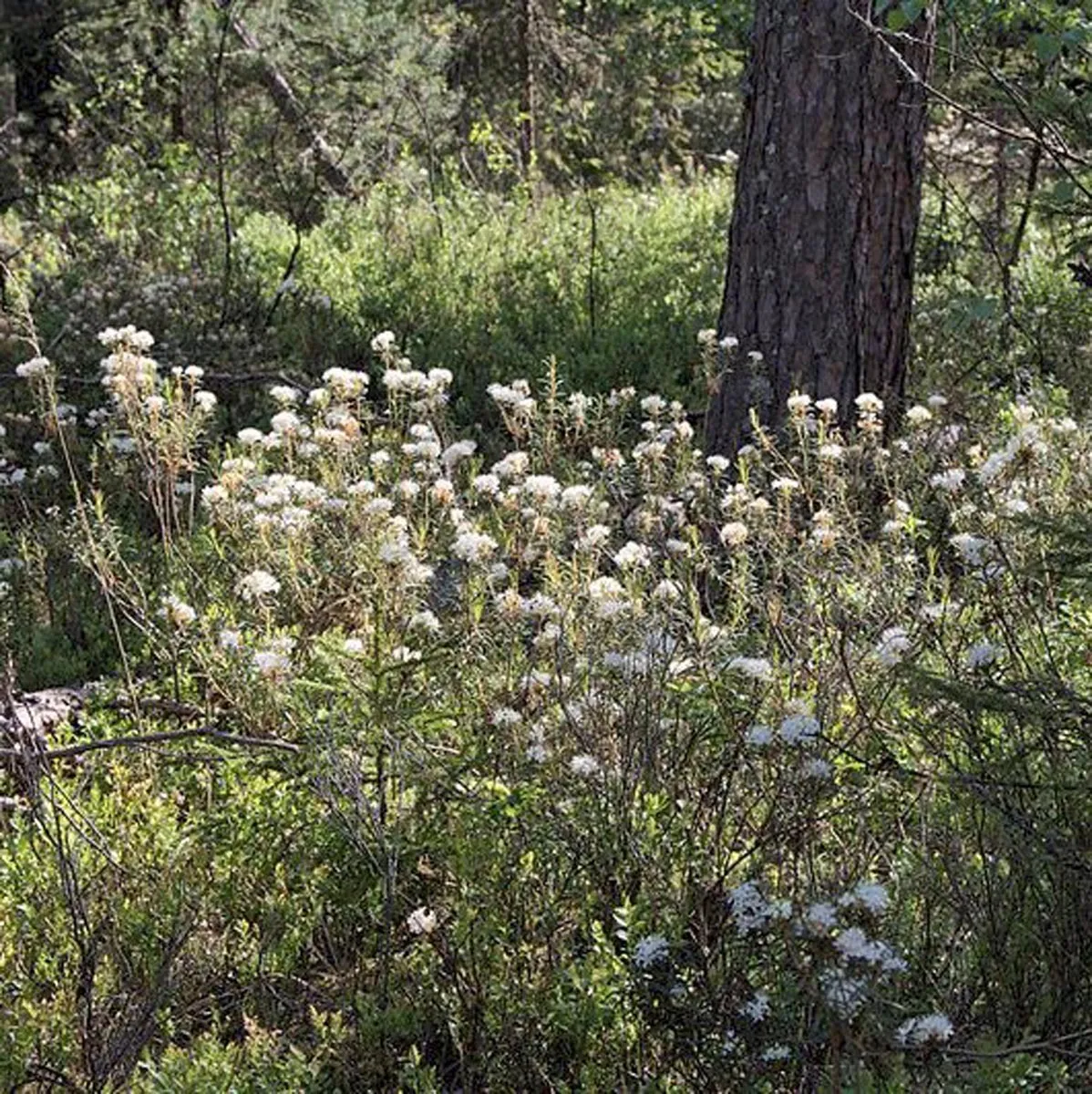
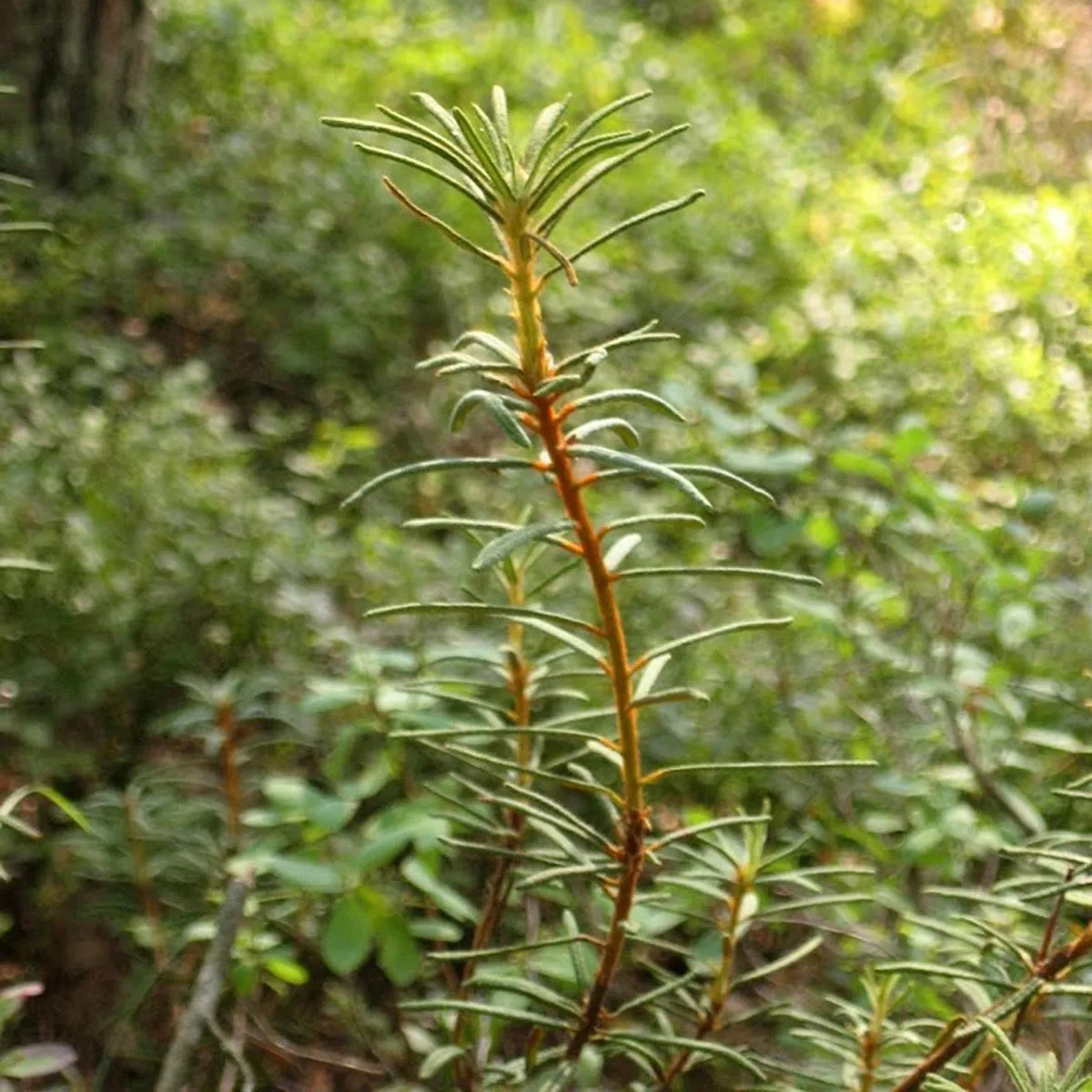
The Marsh Labrador Tea (also Rhododendron tomentosum) is an evergreen shrub that reaches 0.5 to 1.5 metres and preferably grows in moors and peat soils.
Its leaves are full of essential oil, which was used for the brewing of beer in the past and intensified the effect of the alcohol.
Furthermore, it was mixed with bog myrtle to brew the famous gruit ale.
Its leaves are slightly poisonous and, today, are only used in folk medicine, e.g. against insect or tick bites, anymore.
It's also suitable for fumigation as its leaves exude a slight camphor scent. A long stay in a field with Labrador tea is said to have an intoxicating effect because of its scent.
Due to the drainage of moorlands, it has become very rare.
Plant profile
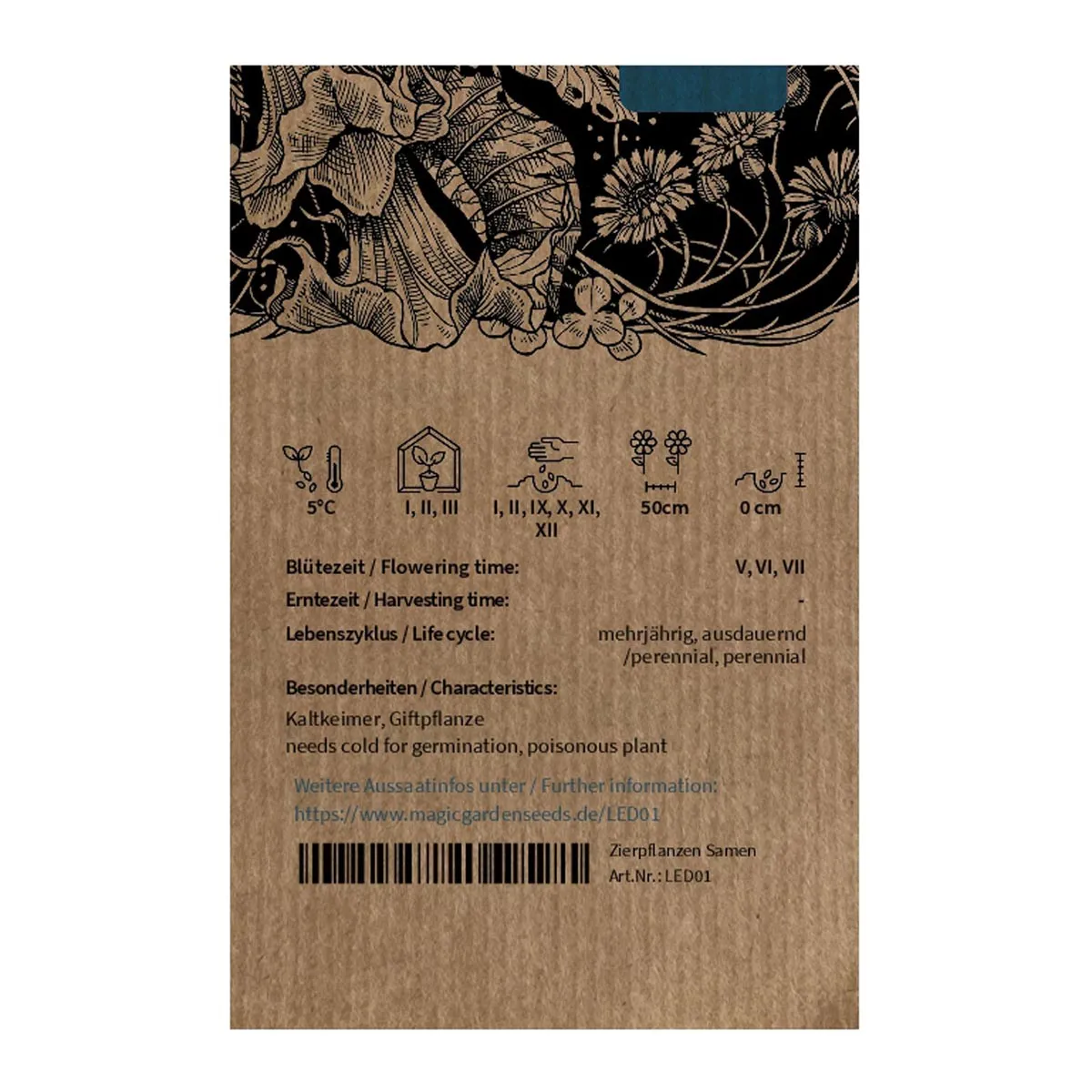
| Plant type | Shrub |
|---|---|
| Use | Herb/spice plant, Medicinal plant, Ornamental plant, Scented plant |
| Lifecycle | Hardy, Perennial |
| Species | Ericaceae |
| Region of origin | Asia, North America, Northern Europe |
| Characteristics | Needs cold to germinate, Poisonous plant |
| Flower colour | White |
| Flowering months | July, June, May |
Growing instructions
| When to sow outdoors | December, February, January, November, October, September |
|---|---|
| Sowing depth | 0 cm |
| Germination temperature | 3-5°C |
| Climate | Temperate |
| Planting distance | 50 cm |
Sowing and care
Evergreen shrub. Cold germination: sow outdoors at the beginning of spring or in autumn. Alternatively, you can use artificial stratification, as follows. Mix the seeds with moist sand in a plastic bag. Keep the bag warm and moist (approx. +20°C) for the first 2-4 weeks and then place it in the refrigerator and keep it at a temperature of +5°C for 5-6 weeks. Then remove the plastic bag from the refrigerator and remove the seed and sand mix from the bag. Keep the sand mix at room temperature and check the seeds regularly to see when they germinate. Prick the seedlings into pots and plant them out after the last frosts in mid-May.
Other names
Botanical name: Ledum palustre, Rhododendron tomentosum, Rhododendron palustre
German: Sumpfporst, Altseim, Baganz, Bagen, Bagulnik, Bienenheide, Borse, Brauerkraut, Großes Flohkraut, Flohkrebs, Gichttanne, Gränze, Gruitkraut, Gruiz, Grund, Gruut, Hartheide, Heidenbienenkraut, Kein-Porst, Kiefernporst, Kühnporst, Kühnrost, Morose, Mottenkraut, Mutterkraut, Pors, Porsch, Porst, Porstkraut, Post, Postkraut, Purst, Rausch, Rosmarinkraut, Rosskraut, Sautanne, Schweineposse, Tannenporst, Waldrosmarin, Wanzenkraut, Weiße Heide, Wilder Rosmarin, Zeitheide, Zeitheil
English: marsh Labrador tea, northern Labrador tea, wild rosemary
Reviews
Login
No reviews yet. Will you write the first one?