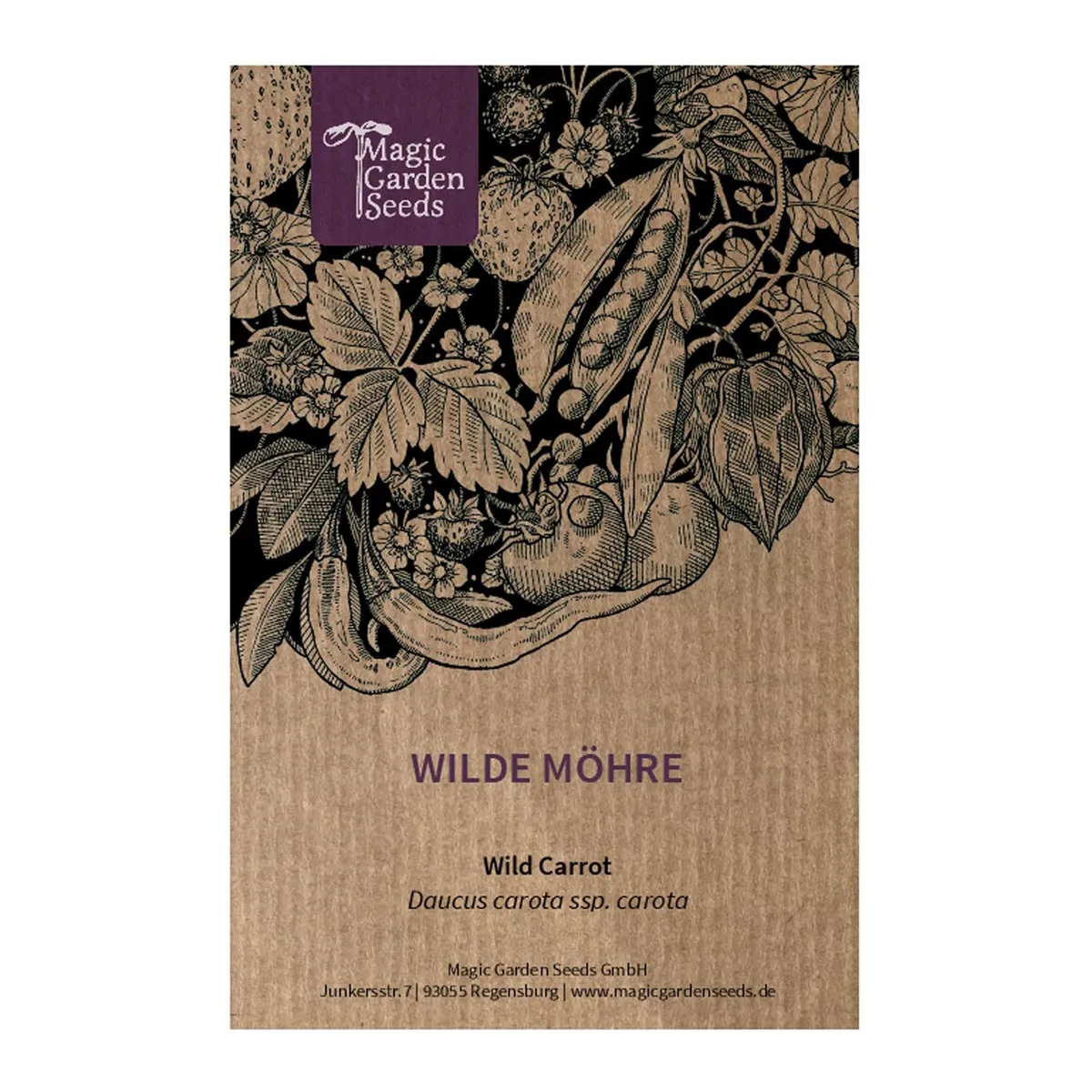
Wild Carrot (Daucus carota ssp. carota) seeds
- Aromatic wild form of the garden carrot with edible seeds, young spicy roots and decorative white umbel flowers.
- The seed packet contains approx. 1000 seeds of open-pollinated seed from conventional cultivation.
- Undemanding, drought-tolerant and hardy wild plant for sunny beds, meadows and natural gardens.
€2.29
Description
Aromatic wild ancestor of the garden carrot with delicate flower umbels
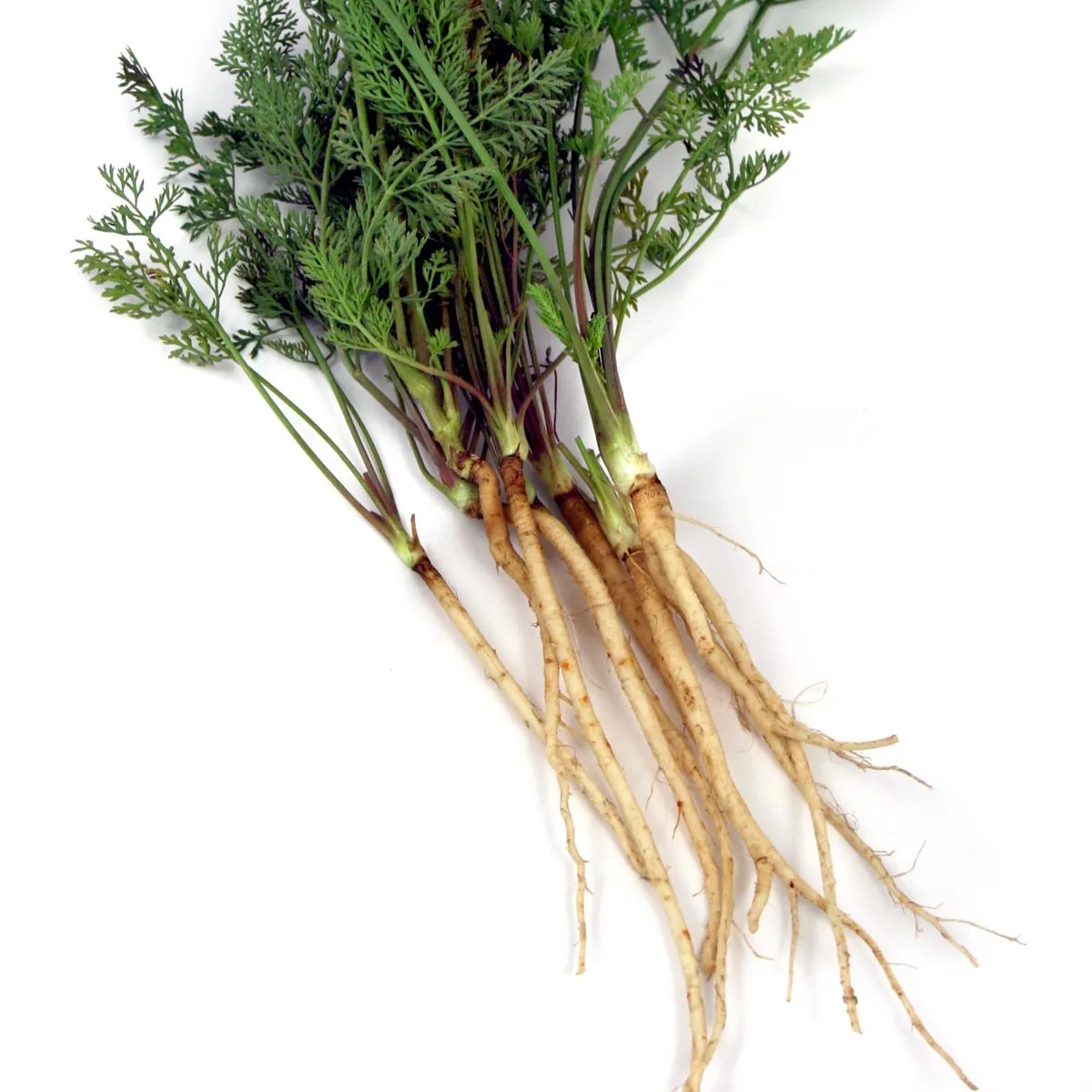
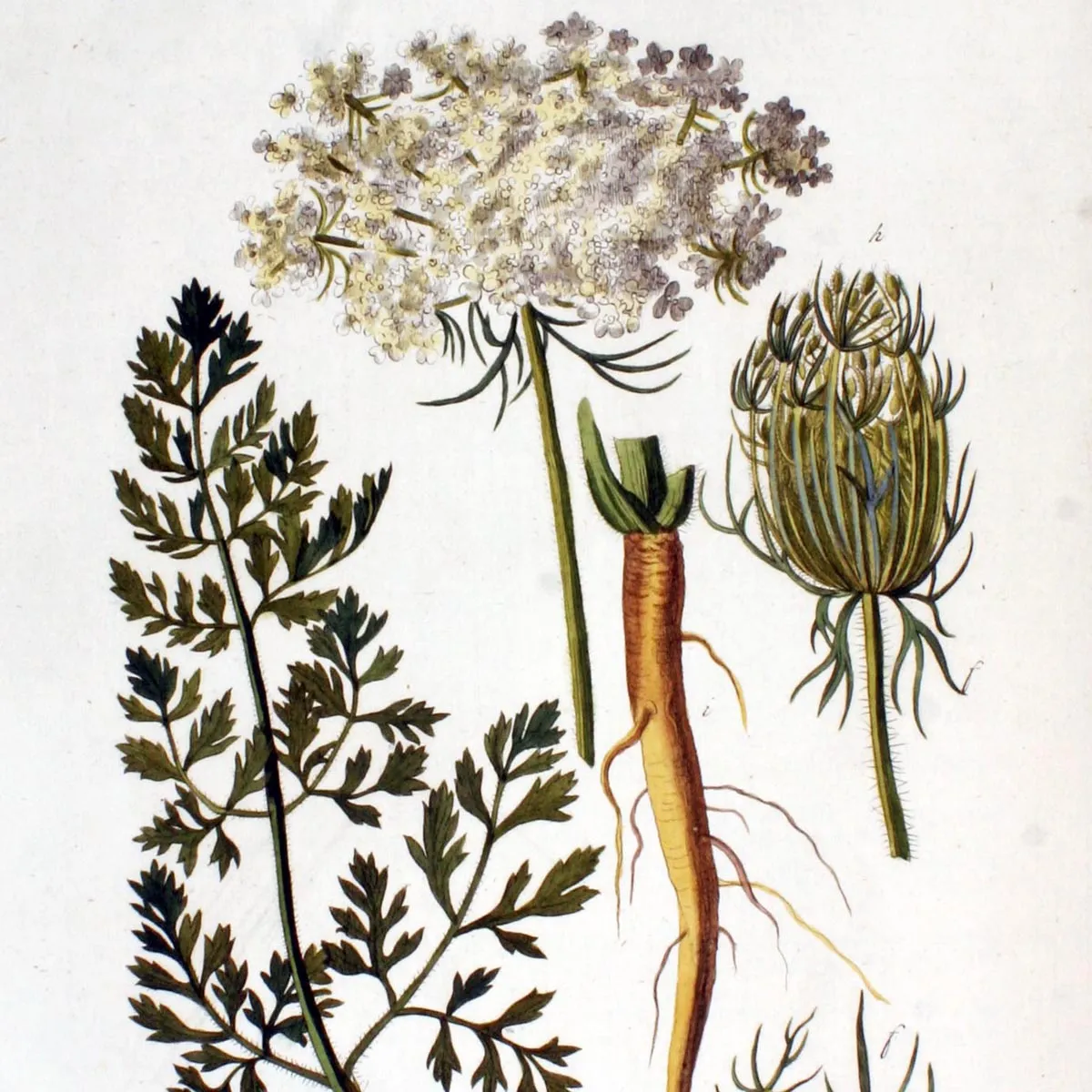
Wild carrot is the original wild form from the group of relatives of our modern garden carrot. While cultivated carrots form thick, fleshy storage roots, Daucus carota subsp. carota develops a rather thin, beige to brownish-white taproot. Young roots are still tender and have a strong, typical carrot aroma. They are especially well suited for cooking an aromatic vegetable bouillon.
As they age, the roots become fibrous, pungent and woody. In the second year, when the plant forms its flower stems, they should therefore no longer be harvested for the kitchen. Wild carrot is biennial: in the first year, the leaf rosette and taproot develop; in the second year, the usually 30 to 100 cm high, branched flower stems follow.
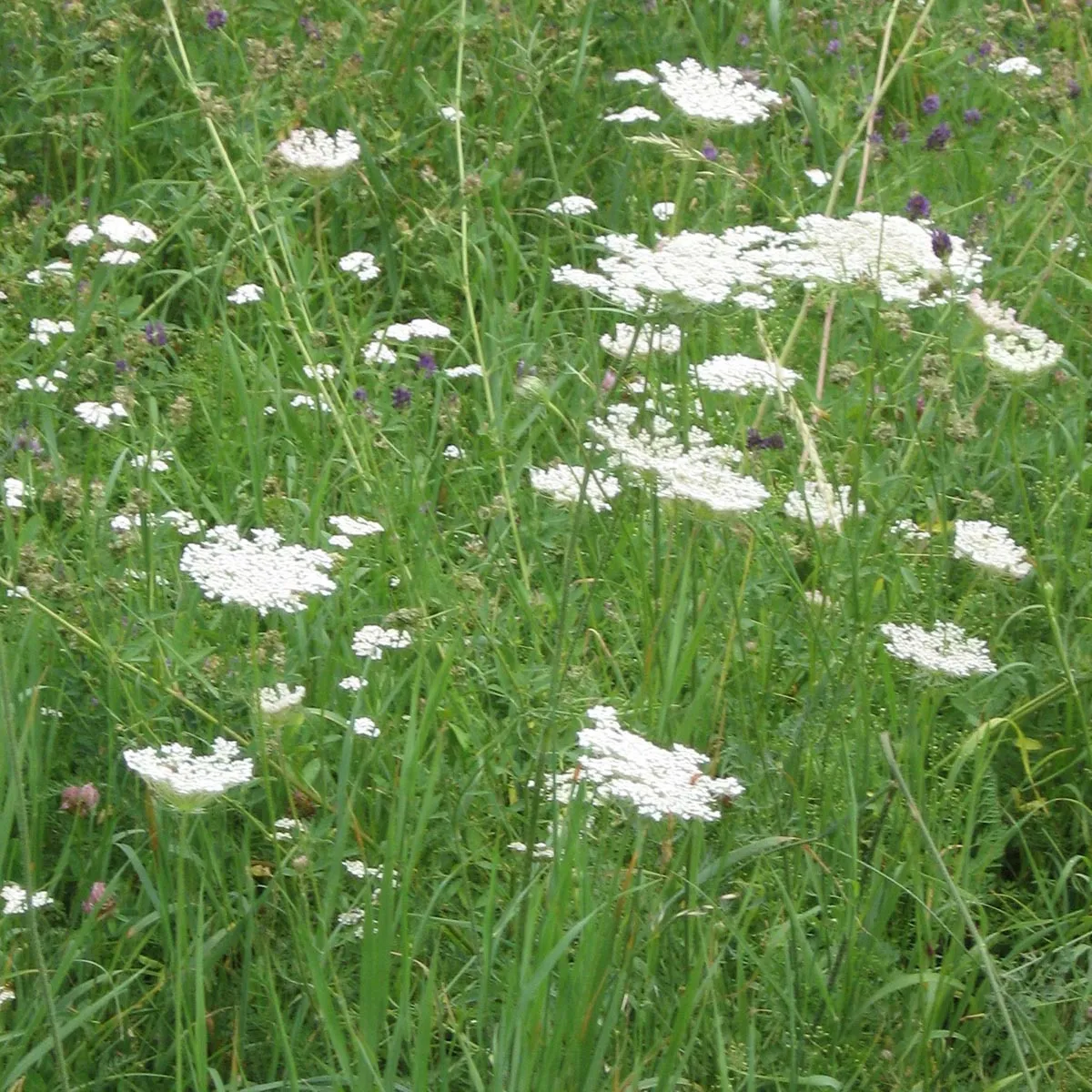
The plant is extremely adaptable and grows in meadows, along field margins and roadsides, on slopes, embankments and other open areas. It prefers sunny locations and loose, well-drained soils. Sandy-loamy, loamy and calcareous soils are well suited. Even in nutrient-rich, slightly overfertilized or somewhat saline locations, this robust wild plant can hold its own.
White umbel flowers for natural gardens and flower beds
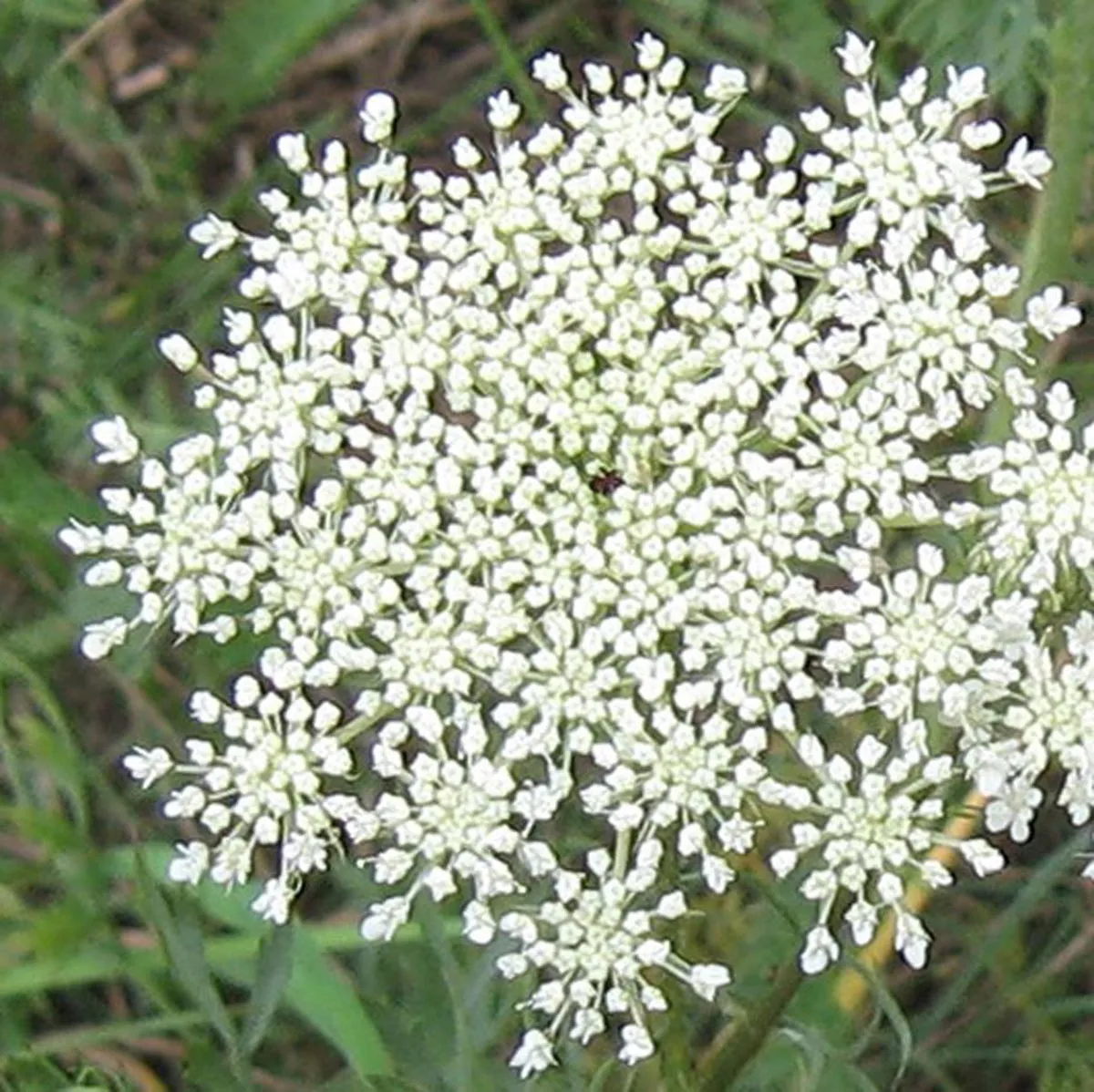
From June to September, wild carrot bears numerous large, finely structured flower umbels. The many small white individual flowers give the plant a light, almost veil-like appearance. In the center of an umbel there is often a single dark red to almost black flower, which is particularly striking.
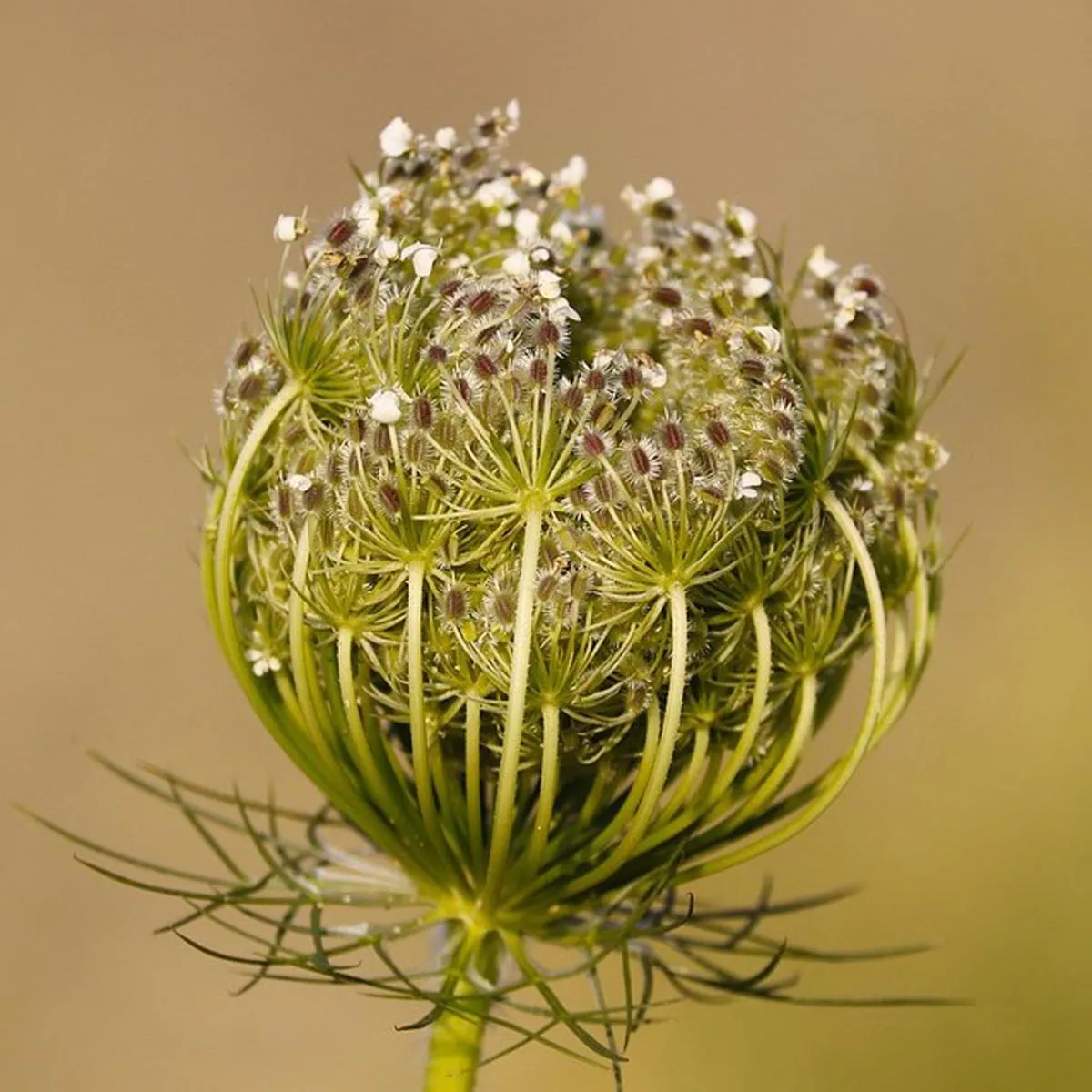
After flowering, the umbels draw inward and take on a characteristic nest-like shape. The flower heads are suitable as airy cut flowers, while the mature seed heads also look decorative in dried bouquets. In natural gardens, wildflower areas and loosely designed perennial beds, wild carrot creates a natural yet distinctive accent.
The flowers are visited by bees, wild bees, hoverflies, beetles and many other insects. Because of their open flower form, nectar and pollen are easy to reach. In addition, the plant is an important food plant for various butterfly caterpillars, including the caterpillars of the swallowtail.
Edible seeds and traditional use
In addition to the young roots, the leaves, flowers and seeds of wild carrot can also be used. The ripe carrot seeds in particular have a strong aroma. They can be used like caraway as a bread spice or for seasoning savory dishes.
Wild carrot is one of Europe’s traditional useful plants. Even before fleshy garden carrots were deliberately cultivated, various parts of the plant were used as food, spice and in folk medicine. An essential oil is extracted from the seeds and is still used today in cosmetic and medicinal contexts.
Carrot seed oil is not identical to the usually orange-colored carrot oil. Carrot oil is generally made from the roots of cultivated carrots, which are macerated in a fatty plant oil. Essential carrot seed oil, by contrast, is obtained directly from the seeds.
Historically, carrot seeds were sometimes associated with a contraceptive effect. However, a reliable effect has not been sufficiently scientifically proven. The seeds are therefore not suitable as a contraceptive and must not replace recognized contraceptive methods.
Plant profile
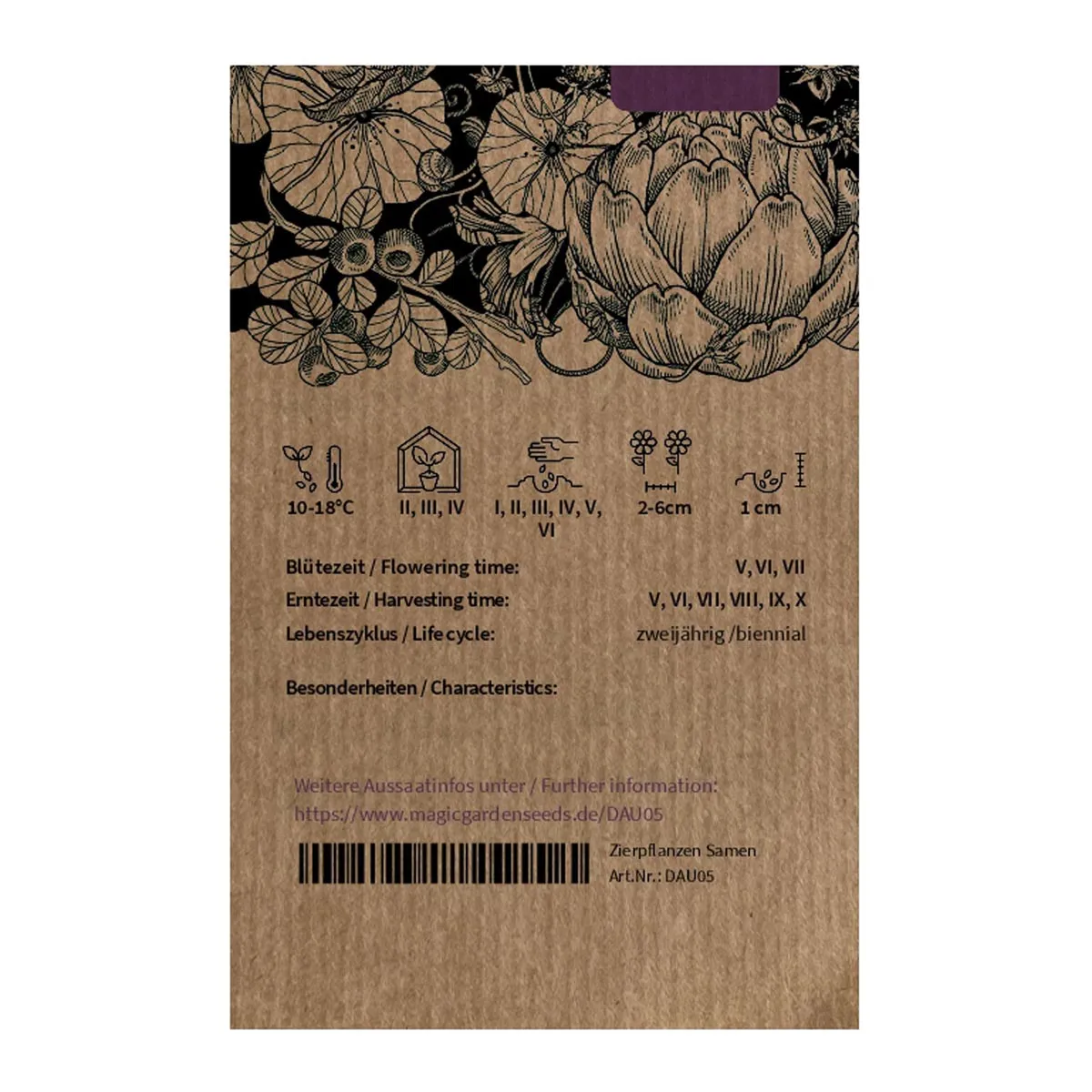
| Lifecycle | Biennial |
|---|---|
| Species | Apiaceae |
| Characteristics | Needs darkness to germinate |
| Eventual height | 30-150 cm |
| Flower colour | White |
| Flowering months | July, June, May |
| Main harvest | August, July, June, May, October, September |
| Root system | Taproot |
| Winter hardiness zones | 7 (-18 bis -12 °C) |
Growing instructions
| When to sow outdoors | April, August, February, January, June, March, May, September |
|---|---|
| Sowing depth | 1 cm |
| Germination temperature | 10-18°C |
| Germination time | 2-6 weeks |
| Climate | Temperate |
| Sunlight | Full sun |
| Water requirement | Medium |
| Planting distance | 2-6 cm |
| Good companion plants | Cauliflower, Chard, Dill, Endive, Knoblauch, Leaf Lettuce, Leek, Lettuce, Onion, Peas, Radish |
| Bad companion plants | Celeriac, Fennel, Parsley, Parsnip |
Sowing and care
Sowing and caring for wild carrot
Because of its deep-reaching taproot, wild carrot should ideally be sown directly in its later growing location. Direct sowing outdoors is possible from March to July. Autumn sowing in September or October is also suitable. From January onwards, it can also be sown in a cold frame, although the young plants then need to be transplanted as early as possible and with great care.
Place the seeds about 0.5 to 1 cm deep in the prepared soil, cover thinly with soil and press down lightly. In heavy soils or soils that dry out quickly, a sowing depth of up to about 2 cm is possible. For row cultivation, a spacing of 30 to 45 cm is suitable. Within the rows, the plants can later be thinned to about 5 to 20 cm apart.
Wild carrot germinates slowly and not always evenly. The first seedlings usually appear after two to four weeks, or later under unfavorable conditions. The soil should remain evenly moist throughout the entire germination phase. Waterlogging, however, must be avoided.
Since the seed rows remain invisible for a long time at first, a few radish or dill seeds can be mixed in as marker seeds. Both species germinate much faster. Radishes are harvested before they crowd the carrots and automatically thin out the stand in the process. Dill should be removed as soon as it is about 25 cm tall or increasingly shades the young plants.
Wild carrot prefers a sunny location with deep, loose and preferably stone-free soil. Loamy soils are suitable as long as they are not heavily compacted and water can drain well. Fresh manure should not be used. The plant needs only few nutrients and can be supplied sparingly with mature compost if required.
In the young stage, the plants grow relatively slowly and can easily be overgrown by weeds. Regular weeding is therefore important at first. After heavy rain, crusted soil should be loosened carefully. During germination and in longer dry periods, sufficient watering is necessary. Later, well-rooted plants are robust and comparatively drought-tolerant.
The young roots can be harvested in the first year. There is no clear sign of maturity. As soon as the plant flowers in the second year, the roots are usually heavily lignified and very pungent. Wild carrot is hardy and normally does not require winter protection.
After ripening, the seeds fall out easily and can produce new plants the following year. If self-seeding is desired, some umbels may be left standing. Those who wish to prevent stronger spreading should cut off the seed heads in good time before they are fully ripe.
Other names
Botanical name: Daucus carota
German: Wilde Möhre, Wilde Karotte, Gewöhnliche Möhre, Gemeine Möhre
English: Wild Carrot, Queen Anne’s Lace, Bird’s Nest, Bee’s Nest Plant
French: Carotte sauvage, Carotte commune
Italian: Carota selvatica, Carota comune
Spanish: Zanahoria silvestre, Zanahoria salvaje
Dutch: Wilde peen, Wilde wortel, Peen
Login