Tulsi, Shiso, Amaranth and Co.: Seven Ethnobotanical Plants for a Garden Full of Stories
Ethnobotany & Magical Plants
Ethnobotanical plants are not simply “special species”. They are plants that show us how people have lived with nature: what they ate, what they seasoned their food with, what they used against ailments, and which plants they wove into their rituals, festivals and daily routines. That is exactly why they are so interesting for the garden. They bring not just colour, fragrance or a harvest, but a story of use.
The seven plants in this article are not just pretty or exotic. Each of them stands for a specific cultural context: for household rituals, for tea culture, for healing knowledge, for highland farming, for spice medicine or for ancient seed crops. And that is exactly what makes them so strong.
1. Tulsi: holy basil between household shrine, tea and healing herb
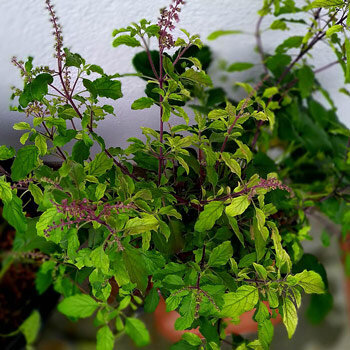
Tulsi, or holy basil, is a plant that makes it very easy to understand what ethnobotany actually means. In many Hindu traditions, Tulsi is not only useful but sacred. The plant is associated with Vishnu and plays a visible role in household rituals. In many families it traditionally stands not just anywhere in the bed, but in a protected spot by the house or in the courtyard. It is watered, tended and revered. At the festival of Tulsi Vivah it is symbolically married to Vishnu, which already shows that Tulsi is not simply a kitchen herb, but a plant with a religious biography.
At the same time, Tulsi is a very practical everyday plant. The leaves are infused as tea, either fresh or dried. In Ayurvedic and folk medicine practice, Tulsi is traditionally used above all for colds, coughs, feverish conditions, digestive complaints and general fortification. This dual role is exactly what makes it so interesting from an ethnobotanical point of view: Tulsi is not either sacred or useful, but both at once.
In the garden, that means: anyone who grows Tulsi is not merely cultivating an aromatic species of basil. You are bringing into your bed a plant that, in its region of origin, is at once a household plant, a ritual plant, a tea herb and a medicinal plant.
2. Shiso: spice plant, healing herb and fragrance carrier of East Asia
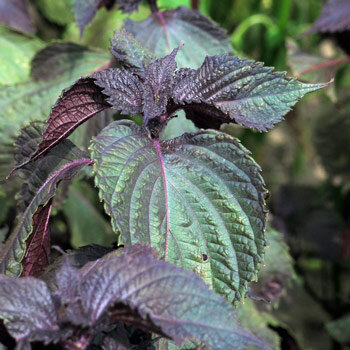
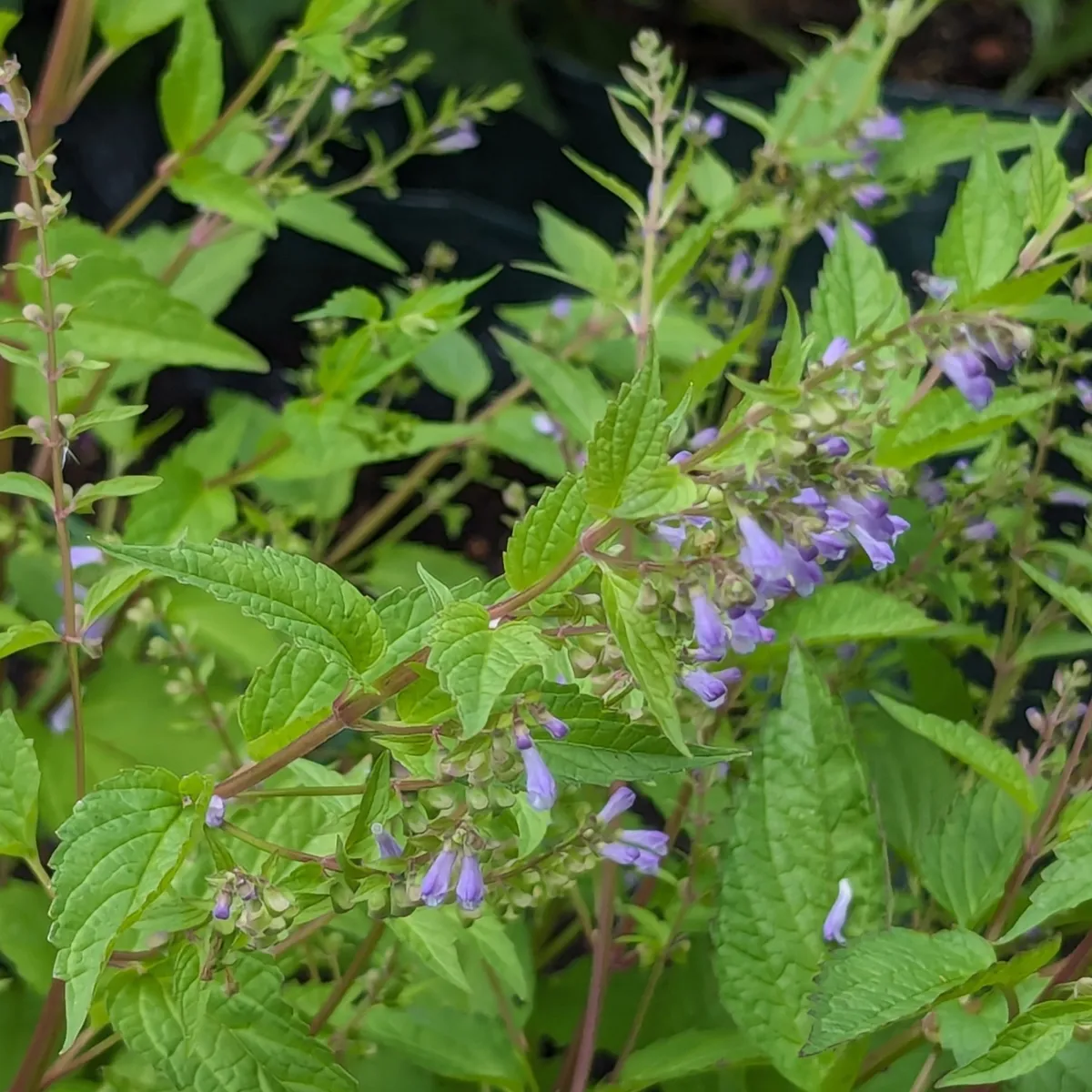
Shiso is one of those plants that is far too easily dismissed as a mere “Asian herb”. In fact, the plant is much more deeply rooted in Japan, Korea and China. Shiso has been eaten, used medicinally and recognised by its fragrance for a very long time. That is exactly what is ethnobotanically interesting: some plants matter so much because they shape flavour, scent and health knowledge all at once.
In the kitchen, Shiso is used in very concrete ways: the leaves are eaten fresh, wrapped around food, made into pickles or combined with rice, fish and meat. In Japan, green shiso leaves often serve as an aromatic accompaniment, while red forms are traditionally used to colour and flavour pickled plums and other preparations. In East Asian medicine, leaves and seeds were also traditionally used for colds, coughs, nausea and digestive complaints.
For the garden, Shiso is therefore more than a pretty leafy vegetable. The plant stands for a food culture in which aroma and medicine were not strictly separated. Anyone who grows Shiso is not just looking at a culinary herb, but at a plant that has long been read in its homeland as a kitchen plant and a medicinal plant at once.
3. Amaranth: an everyday food plant, not just a trend name
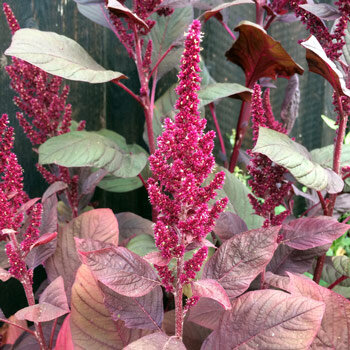
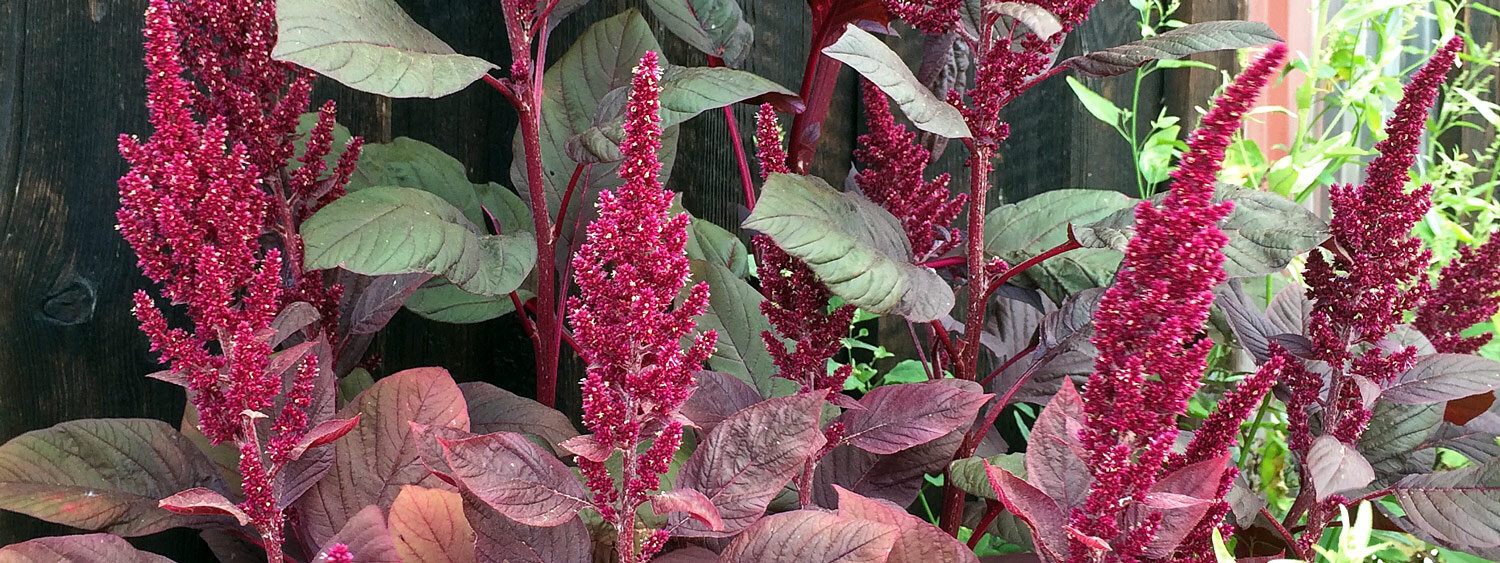
Amaranth is often reduced today to grains, “superfood” or colourful ornamental forms. That falls short. The name amaranth covers very different plants with a long history of use. In our range, the Red Meier represents a form grown for its leaves, and that is exactly what makes it ethnobotanically so exciting. Many amaranth species were and still are primarily leafy greens.
The ethnobotanical appeal here lies not in a spectacular ritual story but, on the contrary, in the everyday. In various regions, amaranth was used as a robust food plant because it grows quickly, yields plenty of foliage and thrives reliably in warm summers. Such plants often turn up where people depend on adaptable, uncomplicated food plants. The young leaves were boiled, steamed or used like spinach.
That is exactly what makes amaranth so valuable for an ethnobotanical garden. It shows that culturally significant plants do not always have to be sacred, rare or mysterious. Sometimes it is precisely the unspectacular leafy greens that show nutritional knowledge, the passing on of experience and regional culinary culture most clearly.
4. Yauhtli: Mexican tarragon as a tea, fragrance and ritual plant
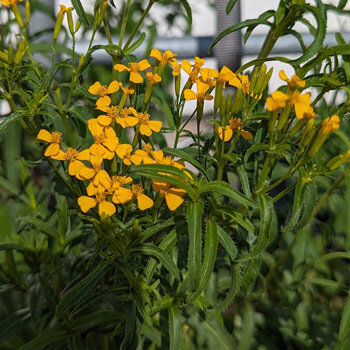
Yauhtli, also called Mexican tarragon, is a particularly good example of a plant that fulfils several cultural roles at once. It smells sweet and aniseed-like, was drunk as tea, used medicinally and at the same time woven into ritual contexts. Plants like this are of great ethnobotanical interest precisely because they are not tied to a single purpose.
In Mexico, Yauhtli was traditionally used, among other things, as an aromatic infusion. The tea made from leaves and flowers was used for colds, fever, stomach and intestinal complaints and other everyday ailments. The plant also played a role as an incense and ritual plant. It is reported, for example, that it was burned in religious ceremonies and in the home in place of frankincense. This is a lovely example of how scent, healing knowledge and ritual interlock.
For the garden, Yauhtli is therefore a real treasure. You are dealing with a plant that is not only aromatic and decorative, but brings with it a whole bundle of tea use, medicine and ceremonial echo. That is exactly what makes it one of the strongest ethnobotanical species in our range.
5. Black cumin: spice and medicine in seed form
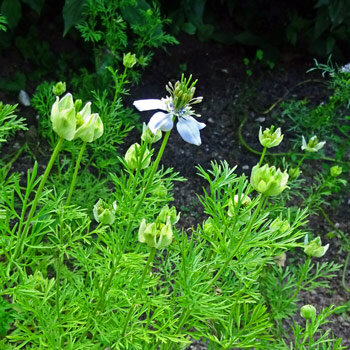
Black cumin is a plant whose ethnobotanical depth is easily overlooked, precisely because its seeds are familiar to many. You know them from flatbread, from spice blends or from herbal medicine. Yet in many regions of West Asia, North Africa and the Islamic world, black cumin seeds were never just a kitchen ingredient. They also belonged in healing contexts.
Traditionally, seeds and oil were used for a wide range of ailments, most often for digestive problems, colds, menstrual and postnatal complaints, and to promote milk production. That the plant both seasons food and is used medicinally is very typical in ethnobotanical terms. Many spice plants were simply not responsible only for flavour, but part of an everyday knowledge of the body.
In the garden, black cumin therefore makes particularly good sense. The plant is beautiful, easy to understand and immediately opens up the question of how closely spice and remedy once belonged together. It is a very good example of how ethnobotany often begins in the kitchen.
6. Quinoa: an ancient food plant of the Andes
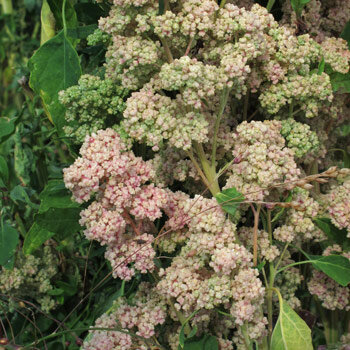
Quinoa was not a special side dish for many communities in the Andean region, but a staple food. The plant has been grown in the highlands for millennia and was among the important field crops of Inca, Aymara and Quechua groups. In the high altitudes of the Andes in particular this was decisive, because quinoa thrives even where other food plants are far more difficult to grow.
The benefit was very concrete: the seeds were harvested, dried, stored and used as nourishing food. Quinoa could be boiled, made into porridges or processed into flour, and was thus a reliable storage crop for everyday life. Ethnobotanically this is especially exciting, because quinoa did not stand for a single purpose, but was part of a whole food system, adapted to climate, landscape and farming experience in the Andean highlands.
In the garden, quinoa therefore does not simply tell the story of a modern superfood. The plant stands rather for ancient highland knowledge, for site-adapted agriculture and for the question of which crops could truly feed people over a long time. Anyone who grows quinoa is therefore bringing into the bed not just a decorative and high-yielding species, but a plant of very concrete cultural-historical significance.
7. Chia: a nourishing seed plant with a long history
For the Aztecs, chia was an important crop with very practical uses. The seeds were eaten, made into drinks and porridges and valued as food that keeps well. Seeds like these were of great value in pre-Hispanic societies, because they supplied concentrated nourishment and could be stored and transported easily. Chia was thus not merely an extra, but part of a functioning everyday food supply.
Today, chia is often perceived only as a modern health product. Yet what is ethnobotanically more exciting is that the plant had a firm role in agriculture and nutrition long before this trend. In the garden, chia is a reminder that behind many supposedly new products stand very old crops with a concrete history of use.
A garden full of stories begins with good questions
These seven plants show very different forms of ethnobotanical significance. Tulsi stands for the link between household ritual and healing. Shiso combines flavour and medicinal knowledge. Amaranth tells of everyday food security. Yauhtli brings together scent, tea and ritual. Black cumin shows how spices become remedies. Quinoa and chia remind us that behind modern trend plants there are often very old crops.
An ethnobotanical garden is therefore not simply a bed of “exotic plants”. It is a place where plants become visible again as carriers of culture. That is exactly what makes such species so exciting: they supply not just a harvest, but material for understanding.