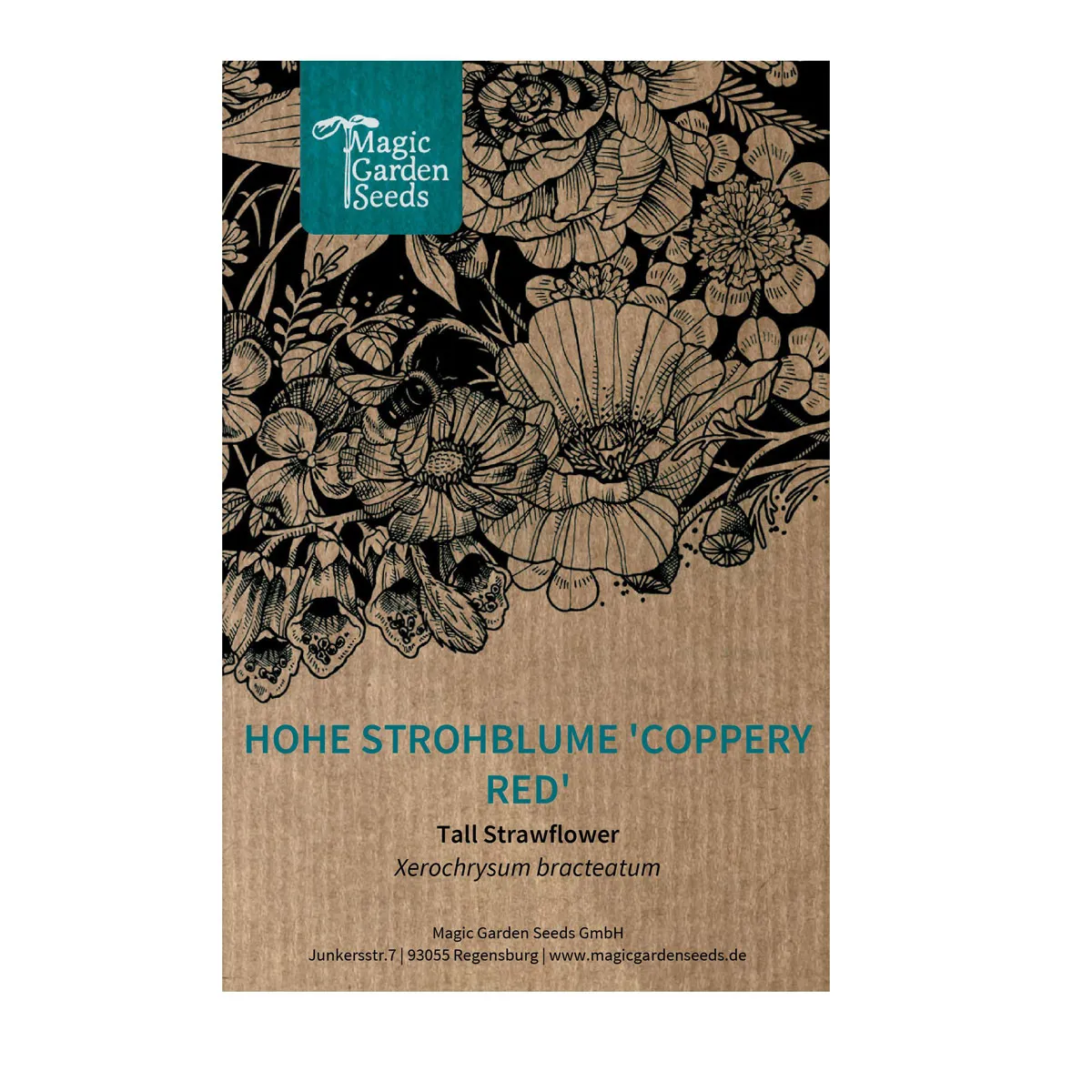
Tall Strawflower ‘Coppery Red’ (Xerochrysum bracteatum) seeds
- Tall annual strawflower with intense copper-red to dark red flowers for expressive summer beds and cutting gardens.
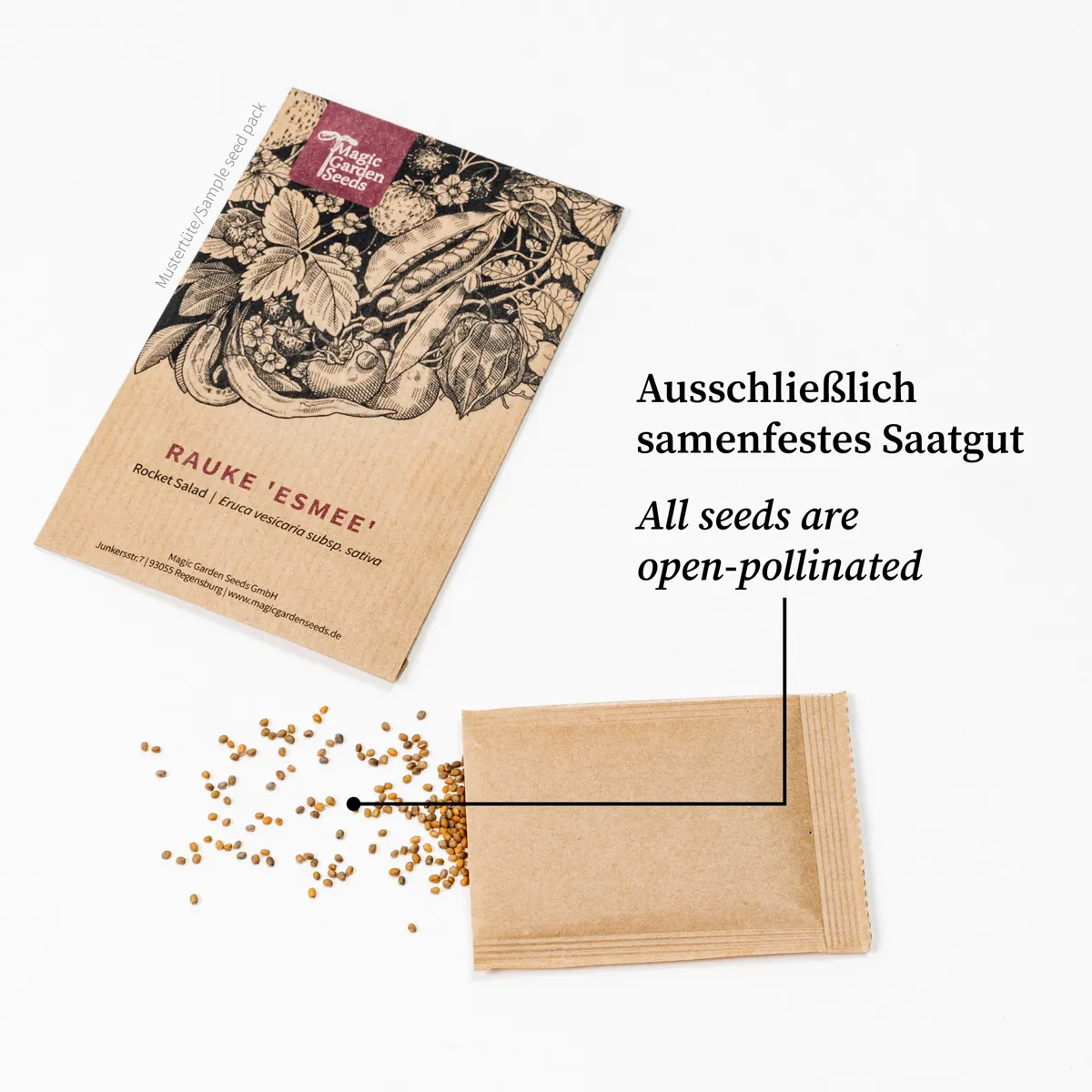
- Open-pollinated seeds - seed packet containing approx. 500 seeds.
- Ideal for fresh bouquets, dried bouquets, wreaths and autumn arrangements - the papery flowers retain their shape and colour.
€2.59
Description
‘Coppery Red’ preserves the warm colours of summer for autumn bouquets
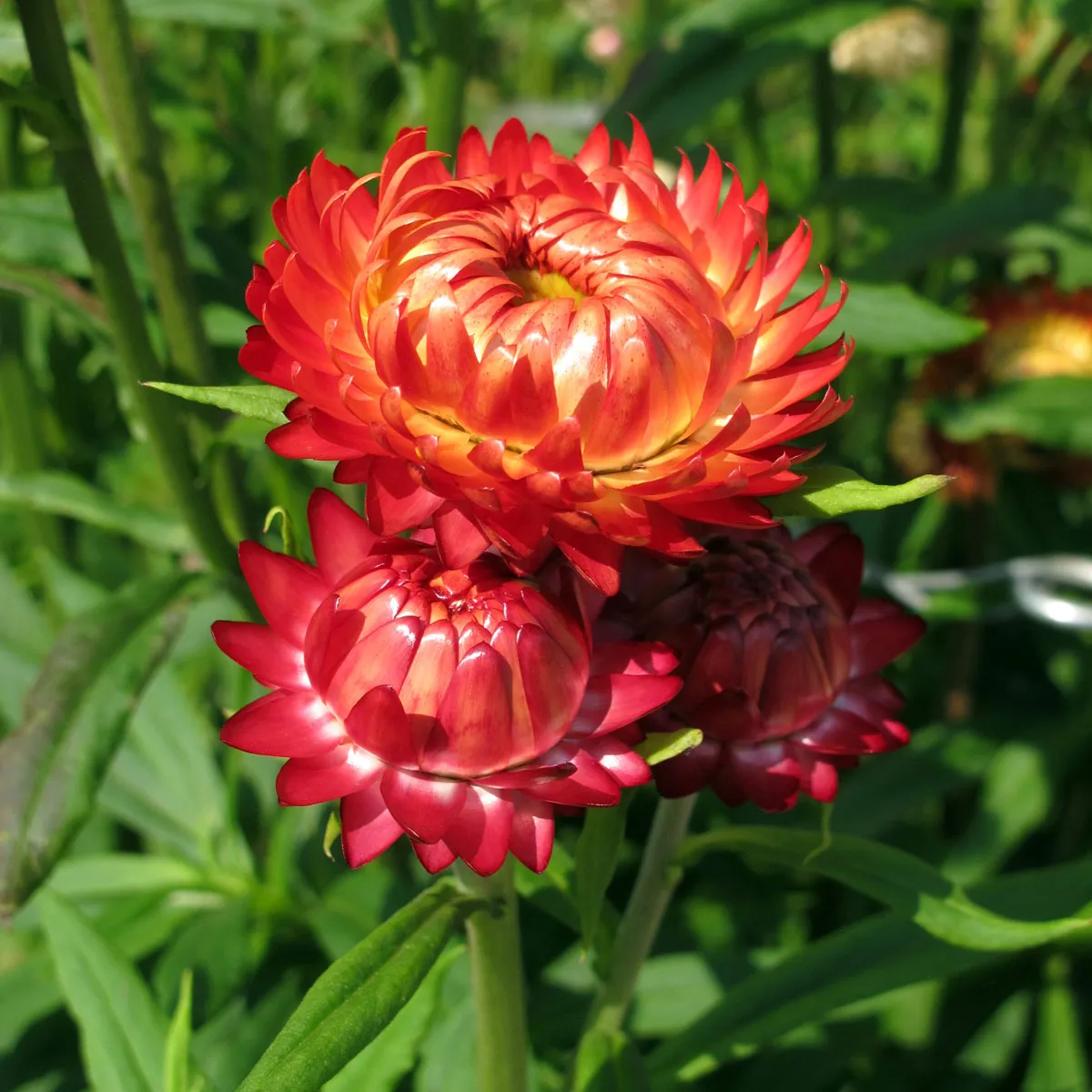
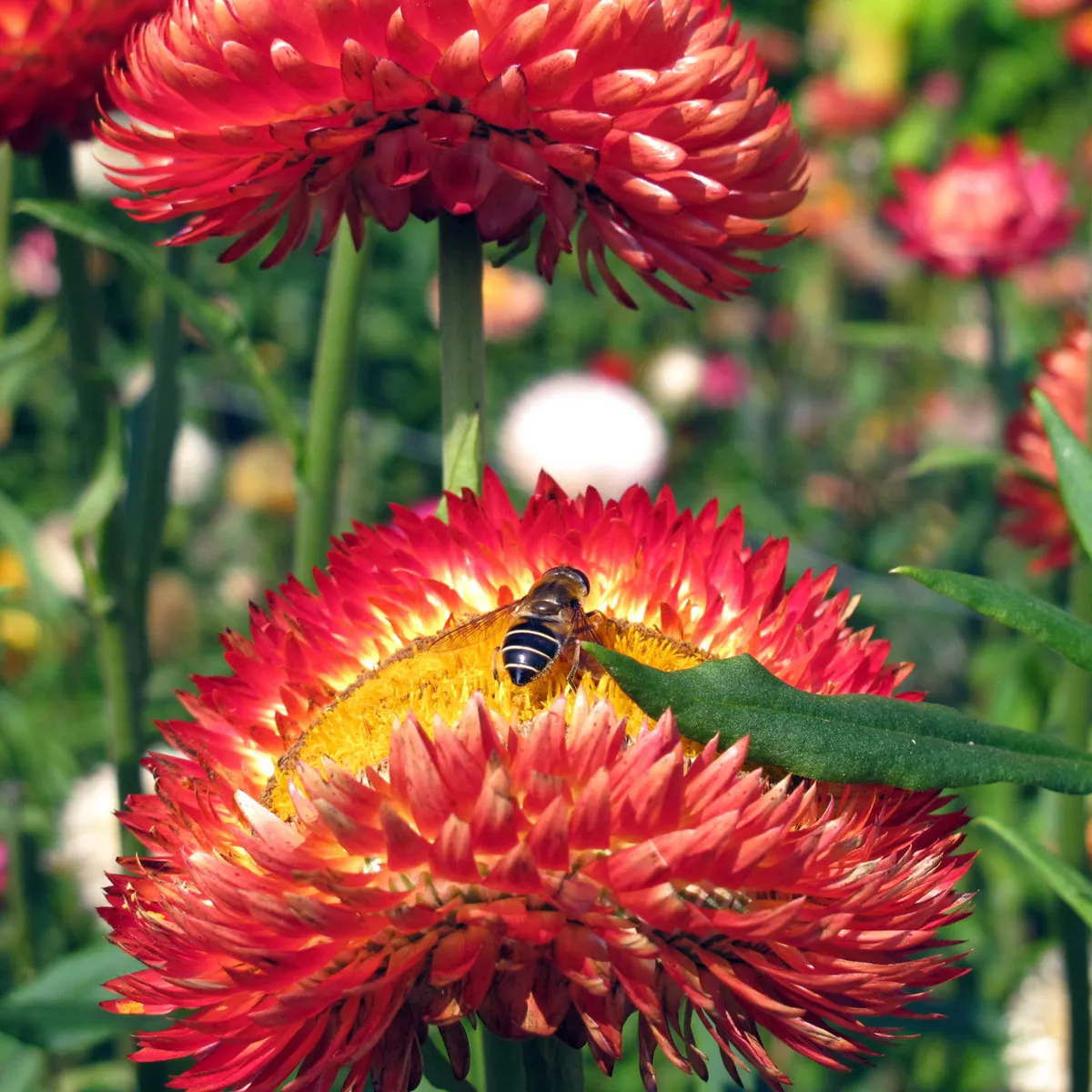
Tall Strawflower ‘Coppery Red’ brings strong copper-red to dark red flowers to sunny beds and also provides long-lasting cut flowers for bouquets, wreaths and dried decorations.
Its warm, deeply saturated shades clearly set ‘Coppery Red’ apart from classic yellow or pink strawflowers. The striking flower heads consist of firm, papery bracts that retain their shape and colour particularly well when dried. This makes the variety excellent for summer cut flower bouquets, autumn arrangements and long-lasting dried floristry.
The species Xerochrysum bracteatum originally comes from Australia. In horticulture and the seed trade, it is still often offered under its former botanical name Helichrysum bracteatum. Strawflowers were already valued as everlastings in the 19th century, meaning flowers whose blooms remain decorative long after cutting. Through targeted breeding, numerous garden forms have been developed with different colours, flower sizes and good qualities for cutting.
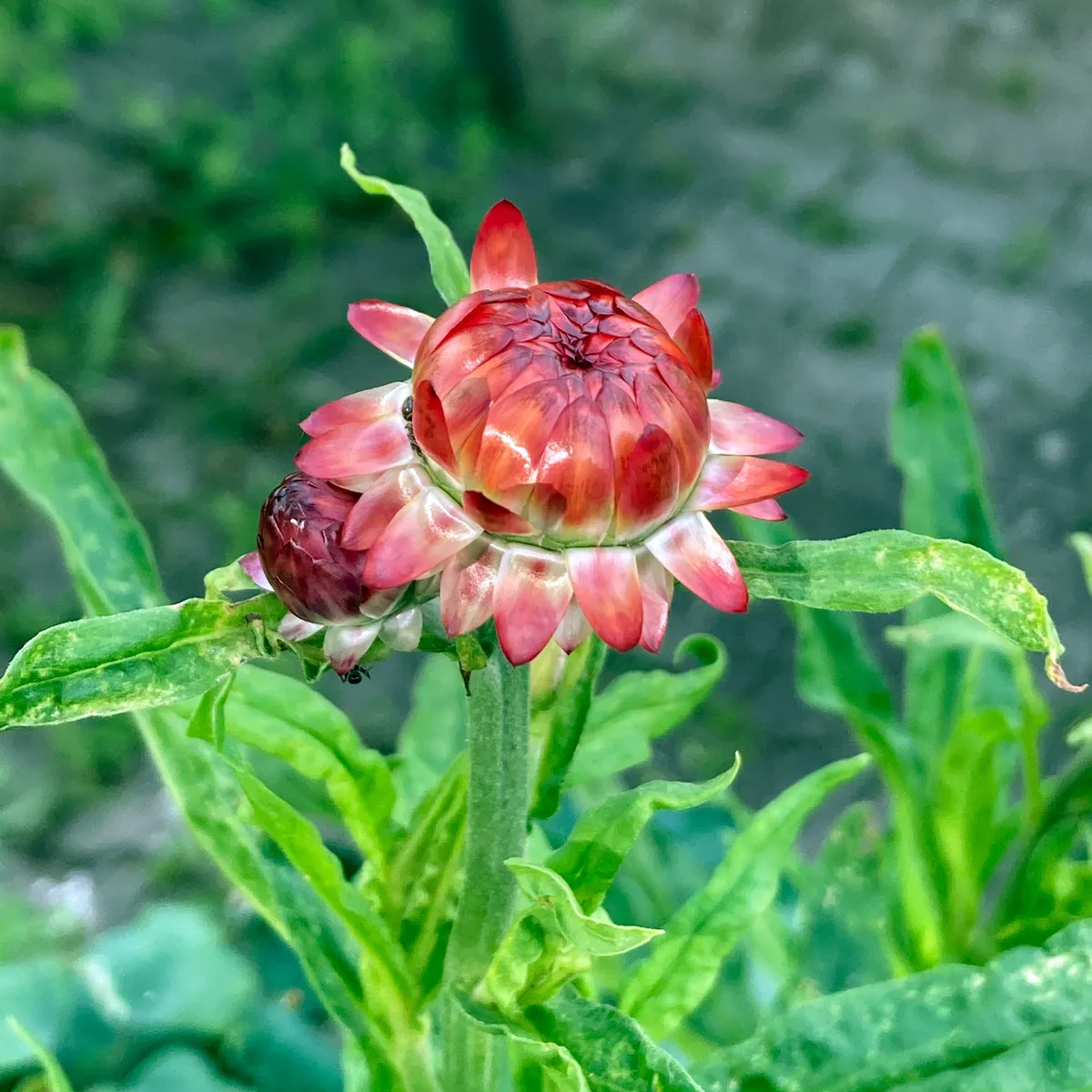
‘Coppery Red’ grows upright and bushy and is especially suitable for sunny summer beds and cutting gardens. The copper-red flowers combine well with grasses, zinnias, sage and other warmth-loving summer flowers. Regular cutting encourages further flower formation. For dried bouquets, the flowers are best harvested when they are about half open. The stems are then hung upside down in an airy, dry and shaded place.
Plant profile
| Plant type | Summer flower |
|---|---|
| Use | Container plant, Cut flower, Dried flower, Ornamental plant |
| Lifecycle | Annual |
| Species | Asteraceae |
| Seed propagation | konventionell |
| Region of origin | Australia |
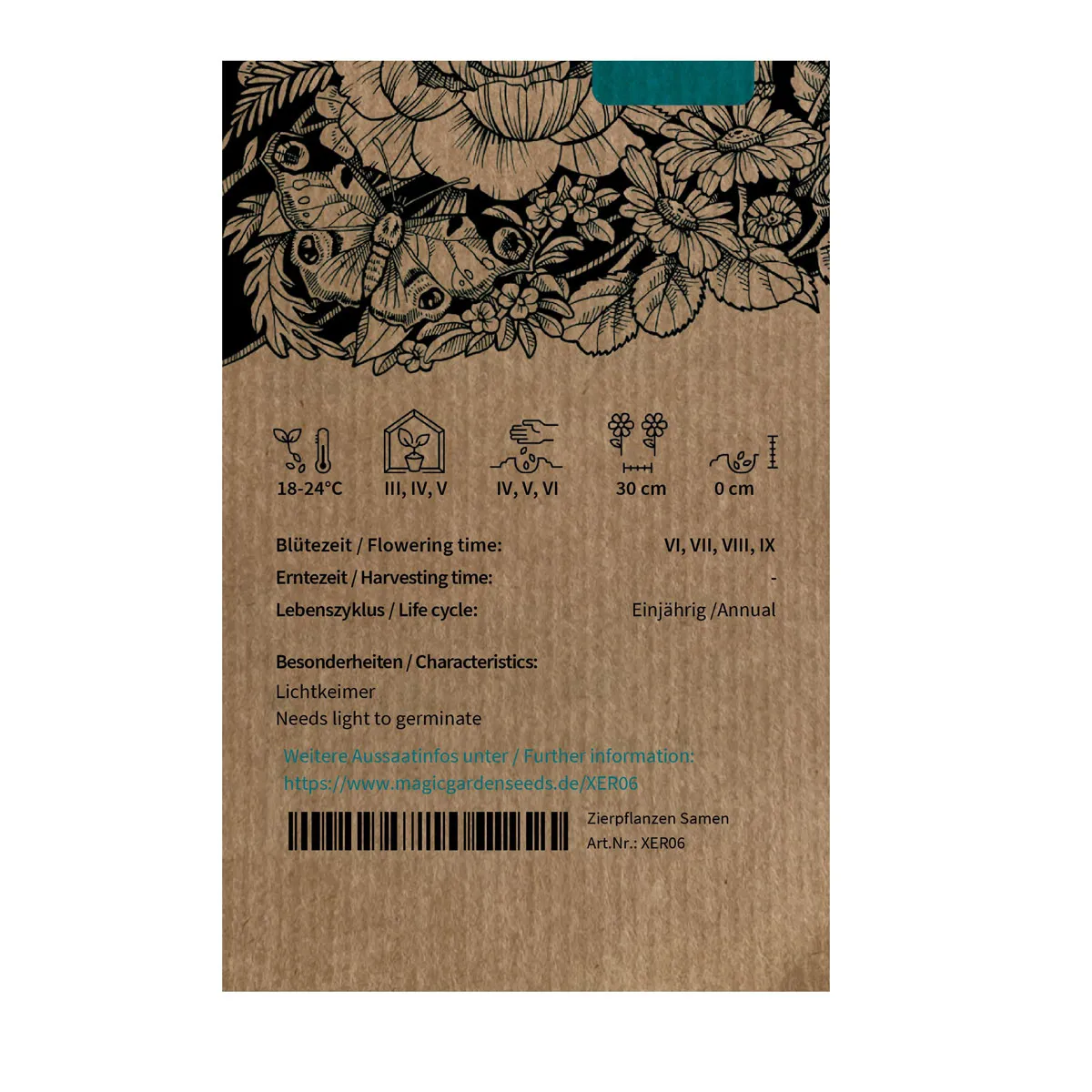
| Characteristics | Drought tolerant, Needs light to germinate, Not winter-hardy |
| Eventual height | 40-80 cm |
| Flower colour | Purple, Red |
| Flowering months | August, July, June, September |
| Root system | Taproot |
| Winter hardiness zones | 10 (-1 bis 4 °C) |
Growing instructions
| When to sow outdoors | April, June, May |
|---|---|
| Sowing depth | 0 cm |
| Germination temperature | 18-24° C |
| Germination time | 2-3 weeks |
| Climate | Dry, Temperate |
| Soil type | Free-draining, Moderate nutrient levels, well-loosened |
| Sunlight | Full sun |
| Water requirement | Low, No waterlogging |
| Planting distance | 30 cm |
Sowing and care
Sowing & care of Tall Strawflower ‘Coppery Red’
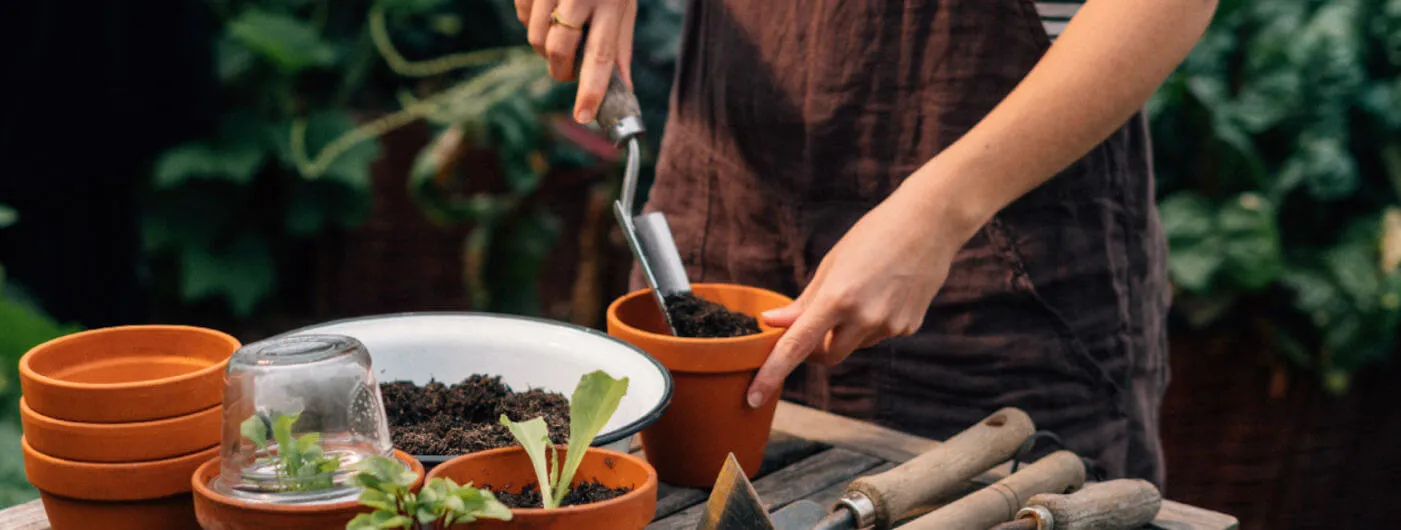
Seeds can be started indoors from March in trays or small pots with fine seed compost. The fine seeds are scattered onto the substrate, pressed down lightly and covered only very thinly with soil. Germination takes place at around 20 to 24 °C with even, careful moisture. After emergence, the young plants need a very bright and slightly cooler position so that they grow compactly.
After the last frosts, they can be planted outdoors from mid-May. Alternatively, direct sowing is possible from April to May. The position should be fully sunny, warm and well ventilated. Loose, well-drained and moderately nutrient-rich soil is ideal. Strawflowers tolerate temporary drought better than persistent wetness and should therefore be watered only moderately. Waterlogging and heavy fertilisation should be avoided.
Other names
Botanical name: Xerochrysum bracteatum, Helichrysum bracteatum
German: Strohblume, Hohe Strohblume, Gartenstrohblume, Garten-Strohblume, Immortelle,
English: Strawflower, Tall Strawflower, Everlasting Flower, Paper Daisy, Golden Everlasting
French: Immortelle à bractées, Immortelle, Hélichryse à bractées, Fleur de paille
Italian: Elicriso a brattee, Elicriso, Sempreverde, Fiore di carta
Spanish: Siempreviva, Siempreviva de brácteas, Flor de papel, Inmortal
Dutch: Strobloem, Hoge strobloem, Tuinstrobloem, Papierbloem
Login