My Tomatoes Are Getting Brown Spots: Is It Late Blight and Can I Still Eat the Fruit?
Gardening Knowledge
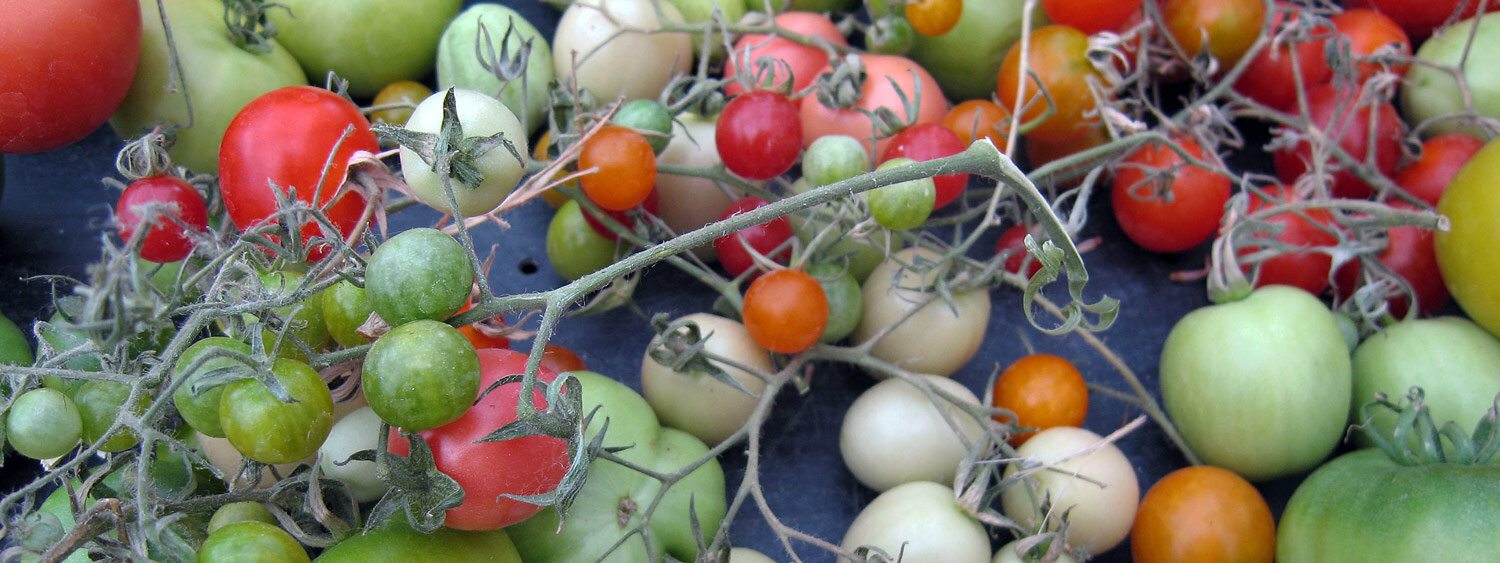
Brown patches on leaves, stems or fruits can quickly set alarm bells ringing for tomato gardeners. Especially in late summer, late blight is often the cause. But not every brown patch automatically means the end of your tomato harvest. The key is to look closely: Where are the patches appearing, what do they look like and are the fruits affected as well?
Welcome to our Magic Garden Seeds Garden Clinic. Here we answer specific questions from everyday gardening - clearly, practically and with a caring eye for what plants are trying to tell us.
Today we are looking at one of the most dreaded problems in the tomato garden: the plants have been healthy and laden with fruit for weeks - and suddenly brown patches appear on the leaves. The stems or individual tomatoes may start to discolour as well. The first thought is often: Is this late blight? And do I now have to throw away my entire harvest?
The good news first: not necessarily. But with late blight, it pays to act quickly.
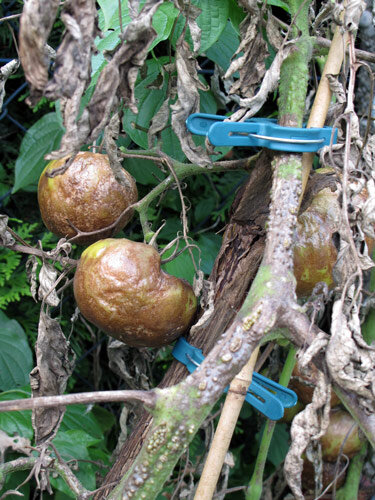
How to recognise it
Late blight usually appears first on the leaves.
Typical signs include:
- initially grey-green, later brown to dark brown patches on the leaves
- irregularly shaped patches that gradually become larger
- dark brown areas on leaf stalks and stems
- wilting and dying leaves
- brown, firm or sunken areas on the fruits
- in damp weather, sometimes a pale coating on the undersides of the leaves
The disease often spreads quite quickly. Within just a few days, a small patch can develop into a clearly visible infection.
A particularly typical sign is that not only individual fruits are affected, but the leaves and stems also show changes.
What exactly is late blight?
Late blight is caused by the pathogen Phytophthora infestans. Above all, it loves one thing: moisture.
If tomato leaves remain wet for long periods, the pathogen can develop particularly well. This is why late blight often appears after prolonged periods of rain, during cool, damp weather or in late summer, when nights become cooler and heavy dew forms in the morning. This also explains why tomatoes grown beneath a rain shelter are often less severely affected than plants growing completely unprotected outdoors.
Put simply: late blight has the greatest advantage when tomato leaves stay wet for a long time.
Is every brown patch late blight? No.
Tomatoes can develop brown or black areas for a number of different reasons.
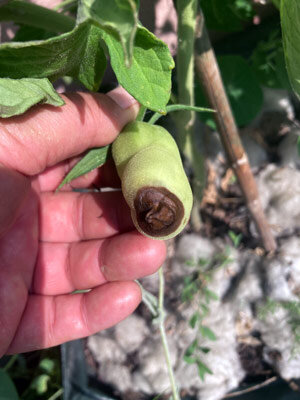
Late blight in particular is often confused with blossom end rot.
With blossom end rot, the dark patch usually appears at the lower end of the fruit - opposite the stem. The leaves and stems generally remain healthy.
This is an important difference:
- Brown patches on leaves, stems and fruits: late blight may be the cause.
- A dark, sunken patch only at the bottom of the fruit: more likely blossom end rot.
Blossom end rot is not an infectious disease, but a physiological disorder of the plant. If you would like to know more about how to recognise it and what you can do about it, you can find our article “Why do my tomatoes have black patches on the bottom?” here.
Can I still eat tomatoes affected by late blight?
That depends on whether the fruit itself is affected.
The tomato has brown patches
Tomatoes showing typical symptoms of late blight are best not eaten. The discolouration may extend deeper into the fruit tissue than is visible from the outside. Damaged areas can also be colonised by other microorganisms. Simply cutting away the brown area generously is therefore not recommended.
The plant is affected, but the tomato looks healthy
The situation is different with completely undamaged fruits. Healthy tomatoes from an affected plant can still be harvested and should ideally be used promptly.
Especially in September, there are often many green fruits still hanging on the plant. You can carefully remove these and allow them to ripen indoors. Check them regularly while they ripen. Sometimes symptoms only become visible after a few days. If a fruit develops dark, suspicious patches, discard it.
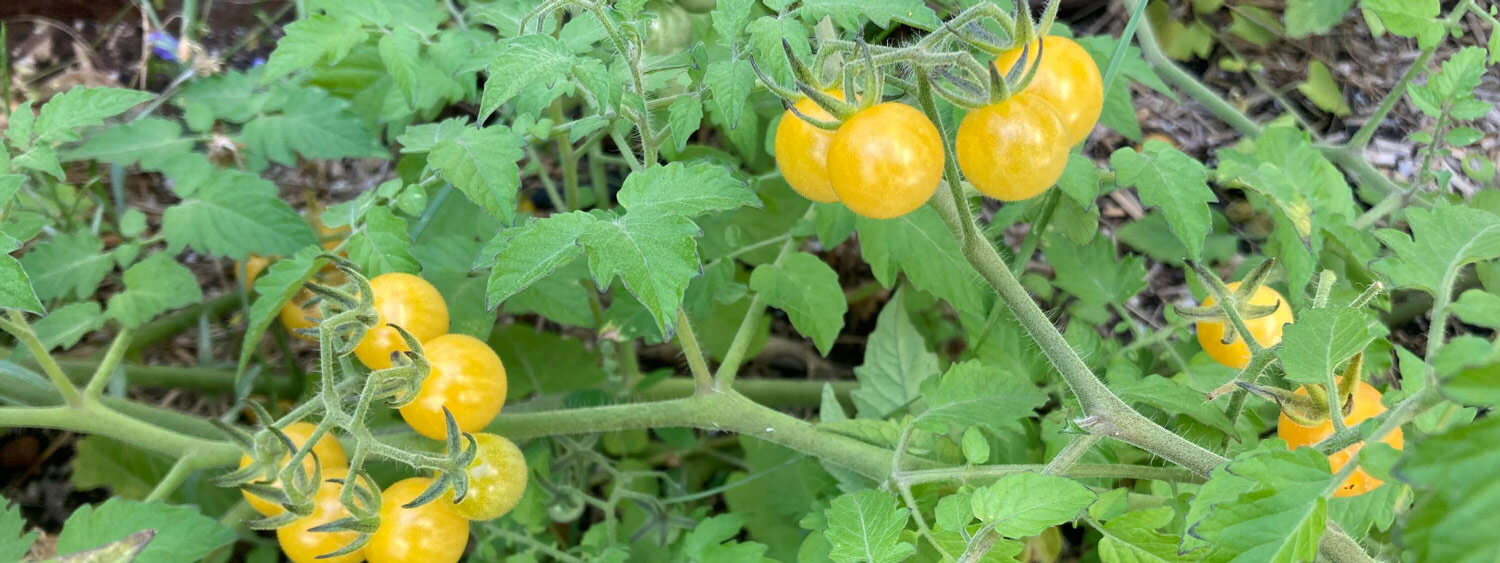
Tip: Wild tomatoes are highly resistant to late blight and can even be grown without protection from rain.
What can you do immediately?
If you discover late blight, you cannot restore already damaged parts of the plant to health. But you can try to slow down further spread.
Remove affected leaves
Remove individual diseased leaves as early as possible. Work carefully and avoid unnecessarily touching lots of healthy plants afterwards. If large parts of the plant are already affected, however, removing individual leaves is unlikely to make much difference.
Harvest healthy fruits
Ripe, healthy tomatoes should be harvested from heavily affected plants as soon as possible. Well-developed green fruits can often continue ripening indoors.
Keep the leaves dry
Always water tomatoes directly onto the soil and avoid wetting the leaves whenever possible. Especially in late summer, make sure the plants have plenty of air around them. Dense foliage dries much more slowly after rain or dew.
Remove heavily affected plants
If large parts of a plant are affected and it is visibly dying, remove it from the planting area. This at least reduces the amount of infected plant material among your tomatoes.
Why is late blight so common in late summer?
Tomatoes love warmth. Late blight loves moisture. In summer, rain on the leaves often dries again quite quickly. In September, things are often different. The nights become longer and cooler. Dew settles on the plants in the morning, while the sun is less powerful. If the leaves stay wet for many hours, conditions become particularly favourable for the pathogen. This is why many tomato gardeners experience the same phenomenon: the plants grow seemingly without problems throughout the summer - and then, just before the last large harvest, late blight suddenly appears.
How to help prevent late blight
It is not always possible to prevent the disease completely. But you can significantly improve growing conditions for your tomatoes.
Protect tomatoes from rain
A tomato shelter or protected position can be very helpful. However, it is important that enough air can still circulate around the plants. A completely enclosed, humid greenhouse is not ideal either.
Leave enough space
If tomatoes are planted very close together, their leaves dry more slowly. An open, airy arrangement helps moisture evaporate more quickly.
Water directly onto the soil
Water in the morning where possible and directly around the roots. This helps keep leaves and stems dry.
Keep an eye on the lower leaves
You can remove leaves that lie directly on the soil or remain constantly damp. However, do not strip the plant completely. Tomatoes still need their leaves for growth and fruit ripening.
Check your plants regularly
It is particularly worth taking a close look after several rainy days. The earlier you notice changes, the sooner you can respond.
The Magic Tip
With late blight, the brown colour itself is not the most important identifying feature - the overall appearance of the plant is.
So do not look only at the tomato itself.
Are the leaves and stems affected too? Are the patches spreading quickly? Has the weather been damp over the past few days?
The more of these signs occur together, the more likely late blight becomes.
And sometimes a second look is especially worthwhile: a dark patch found only at the bottom of the fruit may be something completely different - blossom end rot.
What does late blight mean for next year's crop?
If the tomato season ends with late blight, one question quickly comes to mind: Will the disease automatically return next year?
Not necessarily. Even so, it is worth removing affected plants carefully at the end of the season and planning the growing area thoughtfully for the following year. The late blight pathogen produces spores that spread particularly readily in damp weather. They can originate from diseased leaves, stems and fruits and may be carried to other plants by wind or splashing water, for example. For this reason, heavily affected plants should not simply be left lying between the beds at the end of the season.
-> How should I dispose of infected tomato plants?
Remove affected plant material thoroughly from the bed. This includes fallen leaves and diseased fruits. You will often read the advice that plants with late blight should never be composted. However, it is not quite that simple:
If your compost reliably reaches genuine hot-composting temperatures, affected plant material can in principle be composted. The key is that high temperatures are maintained inside the compost for an extended period and that all diseased material reaches the hot zone.
Affected plant material should therefore not simply be placed on top of the compost heap. A well-managed hot compost can reach temperatures of around 55 to 65 °C. Turning the compost regularly also moves material from the cooler edges into the hot centre.
A normal, slowly decomposing garden compost, by contrast, often does not reliably reach these temperatures. If you are unsure whether your compost genuinely undergoes a hot composting phase, municipal food and garden waste or green-waste collection is the safer option - provided your local authority accepts diseased plant material.
Important: The decisive question is therefore not simply “compost or not?”, but how your compost works.
-> Do I need to replace the soil?
In a normal garden bed, you do not automatically need to replace all the soil after late blight. Even so, it can make sense not to plant tomatoes in exactly the same place the following year where possible. Crop rotation helps reduce overall disease pressure and also supports more balanced use of the soil.
Bear in mind that potatoes can also be affected by Phytophthora infestans. If enough space is available, avoid following tomatoes immediately with tomatoes or potatoes on the same plot.
The situation is slightly different for tomatoes grown in containers. Heavily rooted, exhausted compost should not be reused indefinitely anyway. After a season with severe disease, fresh growing medium provides a good new start.
-> Don't forget tomato stakes, strings and tools
Plant stakes, supports, secateurs and other garden tools also come into contact with leaves, stems and soil during the season. Thoroughly clean reusable tomato stakes and tools at the end of the season and remove any adhering plant debris and soil.
Strings or other materials that are difficult to clean are better replaced after a severe infection.
Start next year as dry as possible
For the coming growing season, the most important preventive measure remains avoiding prolonged leaf wetness wherever possible. An airy position, sufficient spacing between plants, watering directly onto the soil and protection from rain can make conditions considerably less favourable for late blight.
Even so, the disease cannot be ruled out completely. Weather, moisture and spores carried in from the surrounding area also play a role.
Remember: One season of late blight does not mean that your tomato bed is permanently “contaminated”. Removing plant debris, cleaning supports and tools, sensible crop rotation and keeping foliage as dry as possible are the most important steps towards a fresh start next year.
Our conclusion
Brown patches on tomatoes are frustrating, but they do not automatically mean that your entire harvest is lost. With late blight, changes usually appear on several parts of the plant: leaves develop brown patches, stems become discoloured and later the fruits may also be affected.
Tomatoes with visible symptoms of late blight should no longer be eaten. Unblemished fruits from an affected plant can still be harvested and used promptly. Green tomatoes can continue ripening indoors, but should be checked regularly while doing so.
The best preventive approach is to grow your tomatoes in conditions that are as dry and airy as possible: protect them from rain, water directly onto the soil and leave sufficient space between the plants. And if late blight appears anyway, do not despair. Every gardening year is different. Sometimes a diseased tomato plant is simply part of it - and reminds us quite vividly how closely growth, weather and the seasons are connected.
Which plant is puzzling you at the moment?
Write your question in the comments - perhaps we will answer it in the next Magic Garden Seeds Garden Clinic.