Perhaps It’s Simply Enough for This Gardening Year
Gardens of the future
This year my garden is too hot and too dry. Last year, July and August felt like nothing but rain where I live. Then, at the beginning of October, the first frost came and brought the season to a rather abrupt end. And once again I sit here and ask myself:
How do I actually need to change this garden so that it and I can cope with whatever is coming?
I’m thinking a lot about my garden again at the moment.
Not about which tomato variety will go into the greenhouse next year, or whether there might still be room for another raised bed between two beds.
It’s about something more fundamental.
How do you carry on gardening when the conditions under which you once started gardening are changing?
I keep coming across this question on social media at the moment, too. Some home gardeners ask quite openly whether it still makes any sense to carry on this year. The effort it takes to get plants through heat and drought is high. There is watering, shading and mulching, and still you see plants suffering.
For me, though, the answer to the question of whether it is worth it is still: Yes, gardening is worthwhile.
But that does not mean every gardening year has to be pushed through at any cost until the last possible day of harvest.
The problems are real
This is not simply about personal exhaustion, or about suddenly losing our enthusiasm for gardening. We are responding to real conditions that can increasingly challenge the garden:
- long dry spells and soils that dry out badly
- heat and heat stress in plants
- a sharply rising need for watering
- the question of how much water we can and want to use for the garden
- heavy rain instead of evenly distributed rainfall
- overly wet periods with rot and fungal diseases
- problems with germination, flowering and fruit set due to unfavourable temperatures
- shifted sowing, planting and harvesting times
- hail, storms and other extreme events
- frost that can bring a gardening season to a very sudden end
- and above all: planning ahead is becoming ever more difficult
At the beginning of August 2026, the Deutscher Wetterdienst, Germany’s national weather service, described the soils in parts of Germany as unusually dry. The development of soil moisture shows similarities to the drought years of 2018 and 2022. In the south, the soils were in some places even drier than in those comparison years.
My lettuce is waiting
A fairly unspectacular example is showing me very clearly right now what these changes mean for everyday gardening.
Actually, this is the time when we start thinking about sowing winter vegetables again. At Magic Garden Seeds we are working on that at the moment, too.
And yet, personally, I am not sowing any lettuce at the moment.
It is simply too warm.
At Magic Garden Seeds we regularly carry out germination tests to check the quality of our seeds. With lettuce, this does not work reliably at the current high room temperatures. That is why we are currently doing these germination tests in a temperature-controlled fridge with a grow light.
And somehow I find that image very fitting.
Of course, I could now also try to create the most perfect conditions possible for my sowing at home. I could cool, shade, monitor and keep optimising.
But I’m not doing it.
I’m waiting.
Until, hopefully, it gets cooler again.
Perhaps we need to stop trying to solve everything through sheer effort
This thought is occupying me more and more.
Whenever people talk about climatic changes in the garden, we very quickly end up with solutions:
Mulching. Collecting rainwater. Building up humus. Shading. Watering more deeply. Keeping the soil covered all year round.
All correct. I do a lot of it myself and consider it extremely worthwhile.
But perhaps we still need to be careful that adapting to climate change does not simply turn into ever greater personal effort.
After all, drought does not only affect our cucumbers and courgettes. It affects plant growth, agriculture, soils, groundwater and the availability of water as a whole. That is why the Umweltbundesamt, Germany’s Federal Environment Agency, points out that adapting to dry spells and drought is a task that goes far beyond the individual garden.
Sustainable gardening cannot mean using unlimited water, materials, technology and energy so that the garden works exactly as it used to.
We have to make long-term decisions while the conditions themselves are changing.
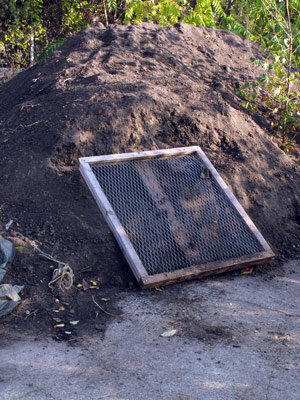
So I’m redesigning my garden. But how?
That is exactly the point I’ve reached again.
I’m once more looking into permaculture, agroforestry and regenerative agriculture.
I’m thinking about building up the soil. About retaining water. About permanent ground cover. About perennial crops. About woody plants, and about how trees and shrubs might one day create a different microclimate.
Much of this makes sense to me.
My garden probably needs more shade. More different layers. More structures. More ways of holding water where it falls. Less bare soil. Perhaps different crops. And certainly, in some places, different expectations as well.
And then I’m faced with a whole heap of new question marks, because a garden redesign like this does not happen within one season. A tree I plant today will not cast the shade I would like next summer. Building up soil takes time. A stable interplay of woody plants, perennials, annual crops, soil organisms and water does not come about just because you once draw a beautiful permaculture plan.
And while I prepare my garden for the future, I do not know what that future holds.
Perhaps that is, for me, one of the hardest realisations about climate adaptation at the moment.
Too wet last year. Too dry this year.
That is another reason why I find simplified statements about climate change of little help.
In my garden, July and August last year were incredibly wet. This year, heat and drought feel like the defining factors to me. At the beginning of October last year, the first frost had already arrived in my garden and drew a fairly radical line under the season.
That does not contradict climate change.
Climate change does not mean that from now on every summer has to be equally hot and dry everywhere. The Deutscher Wetterdienst describes a clear increase in hot temperature extremes; changes in precipitation are more complex and vary from region to region.
For me as a gardener, one thing above all comes through in everyday life:
Reliability is being lost.
The gardening calendar can still give me guidance. But it cannot tell me whether it is 18 or 32 degrees in my garden right now. Whether the soil is moist. Whether the longed-for rain or the next heatwave will arrive in two weeks.
Plants respond to the conditions that are actually there, not to the date on a seed packet.
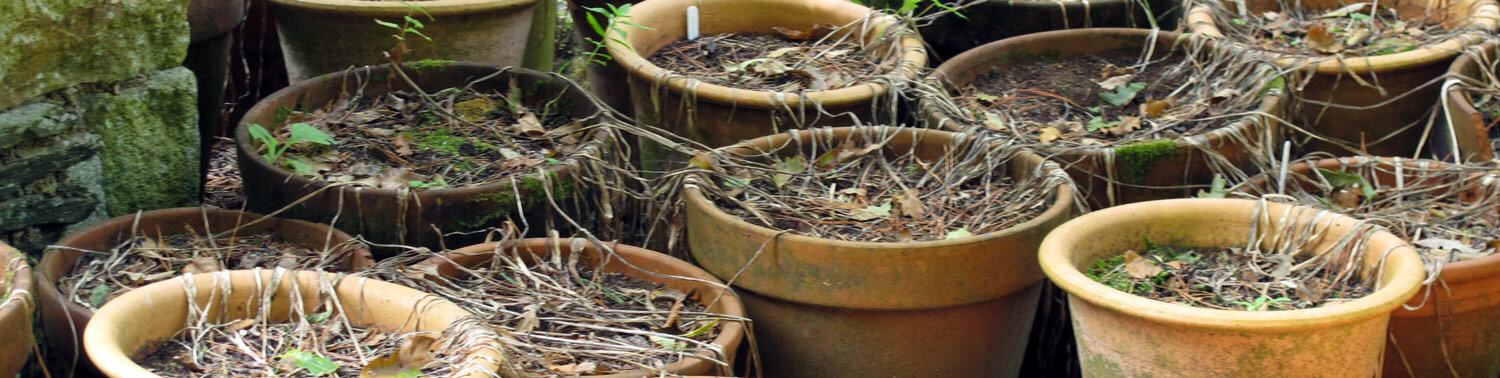
Perhaps waiting is now part of gardening
That is why I won’t be sowing my lettuce just yet.
And perhaps this year I will also finish some other crops earlier.
The beans can go at some point.
A bed that has been harvested does not necessarily have to be planted up again.
A plant that only survives with intensive daily watering may perhaps also be allowed to end its life cycle.
For me, that is not giving up.
Nor is it a retreat from the garden.
Because for me, gardening means much more than producing vegetables. It gets me outdoors. It keeps me moving. It connects me with plants, soil, weather and the seasons. That is exactly why I don’t want to turn this place into a permanent battleground.
Perhaps now is the time for observing
When I sow less, rescue less and try less, suddenly there is room for other questions:
- Where is my garden still cool in the morning?
- Which spots dry out first?
- Where does moisture linger surprisingly long?
- Which plants cope with little extra water?
- Which crops needed a disproportionate amount of attention this year?
- Where am I in urgent need of shade?
- Which plants create a favourable microclimate themselves?
- Where does rain soak in, and where does it simply run off?
- Which plants and varieties surprised me?
- And what would I not want to do in exactly the same way next year?
Perhaps the answers to these questions are more valuable right now than yet another lettuce bed planted up.
No one-size-fits-all solution. But lots of possibilities.
I don’t yet know what my garden will look like in five years’ time.
Perhaps more woody plants will be growing in it. Perhaps I will arrange my vegetables differently. Perhaps some annual crops will get less space and perennial plants more. Perhaps I will try harder to keep water in the garden instead of constantly carrying it in during the summer.
I will keep reading about permaculture, agroforestry and regenerative approaches and try out what makes sense for my own garden.
And I will probably make mistakes.
That is part of it.
Perhaps we should generally spend less time looking for the one perfect solution.
Diversity could play an important role here. This is exactly where, for me, things come full circle with Magic Garden Seeds. Working with open-pollinated seeds, heirloom varieties and unusual plants is not only about preserving something from the past that is worth keeping. It also gives us the opportunity to notice differences, gather experience, keep propagating seeds and observe more closely which plants work under our own particular conditions.
This fits with the idea that has shaped Magic Garden Seeds from the very beginning: making special open-pollinated seeds accessible and passing on knowledge about plants and diversity.
For today, perhaps I’ll simply put the watering can down
In any case, I won’t be sowing any lettuce now.
I’m waiting.
And perhaps instead I’ll sit down in my garden and take a slightly closer look. Not because I have given up, but because I want to understand how this garden can carry on.
Perhaps this observing, waiting and rethinking is not a break from gardening at all right now.
Perhaps it is one of my most important tasks. In fact, I find this conclusion very relaxing.
And how are things with you?
What is this gardening year doing to your plans? Have you postponed sowings, given up on crops or started to rethink your garden from the ground up? Are you also looking into more shade, water retention, permaculture, agroforestry or other ways of adapting to the climate?
Do write and tell us about your observations, and about your question marks too. On this topic in particular, we can probably learn a great deal from one another.