Urban Wilderness on Your Balcony: Between Asphalt & Flowers
Gardening Knowledge
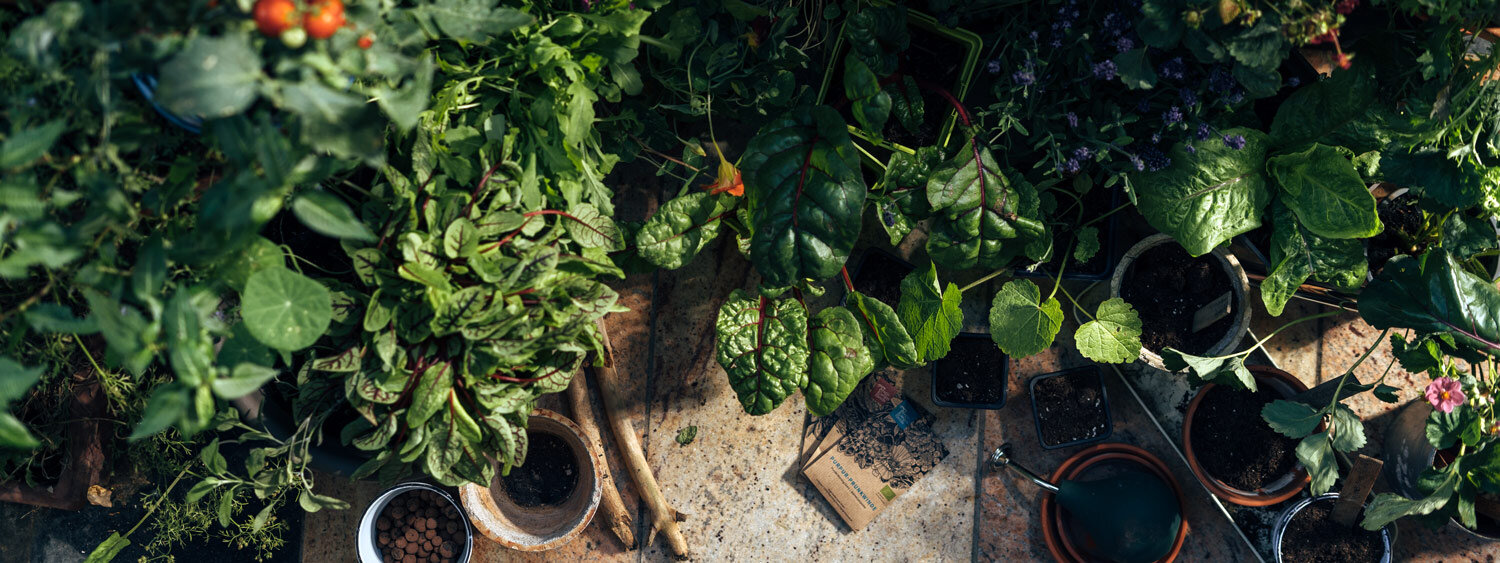
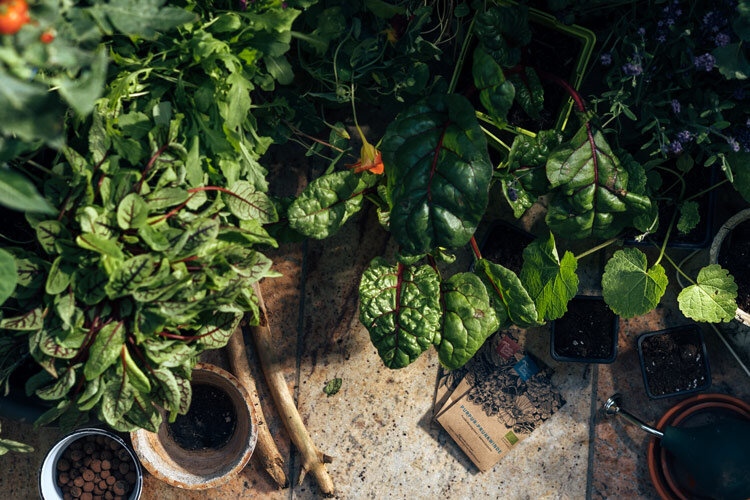
How to create your own mini oasis between asphalt & flowers
Perhaps you know this feeling: you step out onto your balcony, and instead of birdsong you hear traffic. Instead of buzzing insects you see concrete. And yet this is exactly where an incredible potential lies.
Because even two square metres can become a lively mini wilderness. A place that grounds you. That hums. That smells wonderful. That reminds you that you are part of nature, even in the middle of the city.
The most important foundation: your balcony is a habitat of its own
Before you start planting, a change of perspective helps: a balcony is not a "small garden". It is its own distinct microclimate.
Observe very deliberately for a few days:
- How many hours of sun does your balcony get?
- Is it sheltered from the wind or draughty?
- How much does the house wall warm up (especially in the afternoon/evening)?
- Is there a roof, or is the balcony open to rain?
These small observations are often more important than any plant list. Because when you garden in harmony with your location, a lot becomes easier, and much more relaxed.
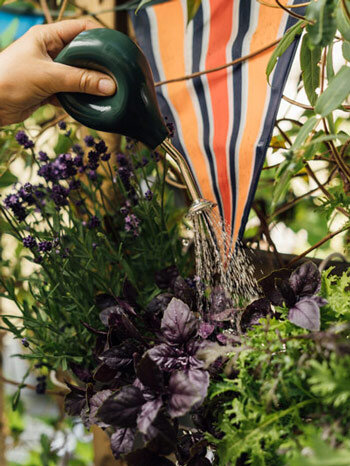
Step 1: Find the courage to go wild
An urban wilderness is not a sterile show balcony. It is allowed to be lush. Lively. Perhaps a little bit chaotic, just like nature itself.
Instead of perfectly symmetrical boxes and uniform planting, you can let the following grow:
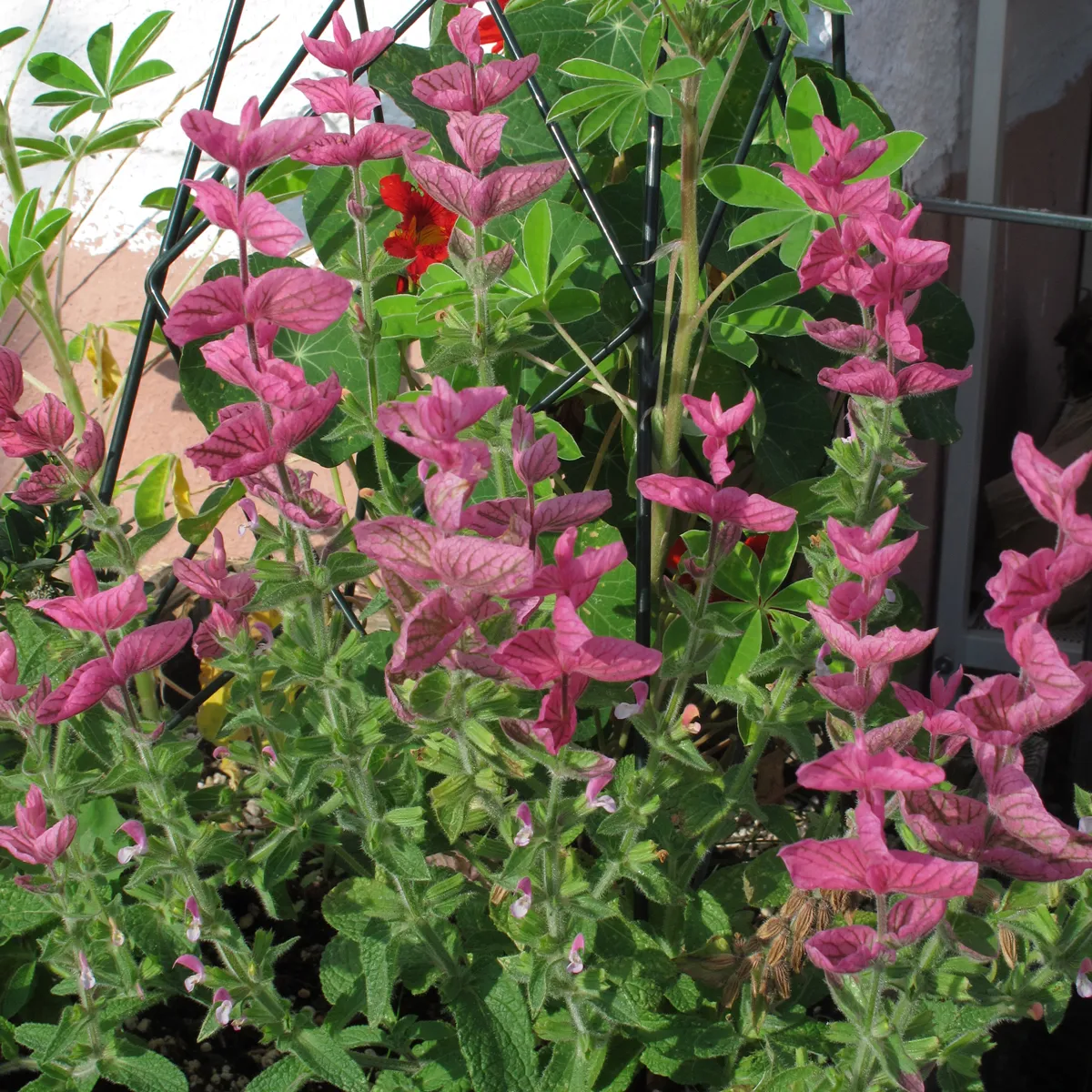
- a mixture of herbs, vegetables and flowering plants
- plants at different heights
- climbers, trailing plants and upright ones
Nature thinks in diversity. And diversity creates stability, for your plants, for the microclimate on the balcony and for everything that lives and lands there.
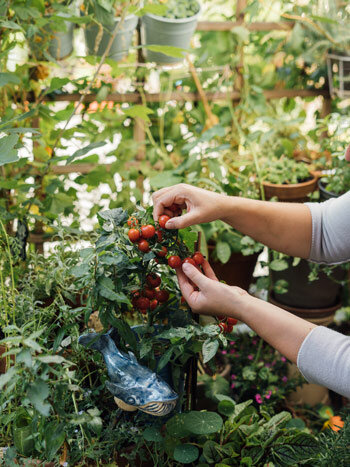
Step 2: Think in layers, even in a small space
Even a narrow balcony can become three-dimensional. It is a small trick with a big effect: as soon as you think in layers, your balcony automatically feels "wilder" and more structured at the same time.
- Ground level: larger tubs with tomatoes, berries or wildflowers
- Mid height: boxes with herbs and edible flowers
- Vertical: trellises for peas, beans or nasturtium
- Hanging: hanging baskets with strawberries or low-growing herbs
This gives you not only more room for greenery, but also a small, varied "balcony biotope" that you can discover anew every day.
Step 3: Combine food for humans & insects
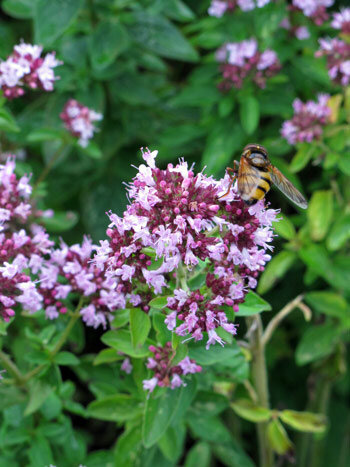
Urban wilderness is not an either-or. You can harvest and create habitat at the same time. This works especially well when you combine edible plants with flowering plants.
- Thyme & oregano: aromatic for you, attractive to pollinators
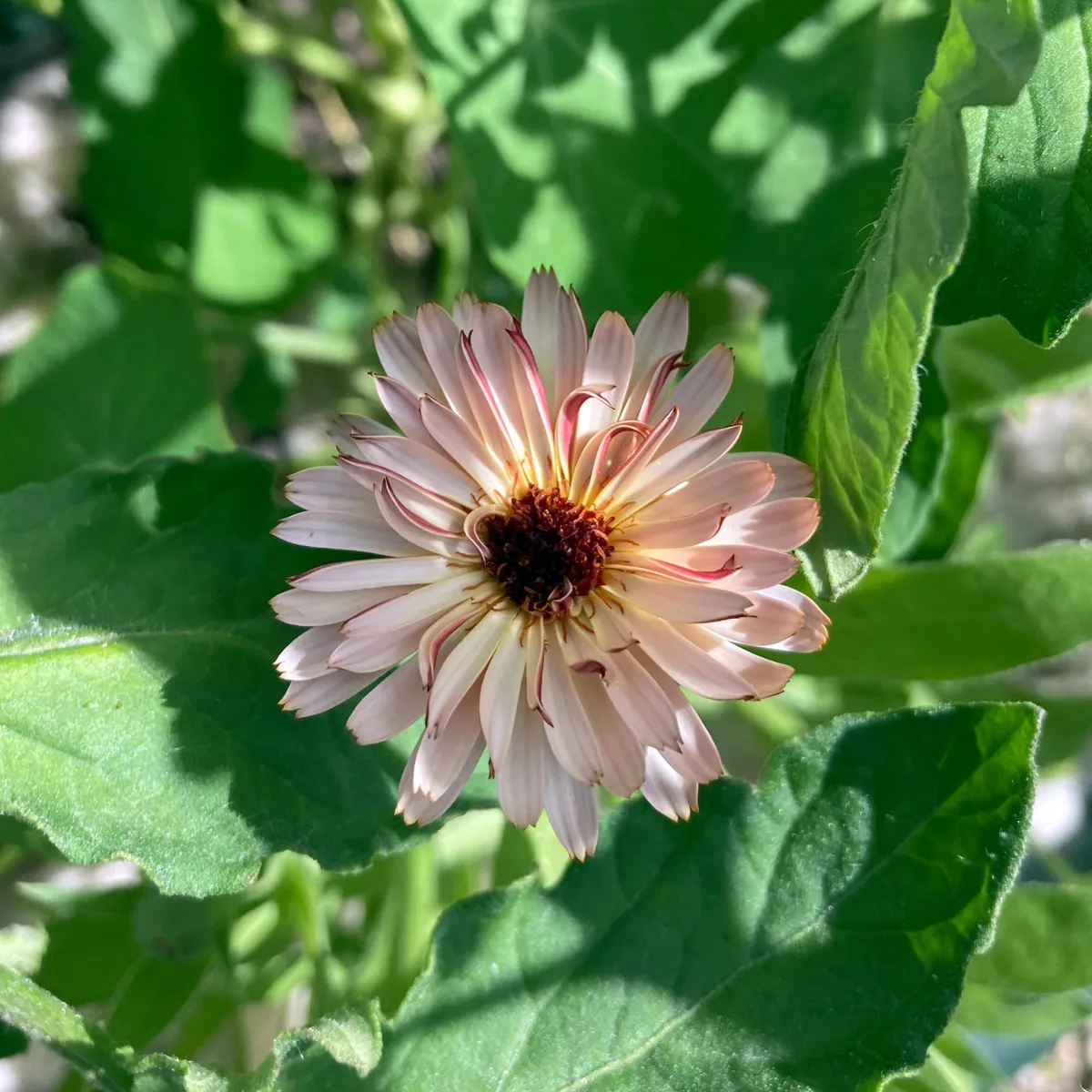
- Marigold: medicinal plant & friend of beneficial insects
- Nasturtium: edible, decorative and often a "decoy buffet" for aphids
- Borage: cucumber flavour & insect pasture
Diverse, open-pollinated varieties in particular are a real joy here, because they not only look beautiful, but also often smell strongly, flower abundantly and give you the option of even saving your own seeds later on.
Step 4: Soil is life, even in a pot
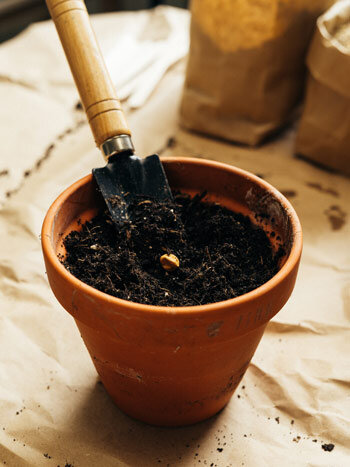
On a balcony, too, this holds true: good soil is the foundation. And yes, even in a window box a little soil life can develop if you support it.
- Use peat-free compost wherever possible.
- Make sure there is drainage (e.g. expanded clay pebbles or gravel at the bottom of the pot).
- Feed regularly with organic fertiliser (especially in summer).
- Mulch, even in a pot! A thin layer of grass cuttings or chopped plant debris protects against drying out.
The result: less stress when watering, stronger plants and, overall, more of a "feeling of nature" in the pot.
Step 5: Use water consciously
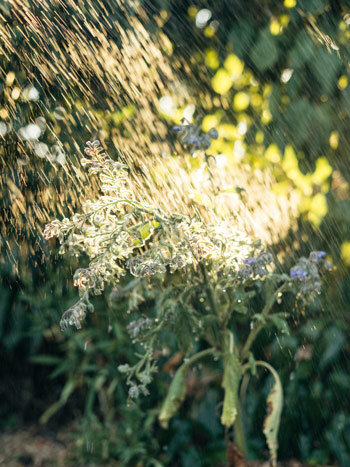
City balconies can get extremely hot in summer. The more concrete and the more south or west sun, the faster everything dries out. With a few simple levers, it gets easier:
- Larger pots instead of mini containers: they store water much better.
- If possible, water in the morning (or late in the evening).
- Place plants in groups: together they create a more humid microclimate.
- Saucers can store water for a short time, but please avoid waterlogging.
And the nice thing: a small wilderness often regulates itself better than a single plant in a tiny pot.
Step 6: Add mini retreats
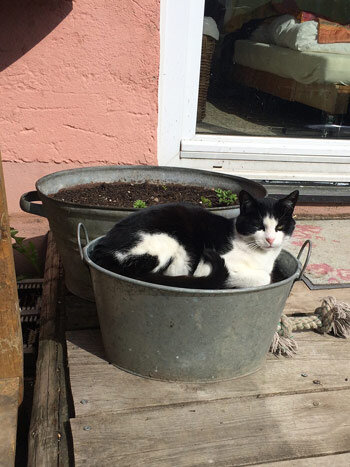
If you like, you can even create small structures on your balcony that help insects and other beneficial creatures:
- a shallow water dish with a few stones as a landing spot
- a small piece of deadwood or a bundle of hollow stems
- a few stones as a sunning spot (wild bees love warmth too)
These are tiny things, and they make a huge difference. Suddenly your balcony is not just green, but alive. And at some point you notice: it is buzzing.
Your first step (if you are just starting out)
Start small and make it easy for yourself:
- 1 large tub
- 1 herb box
- 1 flowering mix
Observe. Learn. Adjust. Wilderness does not arise through control, but through relationship.
Urban wilderness is more than planting
It is not about perfection. Not about maximising yield. Not about a balcony that "always looks tidy". It is about inviting nature back in, and yourself along with it.
Between asphalt and sky, a place can emerge where you breathe deeply. Where you observe. Where you marvel. And where you feel a little more like a part of nature again.
Related products