What Good Are Spiders in the Garden?
Gardening Knowledge
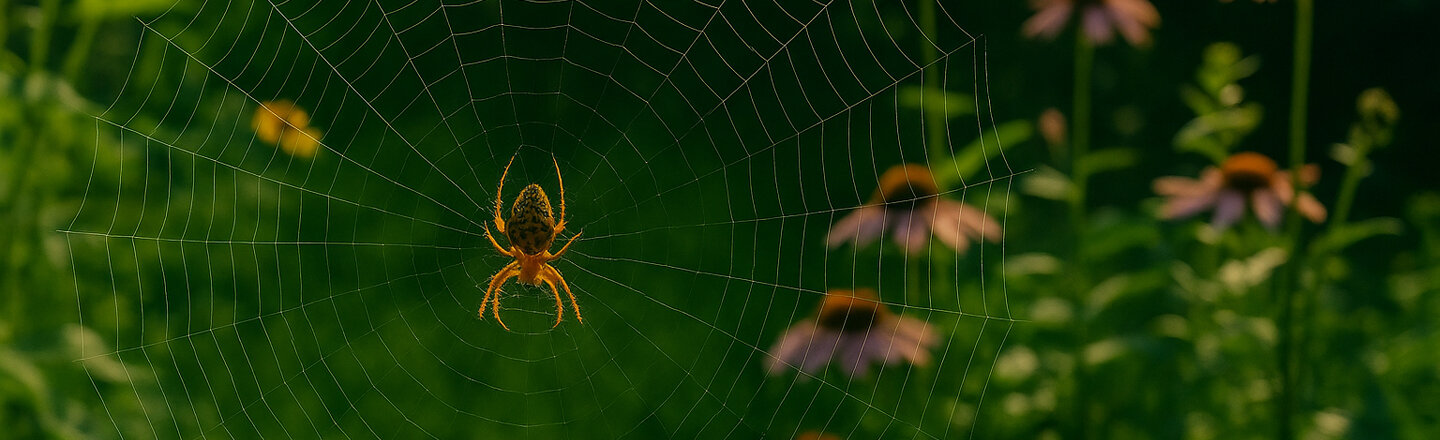
Why you should learn to love the silent eight-legged residents of your garden
Spiders are probably among the most underrated garden residents. While some people reflexively carry them out of the house or are disgusted by them, they are almost indispensable for a healthy, diverse garden. Spiders are beneficial creatures par excellence, and in keeping with our sustainable approach to gardening at Magic Garden Seeds, they help to maintain the ecological balance.
Small hunters with a big impact
In the garden, spiders are far more than silent observers: they are active predators, eating a great many insects every day. On the menu are mosquitoes, flies, aphids and small beetles, among others, which are exactly the little creatures that tend to plague us when we garden.
And the best part: spiders do this job entirely without the use of chemicals. They work silently and tirelessly in the background, in keeping with a natural, responsible style of gardening.
Eight-legged biodiversity: these are the spiders you can discover in your garden
In Germany there are over 1,000 species of spider, and many of them live unnoticed in our gardens. Here are three particularly common ones that you may meet with a bit of luck:
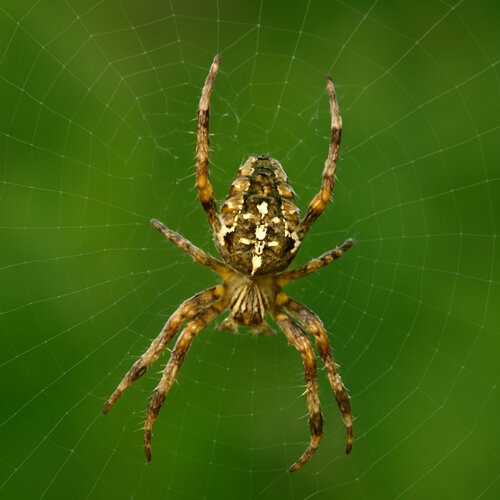
Garden cross spider (Araneus diadematus)
One of the best-known native species. Its artfully spun orb web is a small masterpiece. It usually sits in plain view in the middle and catches flies, mosquitoes, and even wasps.
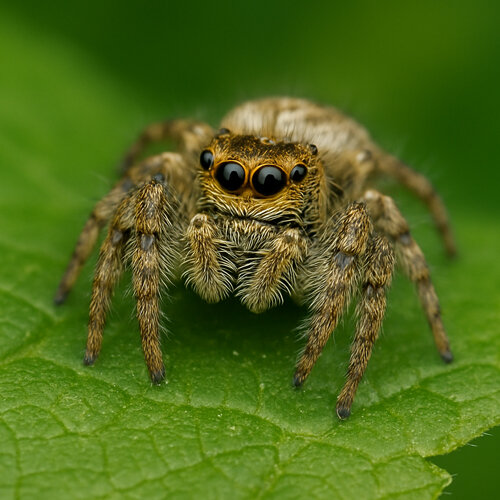
Jumping spiders (Salticidae)
These small, often fluffy spiders are very striking with their big eyes and active way of hunting. They leap onto their prey in a flash and seem almost playful. Especially exciting for children!
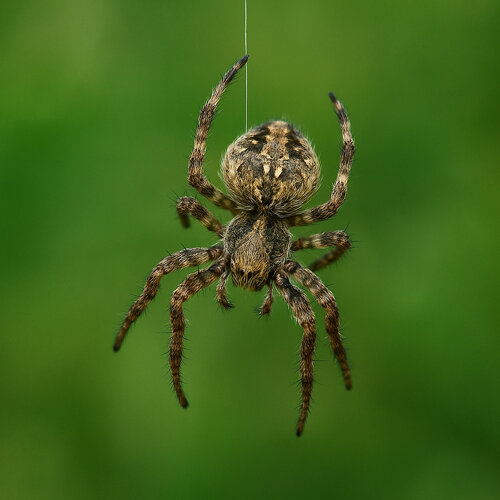
Wolf spiders (Lycosidae)
These ground hunters do not build webs but patrol through the grass. They are nimble, very effective at hunting pests and completely harmless.
Each of these species contributes in its own way to natural pest control and enriches your garden with fascinating behaviour and biodiversity.
Where spiders feel at home
A garden where spiders live is usually a garden with structure, variety and places to retreat to. The animals prefer wild corners, deadwood, piles of leaves, piles of stones or dense perennial borders, where they can hide and build webs.
A habitat like this offers a home not only to spiders but also to many other beneficial insects such as lacewings, wild bees or ladybirds, and turns your garden into a real mini ecosystem.
Protection for your plants
Spiders are also particularly valuable when it comes to your vegetable and herb plants. In sensitive phases, such as after germination or during flowering, young plants are particularly vulnerable to insect pests. By hunting, spiders keep pest numbers in check and so make sure your harvest stays healthy.
This means: More yield, less intervention, and all of it natural.
Fascinating things to watch
Anyone who takes the time to look at a spider's web in the morning dew or to watch a jumping spider hunting will quickly realise that these animals are beautiful and fascinating.
For children in particular, a mindful approach to spiders can open up a new perspective on nature, and be an introduction to the world of beneficial wildlife and ecological connections
In conclusion: let spiders be welcome in your garden!
Spiders are a fixed part of a functioning garden world. They show that your garden is healthy, diverse and alive, a place where plants, animals and people can all feel at home.
So our advice: Watch them, learn from them and be glad of every spider that moves in with you. She is not your enemy, but a hard-working helper on eight legs.
Related products