Fungus gnats when sowing indoors: causes, myths and effective help
Sowing & growing
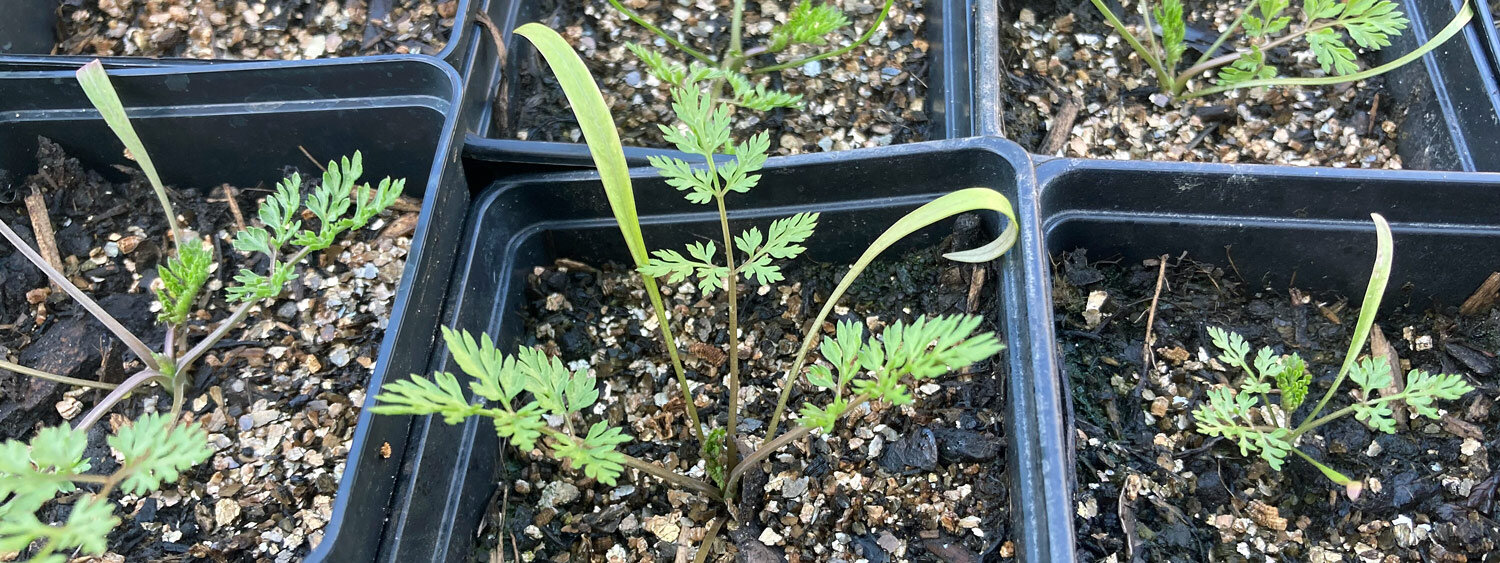
When you start sowing indoors on the windowsill, the new gardening season begins for many amateur gardeners. Tomatoes, chillies, peppers or flowers are started early indoors. But it is precisely at this stage that small black flies often appear: fungus gnats.
Fungus gnats belong to the family Sciaridae and find ideal conditions in damp seed compost. While the adult insects are usually harmless, their larvae in the compost can cause considerable damage to young plants.
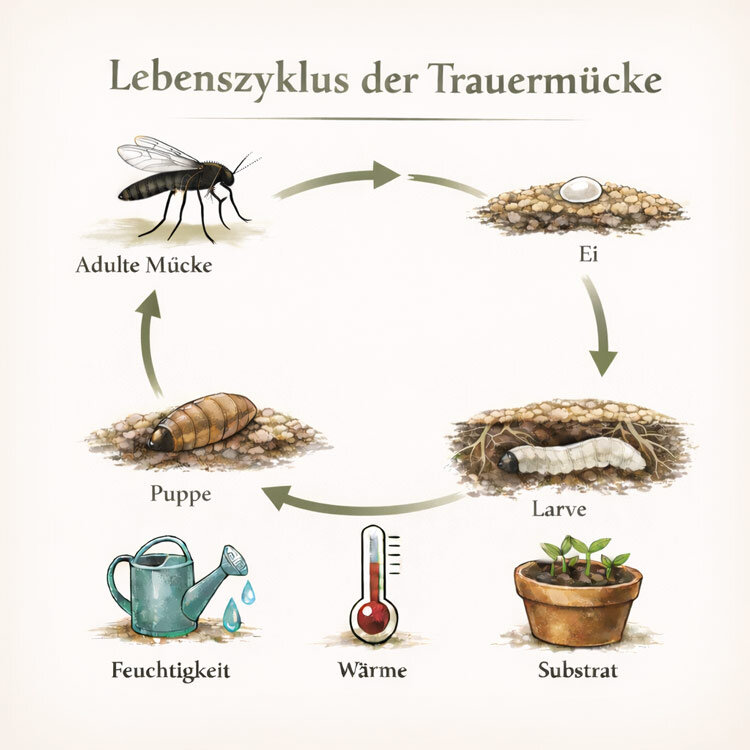
The life cycle of the fungus gnat takes place entirely in the compost, and damp compost favours every stage of development.
Why fungus gnats appear especially when sowing indoors
The conditions for raising seedlings are almost perfect for fungus gnats. Warm temperatures, permanently damp compost and compost enriched with organic matter provide ideal conditions for egg-laying and larval development.
The females lay their eggs in the top layer of the compost. After a short time, larvae hatch, which feed on organic material, fungi and fine plant roots. Seedlings and young plants in particular are sensitive to this.
Typical damage caused by fungus gnat larvae
- Poor or uneven germination.
- Sudden collapse of young seedlings.
- Stunted growth despite good care.
- Damaged or dead fine roots.
How to spot fungus gnats
An infestation is usually first noticed by small black flies that rise from the compost when you water or move the pots. The actual cause of the damage, however, lies in the compost: glassy, translucent larvae with a dark head, only a few millimetres long.
Where do fungus gnats actually come from?
A common assumption is that fungus gnats are already present in the compost. As a rule, however, high-quality, fresh seed compost is free of living larvae.
Fungus gnats usually get into the home from outside, for example through open windows or new plants. If they find damp compost, they lay their eggs there. Under favourable conditions, a visible infestation quickly develops.
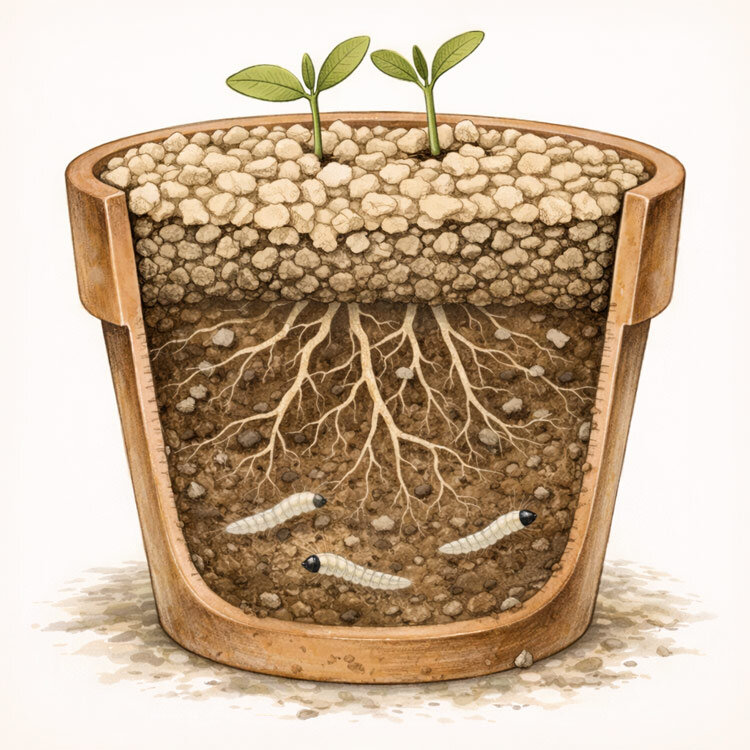
The larvae damage fine roots in the compost. A dry, mineral surface makes egg-laying more difficult.
Vermiculite as a help when sowing indoors
Vermiculite is a mineral, heavily expanded material that holds water without becoming waterlogged. A thin layer on the surface of the compost can help to prevent fungus gnats, as it makes egg-laying more difficult.
At the same time, vermiculite protects the compost from capping and drying out and improves conditions for seedlings. It is particularly suitable as a preventive measure, but it does not replace treatment in the case of a severe infestation.
Myths about fungus gnats
Myth 1: Fungus gnats always come from the compost
They are usually brought in from outside. Good seed compost is, as a rule, free of living larvae.
Myth 2: The flies damage the plants
It is not the adult insects but the larvae in the compost that cause the damage.
Myth 3: Lots of watering helps weakened plants
Permanent dampness favours fungus gnats and makes the problem worse.
Myth 4: Only chemicals help
Biological and mechanical measures are usually more effective in the home garden.
Emergency plan for a severe fungus gnat infestation
- Step 1: Adjust your watering
Let the top layer of compost dry out well to break the egg-laying cycle. - Step 2: Reduce the adult insects
Yellow sticky traps help to catch flying fungus gnats and to gauge the infestation. - Step 3: Tackle the larvae
Biological beneficial organisms such as nematodes reduce the larvae directly in the compost. - Step 4: Cover the compost surface
A thin layer of vermiculite makes renewed egg-laying more difficult. - Step 5: Check badly affected plants
In the case of severe damage, repotting into fresh compost can be worthwhile.
Prevention is the best protection
Seed compost with a stable structure, clean containers and adjusted watering are the most effective precautions. If you are attentive early on, you can usually contain fungus gnats before they become a serious problem.
In short: Fungus gnats rarely arise from the compost itself. Moisture, warmth and organic material are what matter. With adjusted care and targeted measures, an infestation can be kept well under control.