
Carnation seeds - fragrant Dianthus species for beds, rock gardens and vases
Carnations are among the most traditional garden flowers of all: fragrant, rich in colour, often surprisingly robust and far more varied than they may seem at first glance. Under the botanical name Dianthus, you will find compact cushion-forming species, wild perennials, classic garden carnations, sweet Williams and elegant cut flowers. If you sow carnation seeds, you can raise this many-faceted group of flowering plants yourself from the very beginning.
In this category you will find carnation seeds for beds, borders, rock gardens, cottage gardens, containers and the vase. Depending on the species, carnations grow low and cushion-forming, loosely perennial or taller and suitable for cutting. Some species such as maiden pink and Cheddar pink are especially well suited to dry, sunny positions and rock gardens, while sweet Williams and garden carnations are classic bedding and cut flowers.
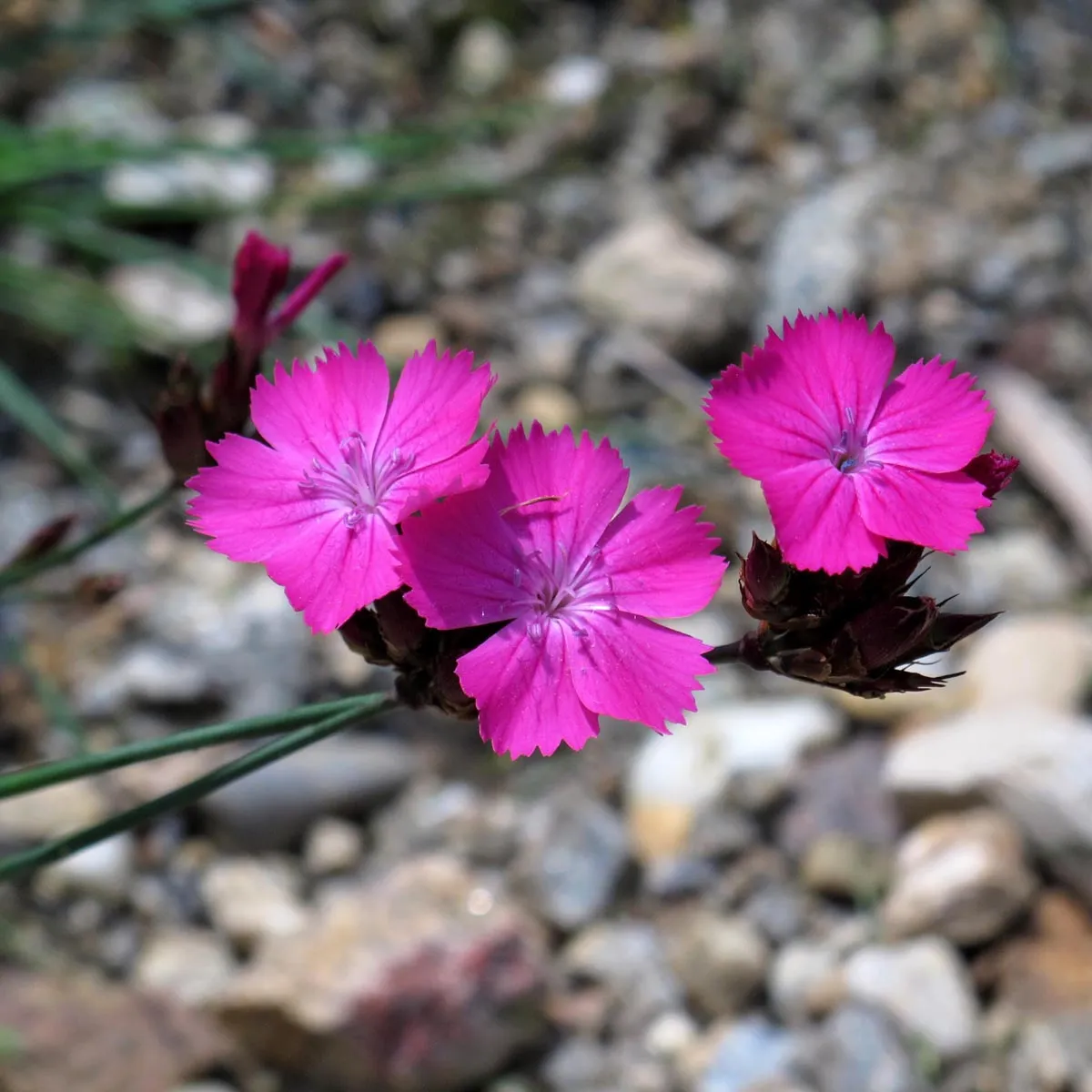
The genus Dianthus includes several hundred species and shows an impressive range: from the fragrant garden carnation and the biennial sweet William to the Carthusian pink as a native wild perennial. Many carnation flowers have toothed or fringed petal edges, intense shades of pink, red, white or purple and a spicy, often unmistakable fragrance. It is precisely this combination of elegance, scent and resilience that has made carnations popular garden plants for centuries.
Carnations generally love sunny positions and well-drained soils. Many species cope better with rather poor, calcareous or drier conditions than with heavy, permanently wet soils. This makes them well suited to rock gardens, dry-stone walls, sunny bed edges and naturalistic plantings. Taller species also produce long-lasting cut flowers and extend the floral display into the vase.
- Carnation seeds for fragrant Dianthus species in beds, rock gardens, containers, borders and vases
- Wide diversity of cushion pinks, sweet Williams, garden carnations, wild pinks and species suitable for cutting
- Ideal for sunny positions, well-drained soils and richly coloured flowers from spring to late summer
Whether as fragrant cut flowers, robust perennials, delicate rock garden plants or classic cottage garden flowers - carnations grown from seed bring a special mix of tradition, colour and botanical diversity to the garden.

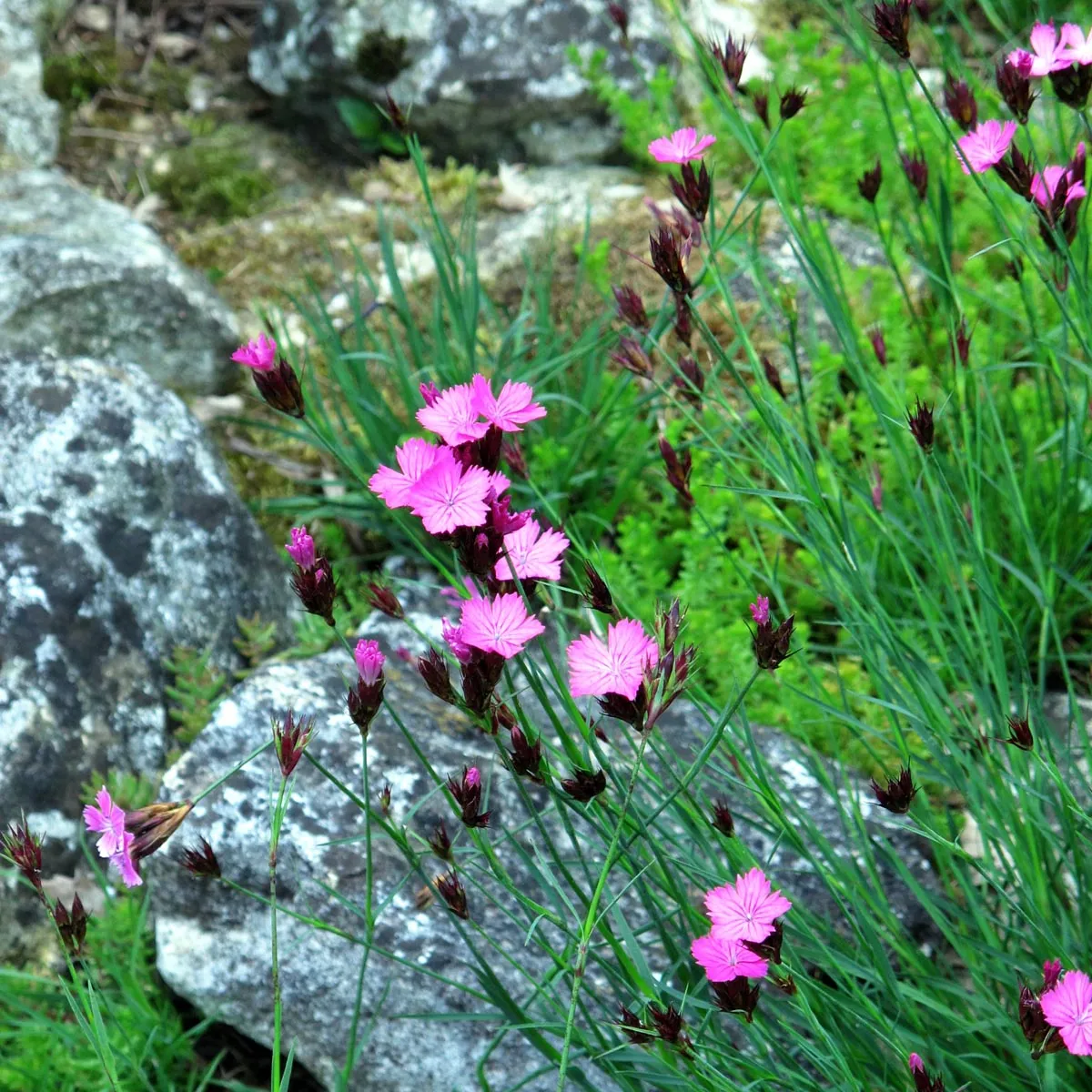
Growing carnations and pinks from seed - sowing and cultivation of Dianthus
Dianthus seeds can be pre-grown indoors or sown directly outdoors, depending on the species. For early flowering and strong young plants, pre-cultivation from February to April is recommended. The seeds are sown in a loose, fine-crumbled and well-drained growing substrate, covered only thinly with soil and kept evenly moist. The substrate should not become waterlogged, as young Dianthus plants can be sensitive to waterlogging.
Bright, moderately warm conditions are favourable for germination. Many Dianthus seeds germinate reliably at temperatures around 15 to 20 °C. Depending on species and seed quality, the first seedlings may appear after about one to three weeks. After germination, the young plants should be placed as brightly as possible so that they grow compactly and form stable shoots.
As soon as the seedlings are strong enough and have developed several true leaves, they can be pricked out and cultivated further individually or in small groups. Before planting outdoors, the young plants should be slowly hardened off. They are planted in a sunny location with loose, well-drained soil. Heavy soils can be improved with sand or fine gravel so that excess water drains away well.
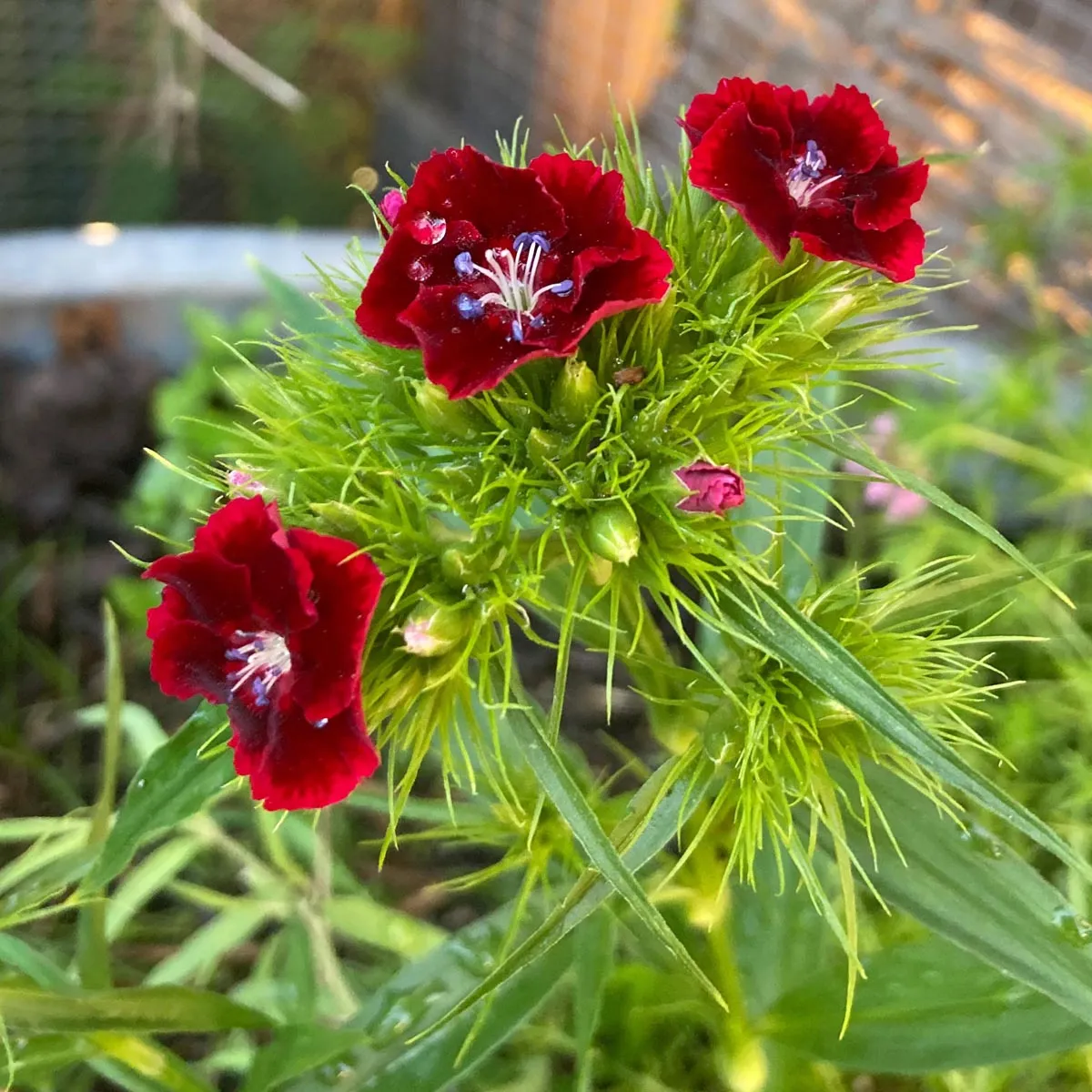
Some Dianthus species are annual or are cultivated as annual summer flowers, while others are biennial or perennial. Sweet Williams are often grown as biennials: they form strong leaf rosettes in the first year and flower the following year. Perennial pinks such as cheddar pink, maiden pink or feathered pink can persist for several years under suitable conditions and often form dense cushions or loose clumps.
Dianthus in the garden - fragrance, flower forms and great species diversity
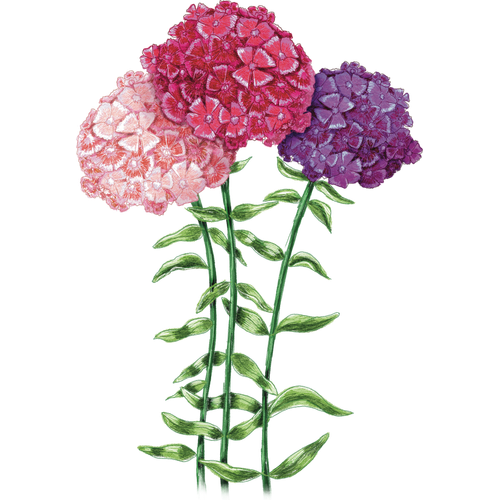
The special charm of carnations and pinks lies in the great diversity of the genus Dianthus. While carnations and florist’s carnations have long been valued as cut flowers, Sweet Williams bring colourful flower clusters to beds and cottage gardens. Maiden pinks and cheddar pinks remain lower, form carpets or cushions and are especially well suited to rock gardens, dry stone walls and sunny bed edges.
Many Dianthus plants appear delicate at first glance, but are surprisingly adaptable. Their origin in open, sunny landscapes is reflected in their preference for light, air and well-drained soils. Permanently damp, heavy locations are less suitable. Where the soil is poorer and more permeable, many species develop compact growth, abundant flowers and a particularly natural appearance.
Fragrance also plays an important role in Dianthus. Carnations, feathered pinks and some wild species in particular have a spicy, sometimes slightly sweet scent that sets them apart from many other summer flowers. Fringed petal edges, clear colours and a long garden tradition further make Dianthus plants highly recognisable.
For naturalistic plantings, single and unfilled forms are especially interesting because their flowers are more accessible to insects. In classic beds and borders, taller species provide colour and cut flowers, while low Dianthus species fill gaps, edge borders or flower between stones. Dianthus seeds can therefore be used to create very different garden scenes - from neatly ordered to wild and natural.
Anyone growing Dianthus from seed discovers not just a single flower species, but an entire plant group with many faces: fragrant cut flowers, robust wild perennials, low cushions, biennial classics and brightly coloured summer bloomers. It is precisely this range that makes Dianthus seeds so interesting for the garden, balcony and vase.