
Black-eyed Susan seeds - robust summer flower with bright flower heads
Black-eyed Susan Rudbeckia hirta is an annual to biennial summer flower from North America that immediately catches the eye with bright flowers and its characteristic dark central cone. Its long flowering period and natural, uncomplicated growth make it a beautiful choice for cottage gardens, summer beds and naturalistic plantings.
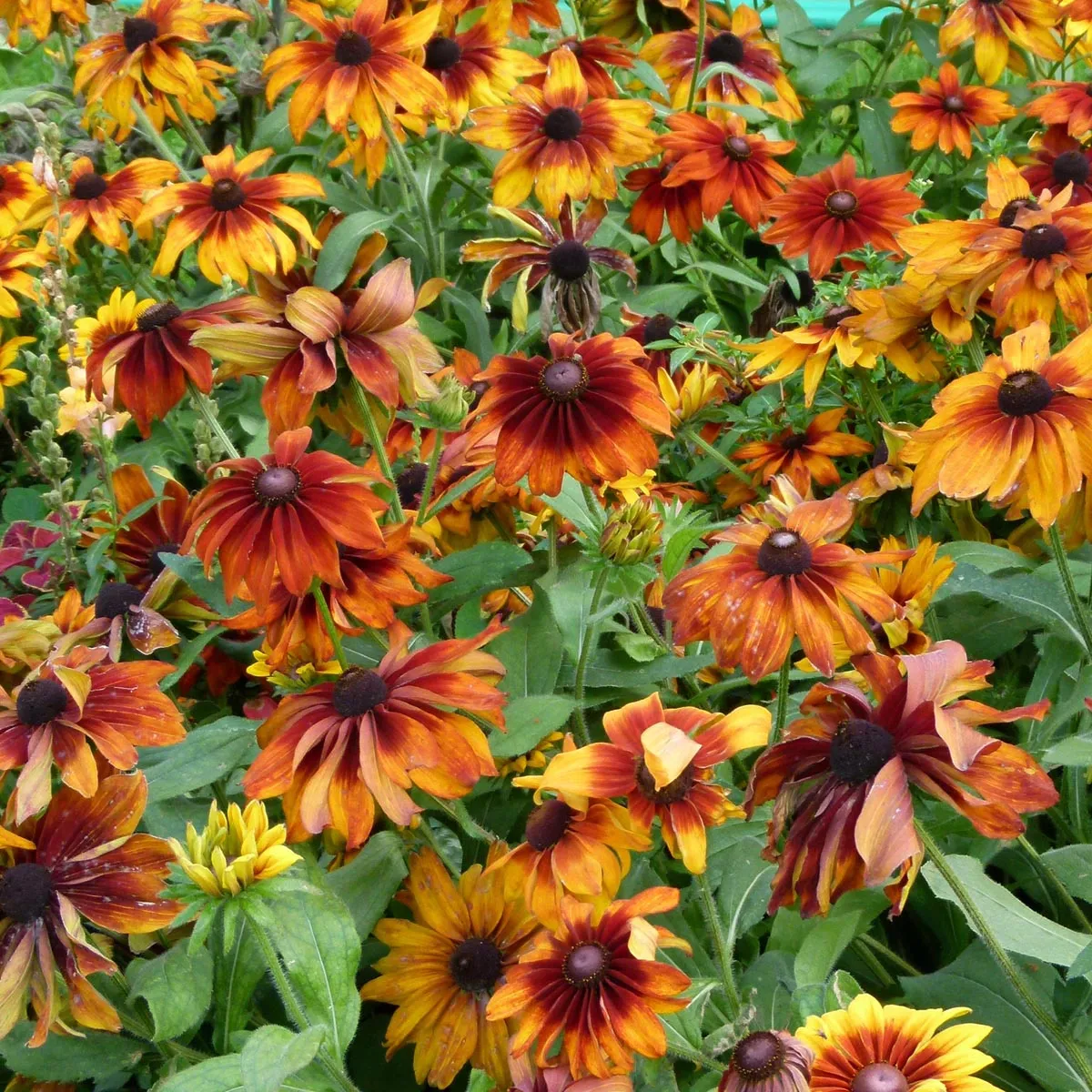
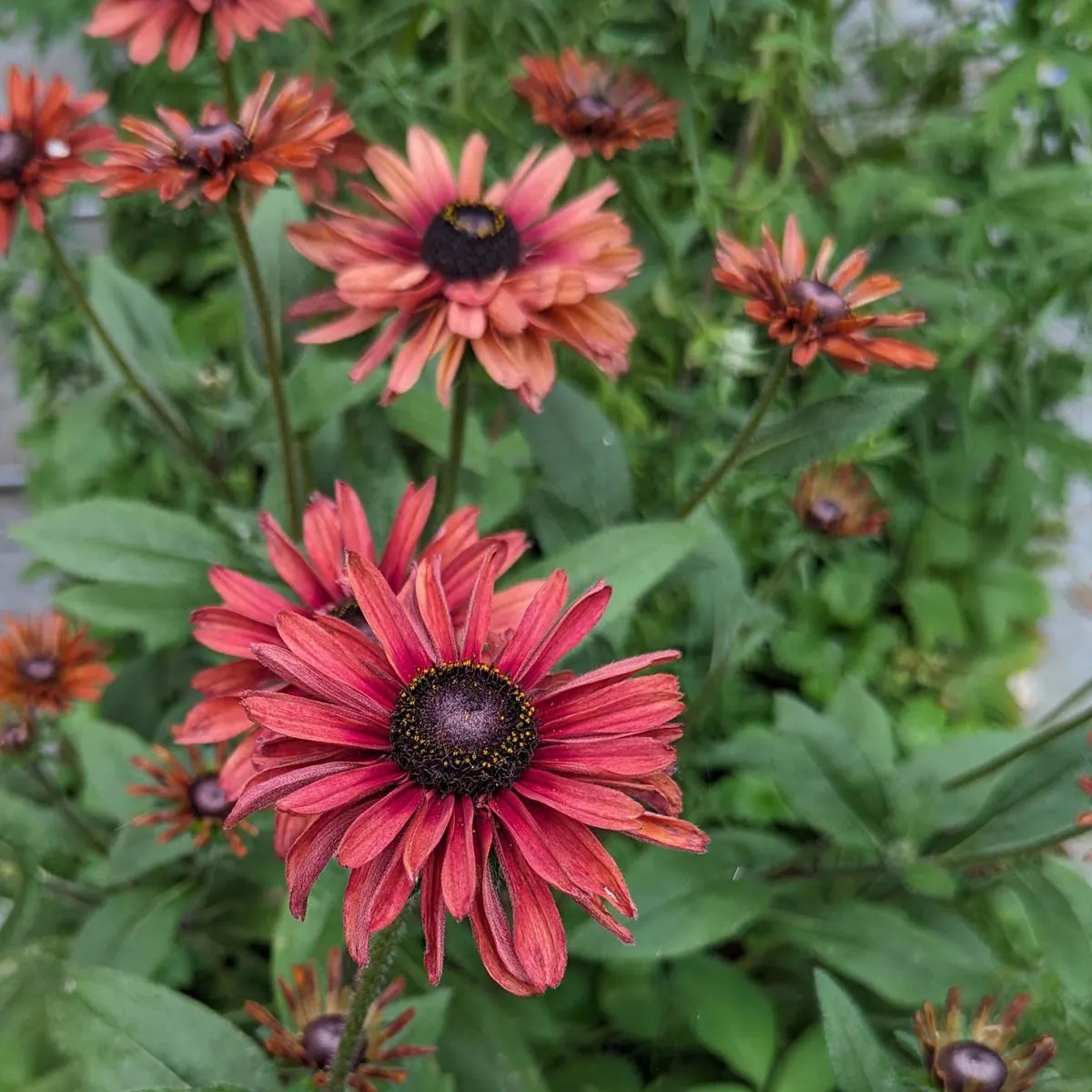
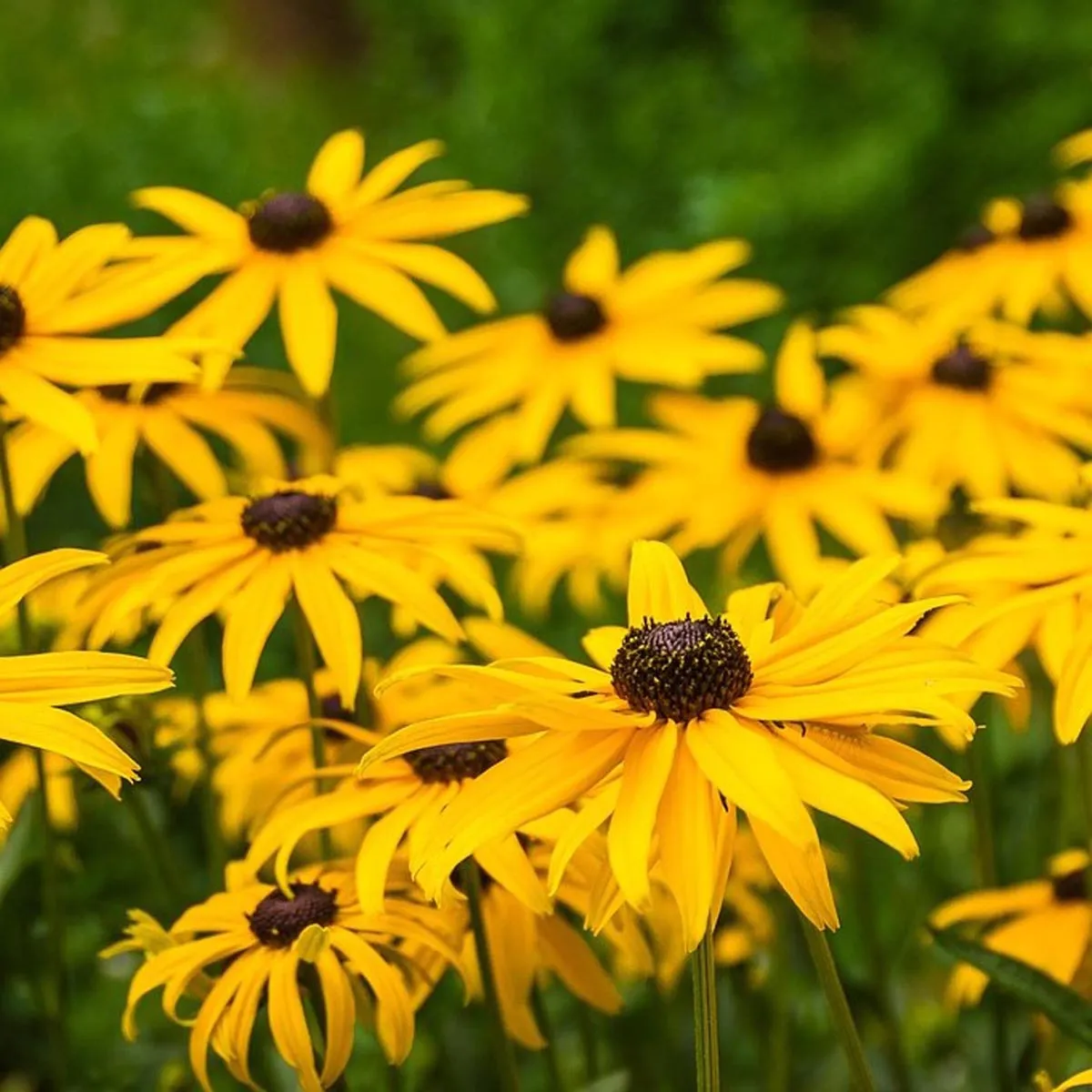
Black-eyed Susan seeds offer far more than classic yellow with a dark centre: depending on the variety, the colour spectrum ranges from lemon yellow and gold to orange and bronze through to warm reddish brown. Greenish flower centres, bicoloured and more strongly double forms can also be found in Rudbeckia hirta.
Why is Rudbeckia hirta called “Black-eyed Susan”?
The Latin name already reveals a typical feature of the plant. Hirta broadly means “hairy” or “rough” and refers to the clearly hairy leaves and stems. The German name Rauer Sonnenhut also refers to this feature.
In English, the species is known as “Black-eyed Susan”, while in German the name Schwarzäugige Rudbeckie is also sometimes used. The dark, domed flower centre creates a striking contrast to the usually yellow, orange or reddish-brown ray florets.
From golden yellow to mahogany
The great diversity of varieties is one of the special charms of Rudbeckia hirta. Alongside classic golden-yellow flowers, there are bicoloured forms with reddish-brown rings, varieties in bronze and mahogany tones as well as unusual variants with a greenish centre. Plant height also varies considerably: compact varieties remain low, while vigorous cutting varieties can reach around one metre in height.
This means that Rudbeckia hirta seeds can be used in very different garden situations - from bed edges to larger summer flower plantings and tall groups among other late-flowering perennials and summer flowers.
A long summer of flowers for people and insects
Depending on sowing time and variety, the flowers open from summer well into autumn. Their striking flower heads are visited by bees, bumblebees, hoverflies, butterflies and other insects, bringing strong colour to the bed once again, especially in the second half of the gardening year.
Many varieties are also excellent as cut flowers. In this way, Black-eyed Susan combines a long-lasting flower display in the garden with bright summer bouquets for the vase.


Sowing Black-eyed Susan
Rudbeckia hirta seeds can be pre-grown indoors or in a greenhouse from March to May. The seeds need light to germinate and are therefore scattered onto moist seed compost and only lightly pressed down, but not covered with soil. At temperatures around 15 to 20 °C, germination usually begins within about one to three weeks.
Direct sowing outdoors is possible from spring, as soon as the soil has warmed up sufficiently. Here too, the fine seeds should only be sown on the surface and kept evenly moist during the germination phase. Pre-grown plants can be planted out in the bed after the last stronger late frosts.
Black-eyed Susan prefers sunny to semi-shaded locations with well-drained, humus-rich soil. Young plants need an even water supply, while well-established Rudbeckia plants also tolerate shorter dry periods. Waterlogging should be avoided.
FAQ about Black-eyed Susan
Is Black-eyed Susan annual or perennial?
Rudbeckia hirta is a short-lived species that can grow as an annual to biennial and is often cultivated here like an annual summer flower. Under favourable conditions, individual plants can overwinter. In addition, Black-eyed Susan often maintains itself by self-sowing.
Is Rudbeckia hirta the same as perennial yellow coneflower?
No. Several species and even different genera are offered under the name coneflower. Rudbeckia hirta is Black-eyed Susan. Other Rudbeckia species such as Rudbeckia fulgida are long-lived perennials. Purple coneflower Echinacea purpurea also belongs to the daisy family, but to a different genus.
Does Black-eyed Susan self-sow?
Yes, Rudbeckia hirta can self-sow readily in suitable locations. Anyone wishing to encourage this should leave some faded flower heads on the plants until the seeds ripen. This can allow new seedlings to appear the following year.
Can Black-eyed Susan be grown in pots?
Yes. Compact varieties in particular are also suitable for larger pots and planters. A sunny location, good drainage and an even water supply are important, as the substrate in containers dries out faster than garden soil.
Is Black-eyed Susan suitable as a cut flower?
Many taller varieties of Rudbeckia hirta are very well suited to summer bouquets. The flowers are best cut when they are fully open and have strong, well-developed stems.
Should faded flowers be cut off?
Regularly removing faded flowers can encourage the formation of further blooms. Anyone who wants self-sowing or would like to leave the seed heads standing in autumn should allow at least some of the flower heads to ripen fully.