
Hollyhock seeds - magnificent classics of traditional cottage gardens
Hollyhocks are among the most striking flowering plants of traditional cottage gardens. With their tall, upright flower spikes and closely spaced individual blooms, they create eye-catching accents along walls and fences and at the back of summer borders.
Hollyhock seeds offer a wide variety of colours and flower forms: from white, yellow and apricot through pink and red to deep, almost black shades. Depending on the variety, the flowers may be single, semi-double or densely double. This creates plants with very different effects - sometimes natural and open, sometimes lush and almost nostalgic.
Hollyhocks and their long garden tradition
The common hollyhock Alcea rosea belongs to the mallow family and has been cultivated in Central Europe as an ornamental plant for centuries. It is also known as garden hollyhock. It is closely related to the true mallows of the genus Malva, but botanically belongs to its own genus, Alcea.
Towering flower spikes in a wide range of colours
Many classic hollyhocks reach impressive heights and develop long flower spikes on which the blooms gradually open from bottom to top. This keeps the plant attractive for weeks and adds strong vertical structure to the garden.
Alongside the classic common hollyhock, there are other species such as fig-leaved hollyhock Alcea ficifolia and Russian hollyhock Alcea rugosa. They differ in features such as leaf structure, flower colour and lifespan, broadening the range of this traditional group of plants.
From cottage gardens to natural gardens
Single-flowered hollyhocks are readily visited by bees, bumblebees and other insects. At the same time, their tall, slender growth gives them the distinctive appearance associated with rural gardens and historic plantings.
Whether planted individually against a sunny house wall, in loose groups along a fence or as a striking backdrop in a border, hollyhocks combine height, colour and an unmistakably traditional garden character.
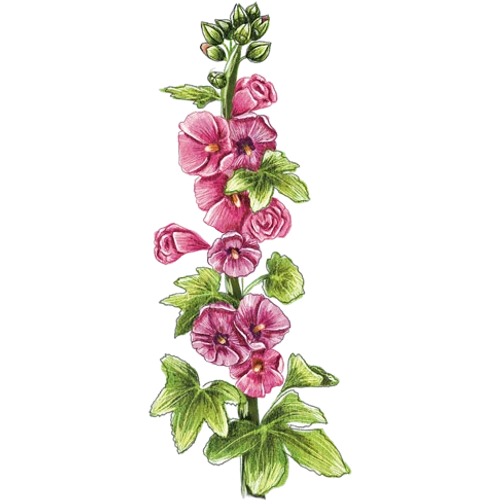

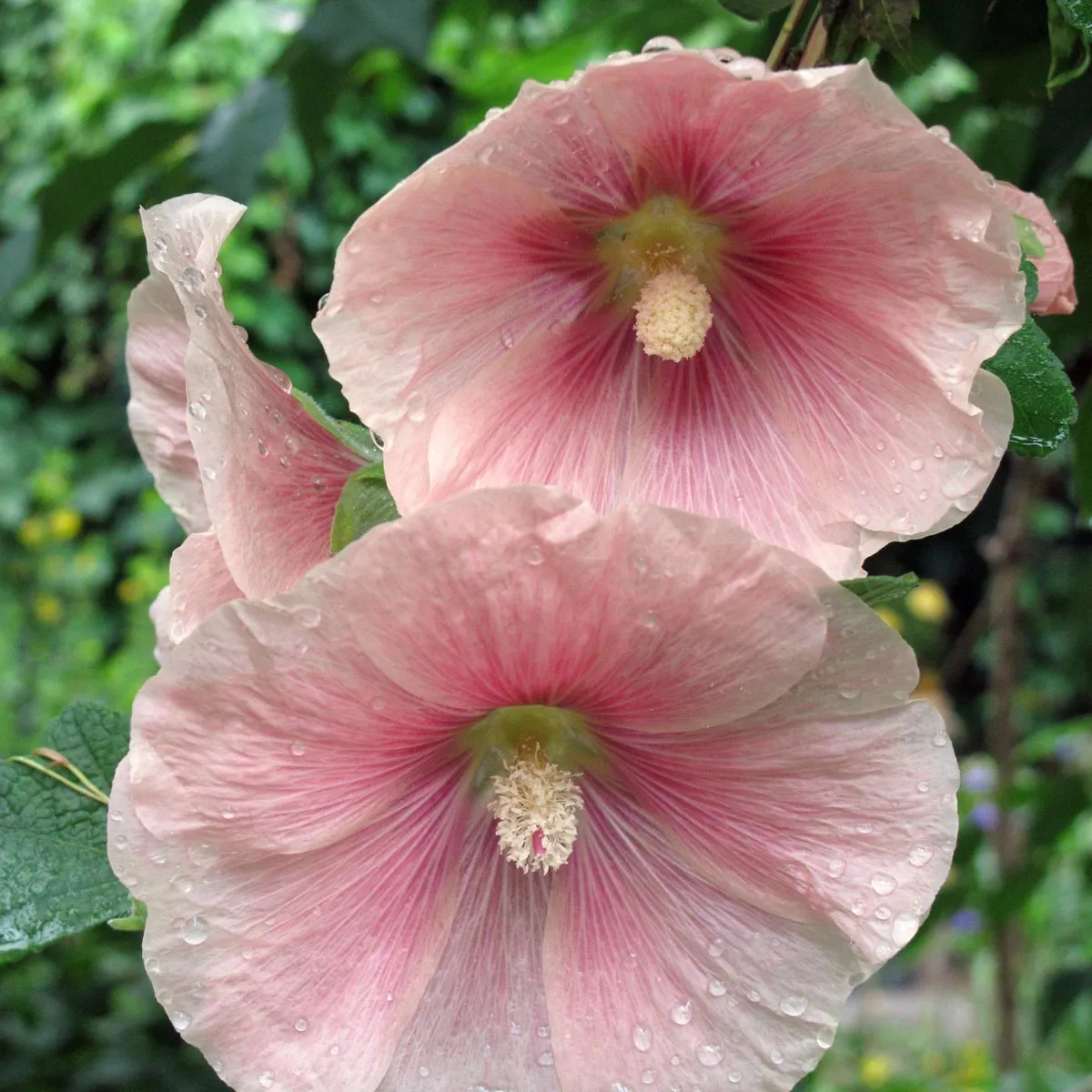
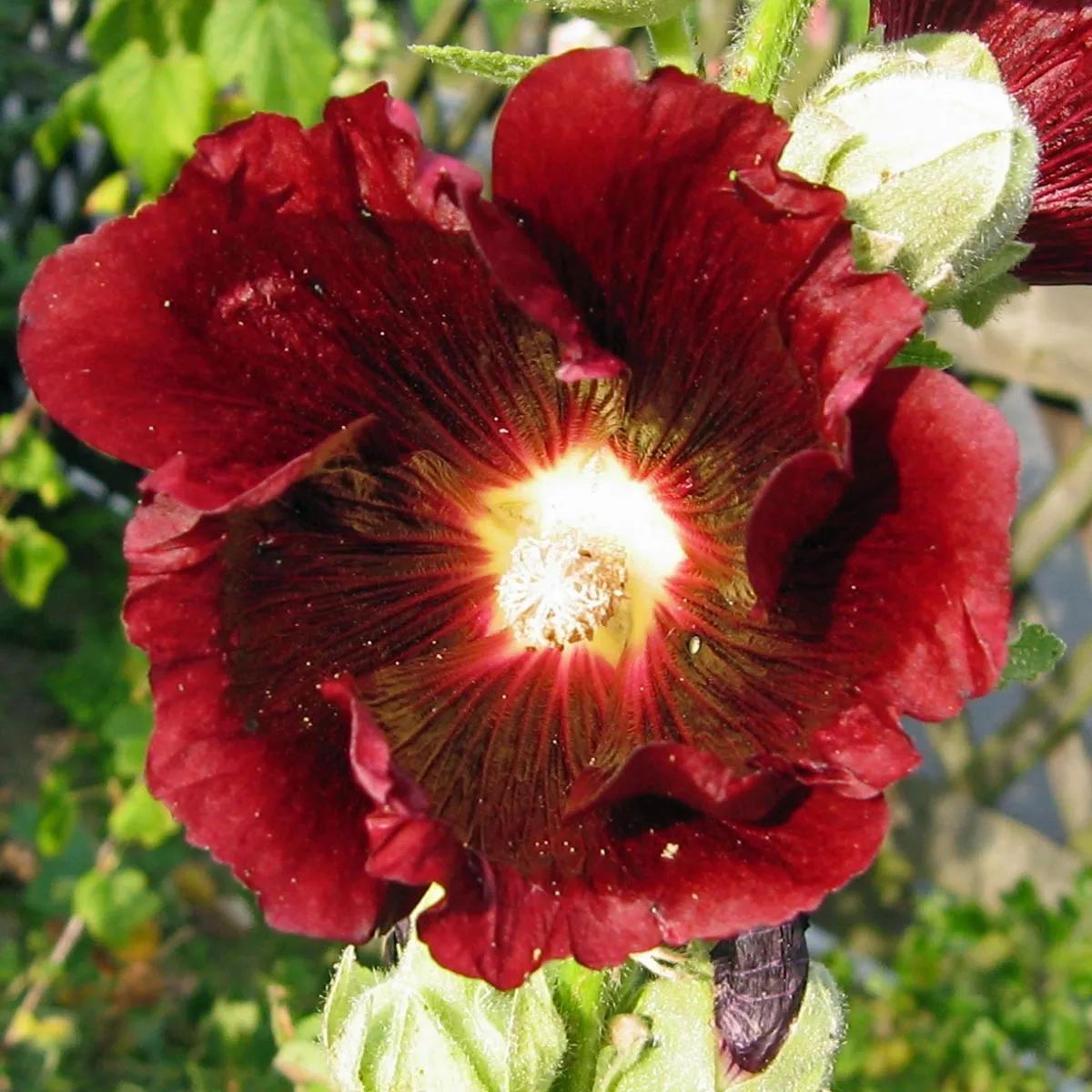
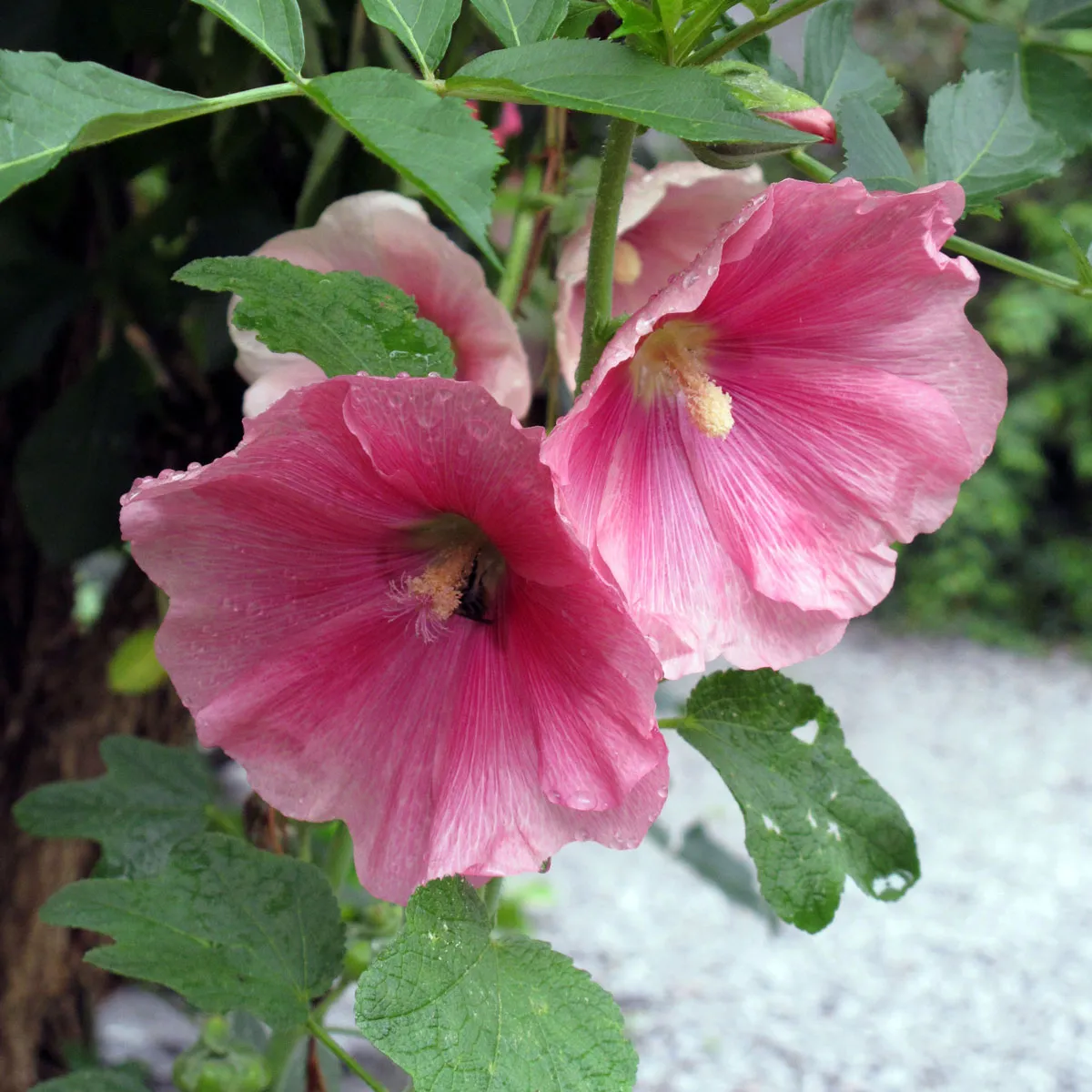
Hollyhock Mix (Alcea rosea) seeds
Sowing & care of hollyhocks
Hollyhock seeds can be sown directly outdoors from spring or started indoors from February to March. Sow the seeds about 5 to 10 mm deep and keep the soil evenly moist. At temperatures of around 15 to 20 °C, germination usually takes place within about two to three weeks.
For direct sowing, choose a sunny, preferably sheltered position with loose, humus-rich and well-drained soil. The young plants should not be spaced too closely so that the strong leaf rosettes and later flower spikes can develop well. Tall varieties may benefit from support, especially in exposed, windy locations.
Many hollyhocks are biennial: in the first year they mainly form a strong leaf rosette, followed by tall flower spikes in the second year. Some forms can remain in the garden for longer under favourable conditions. To encourage a continuous supply of new plants, allow some seed heads to mature and promote self-seeding.
FAQ about hollyhocks
Are hollyhocks annual, biennial or perennial?
The common hollyhock Alcea rosea is usually grown as a biennial. In the first year it mainly develops a leaf rosette, while flowering takes place in the second year. Some plants and varieties can survive for several years under favourable conditions.
Do hollyhocks flower in their first year?
Usually not. Flowering in the second year is typical. There may be exceptions with very early sowing and certain varieties, but the classic growth cycle remains biennial.
Are hollyhocks hardy?
Yes, young hollyhocks generally overwinter without problems as leaf rosettes in the bed. In very harsh locations, a light covering of leaves or brushwood can be helpful. Well-drained soil is particularly important, as winter waterlogging is more problematic than cold temperatures.
Do hollyhocks self-seed?
Yes. If the seed heads are allowed to ripen fully, hollyhocks can self-seed in suitable locations. This allows new plants to appear in the garden year after year. However, offspring of named ornamental varieties may differ from the parent plant in flower colour and form.
What is hollyhock rust?
Hollyhock rust is a typical fungal disease of hollyhocks. It first appears as yellowish spots on the leaves and later as rust-coloured to brown pustules, especially on the undersides of the leaves. An airy position, sufficient spacing between plants and keeping the foliage as dry as possible can help reduce infection. Heavily affected leaves should be removed at an early stage.
Are hollyhocks edible?
The common hollyhock Alcea rosea is generally considered edible. The flowers in particular are occasionally used to decorate food or in tea blends. Only correctly identified, untreated plants that have not been treated with pesticides or other unsuitable substances should be consumed.
Can hollyhocks be grown in containers?
Yes, especially more compact varieties can also be grown in large containers. A sufficiently deep pot, well-drained substrate and an even water supply are important. Very tall varieties generally stand more securely and naturally in the garden bed than in pots.
Why should tall hollyhocks be supported?
Many varieties grow well over one metre tall. In windy locations, their long flower spikes can therefore bend or break. A sheltered position against walls or fences, or an unobtrusive plant support, provides additional stability.