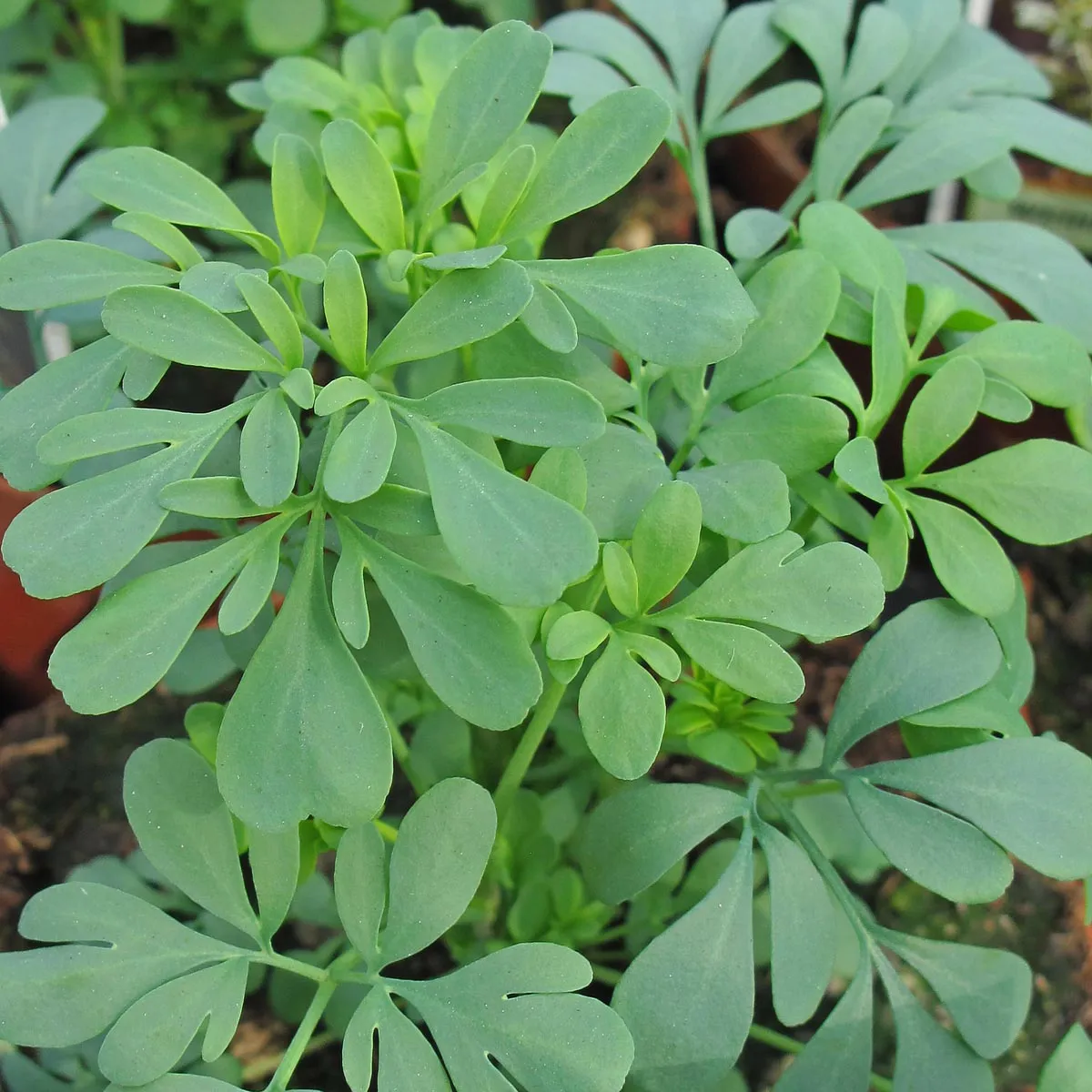
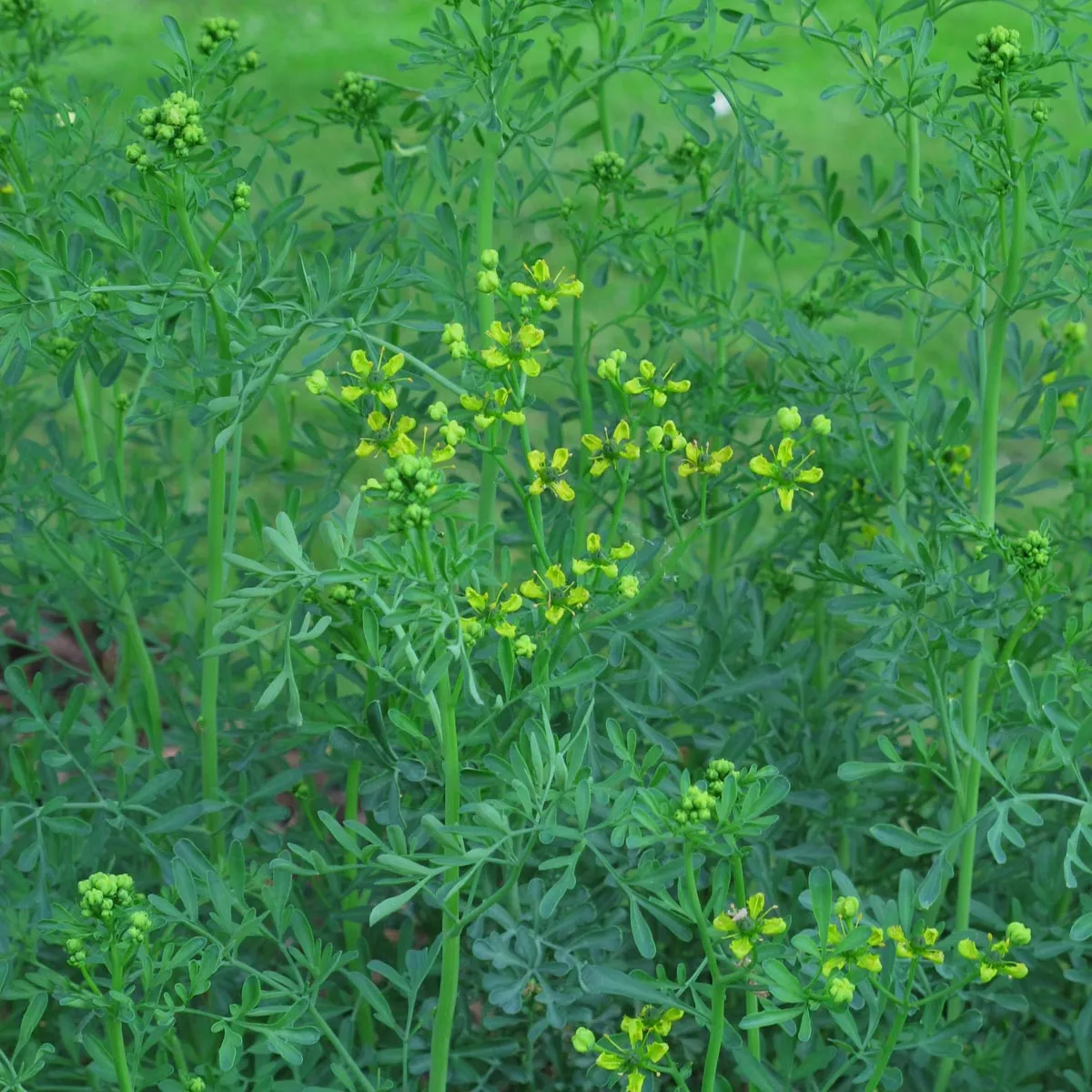
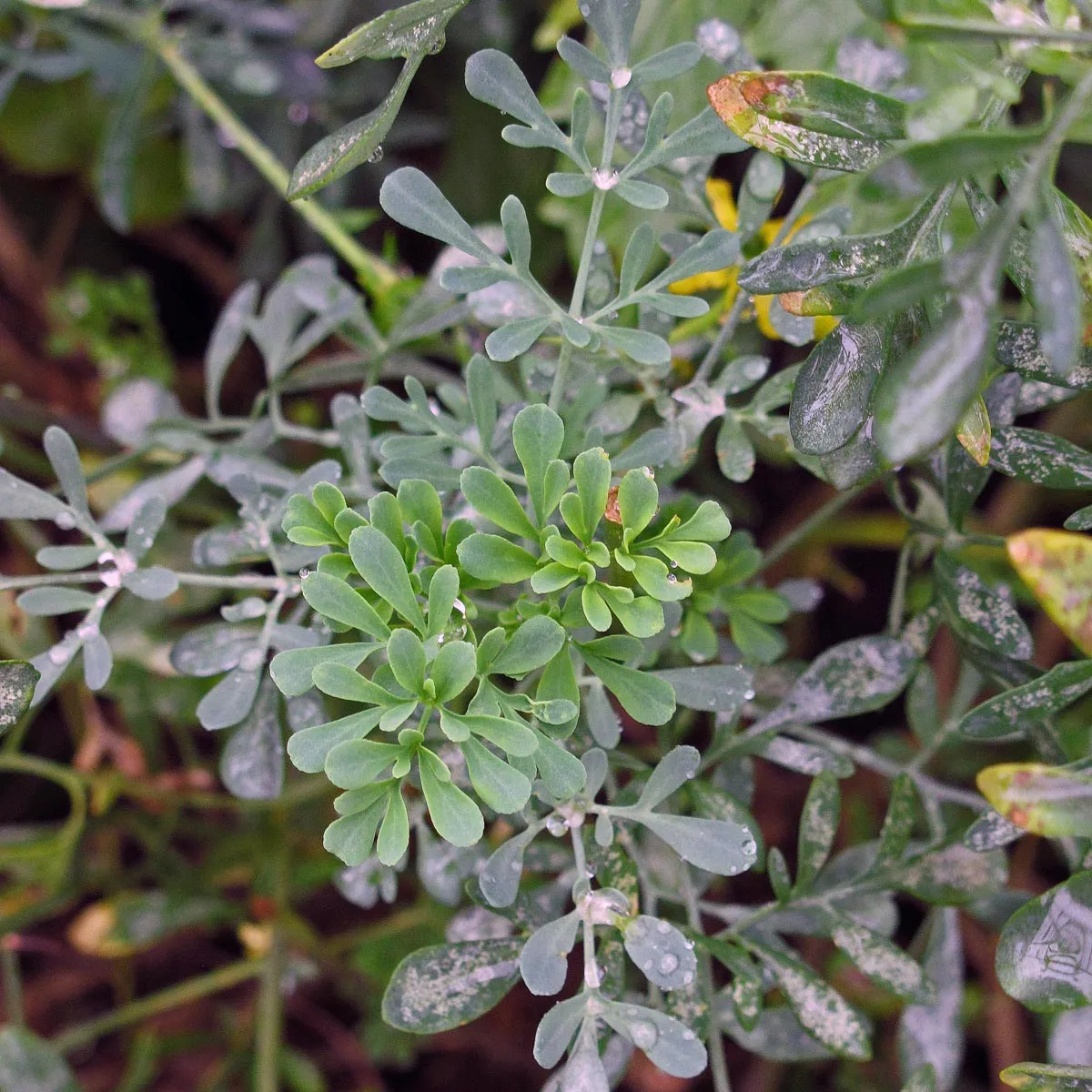
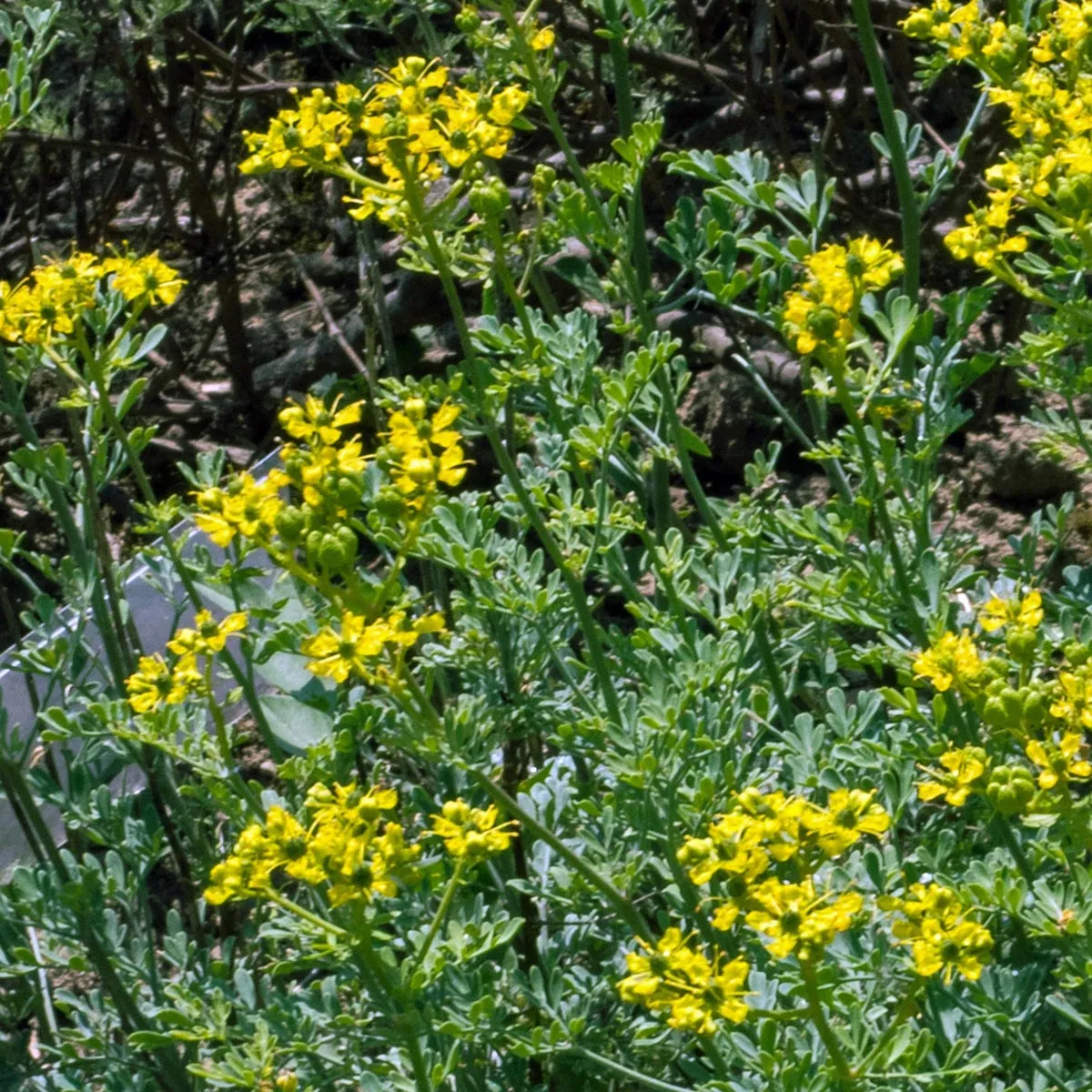
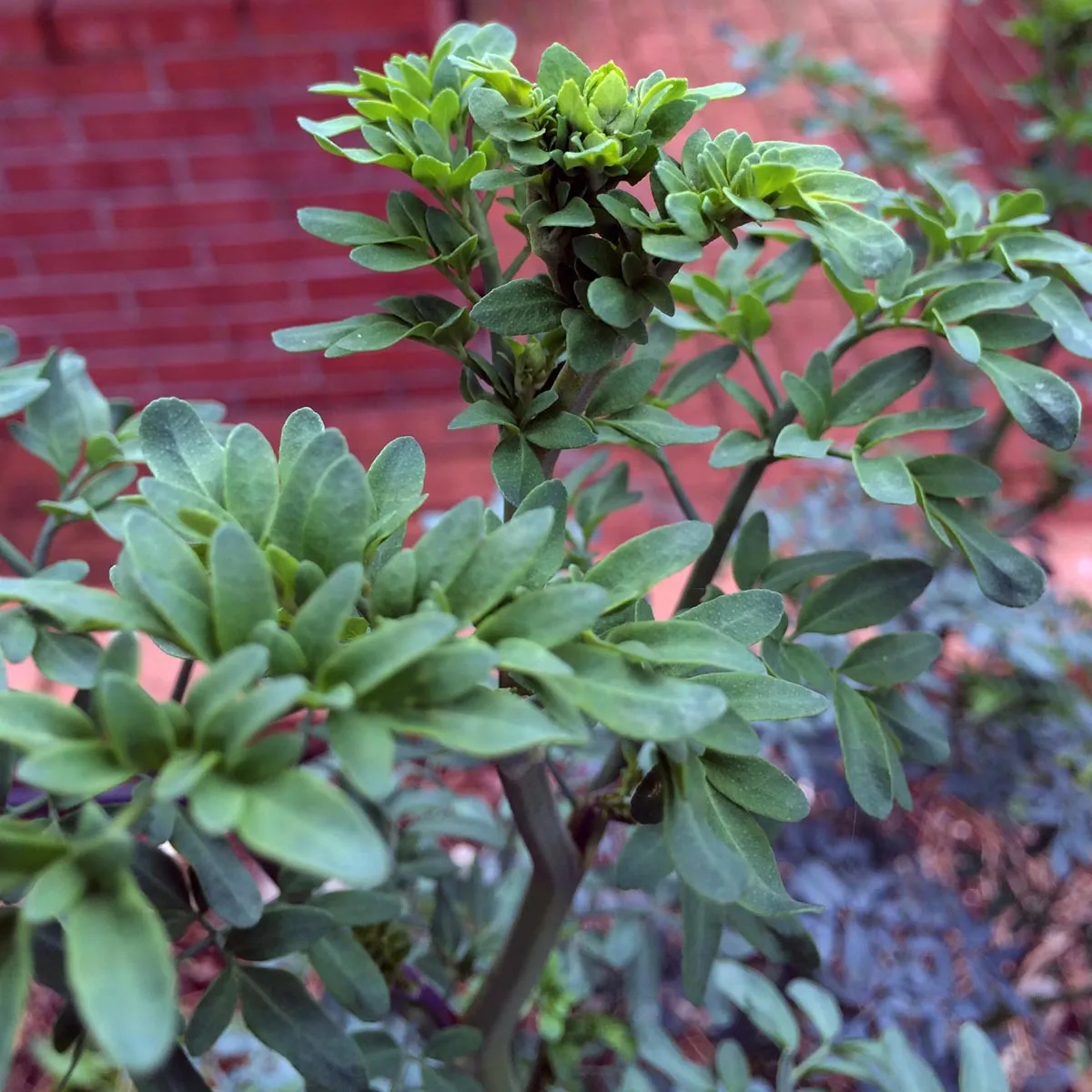
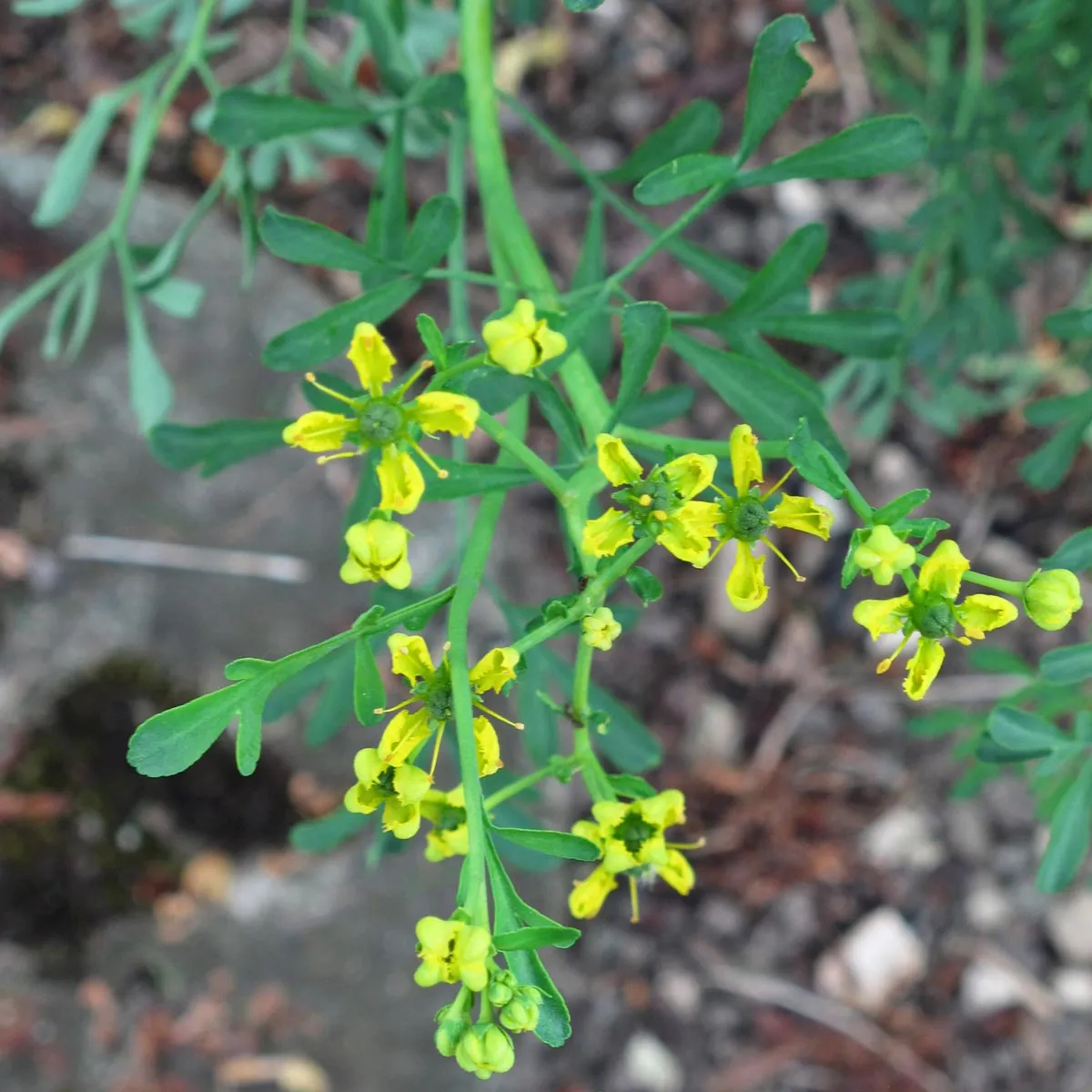
Common Rue (Ruta graveolens) seeds
- Ein in der Antike sehr beliebtes Würz- und Heilkraut, das heute fast in Vergessenheit geraten ist. Sehr eigenwilliges, süsslich-weinartiges Aroma, das gut zu Fisch und Wild passt.
- Contents: Approx. 200 seeds
- Open-pollinated variety, seed tested regularly
Regular price:
€2.59
Product number: RUT01 GTIN: 4250601203706
Description
This particular spice is used in the kitchen in very small quantities, for example for fish soups. The sweet aromatic flavor of the common rue is difficult to describe because it can not be easily compared to any other spice. It also gives many Grappa preparations their characteristic aroma ('grappa con ruta'). In ancient Roman cuisine, rue was very popular, yet today the plant is a culinary rarity.
It has also been used in traditional medicine - both as a remedy, as well as for its abortifacient effect. In France, it was known as 'herbe à la belle fille' and, up to today, the legend has survived that, in Paris botanical garden, the common rue has to be fenced because young girls used to harvest and use it for abortion.
The epithet 'graveolens' already indicates the strong scent of the plant - indeed, the scent of a common rue planted in the garden can have a deterrent effect on cats and help to keep them away from certain places.
Plant profile
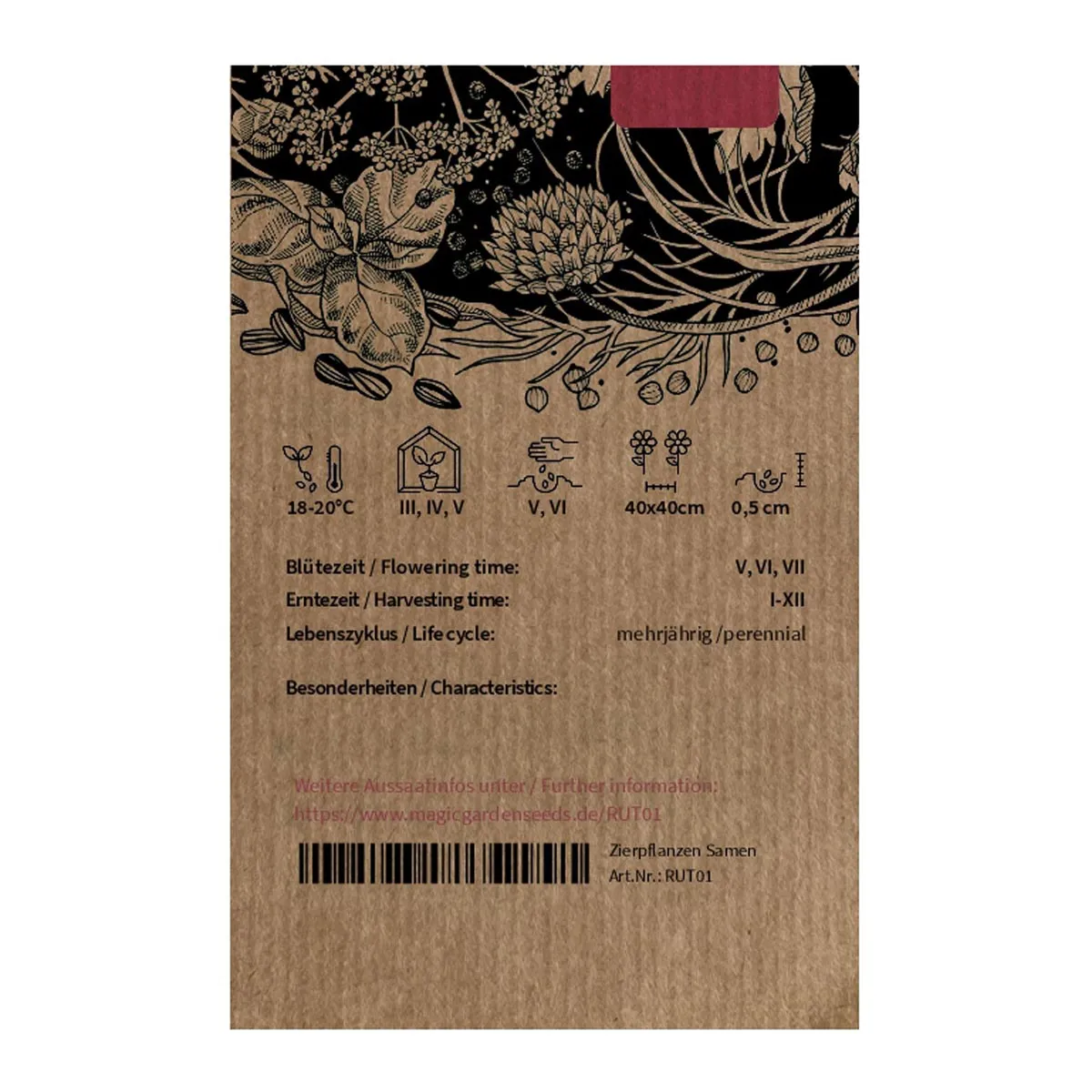
| Lifecycle | Perennial |
|---|---|
| Species | Rutaceae |
| Eventual height | 10-100 cm |
| Flower colour | Yellow |
| Flowering months | July, June, May |
| Main harvest | All year round |
Growing instructions
| When to sow outdoors | June, May |
|---|---|
| Sowing depth | 0.5 cm |
| Germination temperature | 15-20°C |
| Germination time | 2-3 weeks |
| Sunlight | Full sun |
| Planting distance | 40 cm |
| Row spacing | 40 cm |
Sowing and care
The rue needs light to germinate, so the seeds should not be covered with soil. In pre-culture in a seed bag at 20°C, the seed germinates within 1-3 weeks. The seedlings should be transplanted to small pots and be planted outdoors after the last freezing at a planting distance of about 30-40cm. Ruta graveolens grows well in a sunny spot with nutrient-rich, permeable, and not too moist soil.
The common rue reseeds itself after a flowering period and can spread very erratically under good growth conditions. When pruning or removing the plant always wear gloves and protect your skin - in combination with sunlight, the common rue can cause severe skin irritation and dermatitis.
Other names
Botanical name: Ruta graveolens, R. hortensis
German: Gertrudenkraut, Gnadenkraut, Kreuzraute, Totenkraut, Edelraute, Gartenraute, Augenkraut, Augenraute, Pfingstwuttel, Weinkraut
English: herb-of-grace
French: rue vineuse, rue des jardins, herbe à la belle fille
Reviews
Login
No reviews yet. Will you write the first one?