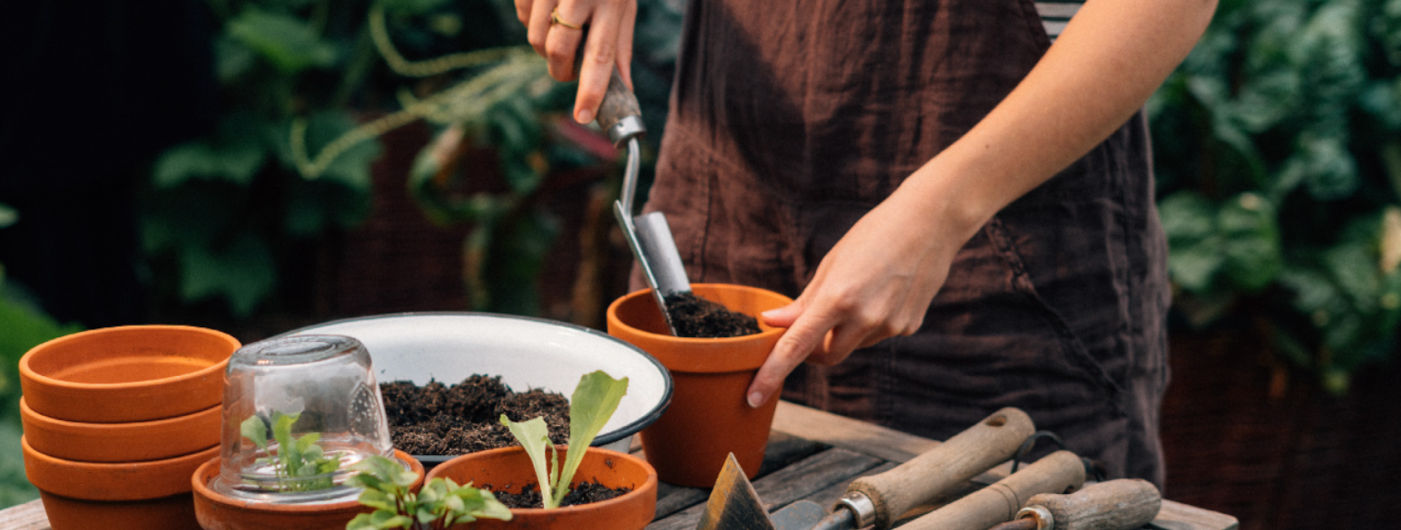
Palm seeds - from seed grain to first palm frond
Palms immediately evoke images of warmth, lush greenery and distant landscapes. Yet behind this familiar image lies an astonishingly diverse plant family. Around 2,600 species belong to the Arecaceae - from small forest palms and climbing rattan palms to enormous species with metre-long fronds. Anyone who sows palm seeds experiences this diversity from the very beginning and can observe how an often inconspicuous seed eventually produces its first typical palm frond.
Read more
Palms are different from classic trees
Many palms develop a powerful trunk over time and can reach impressive heights. Botanically, however, they function very differently from our native deciduous trees. Palms are monocotyledons and do not form ordinary wood with annual rings. Their trunk has no classic secondary thickening growth and largely retains its diameter once formed.
In many species, growth is also concentrated in a single growing point at the top. There, new palm fronds gradually emerge, while older leaves below die off. This special structure is precisely what shapes the unmistakable appearance of many palms.
From fan palms to delicate feather palms
The palm family includes an enormous diversity of forms. Some species bear broad fan leaves, others long, feathered fronds. There are single-stemmed palms, clump-forming species with several shoots, climbing rattan palms and even species whose trunk remains largely hidden underground.
The habitats also differ greatly. Most palms come from tropical and subtropical regions, but some species grow in mountains or in areas with surprisingly cool winters. This is why there are palms that, under suitable conditions, can even be grown in sheltered outdoor locations in Central Europe.
Palm seeds can look completely different
Their fruits and seeds are hardly less diverse than the plants themselves. Some palm seeds are small and inconspicuous, others large, hard and strikingly shaped. Botanically, the coconut belongs to this plant family just as much as the seeds of date palms, fan palms or tropical indoor palms.
For sowing, the freshness of the seed is especially important. Many palm seeds lose viability as they age, and in some tropical species this can happen comparatively quickly. High-quality and preferably fresh seed is therefore an important prerequisite for successful cultivation.
Why palms are so often grown from seed
Many single-stemmed palms cannot be propagated by classic cuttings. Some clump-forming species do develop side shoots and can be divided, but for many palms, sowing remains the most important way to raise new plants.
For lovers of rare species in particular, seed therefore opens up an especially wide selection. At the same time, the entire development can be observed - from germination to the first narrow leaf and later to the characteristic fan or feather fronds.
A plant family of great importance
Palms are far more than decorative house and container plants. In many regions of the world, they are among the most important useful plants of all. Date palms provide fruit, coconut palms provide food, oil and fibres, oil palms provide valuable plant oils and rattan palms provide flexible materials for furniture and woven work.
Palm sugar, sago, palm hearts and many traditional building materials also come from different palm species. Palms have therefore accompanied people for thousands of years as food, raw material and cultural plants.
Patience is part of sowing palm seeds
Anyone growing palms from seed should not be discouraged by a longer waiting period. Depending on the species, palm seeds may germinate within a few weeks or take several months. Some even take considerably longer.
It is precisely this unpredictability that makes the moment so exciting when the first green shoot finally appears. From a single palm seed, the plant then slowly begins to emerge whose fronds, for many people, stand for tropical flair like almost nothing else.