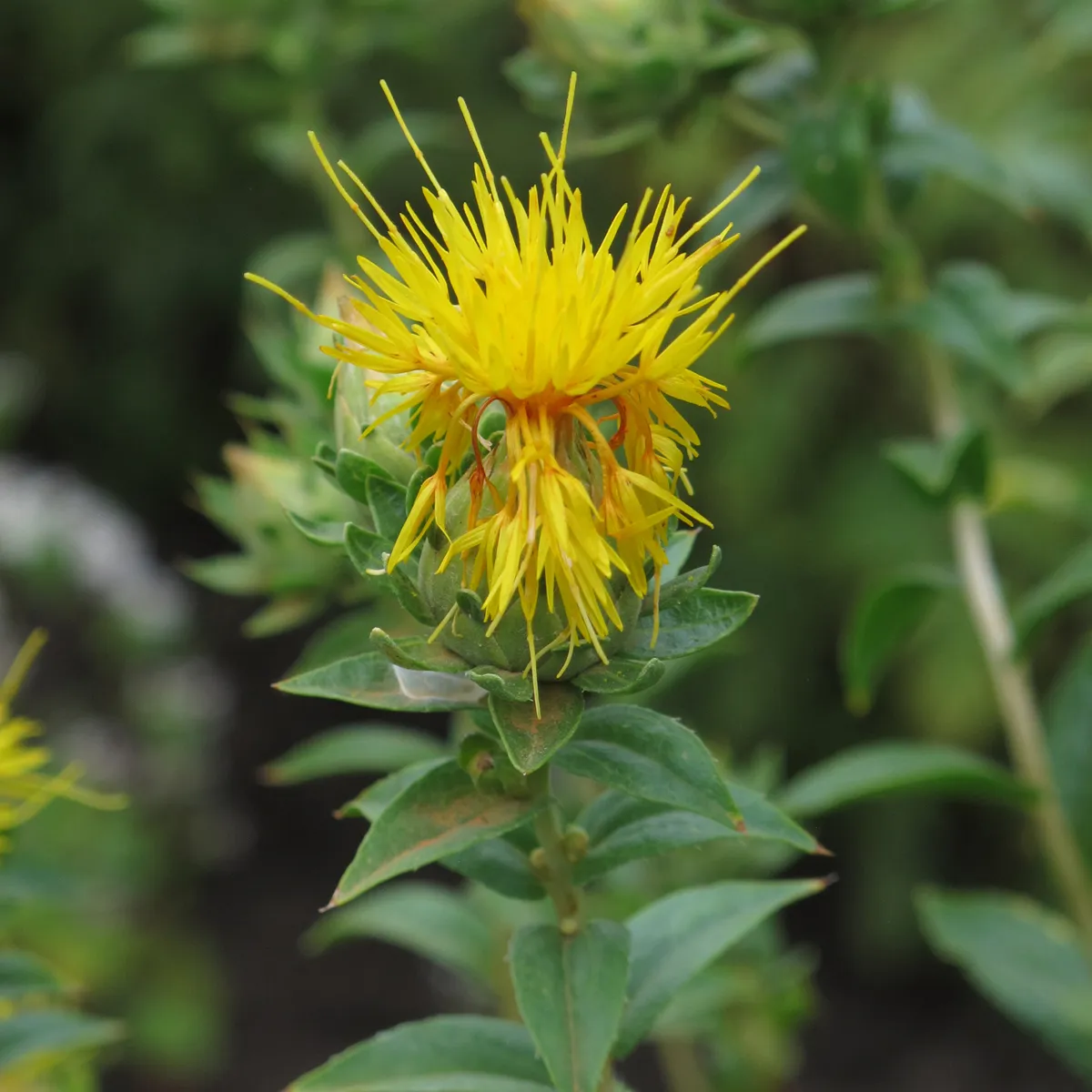
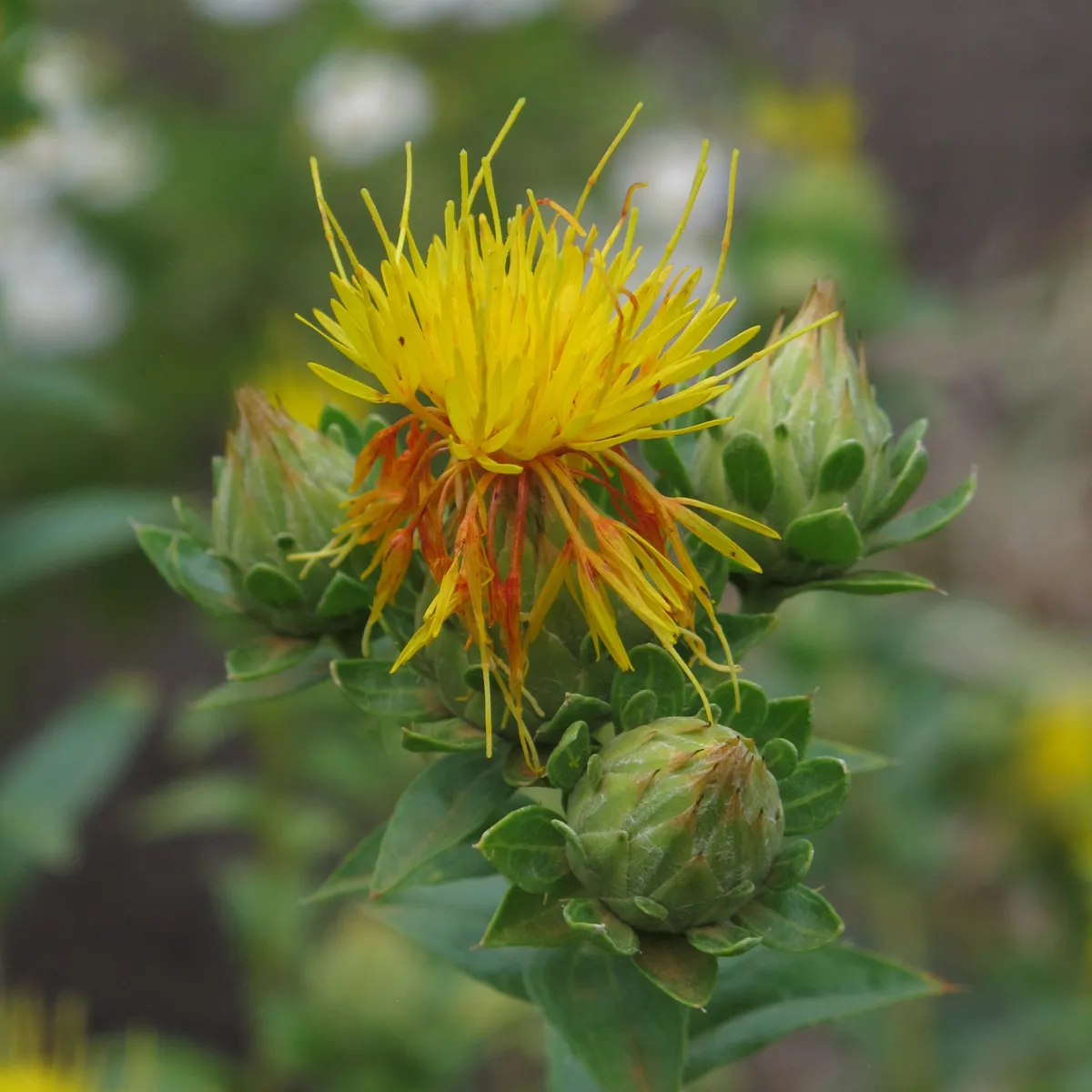
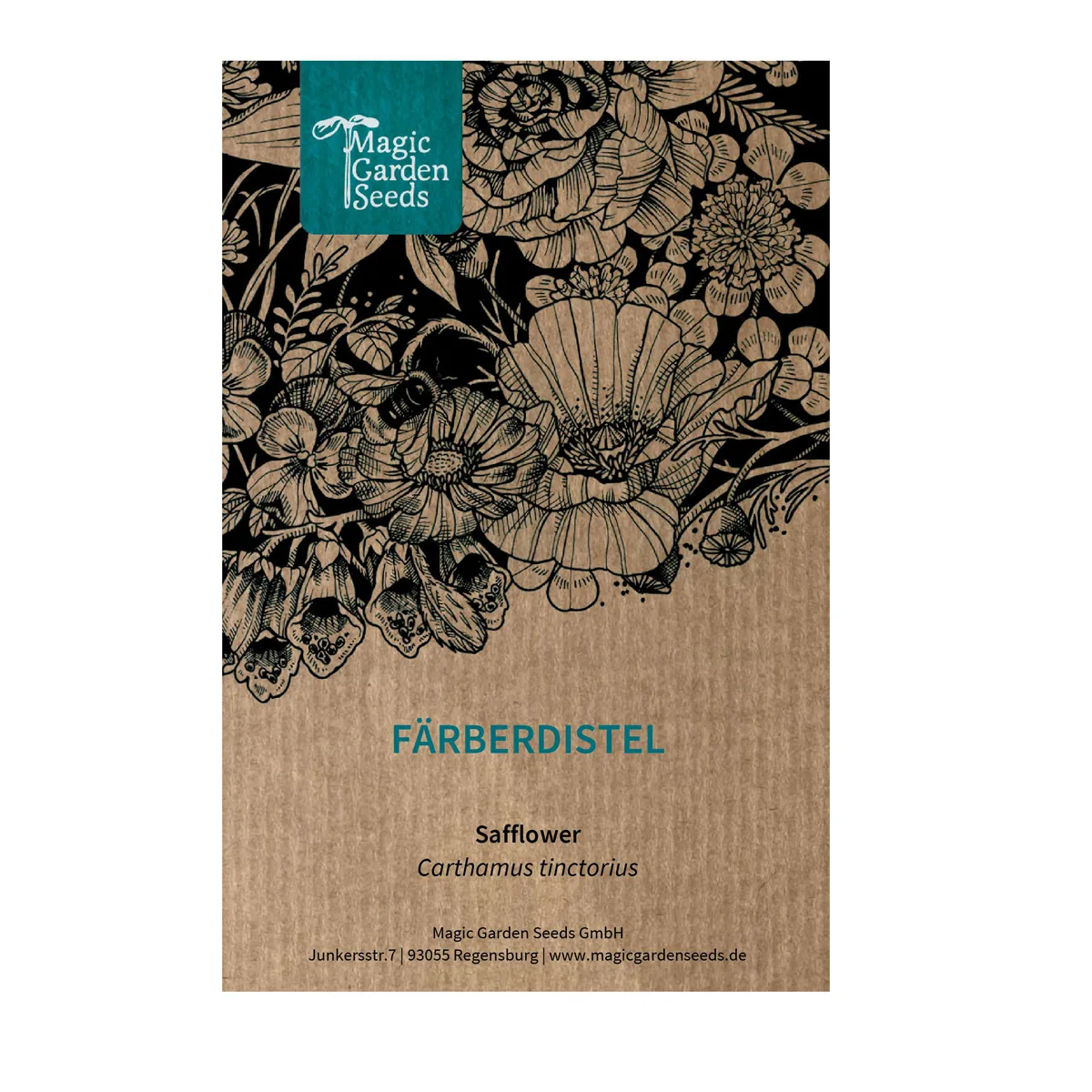
Safflower (Carthamus tinctorius) seeds
- The Safflower impresses with its beautiful yellow-orange blossoms. From its seeds, the high-end thistle oil can be gained.
- Contents: Approx. 25 seeds
- Open-pollinated variety, seed tested regularly.
Regular price:
€2.39
Product number: CAR04 GTIN: 4251420520265
Description
The Safflower, also known as parrot-seed or false saffron, impresses with its beautiful yellow-orange blossoms. From its seeds, the premium safflower oil, which is rich in vitamin E and linoleic acid, can be gained.
Already the ancient Egyptians used the safflower to dye fabrics for their mummies. Its dried petals can be used as a saffron substitute for dying dishes.
Through its long taproot, it's sufficiently provided with nutrients and, therefore, quite carefree.
The safflower is a great plant for the nature and cottage garden.
Plant profile
| Plant type | Summer flower, Wildflower |
|---|---|
| Use | Cut flower, Dye plant, Medicinal plant, Oil plant, Ornamental plant |
| Lifecycle | Annual |
| Species | Asteraceae |
| Region of origin | Asia |
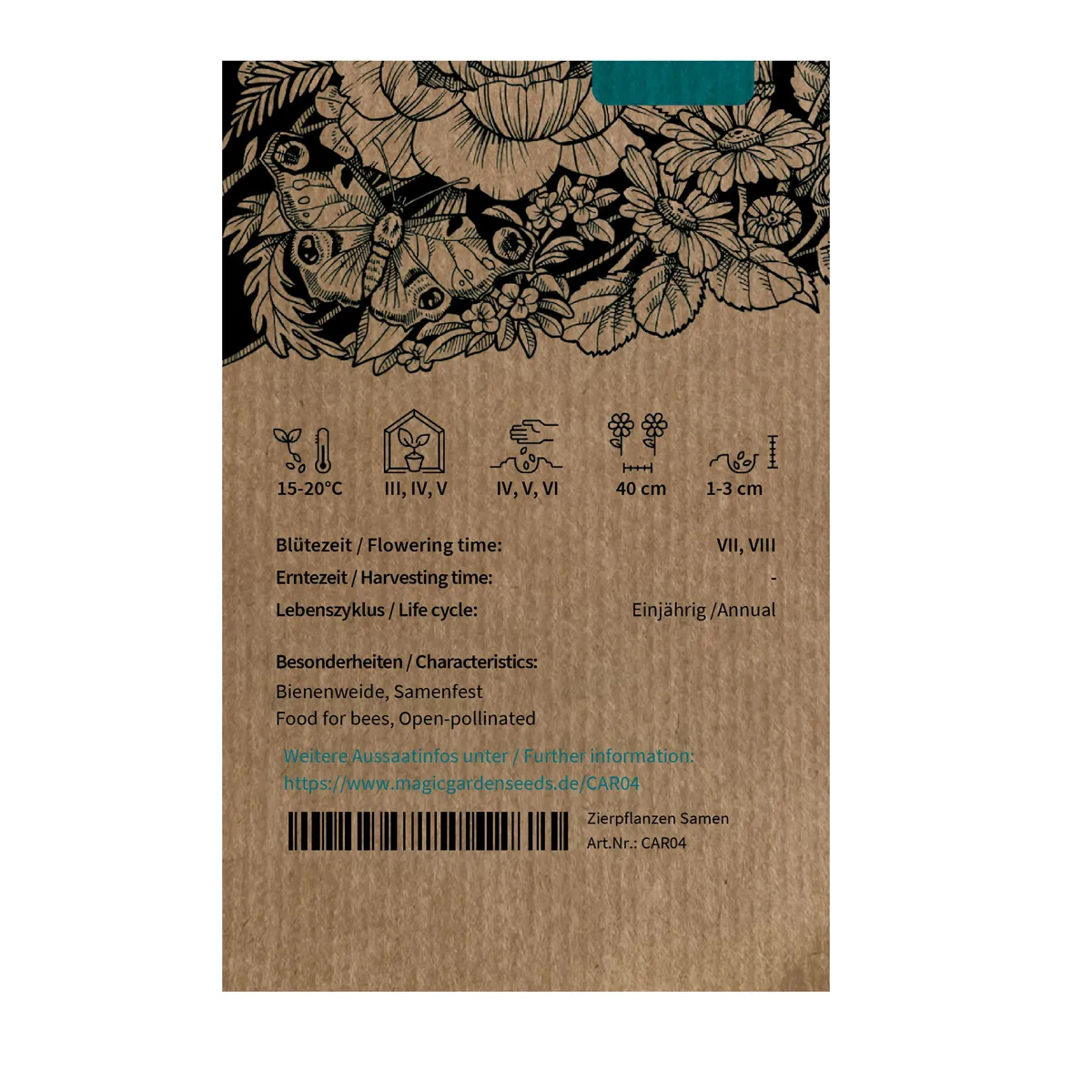
| Characteristics | Food for bees |
| Eventual height | 30-150 cm |
| Flower colour | Orange, Yellow |
| Flowering months | August, July |
| Winter hardiness zones | 9 (-7 bis -1 °C) |
Growing instructions
| When to sow outdoors | April, June, May |
|---|---|
| Sowing depth | 1-3 cm |
| Germination temperature | 15-20°C |
| Climate | Dry, Temperate |
| Soil type | Free-draining, Fresh, Nutrient-rich |
| Sunlight | Full sun |
| Water requirement | Medium |
| Planting distance | 40 cm |
Sowing and care
Annual wildflower. Pre-cultivation indoors from March or direct sowing outdoors from mid-April. Sowing depth 2-3cm. Planting distance: 40cm. Likes sunny, nutrient-rich locations.
Other names
Botanical name: Carthamus tinctorius
German: Färberdistel, Saflor, Öldistel, Färbersaflor, Falscher Safran, Asfrole, Gartensfran, Bürstenkraut
English: Safflower, Parrot-Seed, False Saffron
French: Carthame, Chardon marie
Italian: Cartamo, Zafferanone
Spanish: Cártamo, Falso azafrán
Dutch: Saffloer
Reviews
Login
No reviews yet. Will you write the first one?