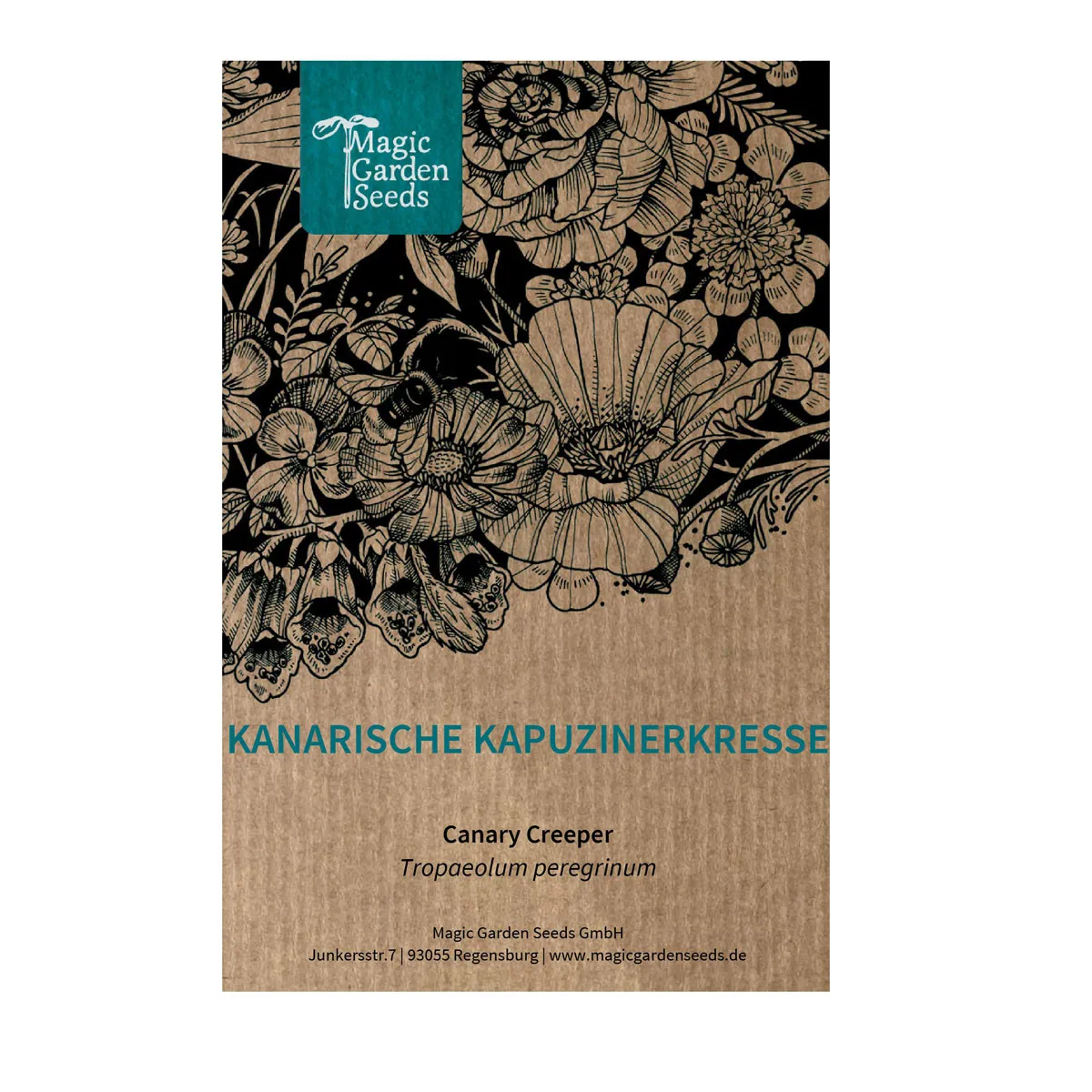
Canary Creeper (Tropaeolum peregrinum) seeds
- Filigree climbing plant with lemon-yellow, fringed flowers and a peppery flavour. <ai>
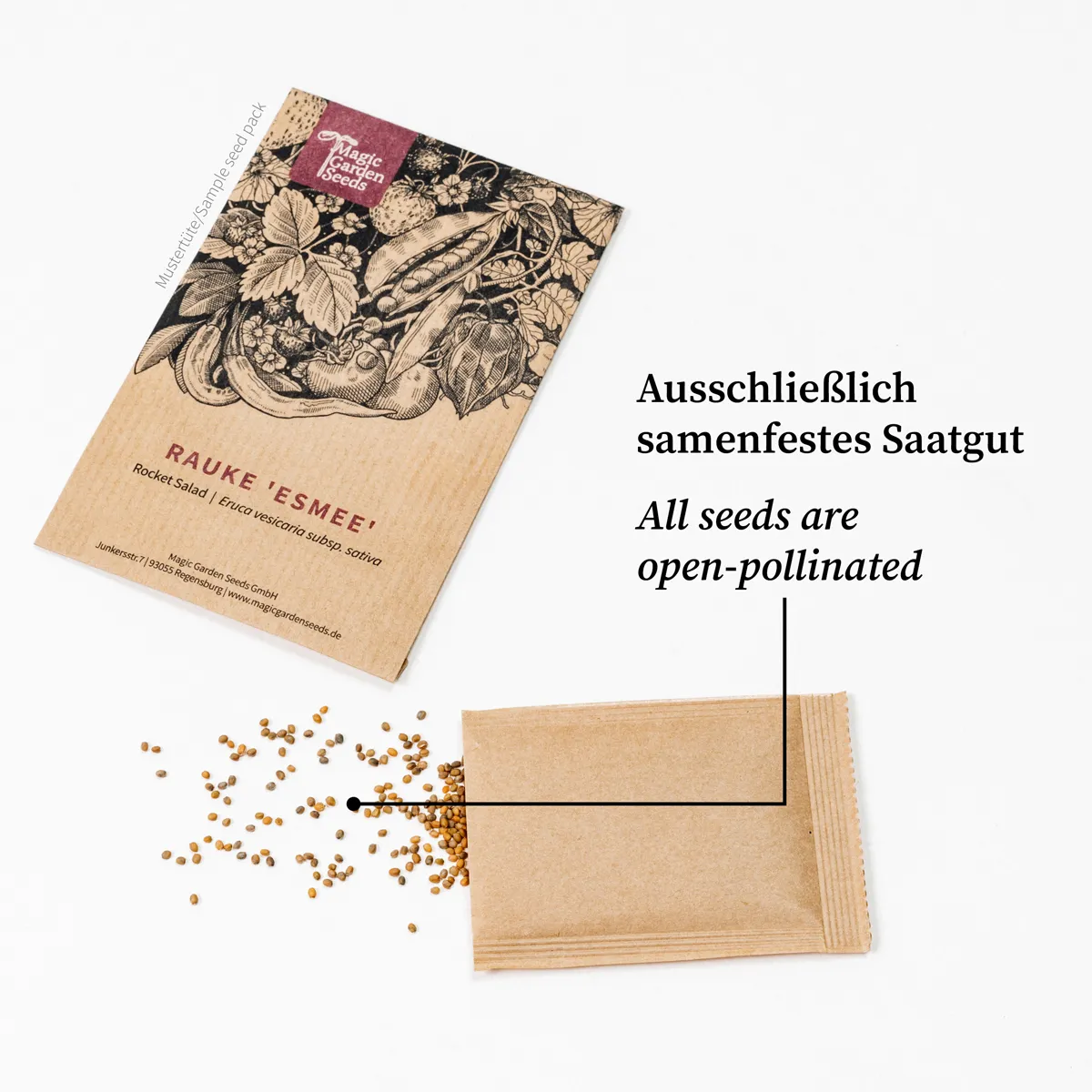
- Open-pollinated seeds - seed packet contains approx. 20 seeds.
- Annual climbing plant for trellises, fences, pergolas and large containers - requires warmth to germinate and is sensitive to frost. <ai>
€2.59
Description
The canary creeper climbs through summer with lemon-yellow flowers like little feathered stars
The canary creeper (Tropaeolum peregrinum) is an unusual relative of the better-known garden nasturtium. Its flowers are bright yellow, finely fringed and almost feather-like in appearance. This gives it a much lighter, more exotic expression than many other nasturtiums. With its long, delicate tendrils, it climbs supports, fences, trellises and pergolas, quickly bringing lively height to the garden, balcony or terrace.
Tropaeolum peregrinum originally comes from South America. Like other species of the genus Tropaeolum, it later found its way into European gardens as a striking ornamental plant, where nasturtiums were valued for their colourful flowers, vigorous growth and edible plant parts. The botanical species name peregrinum refers broadly to something foreign or from elsewhere - a fitting indication of the history of this special climbing plant from the New World.
In the garden, the canary creeper is mainly grown as a richly flowering annual climbing plant. Compared with the garden nasturtium, it grows more finely, more lightly and with a much stronger tendency to climb. It is excellent for giving a summery covering to bare climbing frames, fences, balcony railings or large planters. With good care, its flowering period lasts for many weeks, and the bright yellow flowers create especially beautiful accents among the green foliage.
The canary creeper is also interesting from a culinary point of view. The flowers and young leaves are edible and have a peppery, slightly mustard-like flavour. The flowers are suitable as an edible decoration for salads, cold platters, herb quark, cream cheese and summery dishes. The young leaves can be used sparingly as a spicy addition. In this way, the plant combines ornamental value, edible flowers and vertical greenery in a particularly charming way.
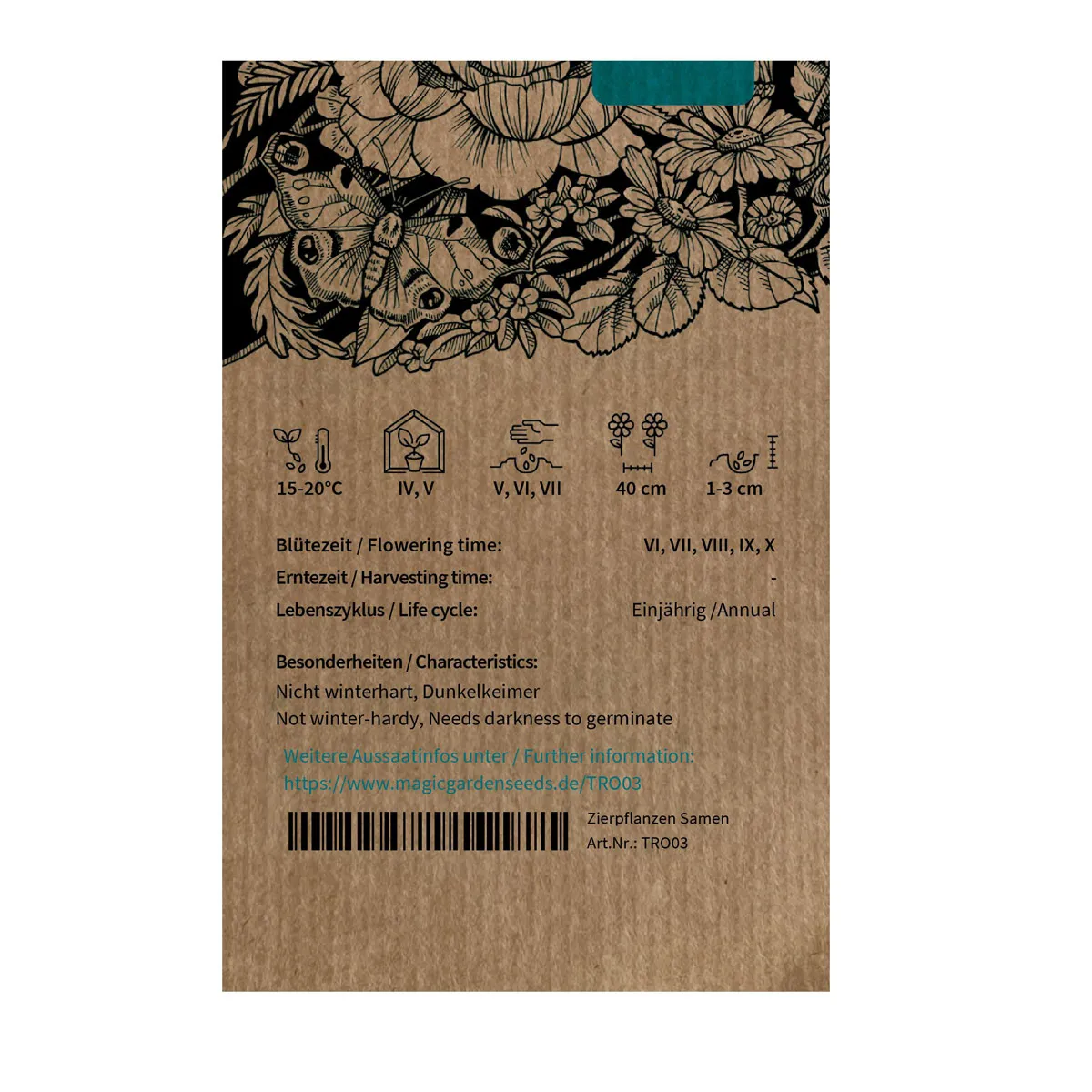
Plant profile
| Plant type | Climber, Container plant, Summer flower |
|---|---|
| Use | Container plant, Edible plant, Good insect food plant, Herb/spice plant, Ornamental plant |
| Lifecycle | Annual |
| Species | Tropaeolaceae |
| Seed propagation | konventionell |
| Region of origin | South America |
| Characteristics | Food for bees, Needs darkness to germinate, Not winter-hardy, Requires a climbing support, Self-seeds |
| Eventual height | 50-300 cm |
| Flower colour | Yellow |
| Flowering months | August, July, June, October, September |
| Root system | Shallow roots |
Growing instructions
| When to sow outdoors | July, June, May |
|---|---|
| Sowing depth | 1-3 cm |
| Germination temperature | 15-20°C |
| Germination time | 2-3 weeks |
| Climate | Temperate |
| Soil type | Free-draining, Moderate nutrient levels, Undemanding, well-loosened |
| Sunlight | Full sun |
| Water requirement | Medium |
| Planting distance | 40 cm |
Sowing and care
Sowing & care of the canary creeper
The canary creeper requires warmth to germinate, is sensitive to frost and should be treated like a seed that needs darkness for germination when sown. For earlier flowering, pre-cultivation indoors from February to April is recommended. The seeds can be soaked in lukewarm water for a few hours before sowing so that the hard seed coat can absorb moisture more easily. They are then sown about 1.5 to 2.5 cm deep in seed compost and kept moist but not wet at a steady temperature of around 15 to 20 °C. Depending on temperature and seed quality, germination usually takes place within 5 to 20 days. Direct sowing outdoors is possible from May, once no more frosts are expected.
The position should be sunny to partially shaded, warm and sheltered from wind. In containers and on hot days, regular watering is important. The soil should be well-drained, humus-rich and not too high in nitrogen, as too much nitrogen mainly encourages leaf growth and can reduce flowering. A climbing support should be provided early so that the delicate shoots can climb well.
Other names
Botanical name: Tropaeolum peregrinum
German: Kanarische Kapuzinerkresse, Kletternde Kapuzinerkresse, Zierliche Kapuzinerkresse, Kanarien-Kapuzinerkresse, Goldranke
English: Canary creeper, canary bird flower, canarybird vine, canary nasturtium
French: Capucine des Canaries, capucine canari, fleur-canari, vigne des Canaries
Italian: Nasturzio delle Canarie, nasturzio canarino, nasturzio rampicante, rampicante canarino
Spanish: Capuchina de Canarias, capuchina amarilla, flor del canario, vid del canario
Dutch: Kanariekers, Oost-Indische Kanarie-kers, Oost-Indische kers, Canary Creeper
Login